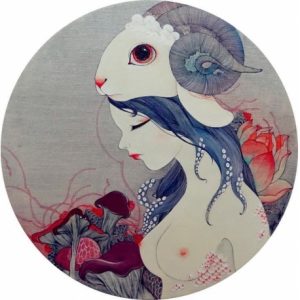
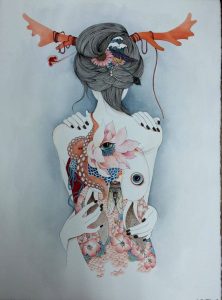
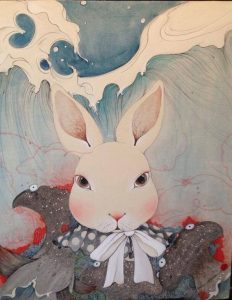
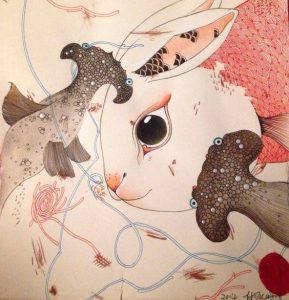
Pan xi is a Chinese artist born in Wenzhou, China, in November 1971. Since childhood, has developed a strong artistic and aesthetic sense because, every week, with her sister, she went to the art institute directed by her father to visit the workshops of the artists at work.
She is so passionate about drawing and painting, she starts taking lessons at the age of ten, from an artist friend of her father.
She began her fine arts studies, after finishing high school, in 1989 at the National Academy of Fine arts in Hangzhou, China, and a year later she received a scholarship and moved to the Academy of Fine Arts in Moscow where he earned a Master in Fine Art.
Lunch break
She is so passionate about drawing and painting, she starts taking lessons at the age of ten, from an artist friend of her father.
She began her fine arts studies, after finishing high school, in 1989 at the National Academy of Fine arts in Hangzhou, China, and a year later she received a scholarship and moved to the Academy of Fine Arts in Moscow where he earned a Master in Fine Art.
Pan Xi 2
In 1999 he obtained a master's degree in oil painting and with the work "Seven Beauties" he won the gold medal of the University.
 Since then he has lived in Europe, between Germany, Austria, Holland and France, and in the United States working as a professional artist.
 He currently lives in Hangzhou, China, where he opens his personal studios on the Jade Mountain Emperor's Hill on the outskirts.
In 1999 he obtained a master's degree in oil painting and with the work "Seven Beauties" he won the gold medal of the University.
Seven Beauty
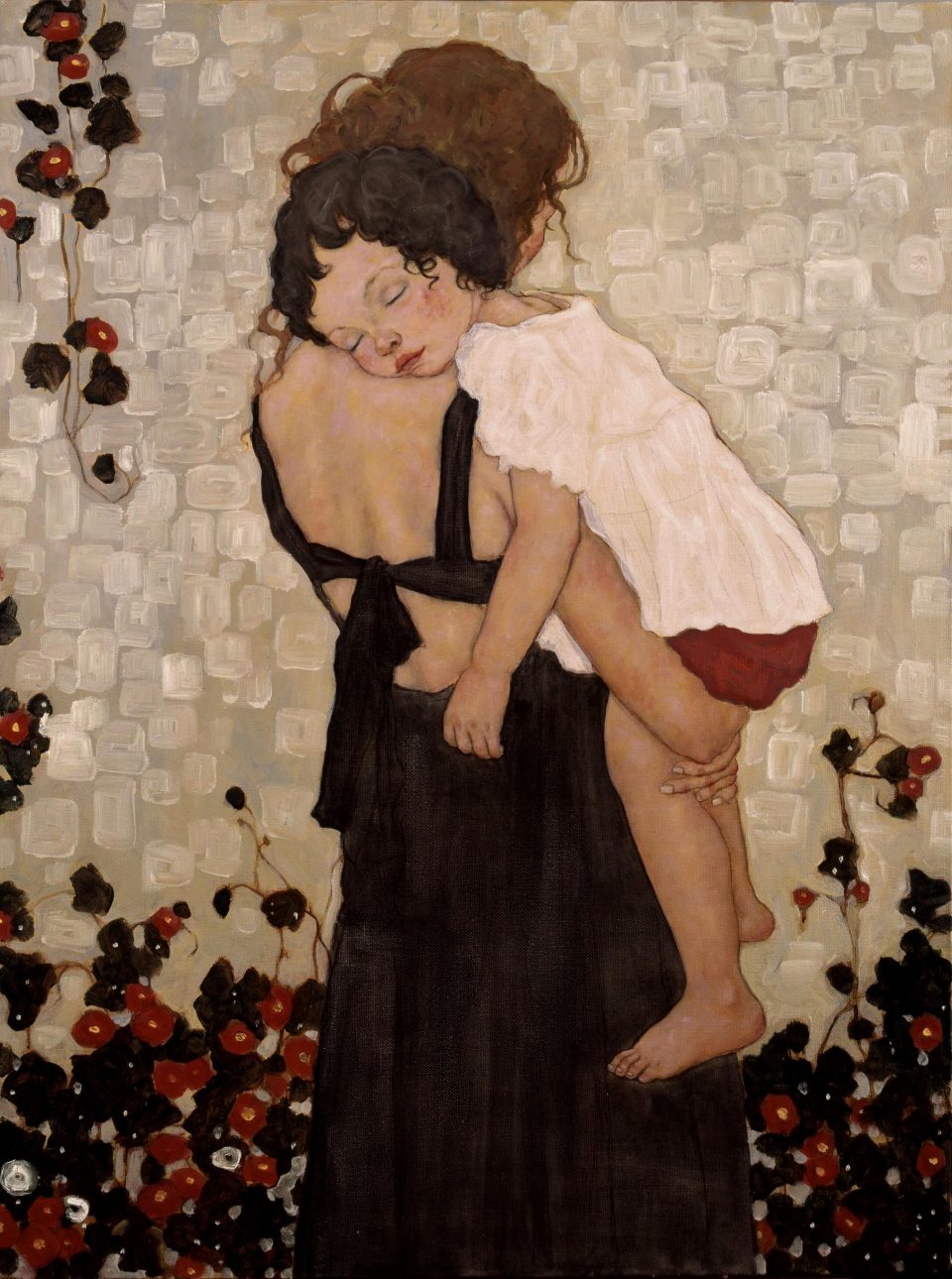
Mother and son
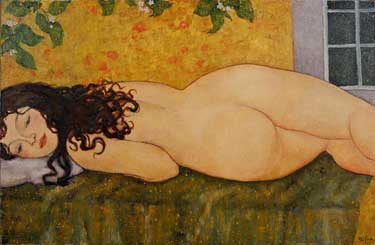
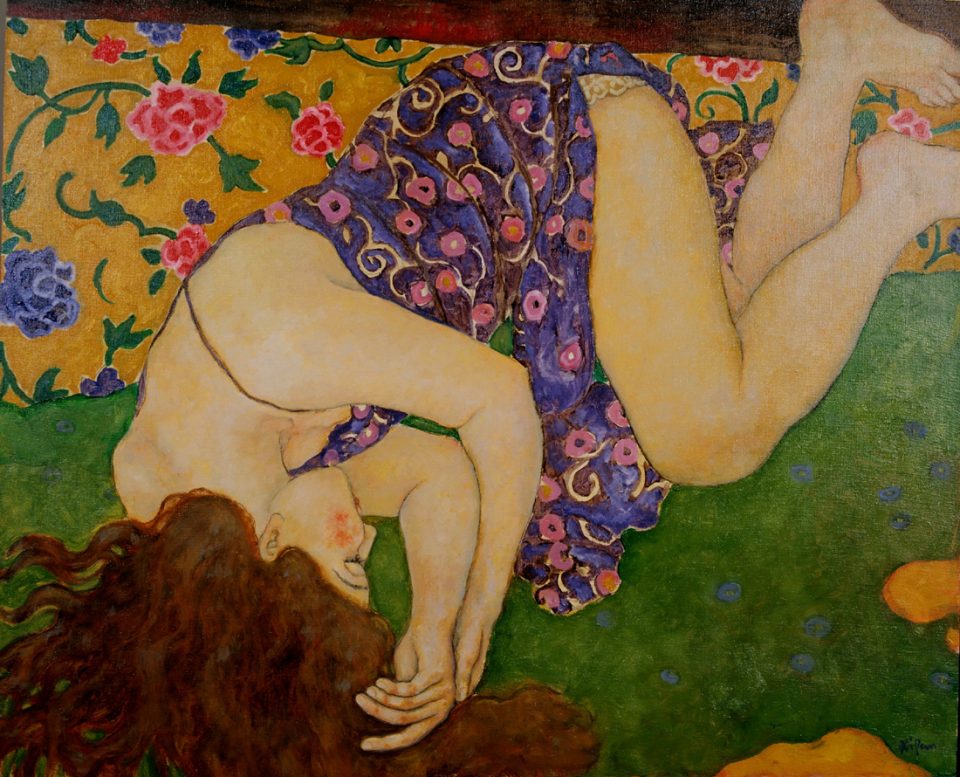
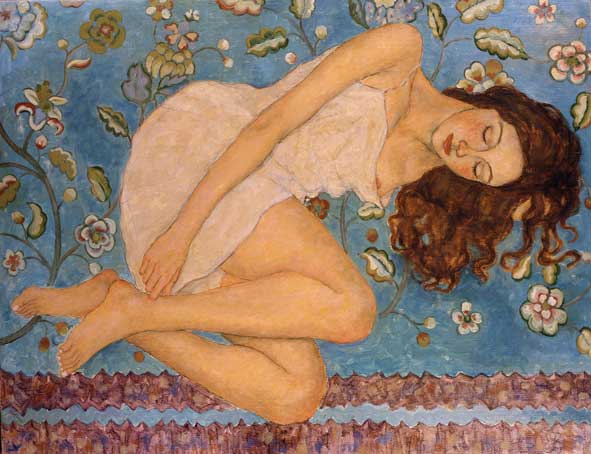
From her works shines through the modernity and power of the early twentieth century artists such as Klimt, especially for the use of colors, Modigliani, as regards the idea of dreams and reality that floats in an unreal time, and Schiele in reference to the yield of the bodies and the positions they assume.
Paris in the spring
Although her works are very twentieth-century they maintain a very powerful bond with the ancient Chinese art that makes the works are fascinating, overwhelming but at the same time extremely delicate and poetic.
Siesta
In her works the female subject is undoubtedly predominant. The women of are rendered in all their femininity and sensuality, dormant and dreamy but at the same time so determined and sure to be able to show their body with total ease, seducing the viewer and taking him to another dimension where everything is always immobile and eternal.
spring
Exhibitions: 2003 Veronica, Gallery “de Arte”, Nantes, France 2005 Girl in a Black dress, Gallery “de Arte”, Nantes, France 2008 Body temperature present, Gallery Zhongdao, Suzhou, China 2009 Mother and Child, Gallery “de Arte”, Nantes, France 2010 Carmine, Art scene Warehouse 2011 In my secret garden, M Art Center, Shanghai, China
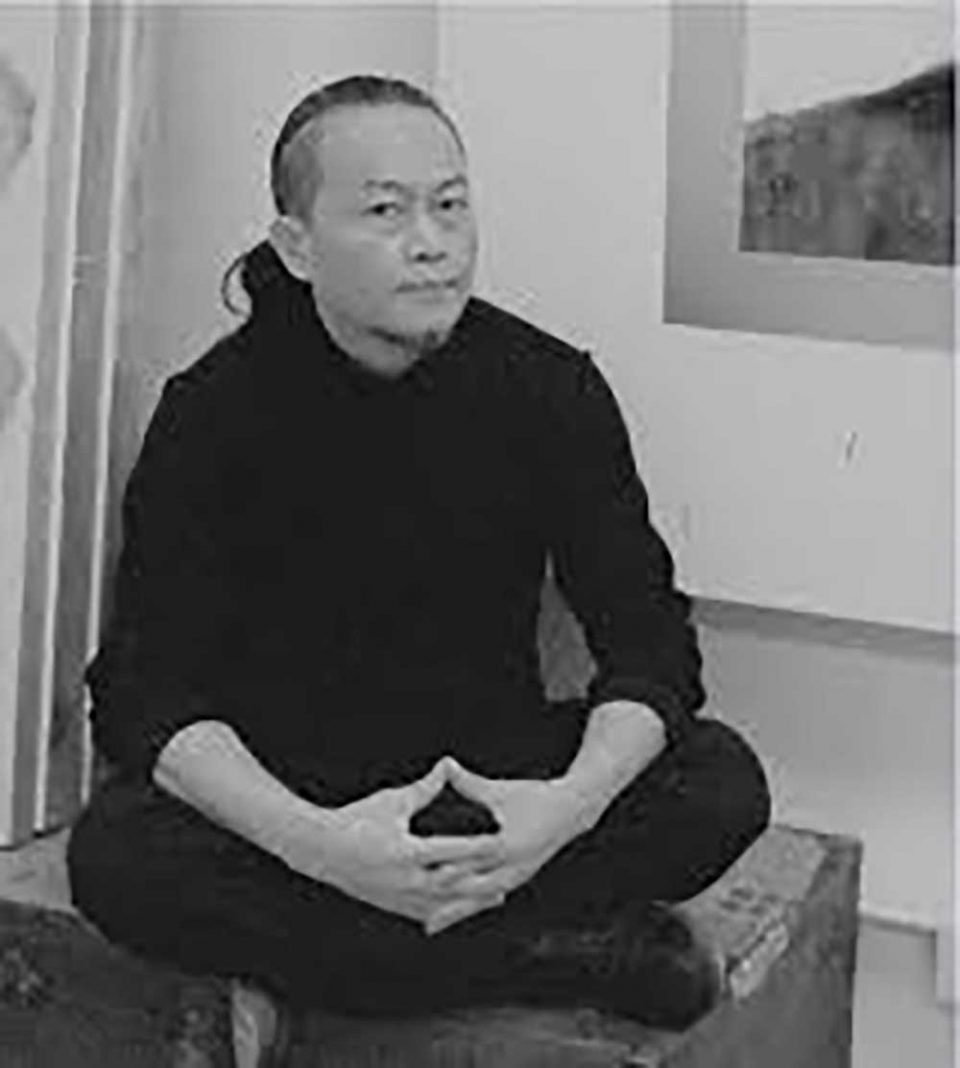
Dai Guangyu is a self-taught artist born and raised in 1955 in a family of scholars in Chengdu, Sichuan Province, China.
Since childhood Dai Guangyu has studied calligraphy, painting and literature and his career as a contemporary artist includes his long experience as a visual and performative artist, curator and cultural critic, and poet.
Dai GuanYu
His work involves the history of Chinese art, the culture of ink painting, as well as Chinese poetry and politics.
In 1985, Dai Guangyu became part of the revolutionary movement New Wave, soon becoming the leader of what develops in Southwest China, after becoming a leader of the Sichuan artistic avant-garde scene, which proves to be very stimulating and perfect for the development of its creative purpose.
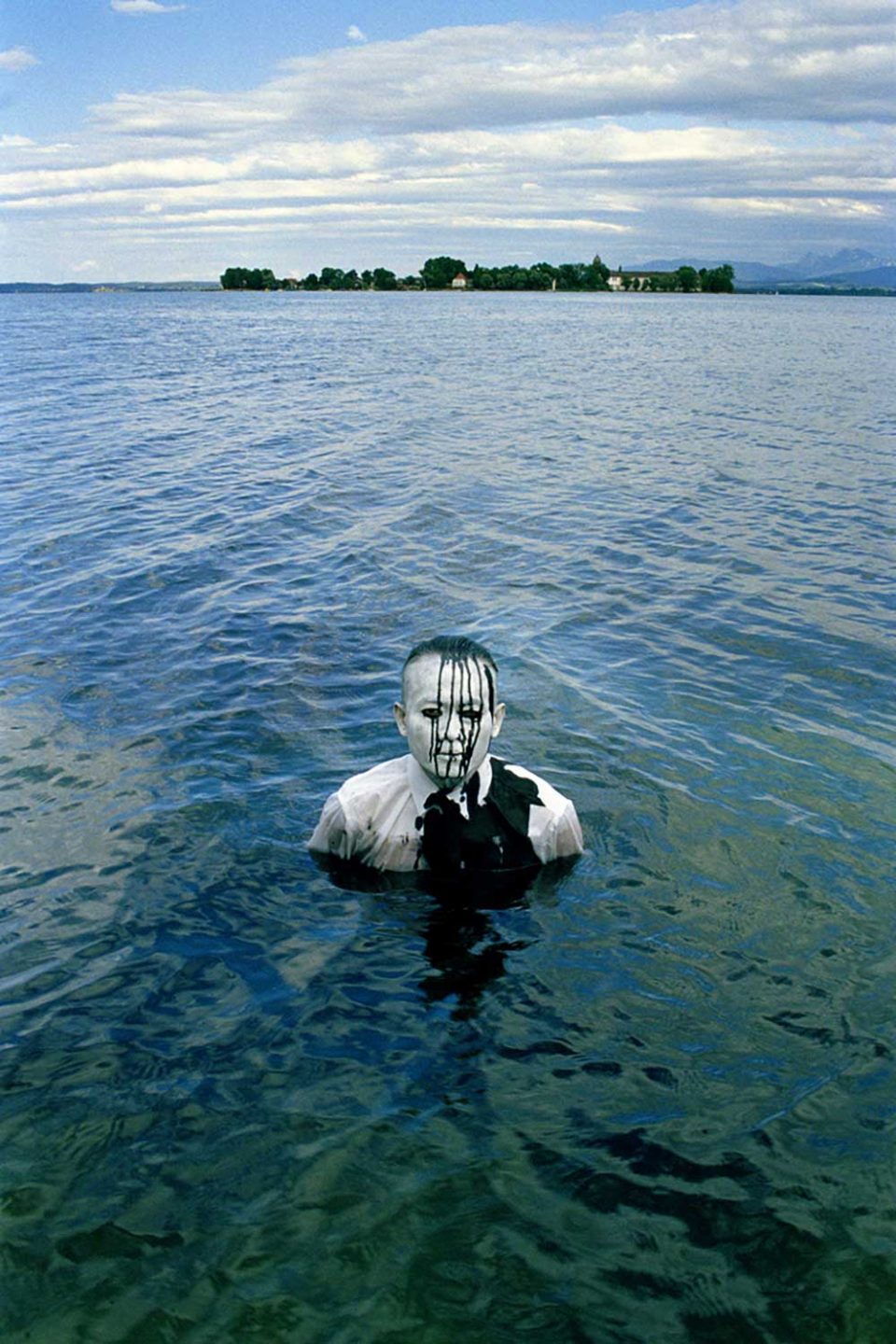
Dai Guangyu – White is not necessarily good
During this period he took part in several exhibitions including, in 1986, “Red Yellow Blue – Young Artists of Sichuan”, the first modern art exhibition in the Sichuan province, at the Sichuan Art Gallery.
In 1989 he participated in the historic China Avant-Garde exhibition at the National Art Museum of China in Beijing and after the end of the 1989 student movement protests, when Chinese art entered a depressed and withdrawn state, Dai Guangyu continued his active interventionist work, curating exhibitions and public performance interventions far from the capital.
Dai Guangyu – Untitled
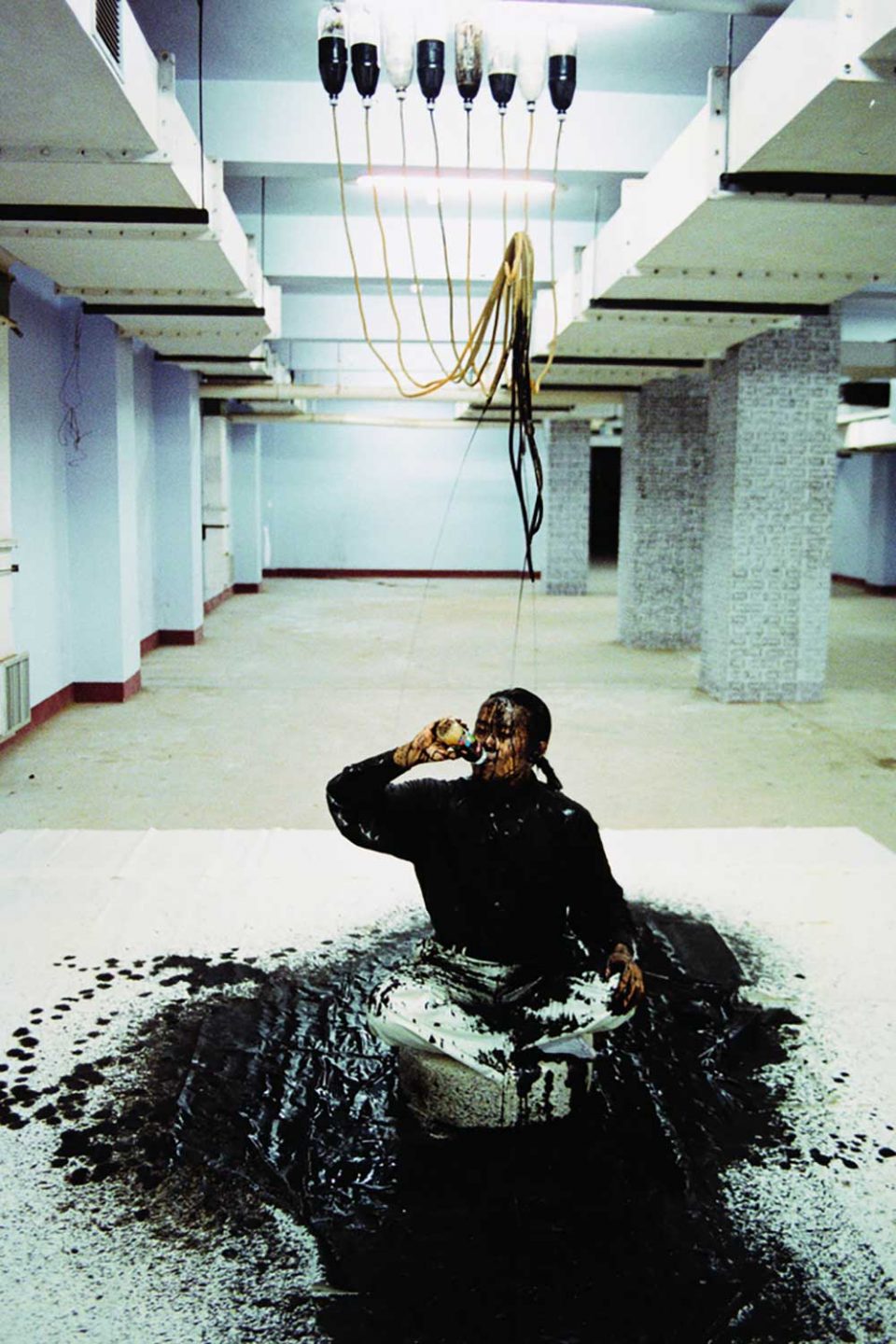
In the 1990s, Dai Guangyu discovered artistic performance, which employs the body as a key artistic medium. The artist has found this artistic medium very interesting and very suitable for expressing himself, artistically speaking, as it allows him to be powerful in movement, incisive in meaning, radical and transitory.
Dai Guangyu – Absorbing – being absorbed
With Dai Guangyu, performance and artistic activities such as conceptual art had found their mentor. In 2003, the artist moved permanently to Beijing where, during these years, he developed a body of art and a strong conceptual approach in cultural references, rich in poetry and symbolism, and beautiful in form, which has aroused continuous criticism.
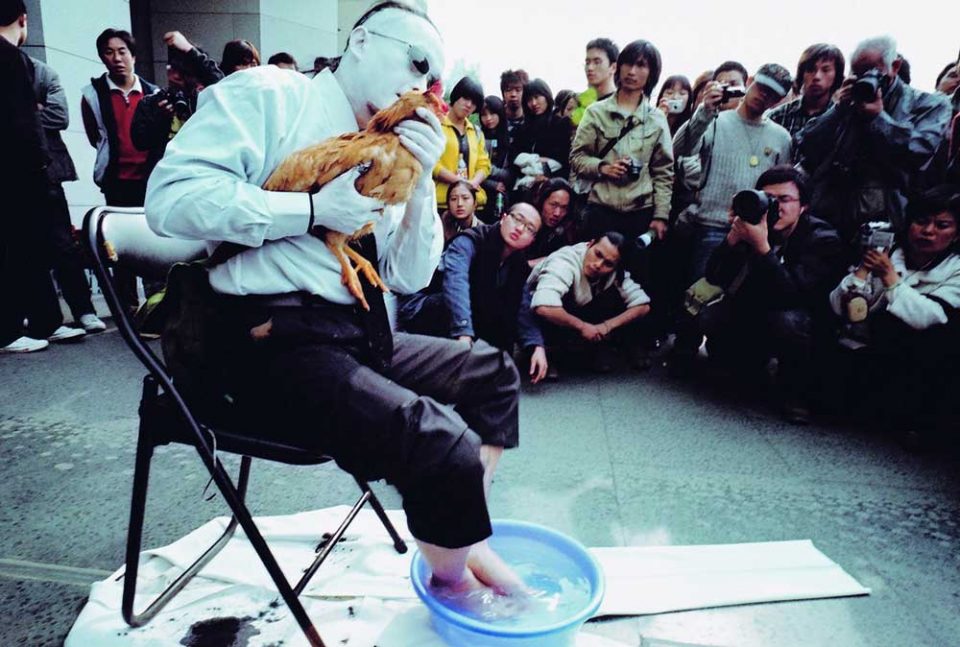
Dai Guangyu – To identify a chicken artistic image of a dead rabbit is difficult
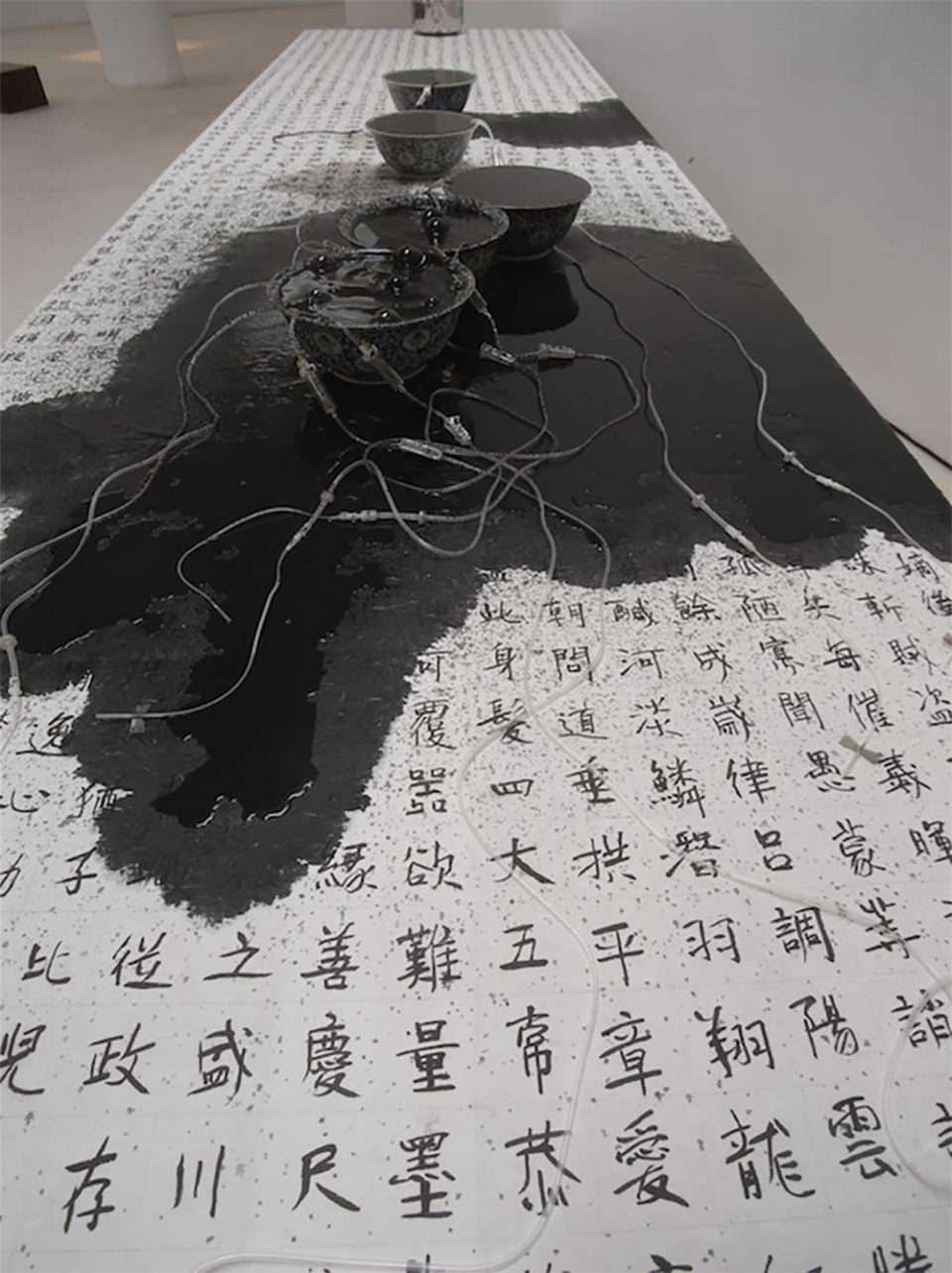
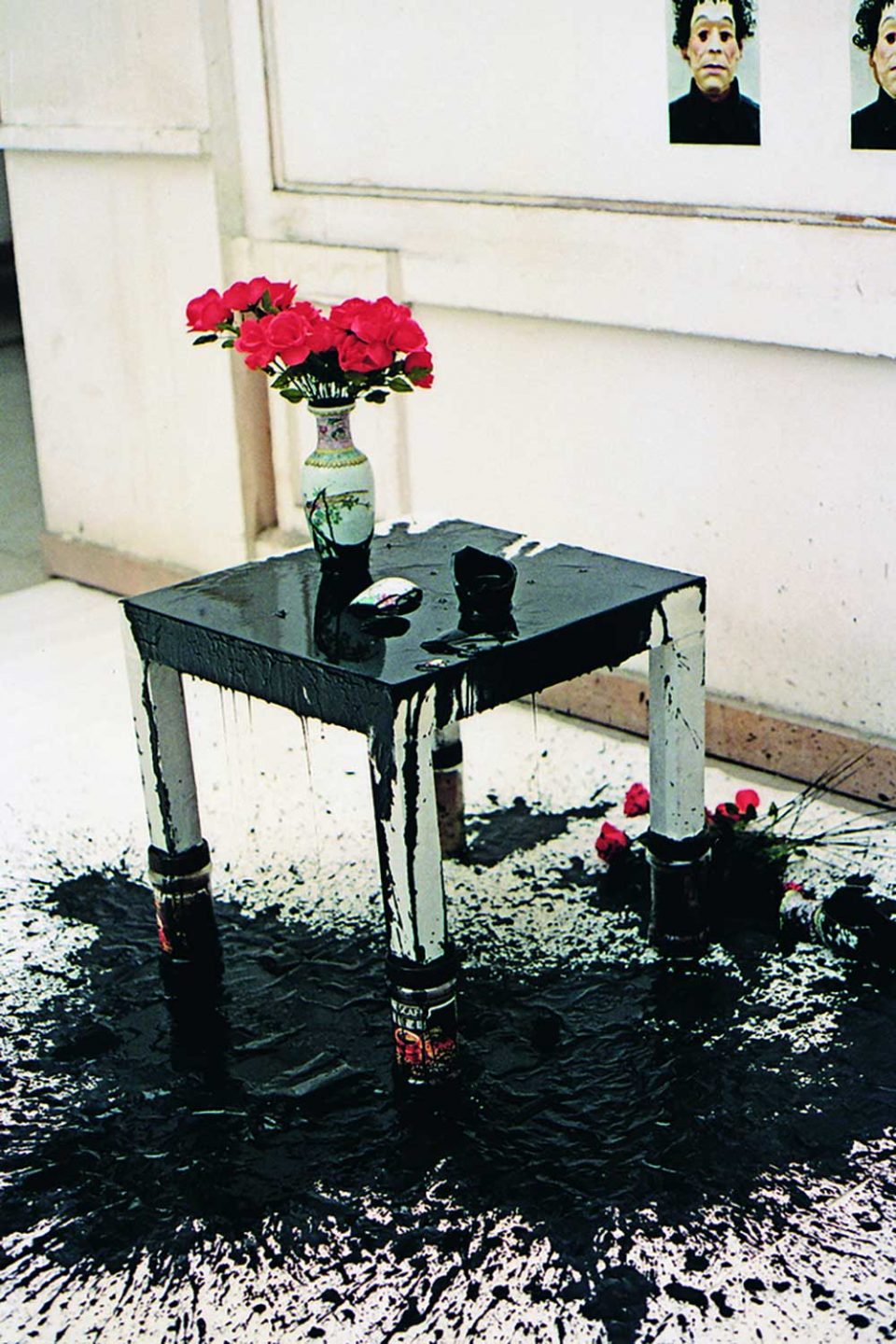
Dai Guangyu, he has created a system of codes and symbols that has intensified along with the progress of his installations and performances. For example, it uses black Chinese ink pots or porcelain, symbols of the complexity of Chinese culture, flour to evoke the basic food of the community and finally also men with faces painted in white and gold as metaphors of Westernization or the pursuit of wealth.
Dai Guangyu – Auction
He argues that through the act of performance, a temporary action that passes from one state to another, all solid forms belong to a single moment and that all circumstances are in the process of transformation. His installations and his photographs maintain a trace of this “state of procreation” which is the essence of the performance and gives a poetic intonation to the forms.
Dai Guangyu – Shooting at myself
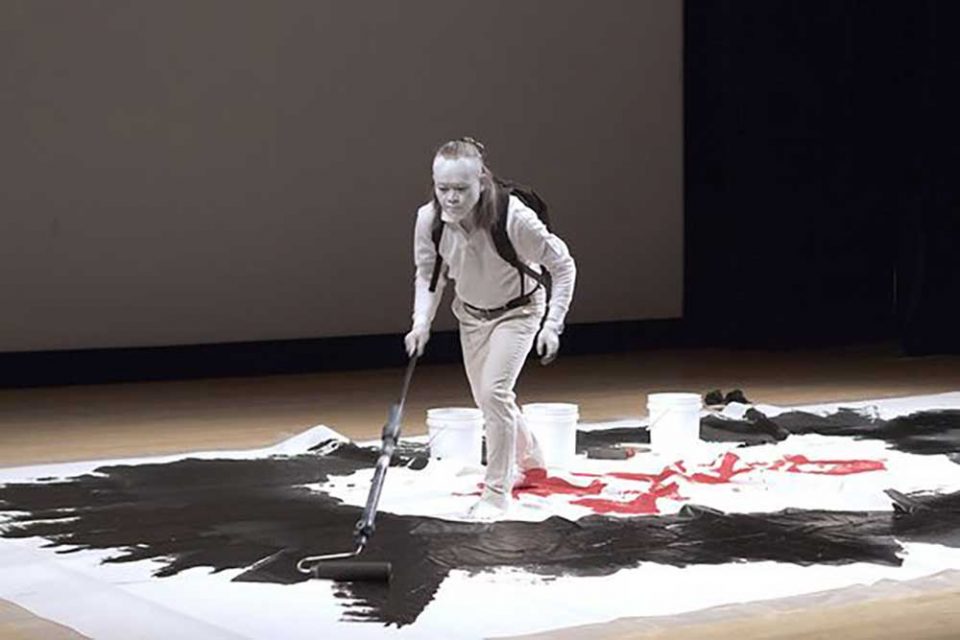
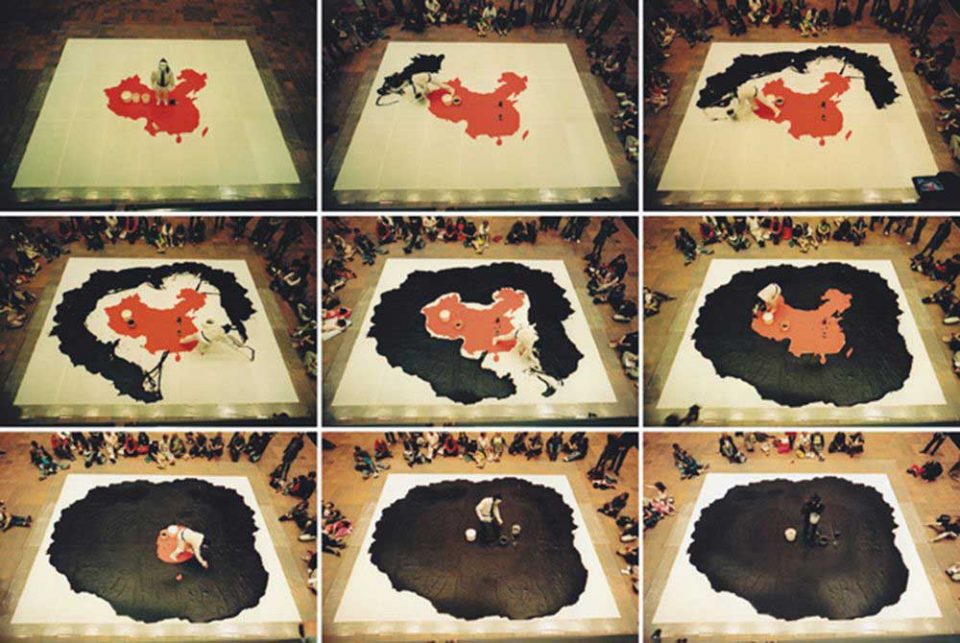
In 2017 the artist realizes the performance The Failure of Defense-America, 2017.
During the performance he expresses his personal struggles against having to live under a repressive political regime. Dai Guangyu through the performance of the performance wants to move the focus, which originally is based on the ideological and class division in China, to the forces that threaten the American nation.
Dai Guangyu – “The Failure of Defense America 2017”
By painting the seemingly empty white paper that covered the stage with black and red ink, the outlines of a series of critical and consequential relationships emerged, asking questions about where we are all in relation to the character and inclusiveness of today’s nation.
Dai Guangyu – “The Failure of Defense America 2017”
Dai Guangyu is now recognized as an important and original figure in the Chinese art scene. His interdisciplinary practice is written within a socially engaged trajectory.
Through his performances, photographs, paintings or calligraphy, he stages his body and the symbolism of Chinese society until the end of their resistance or their disappearance.
Dai Guangyu – Untitled
Exhibitions: 2005 Artists in Action – Performance Art Project, HongKong, China 2005 Inward Gazes – Performance Art in China Exhibition by Invitation, Macau Art Museum, Macau 2005 In Honour of ‘85, Duolun Modern Art Museum, Shanghai, China 2005 Transborder Language: Performance Art /Language Art, Tokyo Art Projects, 798 Factory, Beijing, China 2004 Double Happiness Festival, Tokyo Art Projects, 798 Factory, Beijing, China 2004 Matchmaking, Eastlink Gallery, Shanghai, China 2003 NIPAF: Asia Central Europe, Performance Art Meeting 2003, Slovakia, Hungary, Poland 2003 Chinese Ink in Contemporary Art, National Gallery, Kualalumpur, Malaysia 2003 China – Japan Performance Art Exchange Project / 2003, Chengdu, Xian, Chongqing, China 2002 Fruitfulness – Contemporary Art Exhibition, Beijing Agriculture Hall, Beijing, China 2002 Food and Words, Performance, Chengdu, China (solo) 2002 Shooting at Myself, Installation and Performance, Duisburg University, Germany (solo) 2001 Physical Resources and Objects, Hong Kong, China 2001 Dialogo – Other, Chinese Contemporary Art Exhibition, Chiesa Santa Teresa dei Maschi, Bari, Italy 2001 Chinese Festival – Touring Art Exhibition, Faust Museum, Hannover, Germany 2001 First Chengdu Biennale, Chengdu Museum of Modern Art, Chengdu, China 2000 Heaven Stonehenge, Hannover, Duisburg, Düsseldorf, Germany 2000 Turn of the Century – 1979-1999 – Chinese Contemporary Art, Museum of Modern Art Chengdu, China 2000 Chinese Glamours – Conceptual Images, East Link Gallery, Shanghai, China 1997 How a Frog in a Well Sees the Sky, Open Exhibit, 152B Studio, Chengdu, China (solo) 1996 Resurrection in Chengdu ‘96, Installation, Sichuan University, China (solo) 1995 Scenery Inside and Outside a Red Room, Installation, Chengdu, China (solo) 1994 Chinese Landscape, Installation, Chengdu, China (solo) 1993 Dai GuangYu – Exhibition of Paintings, Lallouzet Waterson, Montreal, Canada
Liu Di is a Chinese artist born in 1985 in the province of Shanxi, China.
In 2009 he graduated from the Department of Professional Photography of the Central Academy of Fine Arts in Beijing and just one year later, in 2010, he won the Lacoste Elysee Award for his series entitled “Animal Regulations”.
Liu Di – Animal Regulation IV No. 4
Liu Di is an artist who, to create his works, uses digitally manipulated photographs to investigate the friction between the natural world and the inhabitants of cities in China.
Use digital tools like Photoshop to relate human and animal figures and the landscape, changing its proportions. In fact, the distortion of the proportions of his subjects places them within the urban and natural landscapes of his land, China.
In 2012 he created one of his most famous and important series playing with the juxtaposition between the disproportionate human nudes and the natural environment.
Exhibition
“By violating the rules of common sense, we can break the hypnotic trance induced by the family reality”
Liu Di – The Weigh of Oneself No.1
In 2013 he creates one of his most recent series, evolving to the previous series, “Animal Regulations”.
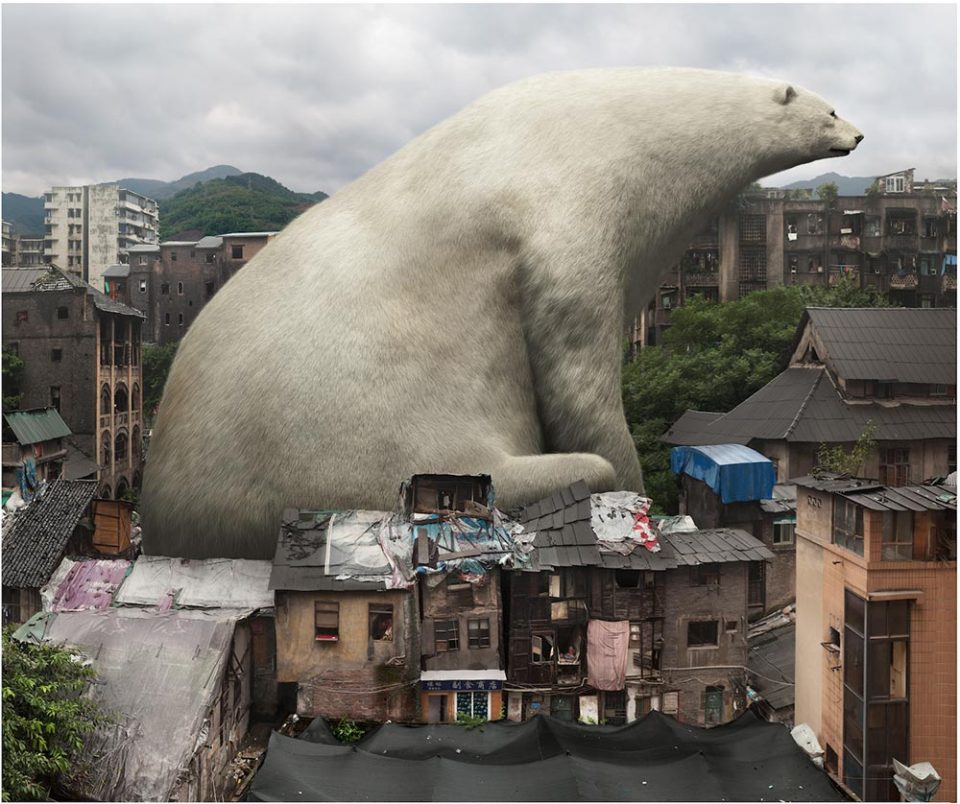
The series features a series of exaggeratedly large, cartoon-like wild animals, such as the giant rabbit in Animal Regulation No. 7, sitting amidst the destroyed landscapes of residential neighborhoods. Their heads are disproportionately small in relation to their massive bodies giving them a caricatural comic effect.
Liu Di – Animal Regulation No.7
Liu Di conceived the project for the first time while walking through the crowded outskirts of Beijing, a city that was very familiar to him.
“Looking at the decrepit living blocks, I had the vague but strong feeling that something was missing between the ground and the sky”
Liu Di – Animal Regulation IV No. 18
“I felt the urge to add something that would push people to look at familiar scenes with a new and long look”
“Something powerful and impossible to ignore, but not something that would make people panic. … In the end I decided it was supposed to be a huge animal”
Liu Di – Animal Regulation IV
Thus, using Photoshop, she re-proportioned a panda, a rhino, a monkey and a frog and placed them in gigantic dimensions in squalid urban contexts. By making these heavy-bottomed beasts locked up in the back streets, in the yards and in the courtyards of social housing, she highlights the relationship between nature and human society.
Liu Di – Animal Regulation No.17
These works look at a mutually destructive relationship through the ruins of both human and animal life spaces. Her photographs distort the banality of reality to provoke the viewer to review her urban surroundings.
Stubborn and persistent hallucinations
Through the images, composed of over-sized subjects set in suburbs, settings like residential complexes, Hutong neighborhoods and scenes of demolished houses, transforms the urban landscape into a surreal playground on which towering massive inflated animals, but confined by the surrounding environment.
Stubborn and persistent hallucinations
Exhibitions:
2010–2015 reGeneration2: Tomorrow’s Photographers Today – A Travelling Exhibition, the Musee de I’Elysee, Lausanne, Switzerland
2010 History Lessons, Pein Fine Arts, Beijing, China
2009 Niubi Newbie Kids II Exhibition, Schoeni Art Gallery, Hong Kong, China
2009 Journey of A Thousand Miles–2009 CAFA Excellent Graduation Works Exhibition, CAFA Art Museum, Beijing, China
2009 Young Artists Promotional Exhibition — 2009 Beijing 798 Festival , Beijing 798 Art Zone, Beijing, China
2009 CAFA Graduation Works Exhibition, China Central Academy of Fine Arts, Beijing, China
2009 Cograda Word Design Congress 2009 Beijing , CAFA Art Museum, Beijing, China
He Juan is a young artist born in 1985 in Qinghai, a territory from which the Yellow River is born and which occupies the north-eastern part of the Tibetan Plateau, in China. In 2003 he studied at the Academy of Fine Arts in Sichuan where in 2007 he graduated.
He Juan is a girl with a calm and calm temperament, a very simple woman who manages to express all her delicacy and sensitivity through her works. In fact these become a real mirror through which we can observe and recognize the romantic personality of the artist. In fact, the works of He Juan are the perfect reflection of the woman who conceived them in all her simplicity and beauty.
These are shapes developed through soft lines and curves that give life to simple figures but full of details. He Juan manages to create very poetic images full of romantic fantasy.
The main subjects within his works are very linked to nature and therefore her works can not be separated from the theme of “animals” because they like to consider the creatures that grow on this earth as protagonists of the photo.
He Juan – Untitled
Through the language of painting, she models her subjects with skill, sometimes with exaggerated and bizarre deformation techniques. This type of artistic treatment makes sure that from the animals represented by her, various types of “personality” emerge, succeeding in this way also in capturing the attention of the public.
He Juan – Untitled
Exhibitions: 2005 Exhibition of Sichuan Academy of Fine Arts in scenery. (Chongqing Art Museum) 2005 The 13th Annual Exhibition of the Student Works of the Oil Painting of the Sichuan Academy of Fine Arts. (Chongqing Museum of Art) 2006 Sichuan Fine Arts Institute of fundamental teaching Exhibition (Chongqing Art Museum) 2006 Dragonair fly shows Chinese Art Award and won the “most beloved audience award” Shanghai 2007 The Sichuan Academy eleventh Fine Arts Student Exhibition (Chongqing Art Museum) 2007 United Kingdom “Art education and creativity” Teaching exhibition (Chongqing Museum of Art) 2007 Sichuan Academy of Fine Arts Exhibition graduate and won the “Extraordinary Degree Award” (Chongqing Museum of Art) 2007 “never set foot on the road” – “project X” youth art exhibition (Shanghai) 2007 Chongqing avant-garde contemporary art exhibition (Chongqing Planning Exhibition Hall) 2007 Art Basel Miami Beach (Basel) 2008 Third women artists Invitational of Contemporary young (Chongqing Art Museum) 2008 Shanghai Art Exposition (Shanghai) 2008 Art Beijing (Beijing) 2008 Singapore Art Exposition (Singapore) 2008 Shanghai Contemporary Art Exposition (Shanghai) 2008 Taipei Art Fair (Taipei) 2009 Fahrenheit Gallery SE Juan Solo Exhibition (Shanghai) 2009 “we” Huangjueping First Exposure (Chongqing) Annual 2009 Hong Kong Art Fair (Hong Kong) 2009 11th Chongqing National Art (Chongqing) 2009 Shanghai Art Fair (Shanghai) 2010 Chongqing First Biennial (Chongqing) 2010 Hong Kong Art Fair (Hong Kong) 2010 Shanghai Art Expo (Shanghai) 2010 (Taipei Art Center, Taipei) “One Heart and One German” Blue Top and Era Exposure Cooperative Outlets (Chengdu Times Outlet) 2011 Sichuan Fine Arts Academy 70th Anniversary Series of “Huang Bingzhan” (Chongqing) 2011 Shanghai Art Fair (Shanghai)
Wen Na is a Chinese artist who through the mural painting manages to recreate fantastic worlds made of deities and ghosts. Wen Na’s wall painting is full of imagination and superb craftsmanship, so much so that it gained fame in the Chinese art scene and also attracted global attention.
Although the artist during college, in 1980, was more attracted to Western books and illustrations, traditional culture is more deeply rooted in his mind and his creations because of the influence of the family.
After graduating from the Tsinghua Academy of Fine Arts she left her job as an illustrator, for a newspaper supported by the state, to work as a freelance artist making murals, sculptures and all kinds of artistic creations related to her original images of celestial beings. The latter under the pen of the Chinese artist are rendered through bright colors and modern clothes, and it is only their way to ride the mists and clouds that remind people of the spirit of Chinese fairy tales.
Wen Na – Shaxixi Sadness
In 2010, Wen Na made her first colorful mural in the village of Sanbao, Jingdezhen, where the famous ceramic artist Jackson Li had built his studio and an international ceramic institution popular with foreign artists and art lovers. The unexpected meeting later led to the creation of numerous impressive murals in Sanbao and then to the rise of Wen as a muralist.
Wen Na – Murales in Sambao
Now, the murals on the Sanbao brick walls have become mottled after years of exposure to time. A wall has even been demolished but the artist believes that this is the beauty of wall painting.
“I prefer to paint on naturally shaped objects or exterior walls of architectures, so the murals will pass through their changes over time, as if they had their lives”.
Wen Na – Murales in Sambao
In recent years, Wen Na has traveled to many places in the world to paint her original images on almost 100 walls.
Also in 2010 she painted on a wall for an art center in Italy, which attracted the attention of the western artistic community to her for the first time.
In that small town at the top of the mountains overlooking the blue Mediterranean bay, Wen painted two demigods “Qianshan and Zhaohai”, which literally means “pulling mountains” and “shining on the sea surface” in Chinese. In his imagination, Qianshan is a mountain spirit that connects and pulls the numerous hills with a rope. “Imagine being able to use a rope to pull on all the mountains, the goddess able to exert her power lightly would have an inexhaustible strength”.
Wen Na – Learn from the mountain
Zhaohai refers to the spirit of the sea, because one night the artist had seen a stretch of white reflection of the moon on the surface of the sea. “Immersing in the scenarios, I asked myself if there is a god who illuminates the surface of the wide and dark sea every night for people”.
Wen Na – Learn from the mountain
In 2017 she worked for the French luxury brand Hermes during her famous art exhibition “Wonderland” in Shanghai which included the opening of 11 showrooms that evoke a fantasy world with Parisian landscapes as a backdrop. Wen Na painted a mural entitled “Paris-Shanghai”, with a Parisian subway scene.
Wen Na – Wanderland
Visitors to her artistic space in the exhibition are introduced in a long corridor modeled on a subway station, where they find walls on both sides full of grotesque images of gods, goblins and other mythical creatures.
Wen Na – Wanderland
Wen Na – Wanderland
Like the ultramodern appearance of her Hermes “spirits”, Wen Na’s images derive from her childish indulgence in traditional culture, powerful imagination and appreciation of the culture and distinctive landscapes in which the mural is designed to fit.
“I am inspired by archaic Chinese elements such as the Dunhuang frescoes, stone tablets and classical literary works including The Pilgrimage to the West, The First Myth and The Classics of Mountains and Rivers”.
Wen Na – Murales
The “Chinese immortals” created by Wen Na have become in these days a sort of cultural icon in the Chinese artistic community.
“I did not learn traditional Chinese painting, so I use the Chinese brush the same way I use the pen, and I’m not particularly interested in painting materials, I actually paint on anything as long as its surface can be colored” she said. Through the painting on the walls, the explorer artist discovers that the images originally “flat” have been given an impression of three-dimensional space.
Wen Na – Murales
Wen Na – Murales
Exhibitions:
2010 Murales in Sanbao village
2010 “Qianshan and Zhaohai” Italy, for art center
2010 “Nine Songs of Dark Map” Songjiang, Shanghai
2013 “Numerous map” Beijing Hao restaurant
2013 “Shaxixi Sadness” Dali Xishe
2014 “Wen of the Scriptures” Chinatown in Mauritius
2015 Pictures of the UGC cinema in Lyon on the glass wall
2015 “Map of the pearls” New Zealand
2017 “Wonderland” art exhibition in Shanghai,for Hermes
Jiang Pengyi was born in 1977 in Hunan, China. He attended the Beijing Institute of Art and Design, from which he graduated in 1999. Using photography as a catalyst for his carefully constructed scenes he captures uncertain stories that inspect the socio-political landscape that surrounds him.In fact, through photography it responds to the changing social, political and physical scenarios of China.
Jiang Pengyi is interested in the passage of time and its effects on society; he is particularly interested in the transformation of Beijing’s urban landscape and the possibilities of how it will be in many decades. His process of artistic creation often involves time-lapse photography and the gradual destruction of his material, while trying to eliminate the proof of the artist’s hand.In his series “Unregistered City” (2008-2010), Jiang Pengyi comments on the human condition by collecting miniature buildings together in desecrated landscapes – abandoned houses, lots of rubble – and by photographing the scenes.
Jiang Pengyi – Unregistered City
Referring to 1,000-year-old landscape paintings and contemporary events in China, these photographs create complex and carefully constructed messages that take place as novels.
Jiang Pengyi – Unregistered City
Jiang Pengyi – Unregistered City
Starting from photographs related to urban landscapes and digital manipulation in his early works, Jiang goes on to reflect on a micro and introspective vision of inanimate objects that he represents through images of surreal views in the intrinsic light that exists in everyday objects and illuminate the traces left by existence of objects over time.
The existence of objects seems peculiar because it is illuminated by their splendor, their image and family function disappear. This disappearance of image and function seems to suggest a sort of destruction of our common association with objects, while the artist tries to reveal the independent existence of each object.
Jiang Pengyi – Objects Illuminated
In a slightly later series of works, “Everything Illuminates” (2012), Jiang experiments with fluorescent powders and melted wax to create luminescent objects that radiate light, acting like miniature stars. Pour this mixture of wax and fluorescent powder onto the objects and photograph the substance using a long exposure. In the resulting images, the original functions of the objects are erased, leaving the viewer with a sense of destruction.
Jiang Pengyi – Everything Illuminated
Jiang Pengyi – Everything Illuminated
Jiang Pengyi – Everything Illuminated
Exhibitions:
2008 – “Que Vive?” Moscow International Biennial for Young Art, Moscow, Russia.
2009 – “Cheng Ran & Jiang Pengyi: Immersion and Distance”, Ullens Center for Contemporary Art, Beijing, China
2010 – “The butterfly effect”, He Xiangning Art Museum, Shenzhen, China
2011 – “Be natural Be yourself”, Frac des Pays la Loire establishes Regional d’Art Contemporain, Nantes, France
2012 – “No Exit – Urban Space”, Biennial of photography in Helsinki, Helsinki, Finland
2012 – “Architekturfotografie – Made in China”, MAKK, Köln, Germany
2013 – “REVEL,” Museum of Contemporary Art, Shanghai, China
2014 – “Chinese Contemporary Photography: 2009-2014”, Minsheng Art Museum, Shanghai, China
2015 – “Asia unfamiliar: the second biennial in Beijing”, CAFA Art Museum, Beijing, China
2015 – “China 8 – Contemporary Art from China on the Rhine and the Ruhr”, Museum Lehmbruck, Duisburg, Germany
2015 – “China 8 – Contemporary Art from China on the Rhine and the Ruhr”, Changjiang International Biennial of Photography and Video,
2015 – “China 8 – Contemporary Art from China on the Rhine and the Ruhr”, Chongqing Changjiang Museum of Contemporary Art, Chongqing, China
2016 – “Ghost in Flash: After Photography”, Taikang Space, Beijing, China
2016 – “The Shadow Never Lies”, Shanghai 21st Century Minsheng Art Museum, Shanghai, China
2016 – “The Shadow Never Lies”, Art Basel, Hong Kong
Jiang’s work has been awarded with several awards, including the Aletti Art Prize for Photography (2011), the Jury Grand Prize from the Société Générale Chinese Art Awards (2010), and the Three Shadows Photography Award (2008).
Zhen Shi is a French-Chinese visual artist born in Shandong on September 9, 1989 in northeastern China.
She lived for some in Beijing and Angers and subsequently started working as a photographer after completing his studies in Paris.
The work of Zhen Shi, combines storytelling and artistic aesthetics, focusing on various topics, including the intricate relationship between reality and memories, issues of personal identity, sociological documentation and even the changing landscape of his land.
She has produced a diverse series of works composed of photographs, artist’s books and videos and the most important works are “Kwei Yih” and “Memories of past things”.
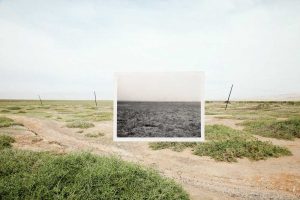
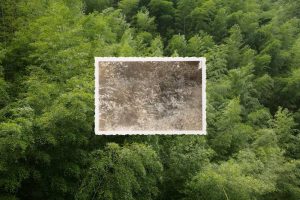
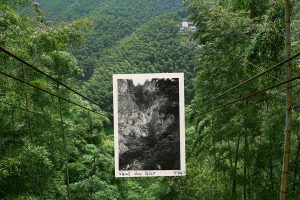
Her “Kwei Yih” series is a project deeply rooted in his personal experience.
Zhen Shi explains: “After many years of wandering away from home, I found myself falling into a state of anxiety and impotence, trying impatiently to regain a sense of belonging”.
Zhen Shi, Kwai Yhi.
Zhen Shi, Kwai Yhi.
“I started this project in 2012, when I had to choose a future. But I do not understand why we need to choose so many things at such a young age. I flew to the north-western border of China, where no one knows me. A year later, I went down to the southwest border when I tried to redefine something – where I am and where I’m going. In the end I realized that all the things I was looking for in these years, in reality, is how to accept “oneself” as part of “existing” when questions about identity and all kinds of nostalgia come to embrace me. In this sense, Kwei Yih is not only a journalistic record of my long road, but also a work on memory, imagination and self-comfort. “
Zhen Shi, Kwai Yhi.
Zhen Shi, Kwai Yhi.
“All the encounters turn in life by unbelievable probability and they all pass by. Memories will fade, and with age even faster than a photo paper. But, whenever I think I can forget them, there are always some frangments which recall the subtle habits of someone, or a few isolated words and phrases. And that is what I want to keep.”
Zhen Shi, Kwai Yhi.
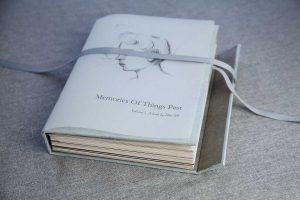
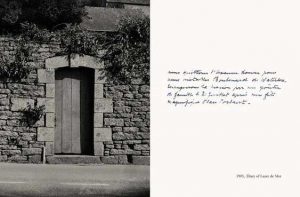
Her work: “Memories of past things” starts in 2015 when he finds an old newspaper at the Brussels flea market.
The author is a woman named Laure Lorthioire-De Mot who tells simple but very interesting stories about her family and their times, crossing four generations between 1872 and 1954, with many letters, images and so on. So Zhen Shi decided to tell this story through an artist’s book.
Zhen Shi, Memories of Things past
Zhen Shi, Memories of Things past
Becoming increasingly interested in the history of this family can find the great-grandchildren of Madame Laure and in particular comes into contact with Christine with whom he is organizing the creation of the second volume of the book.
Exhibitions: 01/2017 – Festival Circulation(S), Paris France 01/2017 – Espace Emergency,Vavey, Switzerland 10/2016 – Les Confrontations Photo, Gex, France 09/2016 – Photobook Week Aarhus, Aurhus, Denmark 09/2016 – Gucang Contemporary photo gallery, Lanzhou, China 08/2016 – Art Book in China abcf Art Book Fair, Shanghai, China 07/2016 – BYOPaper, Night Of the year, Les Recontres d’Arles, France 07/2016 – White Gloves Corner with Leboudoir 2.0, Arles, France 07/2016 – The 2016 Book Awards, Les Recontres d’Arles, France 04/2016 – Three Shadows Photography Art Center, Beijin, China 11/2015 – Lianzhou Foto Festival, Canton, China 08/2012 – The 1st Joint Exhibition of China Outstanding Graduation Design Works, Shanghai, China 07/2012 – Galerie Arlatino, Arles, France