Categories
当代

当代 | 艺术家蒋鹏奕:城市景观里的时间痕迹

Jiang Pengyi was born in 1977 in Hunan, China. He attended the Beijing Institute of Art and Design, from which he graduated in 1999. Using photography as a catalyst for his carefully constructed scenes he captures uncertain stories that inspect the socio-political landscape that surrounds him.In fact, through photography it responds to the changing social, political and physical scenarios of China.

Jiang Pengyi

Jiang Pengyi is interested in the passage of time and its effects on society; he is particularly interested in the transformation of Beijing’s urban landscape and the possibilities of how it will be in many decades. His process of artistic creation often involves time-lapse photography and the gradual destruction of his material, while trying to eliminate the proof of the artist’s hand.In his series “Unregistered City” (2008-2010), Jiang Pengyi comments on the human condition by collecting miniature buildings together in desecrated landscapes – abandoned houses, lots of rubble – and by photographing the scenes.

Jiang Pengyi - Unregistered City
Jiang Pengyi – Unregistered City

Referring to 1,000-year-old landscape paintings and contemporary events in China, these photographs create complex and carefully constructed messages that take place as novels.

Jiang Pengyi - Unregistered City
Jiang Pengyi – Unregistered City
Jiang Pengyi - Unregistered City
Jiang Pengyi – Unregistered City

Starting from photographs related to urban landscapes and digital manipulation in his early works, Jiang goes on to reflect on a micro and introspective vision of inanimate objects that he represents through images of surreal views in the intrinsic light that exists in everyday objects and illuminate the traces left by existence of objects over time.
The existence of objects seems peculiar because it is illuminated by their splendor, their image and family function disappear. This disappearance of image and function seems to suggest a sort of destruction of our common association with objects, while the artist tries to reveal the independent existence of each object.

Jiang Pengyi - Objects Illuminated
Jiang Pengyi – Objects Illuminated

In a slightly later series of works, “Everything Illuminates” (2012), Jiang experiments with fluorescent powders and melted wax to create luminescent objects that radiate light, acting like miniature stars. Pour this mixture of wax and fluorescent powder onto the objects and photograph the substance using a long exposure. In the resulting images, the original functions of the objects are erased, leaving the viewer with a sense of destruction.

 Jiang Pengyi - Everything Illuminated
Jiang Pengyi – Everything Illuminated
 Jiang Pengyi - Everything Illuminated
Jiang Pengyi – Everything Illuminated
 Jiang Pengyi - Everything Illuminated
Jiang Pengyi – Everything Illuminated

Exhibitions:
2008 – “Que Vive?” Moscow International Biennial for Young Art, Moscow, Russia.
2009 – “Cheng Ran & Jiang Pengyi: Immersion and Distance”, Ullens Center for Contemporary Art, Beijing, China
2010 – “The butterfly effect”, He Xiangning Art Museum, Shenzhen, China
2011 – “Be natural Be yourself”, Frac des Pays la Loire establishes Regional d’Art Contemporain, Nantes, France
2012 – “No Exit – Urban Space”, Biennial of photography in Helsinki, Helsinki, Finland
2012 – “Architekturfotografie – Made in China”, MAKK, Köln, Germany
2013 – “REVEL,” Museum of Contemporary Art, Shanghai, China
2014 – “Chinese Contemporary Photography: 2009-2014”, Minsheng Art Museum, Shanghai, China
2015 – “Asia unfamiliar: the second biennial in Beijing”, CAFA Art Museum, Beijing, China
2015 – “China 8 – Contemporary Art from China on the Rhine and the Ruhr”, Museum Lehmbruck, Duisburg, Germany
2015 – “China 8 – Contemporary Art from China on the Rhine and the Ruhr”, Changjiang International Biennial of Photography and Video,
2015 – “China 8 – Contemporary Art from China on the Rhine and the Ruhr”, Chongqing Changjiang Museum of Contemporary Art, Chongqing, China
2016 – “Ghost in Flash: After Photography”, Taikang Space, Beijing, China
2016 – “The Shadow Never Lies”, Shanghai 21st Century Minsheng Art Museum, Shanghai, China
2016 – “The Shadow Never Lies”, Art Basel, Hong Kong
Jiang’s work has been awarded with several awards, including the Aletti Art Prize for Photography (2011), the Jury Grand Prize from the Société Générale Chinese Art Awards (2010), and the Three Shadows Photography Award (2008).

References:
https://www.artsy.net/artist/jiang-pengyi
http://www.shanghartgallery.com/galleryarchive/artists/name/jiangpengyi
https://blindspotgallery.com/artist/jiang-pengyi/
http://www.aikedellarco.com/artist.php?id=141

Categories
当代

Contemporary | China New Video Multimedia Exhibition- Anren 2018.5.13-2018.6.10

China New Image: New attitudes since 2010

Exhibition Date: 2018.5.13-2018.6.10
Opening hours: 9: 00-17: 00 (closed on Monday)
Venue: Anren Overseas Chinese Town Creative Culture Park
Exhibition address: No. 319, Section 2, Yingbin Road, Dayi County, Chengdu City, Sichuan Province

Qiu Anxiong’s “San Shan Hai Jing San” Ink Animation 30’00 ’’ 2017

On May 13, 2018, “China’s New Image: New Attitudes Since 2010” will open at Anren Overseas Chinese Town Creative Culture Park. The exhibition was led by Lu Peng as chief curator, and Lan Qingwei, Shi Yuling and Song Zhenxi were co-curators. They invited nearly 30 video artists from all over the country to participate, hoping to present China through 2010 through the exhibition. The new attitude shown in the image.

《Nimbus 2015》 施政 13’51” 2015
Yu Guo “Telephoto Photographer” Digital Video 10’15 ’’ 2017
Tian Xiaolei “Creation” Single Screen Video 5’30 ”2015
Cheng Ran “The Diary of a Madman: New York” color and sound Single-screen HD video

Categories
当代

Zhen Shi is a French-Chinese visual artist born in Shandong on September 9, 1989 in northeastern China.

She lived for some in Beijing and Angers and subsequently started working as a photographer after completing his studies in Paris.

The work of Zhen Shi, combines storytelling and artistic aesthetics, focusing on various topics, including the intricate relationship between reality and memories, issues of personal identity, sociological documentation and even the changing landscape of his land.

She has produced a diverse series of works composed of photographs, artist’s books and videos and the most important works are “Kwei Yih” and “Memories of past things”.

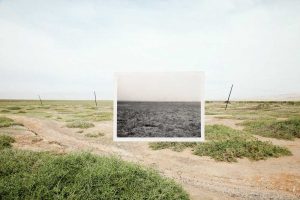
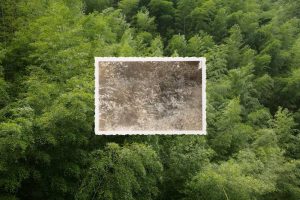
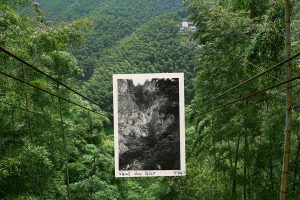
Her “Kwei Yih” series is a project deeply rooted in his personal experience.

Zhen Shi explains: “After many years of wandering away from home, I found myself falling into a state of anxiety and impotence, trying impatiently to regain a sense of belonging”.

Zhen Shi, Kwai Yhi.
Zhen Shi, Kwai Yhi.

“I started this project in 2012, when I had to choose a future. But I do not understand why we need to choose so many things at such a young age. I flew to the north-western border of China, where no one knows me. A year later, I went down to the southwest border when I tried to redefine something – where I am and where I’m going. In the end I realized that all the things I was looking for in these years, in reality, is how to accept “oneself” as part of “existing” when questions about identity and all kinds of nostalgia come to embrace me. In this sense, Kwei Yih is not only a journalistic record of my long road, but also a work on memory, imagination and self-comfort. “

Zhen Shi, Kwai Yhi.
Zhen Shi, Kwai Yhi.

“All the encounters turn in life by unbelievable probability and they all pass by. Memories will fade, and with age even faster than a photo paper. But, whenever I think I can forget them, there are always some frangments which recall the subtle habits of someone, or a few isolated words and phrases. And that is what I want to keep.”

Zhen Shi, Kwai Yhi.

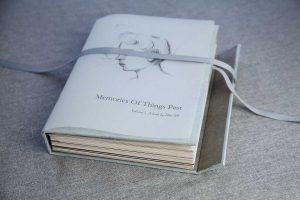
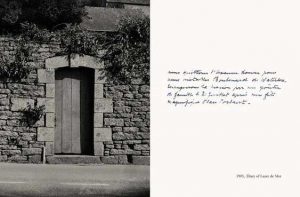
Her work: “Memories of past things” starts in 2015 when he finds an old newspaper at the Brussels flea market.

The author is a woman named Laure Lorthioire-De Mot who tells simple but very interesting stories about her family and their times, crossing four generations between 1872 and 1954, with many letters, images and so on.
So Zhen Shi decided to tell this story through an artist’s book.

Zhen Shi, Memories of Things past

Becoming increasingly interested in the history of this family can find the great-grandchildren of Madame Laure and in particular comes into contact with Christine with whom he is organizing the creation of the second volume of the book.

Exhibitions:
01/2017 – Festival Circulation(S), Paris France
01/2017 – Espace Emergency,Vavey, Switzerland
10/2016 – Les Confrontations Photo, Gex, France
09/2016 – Photobook Week Aarhus, Aurhus, Denmark
09/2016 – Gucang Contemporary photo gallery, Lanzhou, China
08/2016 – Art Book in China abcf  Art Book Fair, Shanghai, China
07/2016 – BYOPaper, Night Of the year, Les Recontres d’Arles, France
07/2016 – White Gloves Corner with Leboudoir 2.0, Arles, France
07/2016 – The 2016 Book Awards, Les Recontres d’Arles, France
04/2016 – Three Shadows Photography Art Center, Beijin, China
11/2015 – Lianzhou Foto Festival, Canton, China
08/2012 – The 1st Joint Exhibition of China Outstanding Graduation Design Works, Shanghai, China
07/2012 – Galerie Arlatino, Arles, France

References:
http://www.shi-zhen.com/accueil
http://photographyofchina.com/blog/zhen-shi
http://confrontations-photo.org/2016-zhen-shi/
https://www.facebook.com/zhen.shi.31
https://www.youtube.com/watch?v=jQmCBUde9Vg
https://www.galerie-circulations.com/collections/zhen-shi

Categories
当代

In March 2018, the talented Chinese illustrator and winner of the Best Child’s Book of Taiwan Open book Award, Xiong Liang has held his first speech in academy of fine arts of Brera in Milan,  sharing his reflections from the 40-year career with students and teachers from all over the world.

Artist Xiong Liang

In resent years the artist has drawn a lot of public attention with his unique illustration works. This time, however, he came here only to talk about his practices and insights about Chinese traditional art.

Starting to create Chinese paintings from childhood, Xiong Liang has been painting for more than 40 years, Despite of the long career he has, he claimed at the beginning of the speech that he has learned even more during his Kung Fu training in the latest two years than all that he had in the practice of painting. The “empty” mentioned in the field of Kung Fu, is a status with the forgotten self, in art, that means to forget about what I want and what I think, but to concentrate on the perception of surroundings, entering into the synesthesia.

ARTBAIGUAN: How do you deal with the contradiction between the huge frame of Chinese traditional painting formed long history and the extremely individualized expression of contemporary art?

Xiong Liang: In Chinese traditional art, the regular has always been emphasized, the artists needed to evaluate their works in a given standard. I think it profit us to stay in the contradiction. because we must try to overcome it, and then we can see where it comes from and what its nature is. For example, we can understand that the gap between Chinese traditional art and Chinese contemporary art is a result of many historical problems, when we observe it from different point of views we will be able to find our way to continue, that is to say that we actually find our motivation to go forward. What’s more, many think that Chinese traditional art has a calm, elegant feature, like my work about round solar terms, for example. But I want to break the stereotype, so I made some really crazy and emotional paintings to abandon the solidified artistic language, in the meantime insert in my own characters. I strongly agree on the opinion that one should decisively abandon all that you don’t agree, the rest is the only thing that touches you.

The Little Stone Lion

ARTBAIGUAN: Could this be considered as your personal distinctness found in the situation of contradiction?

Xiong Liang: I think so. And I think that there’s always the possibility of new idea, it’s just that Chinese artists sometimes tends to be trapped by predecessors. So there’s no pointing in thinking about being creative, what we need is to escape from the existent regular and soon you will find a wild world. For example in my study of Chinese painting, when I could open my heart, remaining opened and relaxed, I was able to receive any sensation, much more than that gained from the ivory tower of the tradition.

ARTBAIGUAN: In your experience of studying Chinese painting, how do you choose from remaining and abandoning?

Xiong Liang: To abandon doesn’t mean to refuse traditional sentiments and techniques. For example, I admire poems from Tang and Song Dynasty very much, but it doesn’t seem to me the most sophisticated form of art, because they show personal ambitions of those poets in certain eras, without having a vast vision. However, the Pre-Qin period culture is totally different: when people talked about music, they were talking about the art of music itself, without using metaphors toward their ambitions and political career, the latter ones concerned only their own staff and were eventually limited by their dynasty and era. In other words, the Chinese art need to find its own way.

Illustration from Xun An Ji

ARTBAIGUAN: Then what do you think is the essential point that remans?

Xiong Liang: The essential point are, no doubt, the line drawing and stylized expression of shade and texture.

ARTBAIGUAN: What is your personal opinion toward the education of Fine Arts in China?

Xiong Liang: The primary education of Fine Arts in China still needs some improvements, for example, its direction and destination is not yet clear. I gave lectures in the China Central Academy of Fine Arts and other academies where I met students majored in Chinese traditional painting that should study western painting basics in the first years. Testing students’ skills of sketch and color has been considered to be an innovative way to improve their general abilities in painting in the early years, but we need to realize that this teaching method is extremely far away from Chinese traditional painting. What I want to say is that every art has its special system, one can never mix with another. I am trying to find a new way of teaching, working with my students.

Illustration from 24 Solar Terms

ARTBAIGUAN: How did you start your work of illustration for children?

Xiong Liang: There are two main reasons. One is that about 15 years ago there was little picture books in the Chinese market, and those combined with oriental features were even less. I was brought up in a Christian family so at the beginning my works were full of western figures, but since I learned Chinese traditional painting from childhood, I decided to interprete Chinese fables and legends using illustrations. Another reason is that I found a brand new way of expressing myself which always brings me inspiration and delight, its something that I called illustrated poems and from it I can see the changes of my way of thinking.

ARTBAIGUAN:What’s the different characteristics of illustration compared with making art works?

Xiong Liang: Making illustration can hardly fulfill my desire of painting, certainly. You can easily understand it looking at my artworks with totally different styles. So I pay more attention on the storytelling when making illustration, taking myself temporarily out of the status of an artist.

Beijing Opera Cats

ARTBAIGUAN: What’s your opinion of the exploration of Chinese art’s contemporary characteristics and expressions?

Xiong Liang: There are many Chinese artists working on this topic, but each has his own point of view. To talk about myself, I don’t belong to any given identity: contemporary art or illustration, what I really care about is the future of Chinese culture, how it will become and how it influences our life. Because my artworks have strong Chinese style, this question is indispensable for me. Before talking about cultural identity, it needs to find its unique form of expression in contemporary art, commerce and mass culture like cinema, theatre, picture book and novels, making it possibile to communicate to the outside world. Those can be communicated are culture, those not become traditions, the latter ones can be a bridge in learning and communicating with other cultures, but its not our destination.

Illustration from Xun An Ji

Categories
当代

Feng Li – White Night 2017

Dates: 25.4.2018-10.6.2018
Opening hours: 10:30-18:30(closed on Mondays)
Location: Thousand Plateaus Art Space
Address: 3-5 Southern District, Tiexiang Temple Riverfront, 699 First Tianfu Street, High-Tech Development District, Chengdu, China

White Night Series

Feng Li once said that he could never go outdoors without his camera, cause walking without it makes him think that he will probably miss some special moment. At the beginning of his career he thought that it was him that has always tried to find something, but eventually those tiny spots of life seem to come to him voluntarily. This may explain why Feng Li’s work has a natural feature which means not intended, and is full of unplanned coincidences. He keeps catching the ignored moments existing in the streets of Chengdu, and since he takes photos with flash, his works is considered to record ordinary daily life in a weird way.

White Night Series

Thousand Plateaus Art Center has proudly announced the opening of Feng Li’s personal exhibition White Night 2017 on Aprile 25th. White Night is Feng Li’s first and only series of works from the beginning of his career.

White Night Series
White Night Series
White Night Series

(Images from Internet)

Categories
当代

The Only Question Is How to Endure. Works from Towards Evenings: Six Chapters

Dates: 10.3.2018-27.5.2018
Opening hours: 10:00-17:00(closed on Mondays)
Location: OCAT Xi’an
Address: Beichitou 1st Road, Yanta District, Xi’an, China
Website: official web page

The Only Question Is How to Endure180*180*10cm 2012-2017

Since 2012, the artist Chen Zhe has started her long term project Towards Evenings: Six Chapters, talking about individual inner feelings toward the surroundings, especially confusions and fears upon the unknowns occurred when one looking at the dusk. In fact, Chen Zhe has already begun to discover the human inner perceptions in her early works. Behind those pain, fright and indulgence, according to Chen Zhe, there is something beautiful, or precisely, they all mix together one and another. And this is the feature of all the works from Towards Evenings: Six Chapters.

Chen Zhe Timing Installation 2017

This exhibition presents works of different materials and media like photography, archiving pictures and installations, in which one video will be exhibited the first time.

Chen Zhe was born in 1989, graduated from Art Center College of Design in 2011, now she lives and works in Beijing. Her works have been exhibited in the 11th Shanghai Biennale, in Sadie Coles Gallery in London, Ullens Center for Contemporary Art in Beijing and Minsheng Art Museum in Shanghai. She has received Kassel Photobook Award, Inge Morath Award from Magnum Foundation and has participated in the shootings of documentary films of the French channel ARTE and Japanese channel NHK.

SaveSave

SaveSave

Categories
当代

Xie Nanxing: Spices

Exhibition Date: 2018.3.17-2018.5.27
Opening time: 10: 00-19: 00 (closed on Monday)
Exhibition location: Ullens Contemporary Art Center Yongdao, promenade, middle exhibition hall
Exhibition address: No. 4 Road, 798 Art Zone, No. 4 Jiuxianqiao Road, Chaoyang District, Beijing Ullens Center for Contemporary Art
Exhibition website: official website

Xie Nanxing Spice One 220 × 300cm oil on canvas 2016

The exhibition presents the audience with the seven paintings created by artist Xie Nanxing in the past two years, which is different from the works in the early stage of his creative career. The works in this exhibition focus on abstract expressions.

Xie Nanxing Spice 2 220 × 300cm oil on canvas 2016

Xie Nanxing was born in 1970 and graduated from the Printmaking Department of Sichuan Academy of Fine Arts in 1996. His works participated in the 12th Kassel Document Exhibition, the 48th Venice Biennale and other famous art exhibitions. He usually completes only 5 to 6 works per year, because he believes that everything is based on speed in the fast-consuming era, and he hopes to resolve the anxiety behind this speed in a slow manner.

Xie Nanxing does not advocate the special literary nature of the painting. “I hope that everyone who walks in the progress hall is equal to my work. The artist does not absolutely have the right to interpret the painting.”

Xie Nanxing Spice 4 200 × 300cm oil on canvas 2016

(Pictures from ucca.org.cn)

Categories
当代

Watching the Clouds Go By: Liang Quan’s Creative Style and it’s Changes

Dates: 10.3.2018-29.4.2018
Opening hours: 9:00-17:00(closed on Mondays)
Location: Hive Center for Contemporary Art
Address: 1-5 Block A4, North Zone OCT·Loft, Nanshan District, 518053 Shenzhen, China
Website: official web page

The Hive Center for Contemporary Art in Shenzhen has held the opening ceremony for its first exhibition of the year 2018 Watching the Clouds Go By: Liang Quan ‘s Creative Style and it’s Changes on March 10th 2018. This is the fifth solo exhibition of the artist Liang Quan in Hive Center, which will present to the audiences the artworks created in different periods of the artist’s career with various topics. The works exhibited are organized according to timeline, aiming to show the whole process of the development of Liang’s aesthetics through comparisons between various artistic styles, themes and creating technics.

Born in the 1940s, Liang Quan has gone through the “Cultural Revolution”  during his adolescent years and has been one of the first students who studied abroad and stepped into the field of post-expressionism. His historically featured personal experience has brought to his artworks both the visual elements from oriental and western culture, as we can always see the Chinese philosophy and cultural characters hidden behind the  form of western abstractionism, creating in this way an unique artistic language that distinguishes itself from the two cultures but perfectly mixes both of them.

(Images from hiveart.cn)

Categories
当代

当代 | 云南青年艺术家展 – 昆明当代美术馆 昆明 2018.3.3-2018.4.7

Notes on Region

Dates: 3.3.2018 – 7.4.2018
Opening hours: 10:00-18:00(closed on Mondays)
Location: Contemporary Gallery Kunming
Address: Park 1903, Qianwei West Rd., Kunming, China
Website: official web page

On March the 3rd 2018 Contemporary Gallery Kunming has held its opening ceremony and in the meantime has been proud to announce its inaugural exhibition Notes on Region, opening on the same day, in which 10 artists will present their artworks, they are Cheng Xinhao, Guo Peng, He Jing, He Da, Li Donghai, Li Gang, Li Rui, Su Jiaxi,  Yan Junjie and Ye Funa. By presenting artworks created by these young artists born since 1980 who grew up o work o live now in Yunnan Province, the exhibition aims to deconstruct the word “region” through lenses of cultural diversity, geographic history and contemporary vision, and tries to reconstruct its notion by different means ranging from abstract and concrete, to formal and conceptual. The distinguishing point of the exhibition is its multidisciplinary nature, namely a combination of the field of humanity, natural science and conceptual art.

Among the participated artists, some have already got achievements in there career, for example Li Gang has held a solo exhibition in Galerie Urs Meile Beijing in 2013 who’s representative work is Preyer Beads (397 pieces 2012) and many others; Cheng Xinhao received his PhD on Chemistry from Peking University in 2013, working as an artist now, he investigates on the issues in the modernization, the construction of knowledge as well as the production of space in Chinese society, and in 2017 his solo exhibition Time from Different Sources: Images from Ciman Village was held in Jiazazhi Gallery in Ningbo, China.

(Images from Internet)

Categories
当代

当代 | 朱金石个展 – 当代唐人艺术中心 北京 2018.3.10-2018.4.30

Zhu Jinshi – The Ship of Time

Dates: 10.3.2018-30.4.2018
Opening hours: 11:00-17:30(closed on Mondays)
Location: 1st Gallery Space, Tang Contemporary Art
Address: D06, 798 Art District,No.2 Jiuxianqiao Road Chaoyang District, Beijing, China
Website: official web page

The artist Zhu Jinshi’s dual solo shows Ship of Time and Rejecting River Currents will be opened in the  two spaces of Tang Contemporary Art on March 10, 2018. Based on the unique architecture of both of Tang Contemporary’s Beijing spaces, these parallel exhibitions will present important works of installation and the artist’s unique “thick paintings.”

In space I The Ship of Time rice paper installation uses exactly 14,000 sheets of rice paper, 1,800 pieces of fine bamboo, and 2,000 cotton threads seven meters long. This summer, the team returned to the ancient villages on Yellow Mountain to develop fireproof rice paper and choose bamboo. Later in the Songzhuang studio, several months were spent shaping the rice paper, baking the bamboo straight, making holes, and cutting three-meter sections. The works were designed specifically for the space, and the two massive beams on the ceiling bear the weight of the suspended installation.

(Transferred from www.tangcontemporary.com)