Categories
在博物馆 传统 典藏故事 古代

Dougong Museum | Pagoda of Fogong Temple: The World’s Three Greatest Towers

The Sakyamuni Pagoda of Fogong Temple is the world’s oldest, best-preserved and tallest surviving pure wooden structure in the pavilion style. It is also known as the “Dougong Museum”.

In November 2012, The Sakyamuni Pagoda of Fogong Temple was included in the preparatory list of China’s World Heritage Sites. With the Leaning Tower of Pisa, Italy, the Eiffel Tower in Paris and called the world’s three major towers.
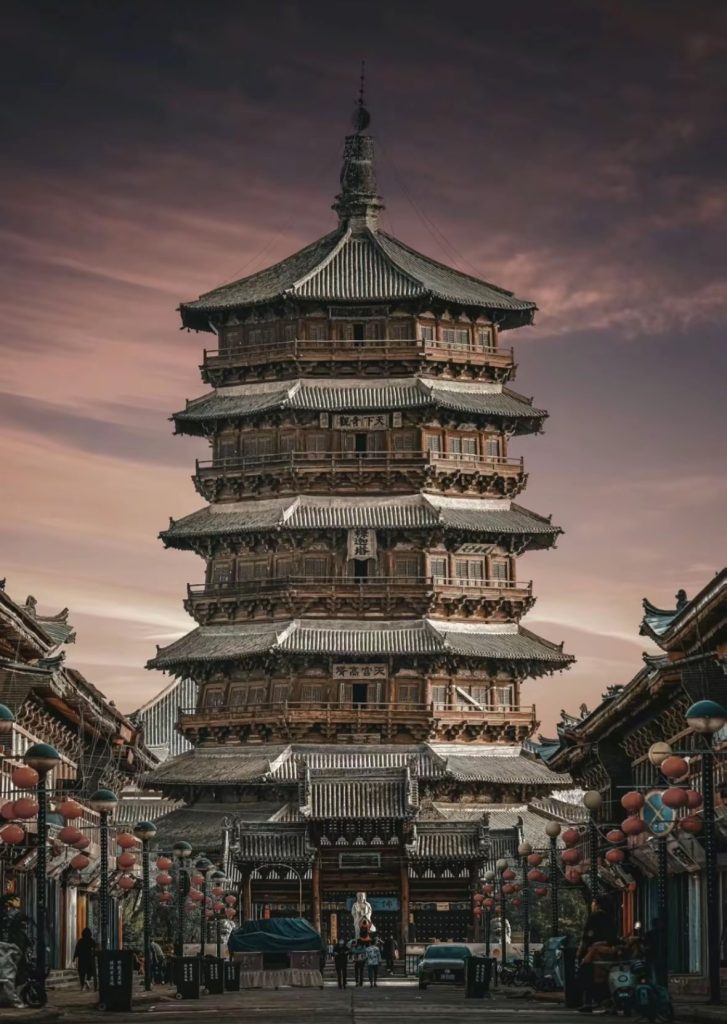
pagoda

The total height of the Shakyamuni Pagoda 65.838 metres, the plane is octagonal, three rooms on each side.

Pagoda has a total of five layers of bright layer, four layers of dark layer. That is to say, if visitors from the outside look at the bright surface is visible as five layers, while the actual number of layers can be counted inside is nine.

The entire pagoda is constructed of wood and mortise and tenon joinery, a traditional Chinese wood craft.
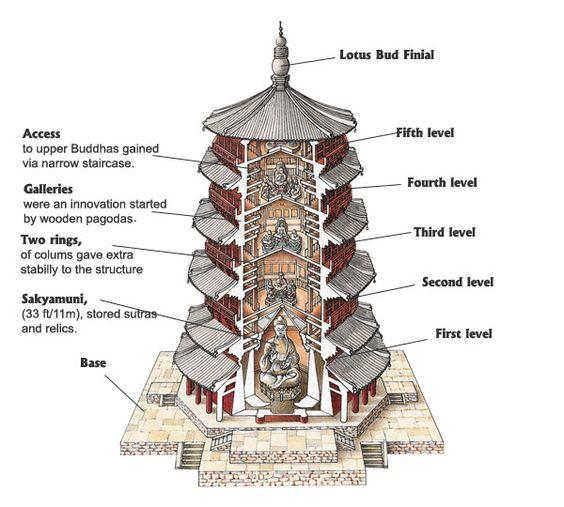
Diagram of the internal structure of the padoga

Craftsmanship of Sakyamuni Pagoda

Sakyamuni Pagoda was built as a purely wooden pavilion-style pagoda. Its architectural design inherited after the Han and Tang dynasties(202 B.C. to 907 A.D.), rich in national characteristics of the heavy building form.

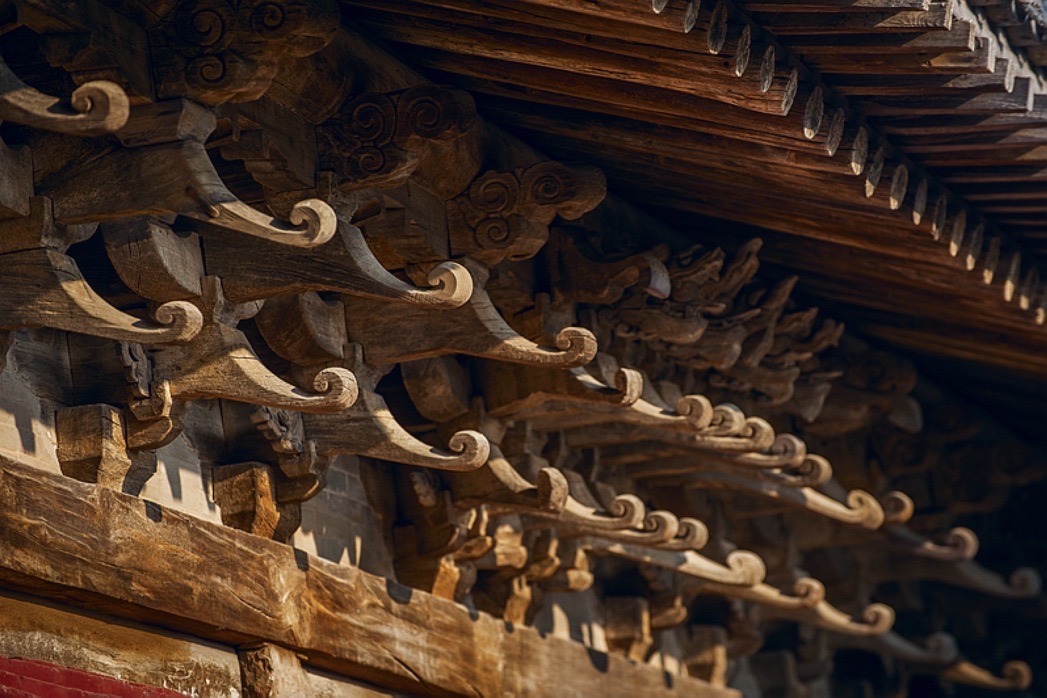
At the same time, it makes full use of the traditional ancient techniques and uses a large number of dougong structures. The whole pagoda has 54 kinds of Dougong, and each dougong has different combinations of forms. Each layer forms an octagonal hollow structural layer.

Dougong (a system of brackets inserted between the top of a column and a crossbeam) is one of the moset important characteristics in traditional Chinese architecture.
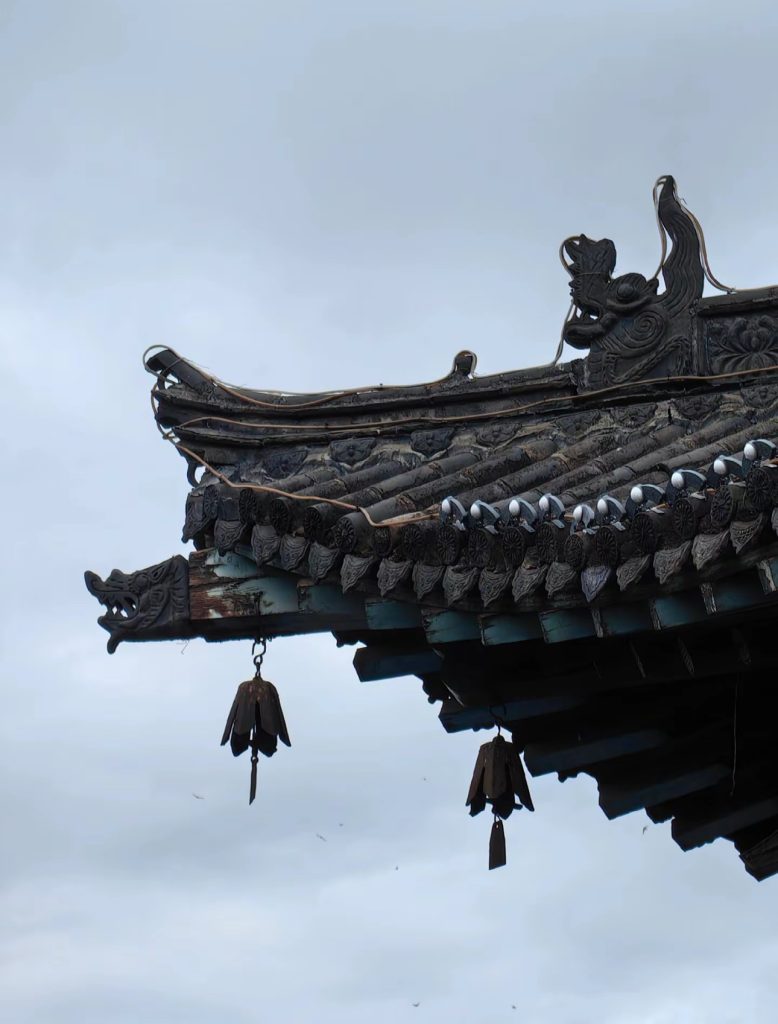
dougong

The design of Shakyamuni Pagoda is so precise that it has the reputation of being a masterpiece of craftsmanship. Overall, the Sakyamuni Pagoda manages to incorporate both traditional Chinese ethnic features and Buddhist religious culture.

Traditional Chinese Wooden Building Technology–Mortise and Tenon

Firstly, Mortise and tenon is the joining structure of Chinese woodwork. The protruding part is the tenon and the recessed part is the mortise. The tenon and the mortise connect closely with each other to get a stable structure.

Further, Mortise and tenon is one of the essential skills of Chinese carpenters, usually for making ancient furniture or constructing ancient buildings. The mortise and tenon joints do not use nails or glue for a tight and seamless fit.
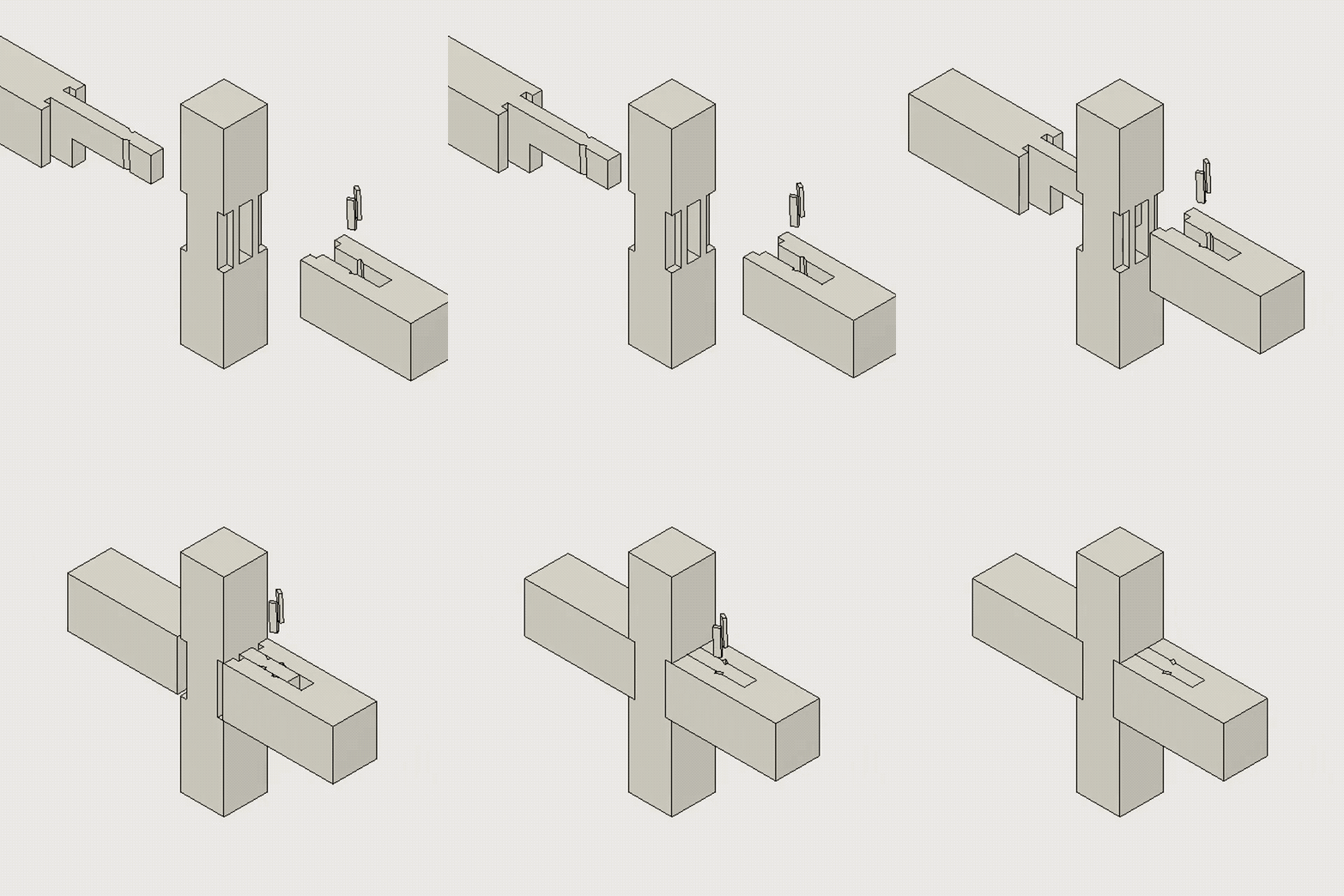
gif of mortise and tenon
Mortise and Tenon

Above all, this is one of the most prominent features of the Sakyamuni Pagoda.

Sakyamuni Pagoda and its cultural heritage

There are 26 statues of Buddha in the Shakyamuni Pagoda. The murals inside the pagoda are all painted, totalling about 646 square metres. A total of 51 plaques and couplets were found in the compartments of the pagoda.

In addition, 160 pieces of cultural relics from the Liao Dynasty (907-1125) were found, including Buddhist scriptures inside the statues, relics of the Buddha’s teeth and statues of the Buddha.
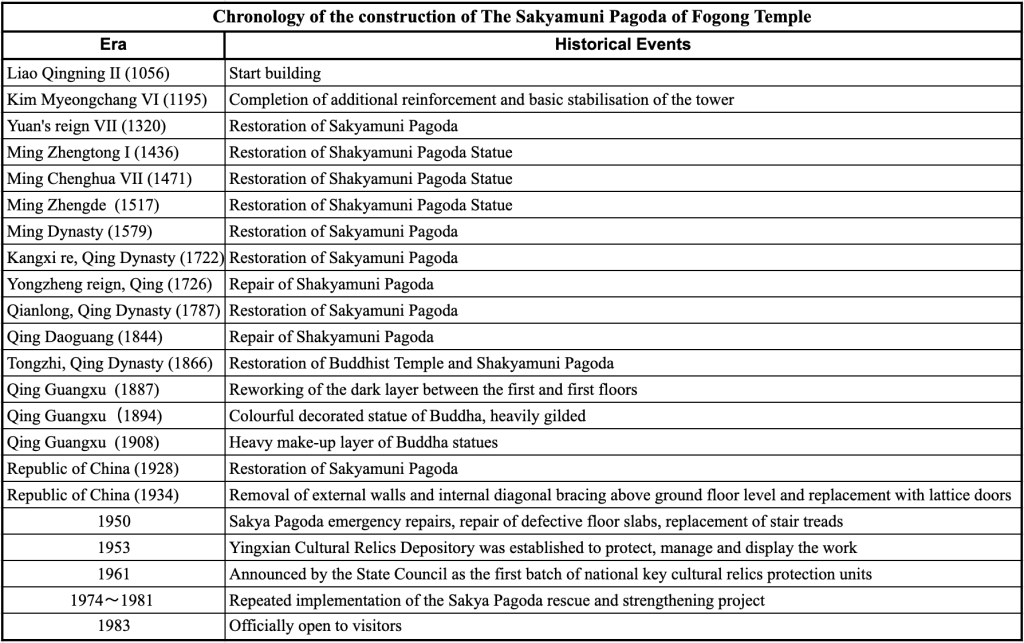
Chronology of the construction of the pagoda

Besides the Liao Dynasty cultural heritage found in the pagoda, there are many and then later generations of repair process added a variety of ancillary cultural relics.

For example, the Ming Wanli years (1579) placed in the tower on the south side of the iron building. Ming Dynasty (1622) built in the bell tower of the iron bell. As well as a pair of iron lions and stone lions built in the Ming Dynasty.

Sakyamuni Pagoda is located in the temple compound of Fogong Temple in Ying County, Shuozhou, Shanxi. There are eight historical sites present in the temple:

  • a wooden pagoda respectively.
  • a bell tower located in front of the Sakyamuni Pagoda and a drum tower.
  • The Sakyamuni Pagoda.
  • The main hall, the Mahamudra Temple.
  • The two ear rooms distributed on the left and right beside the hall.
  • And between the hall and the tower of a pagoda gatehouse.
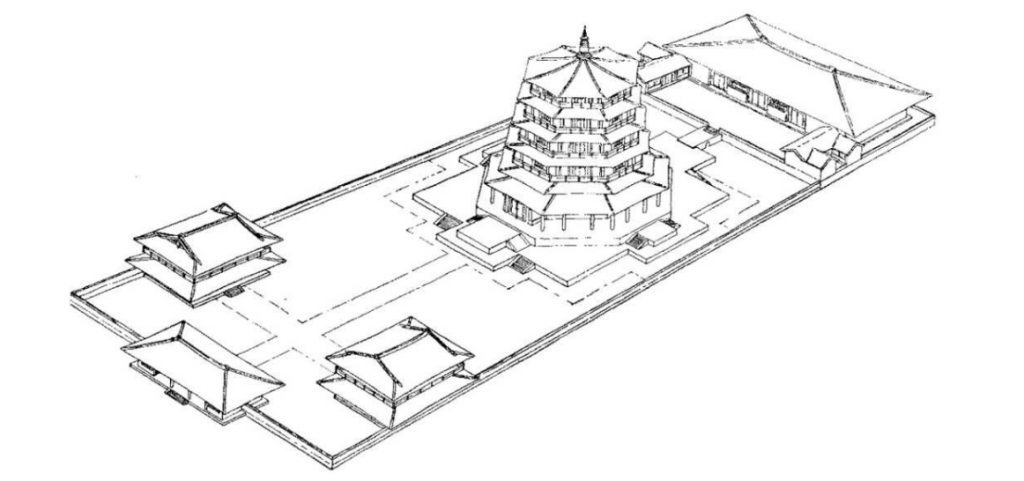
Rendering of the sakyamuni pagoda site
Photo from 《应县木塔》, Chen Mingda

The Discovery of Sakyamuni Pagoda

The pagoda has survived more than 40 earthquakes and more than 200 shellings during the war and is still standing for 1,000 years.

However, the pagoda’s structure has been subjected to a long period of natural environmental aggression and the aging of its components, resulting in the present-day deformation of the pagoda’s structure.

Liang Shih-cheng was a Chinese architectural historian, architect and urban planner.

He devoted his life to the preservation of ancient Chinese architecture and cultural heritage. Likewise, he is the discoverer of the fact that the Sakyamuni Pagoda of Fogong Temple was built in modern times.
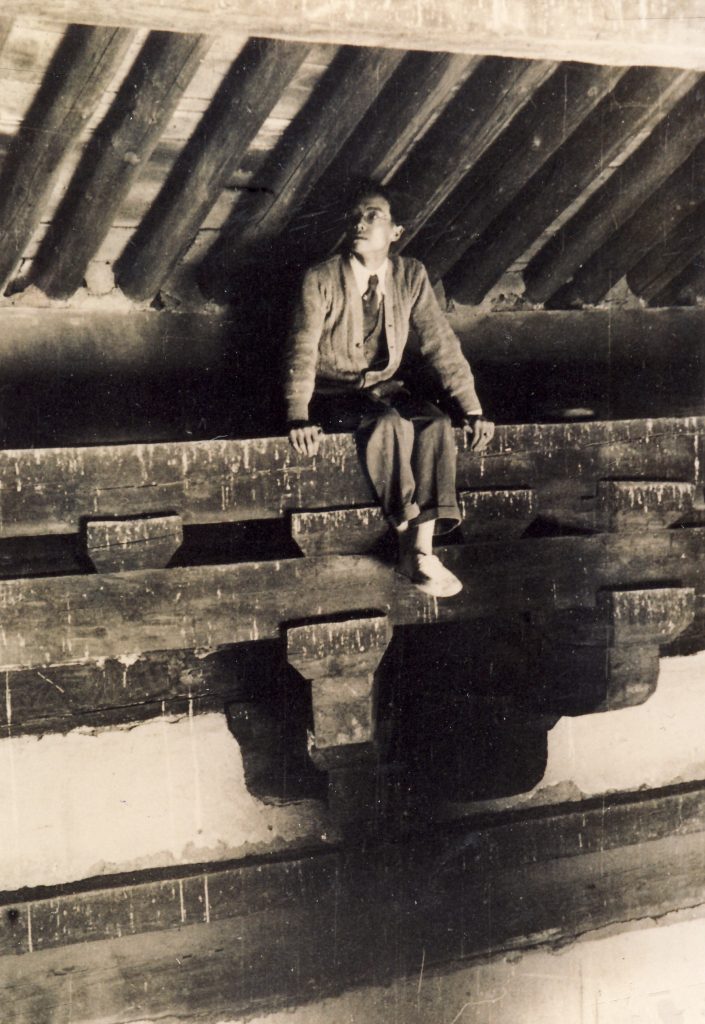
Liang Shih-cheng with the pagoda

Some people have commented that“If Liang Shih-cheng hadn’t found a construction–the Sakyamuni Pagoda in Yingxian County in the 1930s. people couldn’t have understood the content of Yingzao Fashi.”

The ‘Yingzao Fashi’ is China’s first official work detailing the practice of architectural engineering, which clearly records some of the design constructions in the Sakyamuni Pagoda.

In 1932, Liang Shih-cheng came across an archaeological report written by a Japanese scholar about northern China. In this report, this wooden pagoda built in the 11th century was explicitly mentioned.
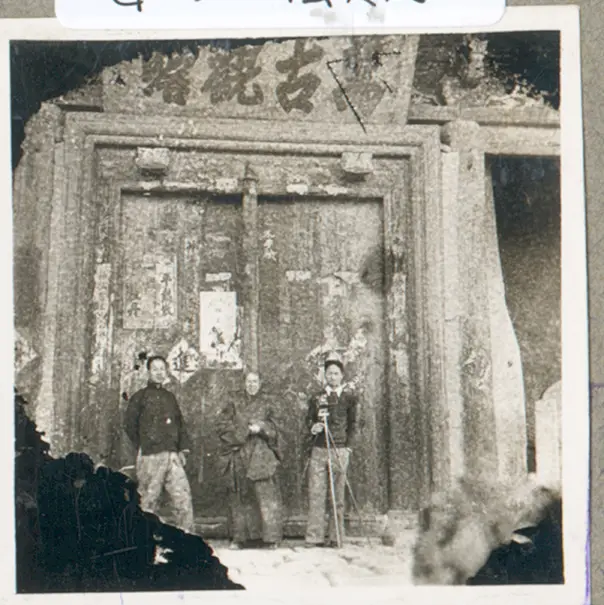
Liang Shih-cheng‘s friend

Thus, based on Liang Sicheng’s search for ancient architecture and his preparation for the compilation of the ‘Notes on Yingzao Fashi’. So there will be the next for the Sakyamuni Pagoda investigation.

After a long period of investigation by Liang Shih-cheng and his friends.To clarify, the most recent hand-drawn drawing of the Sakyamuni Pagoda dates from 1935.
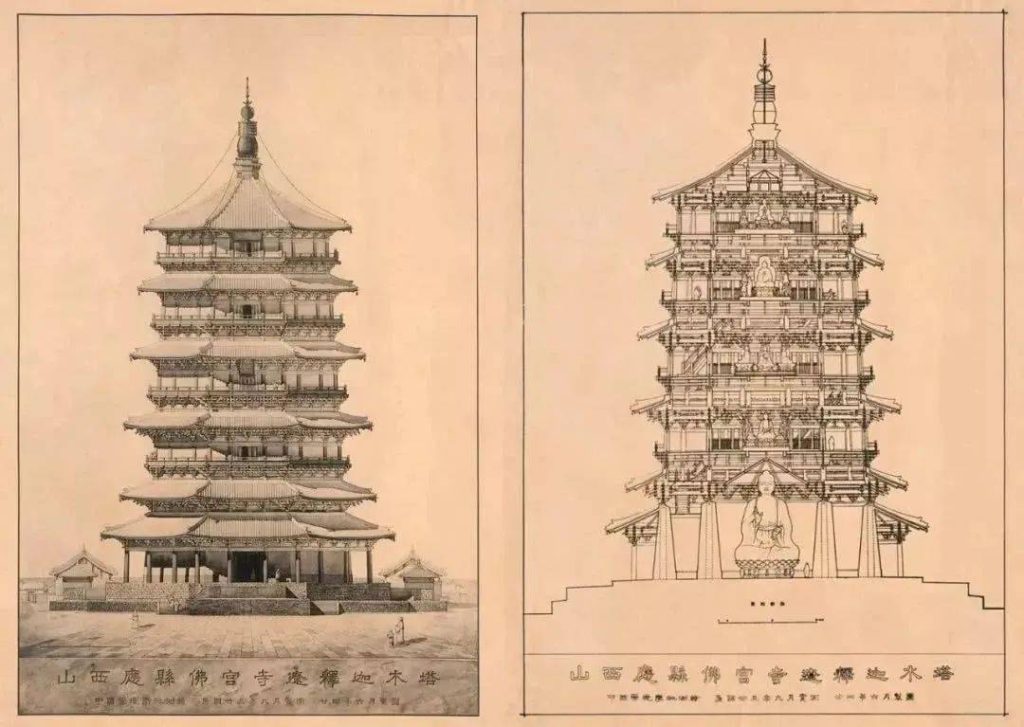
Hand-drawing of Sakyamuni Pagoda by Liang Shih-cheng

This hand-drawing and the content of the investigation for the present for the study of the Shijia Pagoda is of great significance.

Sources

Liu Yan, A Translation Report on Sakyamuni Pagoda, Fogong Temple

Huang Xiaoshu, Study on Integrated Conservation of The Sakya Pagoda of Fogong Temple in Yingxian,Shanxi Province

Image source National Geographic China

Chen Mingda, Yingxian Muta

Other image source Internet and thesis
Categories
Museums 在博物馆 传统 典藏故事 古代 纵观艺术

National Museum of Classic Books | Zhenguan – Li Shimin and His great Tang dynasty
“Zhenguan – Li Shimin and His great Tang dynasty” is on view from May 1, in the National Museum of Classic Books. A total of 15 museums were selected to exhibit 249 exhibits in 140 groups.

The exhibition presents to the public the reign of Emperor Taizong Tang, the second emperor of the Tang dynasty. The Tang Dynasty (618-690, 705-907) was one of the most powerful countries in the world at that time. It had a strong state and a prosperous economy. It also had an active open-door policy, and you could see many Western faces on the roads.

post of this exhibition

Emperor Li Shimin, considered the founder of the Tang Dynasty along with his father, was one of the greatest emperors in Chinese history. During his reign, there was unprecedented political, economic and cultural development.

He took advice with an open mind, appointed wise ministers, knew people well, implemented new policies, and thought of danger in times of peace. And laid a solid foundation for the later flourishing Tang Dynasty. As a result, this created the “Reign of Zhenguan”, the famous peaceful era in Chinese history.

Tang Dynasty Street Scene Drawing

This exhibition takes Li Shimin’s growth path as the baseline, and shows the public his way of governance and an aesthetic feast that belongs to the great Tang dynasty.

In this exhibition, we can see many artifacts from the canonical collection.

Stone-carved Sogdian Whirl Dance Tomb Gate

The stone carvings of the Sogdian Whirl Dance Tomb Doors were discovered in 1985 and collected in the Ningxia Museum. And the front of these two stone doors is very smooth. In addition, each of their surfaces there is a shallow carving of a male dancer who is dancing.

Stone-carved Sogdian Whirl Dance Tomb Gate of Tang

The Tang Dynasty was the heyday of music and dance culture, many artifacts related to music and dance were unearthed. On this set, two male dancers are characterized by curly hair, beard, deep eyes and high nose, and both holding a long scarf to dance. In other words, they are very obvious “Hu”(people).

From this set of artifacts, we can get a glimpse of the openness of the society and cultural tolerance at that time. Moreover, Sogdian Whirl Dance is a famous dance of the Northwest ethnic minorities. It vividly demonstrates the image of the Hoho dance that flourished in the Tang Dynasty 1300 years ago. And it also shows the great integration of ethnic groups in the Tang Dynasty.

Sogdian Whirl Dance of Tang

Gilt silver jar

The Gilt-silver jar was discovered in the tomb of Prince Zhanghuai and his wife, the grandchildren of Li Shimin. The gilt-silver jar is 37.5 centimeters high, with a maximum belly and neck of 12.8 centimeters, and weighs 1.5 kilograms. Further, the handle of the jar is cast as a deep-eyed, high nose with helmet-shaped cap of the human head, the body of the jar is decorated with mainly relief images of figures. These images of figures form a serialized story in the Greek style.

Glit silver jar of Tang

Gilt-silver jar originally belonged to the Persian dynasty of drinking vessels, made in the Bactria region of Central Asia during the Sassanian era. Therefore, the shape of the jar is completely in the style of Sassanid gold and silver. However, the figure of a human head on the handle of the jar is different from the Sasanian Persian figure, which belongs to the Bactrian region of Central Asia.

This Sasanian style piece is a strong evidence to show the world the cultural exchanges between China and the West through the Silk Road. In Chinese ancient texts, the term “Hu bottles” is used to refer to artifacts that came from Western countries. Overall, the Gilt-silver jar is the most representative of the “Hu bottles”.

Hu people/Statuetta of Hu people

The tombstone of Yuchi Jingde

The tombstone is now collected in Zhaoling museum. Its body stone color crystal, detailed carving, square, each side 1.2 meters wide, 0.25 meters thick. And this is the mausoleum excavation of the mausoleum of zhaoling garden in the largest one.

The carving on it for lonicera multi-branched lotus trailing grass and twelve zodiac statues. It is carved on all four sides of the Baoxiang flower pattern. And engraved with five lines of white calligraphy, five characters in line.

The text is “the late Datang Situ and the state governor on the pillar state Eguo Zhongwu Gong Yuchi Fujun epitaph of the tomb”.

Topography of the tombstone of Yuchi, Tang generals.

Yuchi Jingde was a famous general of the Tang Dynasty and one of the archetypes of the Gate God in later times. He followed Emperor Taizong of the Tang to fight in the four directions. During the reign of Zhenguan, he defended the borders and expanded the territory and made great achievements in battle.

During the Xuanwumen Incident, Yuchi Jingde saved Li Shimin from the bamboo forest. Since then, Li Shimin trusted Yuchi Jingde. Above all, he was an important part of the “the reign of Zhenguan”, which, together with Tang Taizong Li Shimin and other rulers and officials, ushered in the heyday of Chinese feudal society.

The tombstone of Yuchi, Tang generals. in the exhibition

Information

Date: 01 May to 25 August 2024

Location: National Museum of Classic Books

Address: No. 33 Zhongguancun South Street, Haidian District, Beijing

This is a paid exhibition, so tickets can be purchased through the WeChat public number “National Museum of Canonical Books”.

Ticket price: Single: 98 RMB
Double: 169 RMB
Concessionary: 68 RMB

The exhibition is open according to the following schedule

Tuesday to Sunday:09:00 am to 05:00 pm

Closed:every Monday (except public holidays)

Telefono:010-88545426

Source

Ministry of culture and tourism of the people’s republic of China

Shannxi Provincial Library

The Guyuan Museum of Ningxia

National Museum of Classic Books

Some images courtesy of Xinhua News Agency

Categories
Museums 在博物馆 传统 典藏故事 古代 纵观艺术

Nanjing Museum | Seven Wonders of the Medieval World — Porcelain Arch

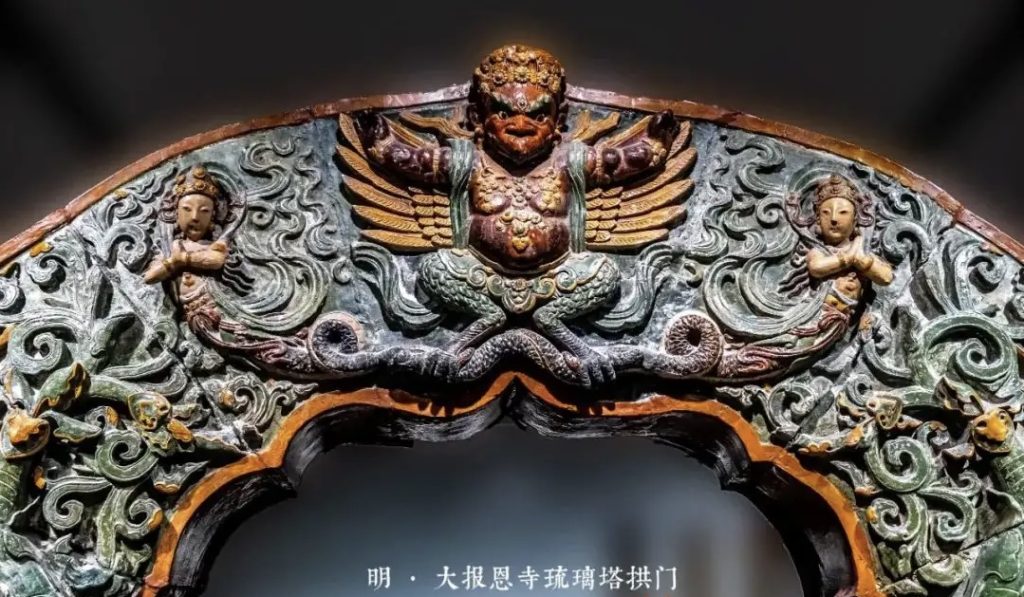
The Porcelain arch of Nanjing is an important architectural component of the Porcelain Tower of Nanjing in the Great Bao’en Temple. Which represents the royal temple architecture of the Ming Dynasty (from 1368 to 1644).

The Porcelain Tower of Nanjing was built in the early Ming Dynasty (mid-15th century). And destroyed in the late Qing Dynasty (late 19th century). The Porcelain Tower was designed and built by The Yongle Emperor Zhu Di (reigned 1402-1424) in order to repay his parents for their kindness.

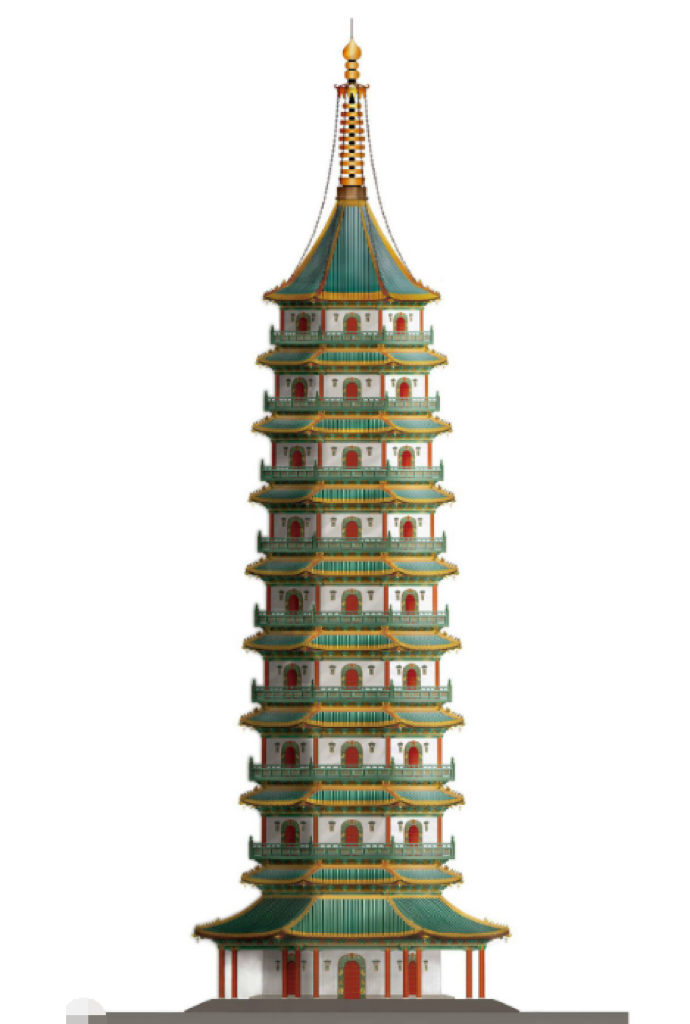
The Tower, which took nearly 20 years to build, is 78.2 meters high and has 9 floors and 8 sides. It is also one of the tallest buildings in ancient China with exact records. Due to the infighting of the Taiping Heavenly Kingdom in Nanjing during the late Qing Dynasty, the glazed tower collapsed. Due to the infighting of the Taiping Heavenly Kingdom in Nanjing at the end of the 19th century (1864), the glazed pagoda collapsed. Nowadays, only one set of Porcelain arches is left in the world for us to visit. This set is currently being collected in the Nanjing Museum as a town treasure.

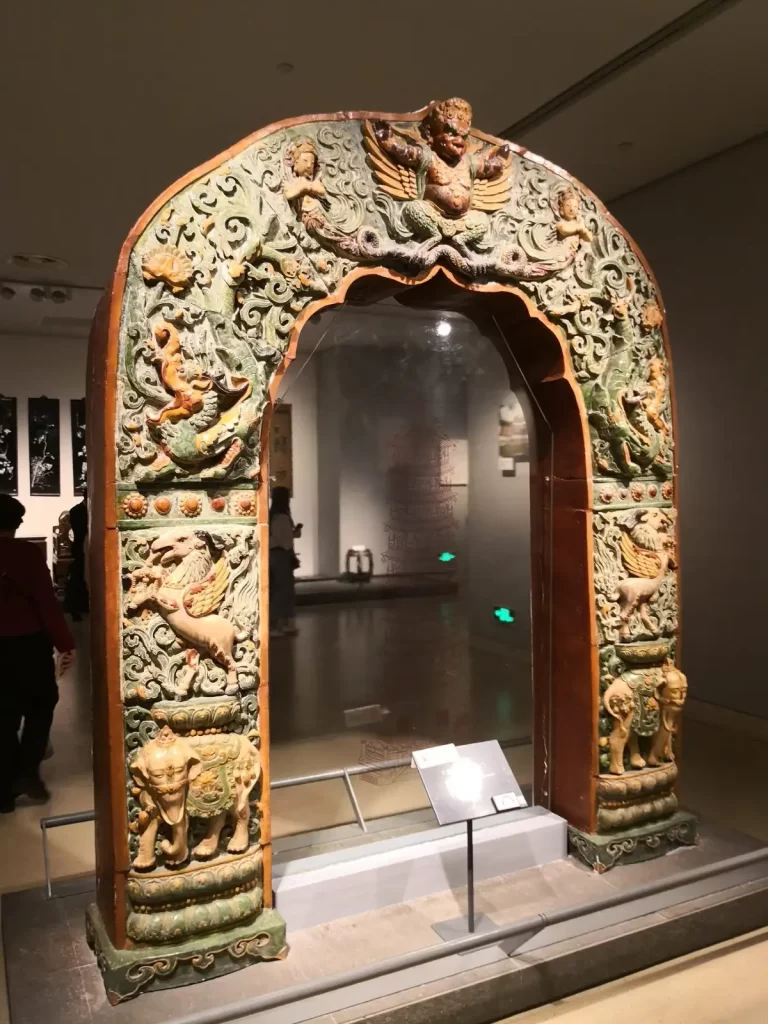
Porcelain arch in the collection of Nanjing Museum

The Porcelain arch

Unearthed in 1958 at the former site of the glazed kiln outside the Zhonghua Gate in Nanjing. At the time of excavation, it was only a batch of defective glazed bricks with mottled glaze, which were later assembled and restored according to the data. The colorful glazed were made through a special process, which can be found on the surviving Porcelain arch.

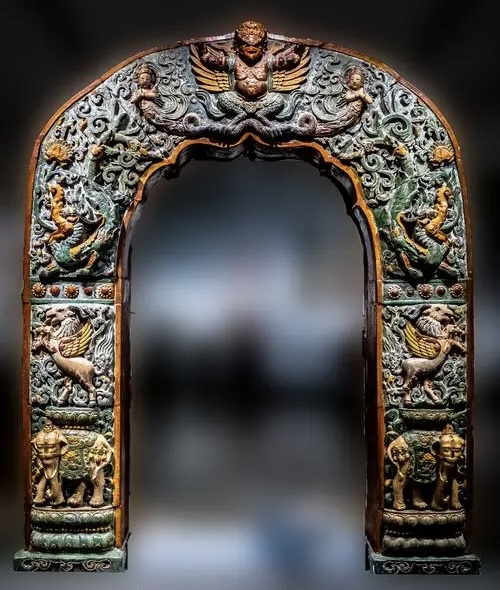
Front view of the arch

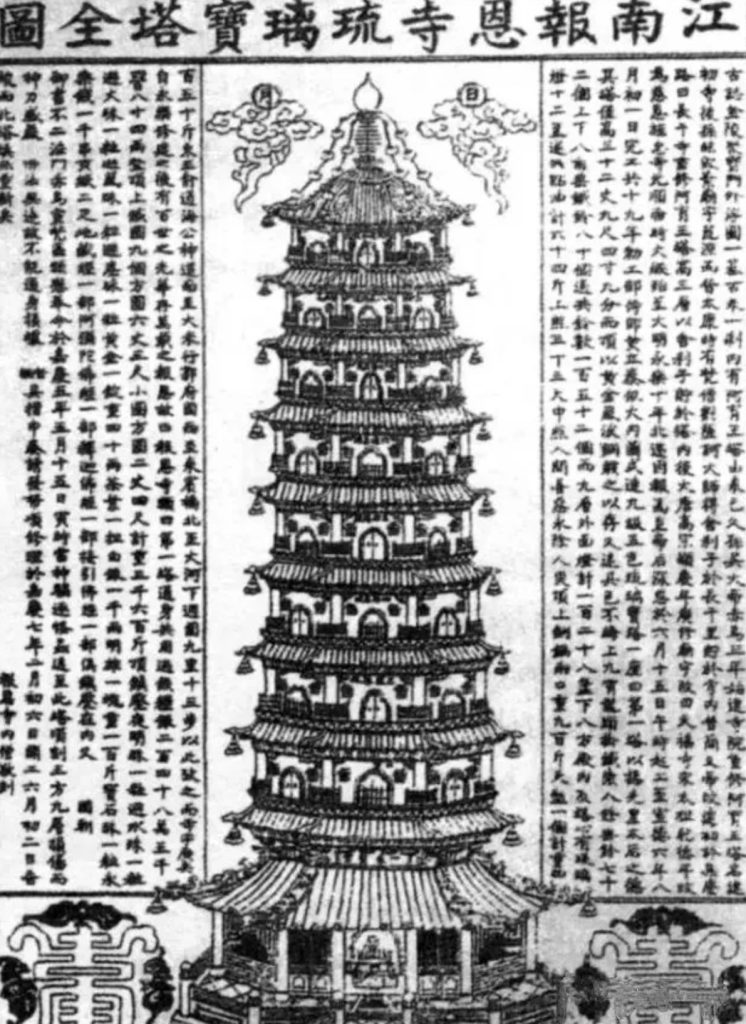
The tower was built with white porcelain bricks that were said to reflect the sun’s rays during the day, and at night as many as 140 lamps were hung from the building to illuminate the tower.

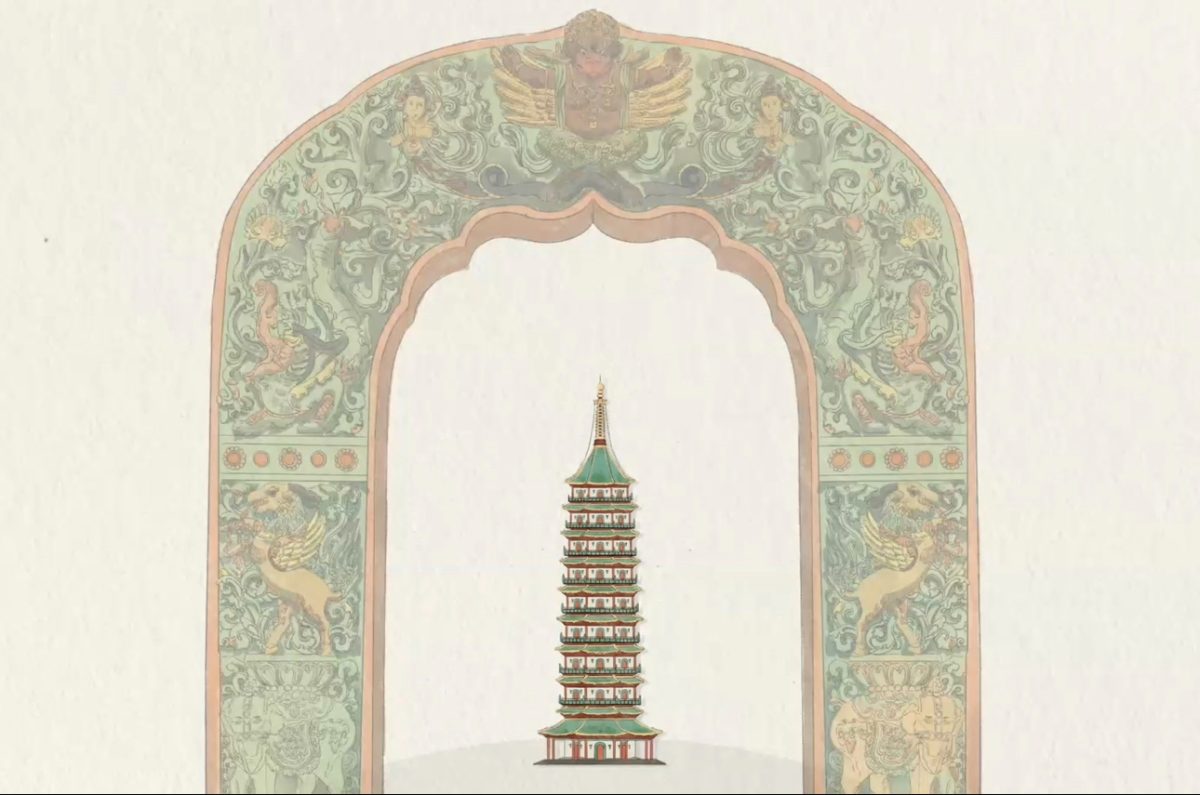
Digital restoration
Digital restoration of the Porcelain tower

Why didn’t the surviving set of Porcelain arche disappear with the Porcelain Tower of Nanjing?

This is because during the construction of the Porcelain tower, three complete sets of tower builds were fired in order to facilitate subsequent repair work. One set was damaged together with the collapsed glazed tower at that time. While the remaining two sets were buried in the ground. The remaining set was found underground.

Designs on the arch

The image on the archway is the dharma decoration (six apparatuses) unique to Tibetan Buddhism Tantric Buddhism. During the reign of Ming Yongle (1402-1424), the Ming government organized several visits to Tibet by Chinese Buddhist monks, and some monks went to Nanjing for exchanges. At that time, the Nanjing Dajianen Temple was still under construction, so it was influenced by Tibetan Tantric Buddhism.

Design on the arch

Story between The Porcelain Tower and the West

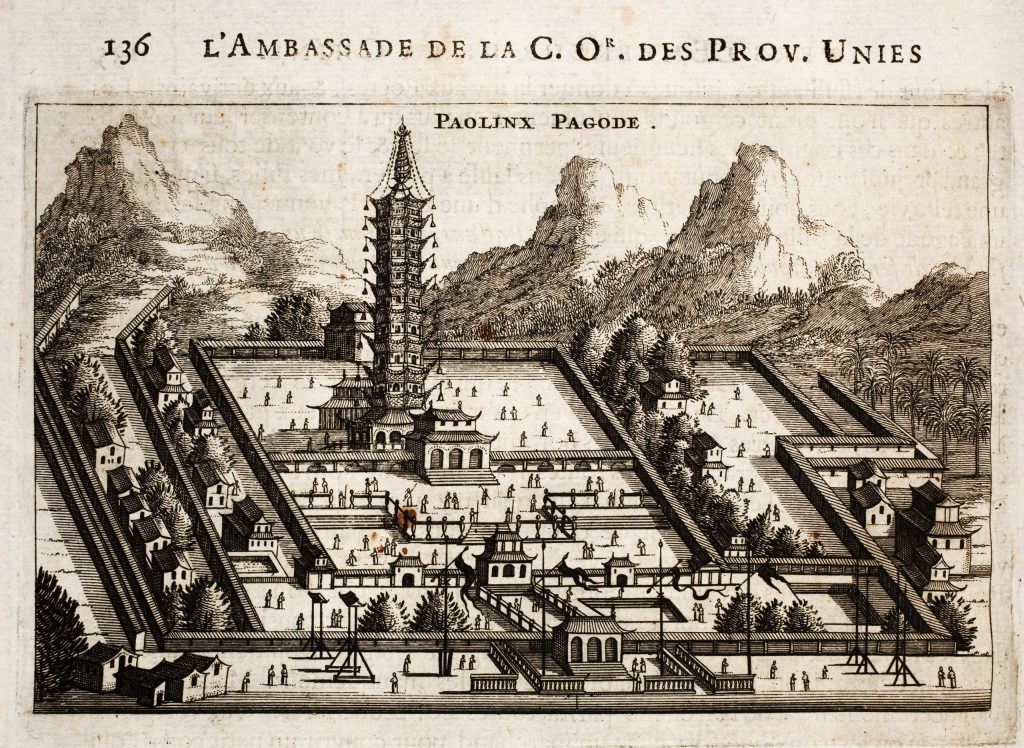
In the 17th century, the European traveler Johan Nieuhof discovered The Porcelain Tower of Nanjing in the Great Bao’en Temple, and made a painting of it, which he brought back to Europe.

The painting of Johan Nieuhof
The Painting of The Porcelain Tower of Nanjing, Johan Nieuhof

This had a grand impact on Western architecture at the time. The design of the Trianon Palace in Paris, and the Kew Gardens Tower in London, were heavily influenced by this.

There is also a particularly interesting story: in ancient Chinese architecture, the number of stories of a tower is basically singular, whereas the imitation towers built in the West are all ten-story. This is because Johan Nieuhof made a mistake and painted the tower with ten stories.

Hand-drawn drawings of Porcelain Tower

Nowadays, Nanjing Dajian’en Temple has rebuilt the glazed tower. However, it was not rebuilt using glazed material. This is to protect the underground palace beneath the ruins of the glazed pagoda, in which precious relics such as the Buddha’s relics and the Ashoka Pagoda have been unearthed.

Source

Web site of Nanjing Museum

Porcelain Tower, by Johan Nieuhof

Historical accounts and other information from CNKI (the China Knowledge Network)

Categories
Museums 在博物馆 传统 古代

Linhai Museum | Ancient Bronzes with Inscriptions -Taizhou

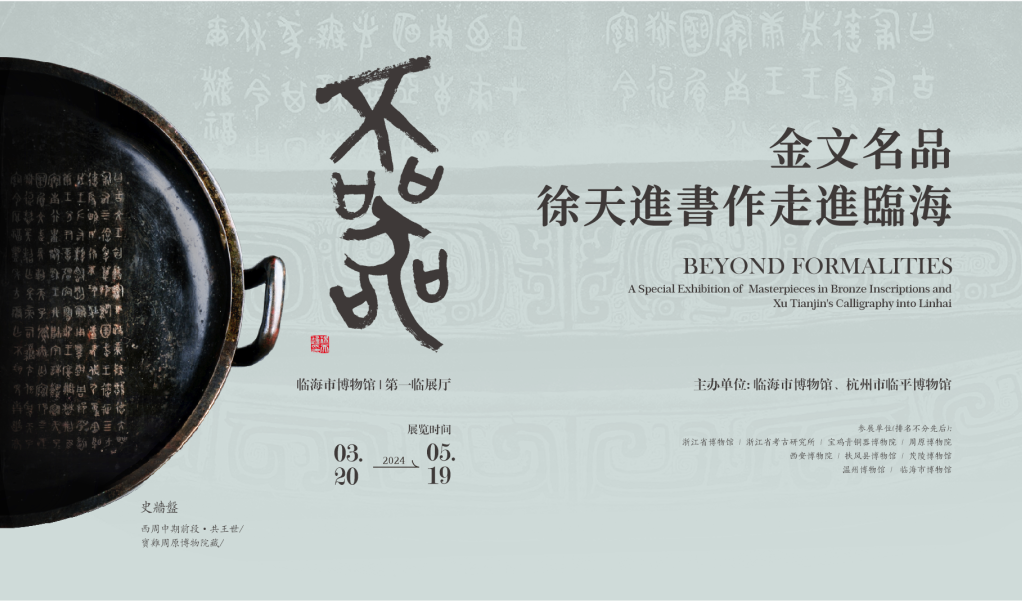
On 20 March 2024, the temporary exhibition “BU QI” opened at the Linhai Museum. Artefacts from more than 10 museums across China, including the Baoji Bronze Museum, Zhouyuan Museum, Xi’an Museum, Fufeng County Museum, Maoling Museum and others.

Jinwen, which includes Chinese writing from the Shang Dynasty to the Zhou Dynasty, has recently been quietly converging in Linhai. The exhibition aims to show the charm of ancient Chinese writing through inscriptions on bronzes.

JINWEN: the name of a Chinese character script that refers to inscriptions cast on bronzes from the Shang Dynasty (ca. 1600 B.C. – 1046 B.C.) and the Zhou Dynasty (ca. 1046 B.C. – 256 B.C.)

JINWEN: Bronze incscriptions

Preface

Cultural relics are not only the products of history, but also the channels of dialogue with history. In the exhibition “BU QI”, through the shape and craftsmanship of the bronzes and the inscriptions on the vessels, the world can discover the long history of China’s ancient ancestors. These artefacts have fallen from the altar of kingship over thousands of years and have demonstrated an extraordinary fascination.

bronze vessels

In China there is a group of precious artefacts, for instance, among which the Shi Qiang Pan, the Qin Gong Bo and other bronzes are more famous. These bronzes not only show us the level of craftsmanship and political culture of the time, but they also contain an important artistic heritage: Jinwen. This exhibition tells us the story of the nearly 3,000-year history of the Chinese character through bronze vessels.

Inscription – Shi Qiang Pan (史墙盘)

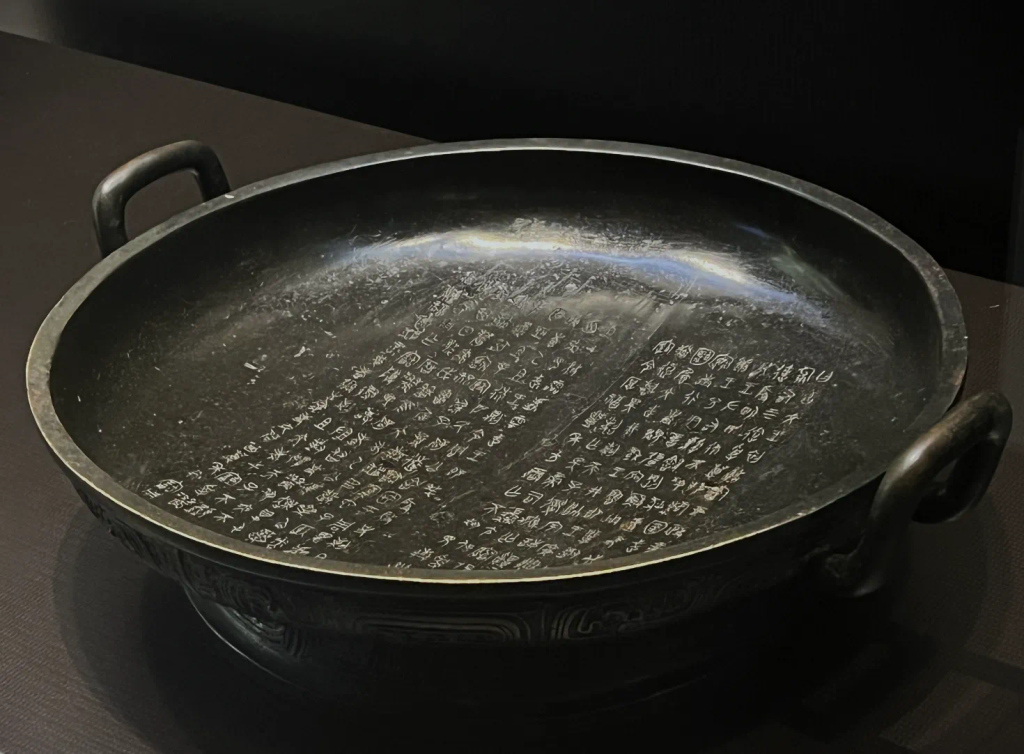
Shi Qiang Pan: a historian whose name was Qiang that cast a plate. It is worth noting that this is a dish set used as a ceremonial vessel, and is also a national first-class cultural relic of China and one of the cultural relics prohibited from being exhibited abroad.

ShiQiangpan, an ancient Chinese bronze pan vessel

It was only during the Western Zhou period (c. 1046 to 771 BC) that the aristocracy was able to cast bronzes. So what was the status of Qiang?

Qiang is from the Wei family. There was a famous tyrant in China, the last king of the Shang dynasty, Zhou (c.1105BC-1046BC). And the ancestor of the Wei, Ziqi, was the elder brother of King Zhou of Shang. After the Zhou Dynasty destroyed the Shang Dynasty, Wei Ziqi joined the Zhou Dynasty as an official. The Wei family of the Zhou Dynasty became a great family after several generations. Thus came the appearance of Shi Qiang Pan.

The first half of the text of the Shi Qiang Pan mainly tells about the achievements of seven generations of emperors of the Zhou Dynasty, and the second half mainly tells about the deeds of six generations of the Wei family. It is not only a testimony of the change of Chinese characters, but also a glimpse of the social structure of the Western Zhou Dynasty.

the inscriptions of the Shi Qing pan

In later times, the Zhou Dynasty fell apart. At the beginning of the Spring and Autumn period, the kingship gradually collapsed. Instead of focusing on the royal nobility, the gold texts of this period began to reflect local features such as the social activities of the vassals and other nobles.

Bronze – Qin Gong Bo (秦公镈)

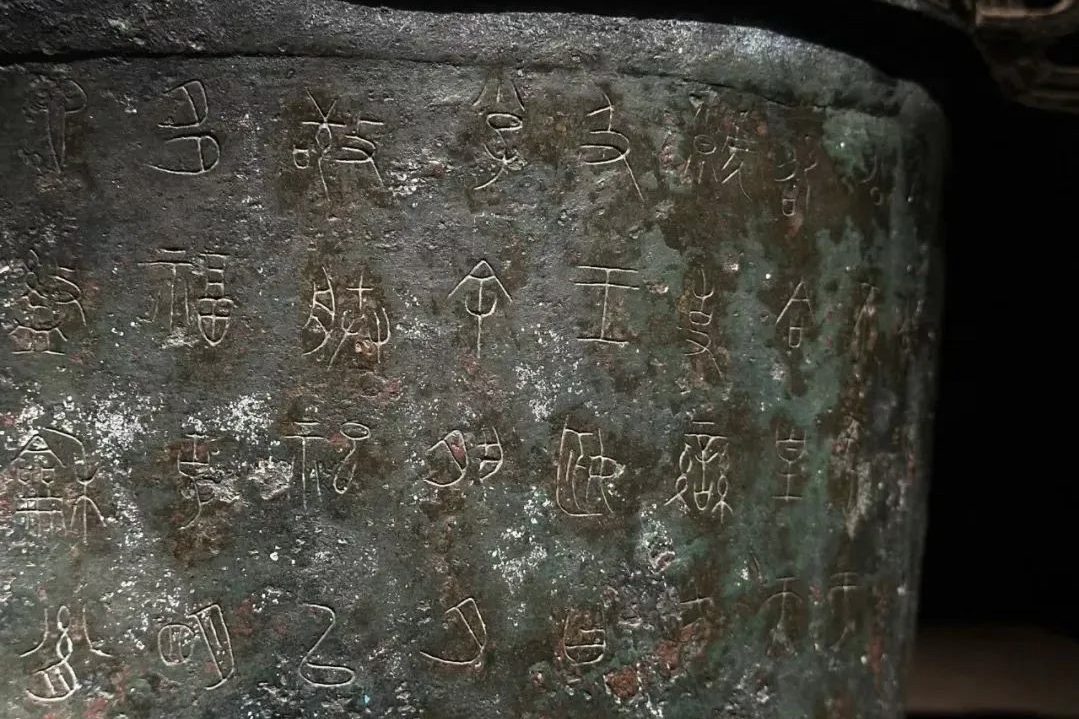
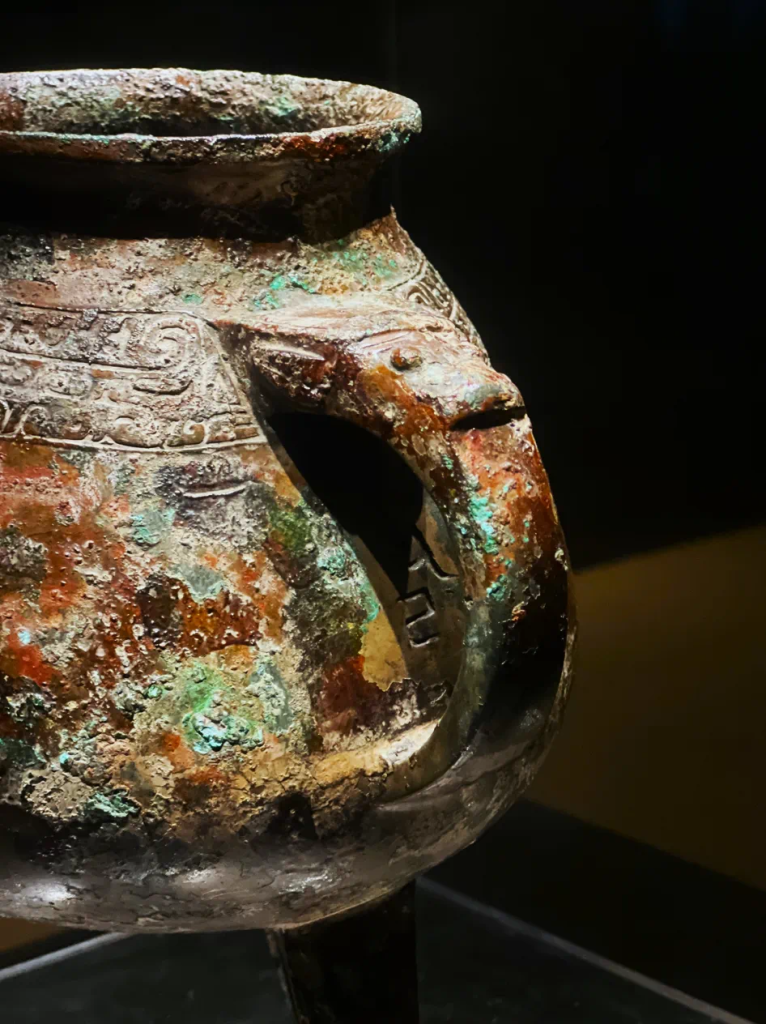
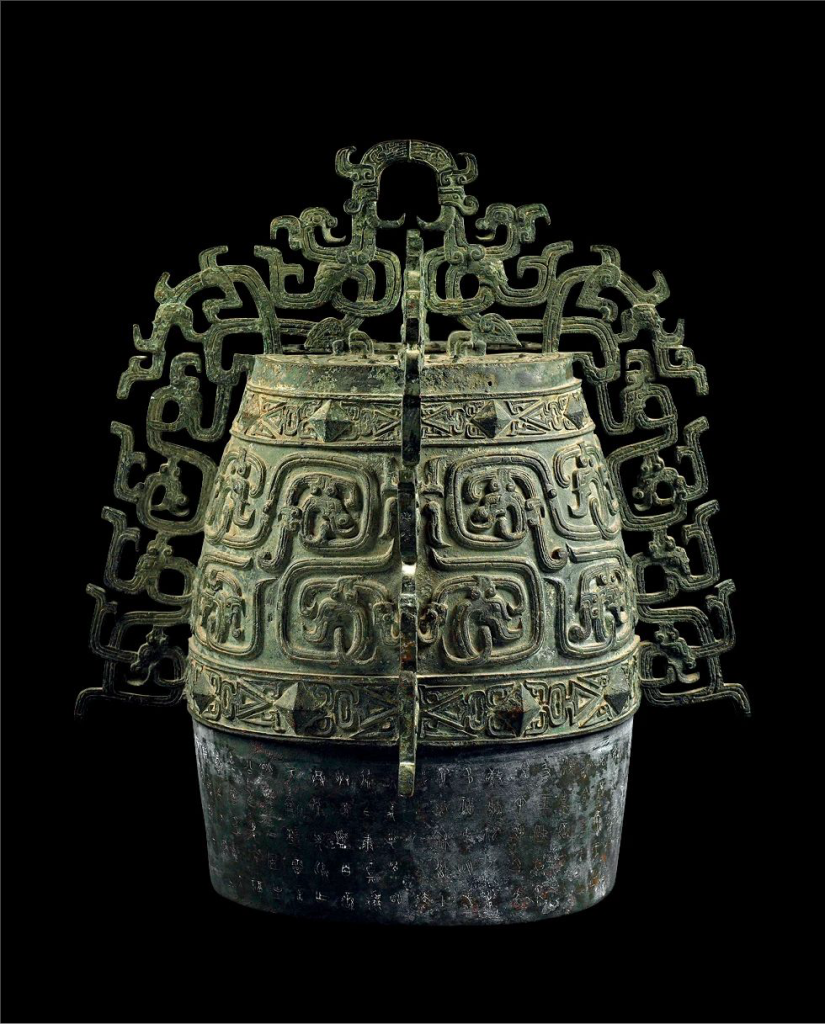
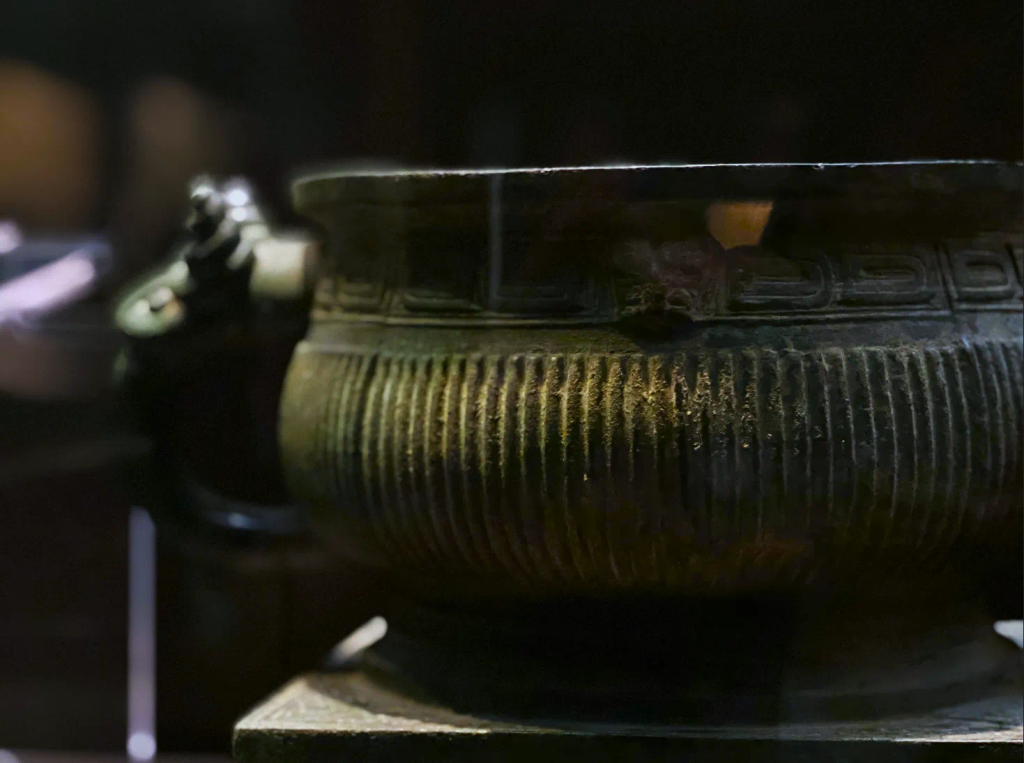
Qin Gong Bo (秦公镈) is an early Spring and Autumn bronze (770 B.C – 695 B.C) from the Baoji Bronze Museum in Shanxi province, and is an ancient Chinese musical instrument that was struck with the body of a hoe.

QingGongBo

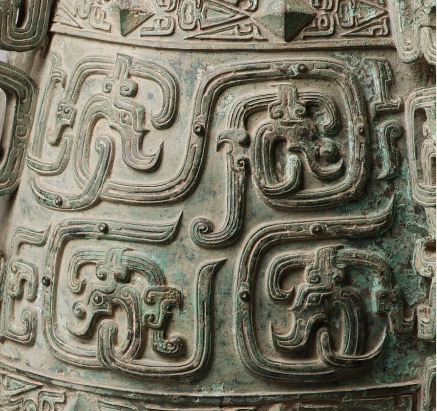
Qin Gong Bo is a new archaeological discovery made in Baoji in 1978, when villagers accidentally discovered eight bronze pieces in a cellar, of which Qin Gong Bo is the largest found, with a height of 75.1 cm, a weight of 62.5 kg and a very majestic shape.

detail

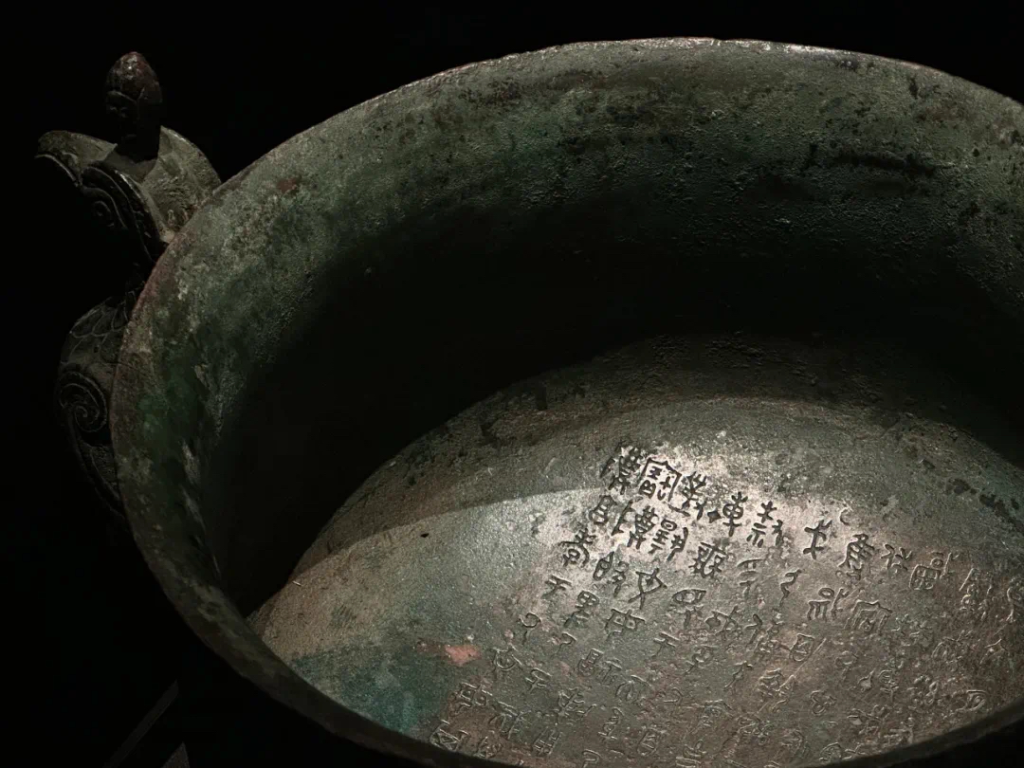
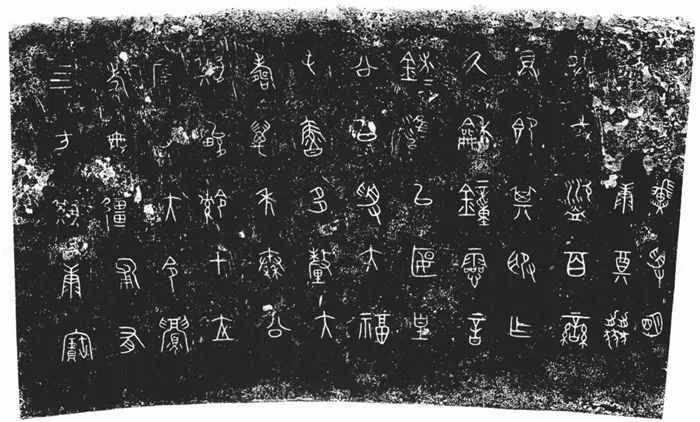
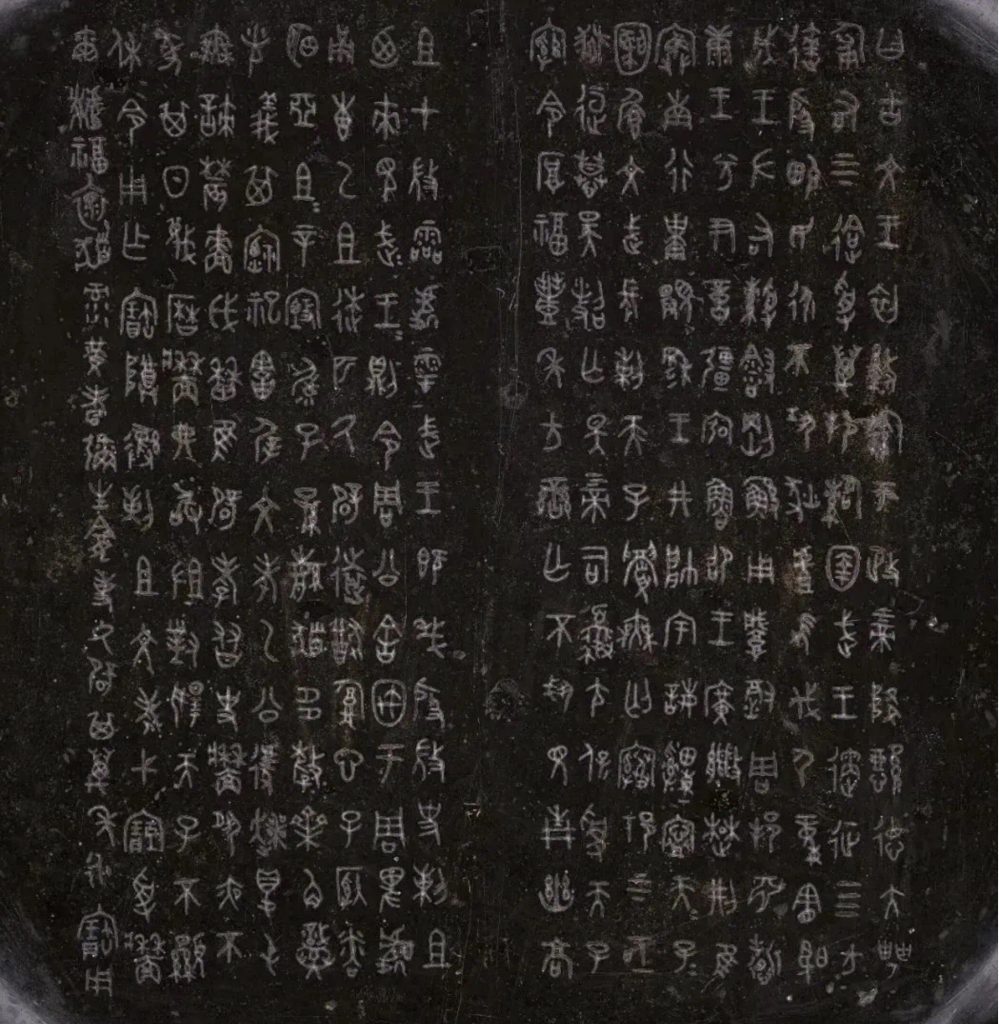
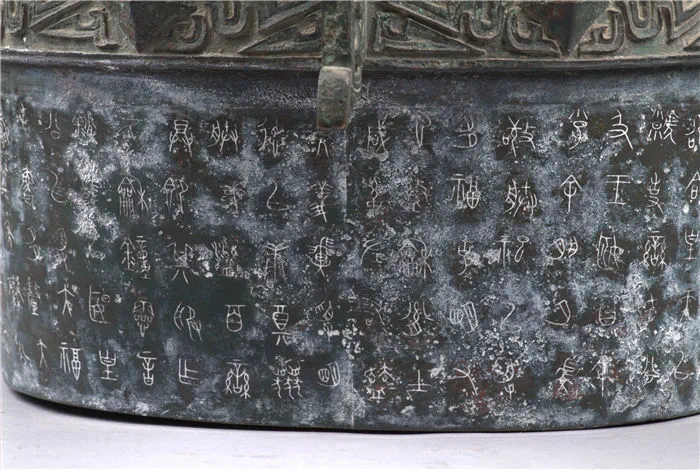
The Inscription of Qin Gong bo

Historical research suggests that the Bo was used as a musical instrument to Hegemony of Qin state temple rituals. Often used together with the ancient Chinese musical instruments Carillon (Bian Zhong). The instrument’s sound was very loud, so historians have speculated that it was usually used to conduct the orchestra and control the overall rhythm.

letter/ inscription

In addition to its exquisite modelling and musical function, the Qin Gongbo bears an inscription of 135 characters. It’s an important historical reference for the study of the Qin dynasty and its predecessor, Hegemony of Qin.

The storia of the inscription

The inscription records the Hegemony of Qin as a vassal state of the Zhou dynasty at the time. And the first-person view of the descendant, Duke Wu of Qin, records that his ancestor, Duke Xiang of Qin, was rewarded with a house and a kingdom for saving the king of the Zhou, receiving land, subjects and prestige. Above all, the descendants of Duke Xiang of Qin were not afraid to work hard. Meanwhile he carefully managed relations with vassal states and surrounding tribes.

In Chinese history, the Qin Hegemony lasted for almost 700 years until the fall of the Qin dynasty. The Qin Hegemony had many capitals and, since Duke Xiang of Qin granted the title of hegemony to Duke Wu of Qin, the owner of Qin Kung Bo, the Qin Hegemony moved its capitals four times in the short space of 140 years.

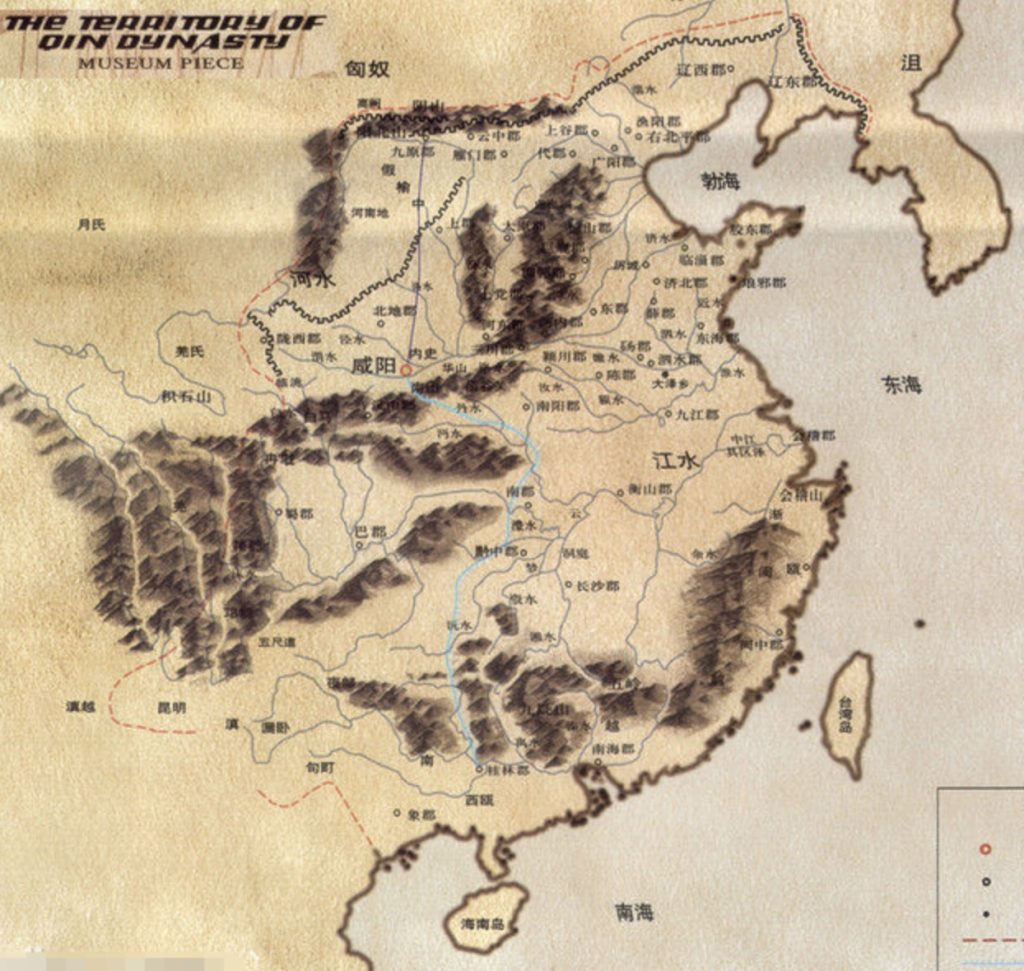
In the long history of Qin, Duke Wu of Qin learnt from the experience of his ancestors. He strengthened his territorial control, and he eventually unified the Guanzhong region of China, which is today the central part of Shaanxi Province in China.

the map of Qin Dynasty

And the Guanzhong region was surrounded by the Qinling Mountains to the south and the Wei River running through it, and was surrounded by mountains on all sides, which made it a natural land barrier. The possession of this entire region also laid the foundation for the Qin Shi Huang (the first Chinese emperor).

Therefore, this inscription embodies the spirit of the Qin people and the determination of the Qin state to become strong. Eventually, in 221 B.C., under the reign of Qin Shi Huang, China was unified.

Bronze in Linhai Museum

The “BU QI” temporary exhibition

This exhibition features bronzes from the Shang Dynasty to the Western Han Dynasty (1675 BC – 8). It includes eight national treasures with inscriptions of more than 110 characters and a complete presentation of bronze inscriptions with more than 3,000 characters. You will be able to see the details of the inscriptions up close in high definition.

information

Information

Date: 20 March to 19 May 2024

Location: Linhai Museum, 1st floor, 1st temporary exhibition hall

Address: Linhai Museum, No.288 Linhai Avenue, Linhai City, Taizhou, Zhejiang, China

Free admission with compulsory booking on the Linhai Museum’s WeChat app.

The exhibition is open according to the following schedule

Tuesday to Sunday:09:00 am to 4:30 pm

Closed:every Monday (except public holidays)

Telefono:0576-89366066

Source

Website of Linhai Museum

Foto

The Territory of Qin Dynasty

Linhai Museum

Shi Qiang pan (French-language version)/ WIKI INFO

Qin Gong Bo (French-language version)/ WIKI INFO

Categories
Museums 在博物馆 传统 典藏故事 古代

Yinxu Museum| Simuxin Ding, in honour of China’s first historical female general.

Recently, the new building of Yinxu Museum was officially opened. This is the first large-scale museum in China to present to the public a national archaeological theme in the form of a panoramic view of the famous Shang Dynasty (1600 bc.-1046 bc.). The museum exhibits nearly 4,000 pieces/sets of bronzes, jade, and oracle bones the earliest writing carriers in China.

Yinxu Museum

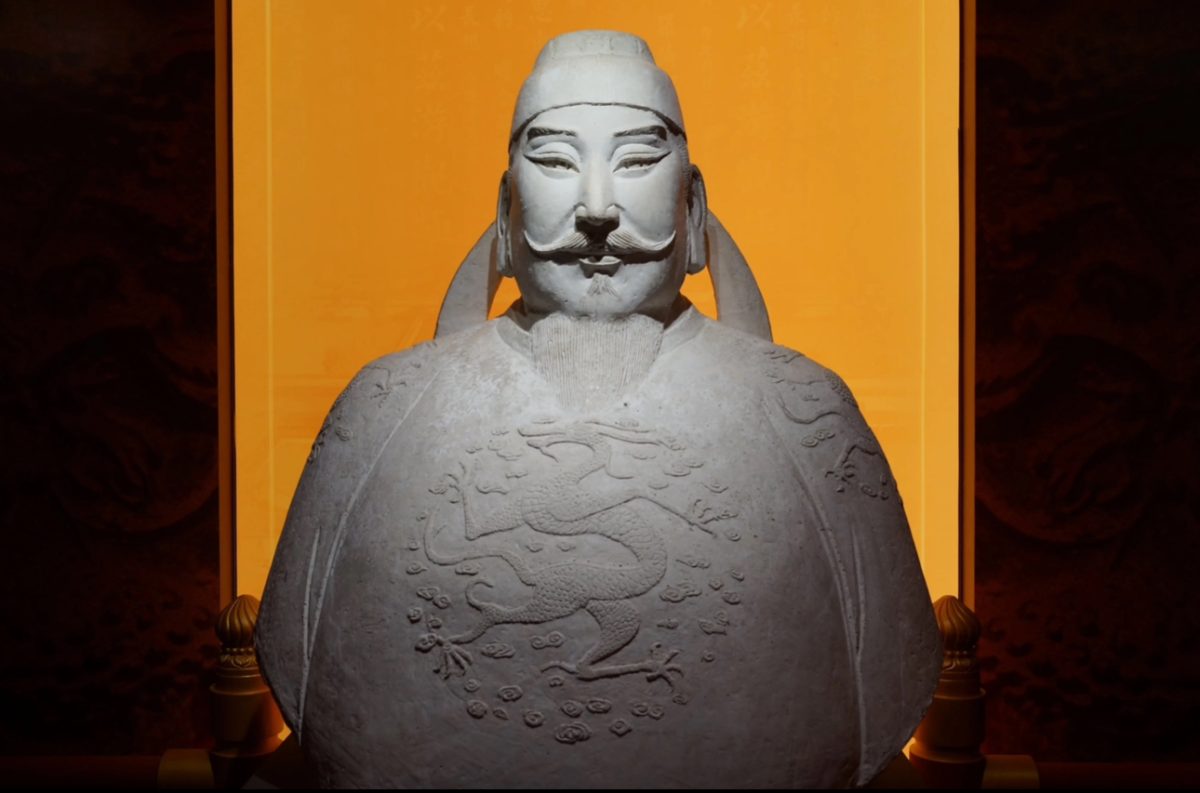
When it comes to the Yinxu Museum, we have to mention an outstanding female historical figure: Fu Hao, also known as Simuxin.

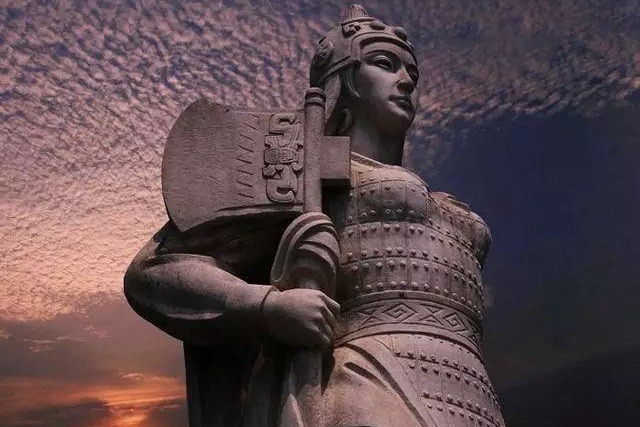
She was the first female general in Chinese history, was also the first wife of King Wuding of the Shang Dynasty (1600 bc.-1046 bc.). Meanwhile a priestess who was trusted by the king for her expertise in divination. She was an amazing woman with multiple identities!

Statue of Fuhao

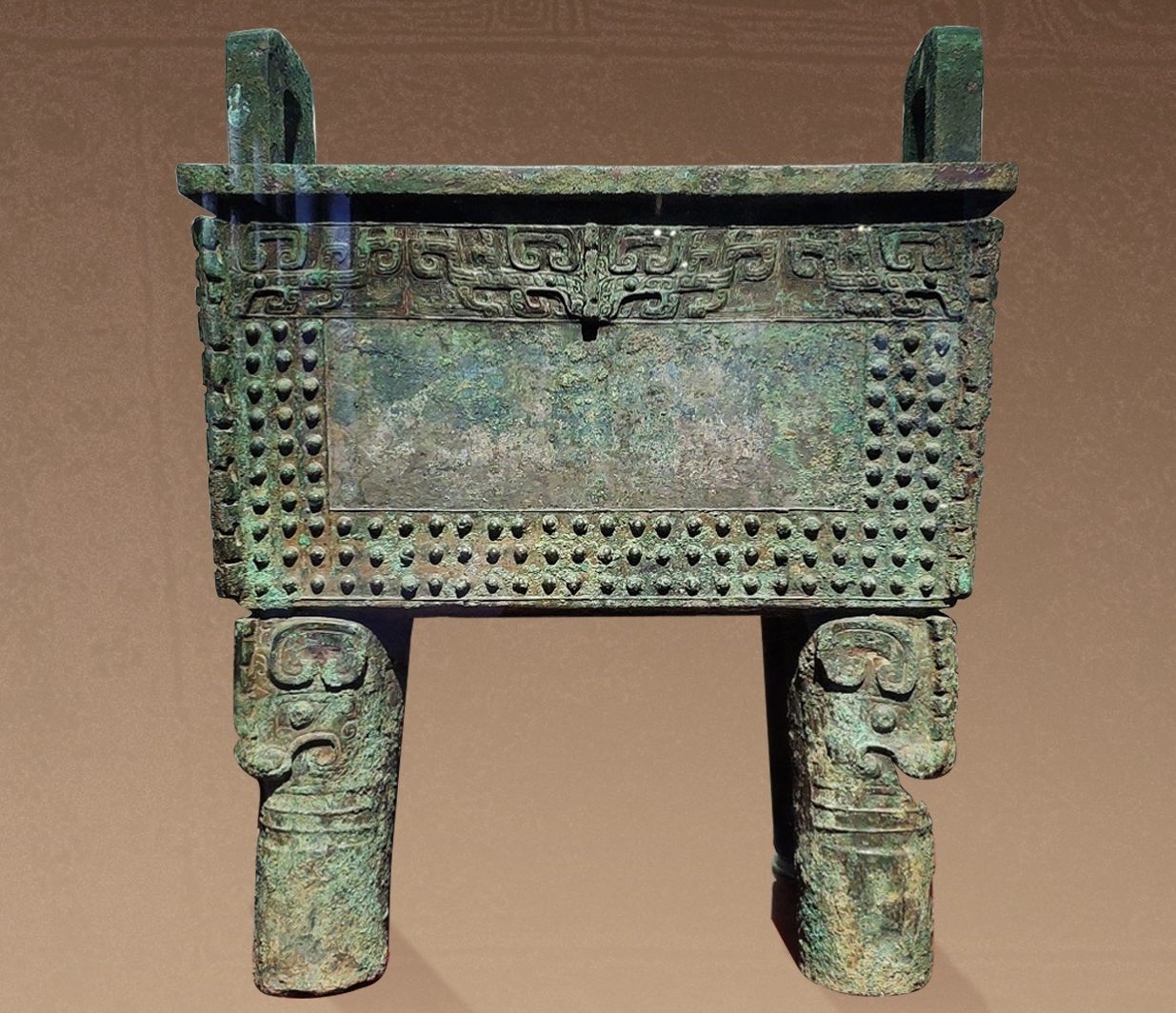
Bronze sacrificial vessel — Simuxin ding

In 1976, the tomb of Fuhao was unearthed in Anyang. Its name derives from an inscription on the burial objects in the tomb.

The tomb is the only one known to have preserved in its entirety a tomb of a member of the royal family of the Shang Dynasty (1600 bc.-1046 bc.). Also, the burials and material in this tomb are relatively complete.

Fuhao and Simuxin ding

The “Simuxin ding” found in the tomb of Fu Hao is another major archaeological discovery of the Shang Dynasty. It is another major archaeological discovery after the “Houmuwu ding” (or Simuwu ding).

Simuxin ding

After that into the Bronze Age, “Ding” from the ordinary food utensils into a heavy and gorgeous bronze ritual. It became the status symbol of the noble ruling class at that time.

In addition, as the town treasure of Yinxu Museum, Simuxin ding has a high research value and artistic value.

The name “Simuxin” comes from the inscription of bronze, which is used as a signature. The name “xin” is the temple name of Fuhao, the wife of King Wuding of the Shang Dynasty. “mu xin” is the name given by the son to his mother. It can be seen that the Simuxin ding was a ritual vessel made by the son of Fuhao to commemorate her.

tomb of Fuhao

Archaeology allows the world to study artefacts and history to discover the different social. Also the life experiences of our ancestors thousands of years ago.

In the tomb of Fuhao, a large number of oracle bones and written records of Fuhao’s life have been unearthed. The person in charge of the Yinxu Museum said, “Fuhao was the famous queen of Wuding and also the first female general in history.” She made great achievements for the Shang dynasty. Also was one of the important and indelible figures in history.

oracle bones with writings

Ornamentation on the Bronze ding

The Simuxin ding is 80,1 cm high, with a 64,0 cm long and 48,0 cm wide rectangular mouth. The body of the vessel is intricately decorated.

The lower four sides of the mouth and the corners are decorated with animal-face motifs, with cloud and thunder motifs on the base, studs on the bottom of the waist, and a striking animal face on the upper part of the foot.

Most importantly, the ancient Chinese beasts “Taotie” and “Kui Long” are used as decorations, suggesting majesty and power. And with the cloud and thunder pattern as a backing, it adds a sense of mystery to the vessel.

imagine ornamentation “Taotie”

Anyang Yinxu Ruins

Tracing the archaeological history of China, it can be found that the Shang Dynasty (1600 bc.-1046 bc.) is the earliest dynasty in China supported by archaeological evidence. Moreover, the archaeological site of Yinxu in Anyang, an important site of the Shang Dynasty, is of great significance.

On 25 February 2023, the Smithsonian’s centennial celebration of the National Museum of Asian Art in the United States featured an exhibition on Anyang: China’s Ancient City of Kings.

To sum up, it is one of China’s oldest and largest archeological sites. And is the birthplace of Chinese archaeology, while the earliest Chinese writing was found here. Further, it was selected as a UNESCO World Heritage Site in 2006.

Yinxu archaeology site

Source

the News of the new building of Yinxu Museum

Web site of Yinxu Museum

the special exhibition in the Smithsonian’s centennial celebration of the National Museum of Asian Art

Categories
LAVORATO Museums 在博物馆

Museum | Into the Sanxingdui Museum

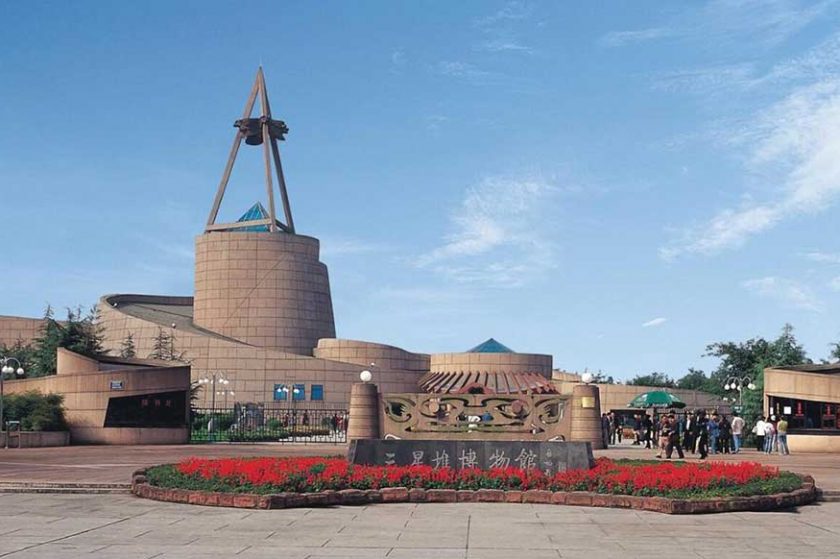
Situated in the northeast of the state-protected Sanxingdui Site by the bank of the Yazi River in Guanghana, Sanxingdui Museum is a modern museum which is 40 kilometers to the north of Chengdu. Covering a total area of 530 yields, in which 11000 square meters serve as the main tableaus for the exhibits, Sanxingdui Museum had its foundation laid in August 1992, and opened to the public in October 1997. Integrating collection, preservation, academic research and social education all in one, the museum showcases kinds of precious cultural relics unearthed at Sanxingdui Site.

The cultural relics at Sanxingdui are a valuable cultural heritage of humanity, which contains a rich historical, cultural and scientific value, and are considered the most attractive among the multitude of spectacular relics in China. The main building of the museum stands in an attempt to adapt to its profile with the shape of the land, the historical site and the forms of the relics, mixing primitivism with modernism; the surroundings of the museum are arranged in an ingenious layout: a lake and a large lush garden are located in a unique environment with flora in all seasons.

The Sanxingdui site is an ancient city, an ancient state and an ancient Shu culture site in southwest China, which is the largest in the area, the longest in time and the richest cultural connotation. The total area covers 12 square kilometers with a city of 4 square kilometers in the center. Dozens of cultural relics were found in the city, such as the city walls, two sacrificial tombs, foundations of buildings, jade pits and burial grounds, as well as several thousand artifacts. The Sanxingdui site was the capital of the state of Shu about 3,000 years ago. In January 1988, the Council of State designated the Sanxingdui site as one of the most important cultural heritage units under national protection.

The structure of the Sanxingdui museum consists of two galleries. Gallery one represents an arc-sloped ecological building, emphasizing the theme that human world and nature are in perfect harmony. Gallery two is spiral architecture, symbolizing both Three-star Mounds and the course of human history development. In gallery one comprehensively displays gold, bronze, jade and pottery artifacts and great achievement in every aspect. In gallery two, specialized bronze gallery, through successively combination of scenes introduce group of bronze images and mysterious sculptures.

Sanxingdui Museum – Exhibition hall
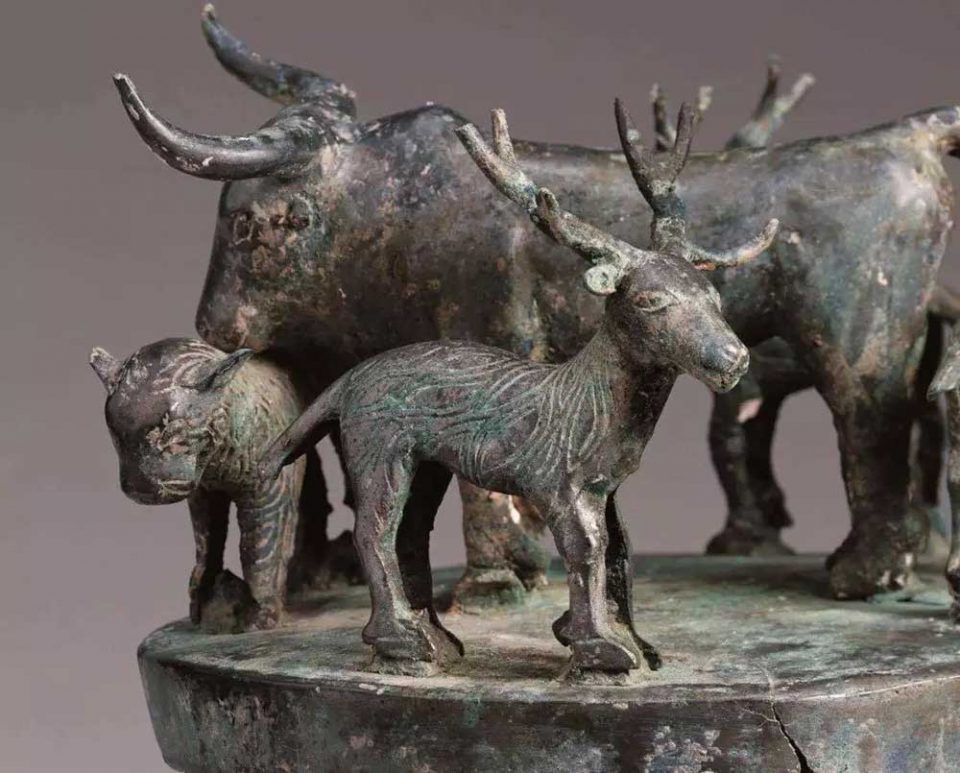
The first gallery is divided into six sections to show the precious items of gold, bronze, jade, stone, ceramics, ivory, shells, excavated from the Sanxingdui site to introduce remarkable success in each domain, the outline of the story and the vital state of ancient Shu. For example, you can admire the oldest golden rod in the world dating back to 4000 BC and the 396 cm tall bronze tree which is the largest bronze tree found so far in China. The second section, large collections of bronze objects are exhibited, such as bronze works in the shape of the sun, snakes, altars, a group of small figures who make sacrifices and some plausible figures such as the bronze figure with a human head wearing a mask. gold, one of the “not to be lost” relics.

VISIT

Address: Sanxingdui Historic Relics 618300,Guanghan Sichuan China

Opening Hours: 8:30 – 18:00 (Exhibition Hall I); 8:30 – 18:30 (Exhibition Hall II). Ticket time: 8:30 – 17:00

CONTACTS

Telephone: 0838-5500349

Website: http://sxd.cn/en/

Credits:

http://sxd.cn/en/
https://www.travelchinaguide.com/attraction/sichuan/chengdu/sanxingdui.htm
https://www.chinahighlights.com/chengdu/attraction/sanxingdui-museum-in-guanghan.htm

Photo credits:

http://www.waclighting.com/project/sanxingdui-museum
https://www.chinadiscovery.com/chengdu-tours/sanxingdui.html
https://windhorsetour.com/blog/sanxingdui-museum-true-archaeological-wonder

Categories
LAVORATO Museums

Museum | Hubei Provincial Museum “Gene Treasure of Jingchu Culture”-Wuhan

The Hubei Provincial Museum (link)is located in the Wuchang District of Wuhan, Hubei Province. Established in 1953, the museum moved to its present location in 1960 and gained its present name in 1963. Since 1999 a number of new buildings have been added. The particular importance of several of the archaeological items in the museum’s collection has been recognized by the national government by including them into the short list of Chinese cultural relics forbidden to be exhibited abroad.

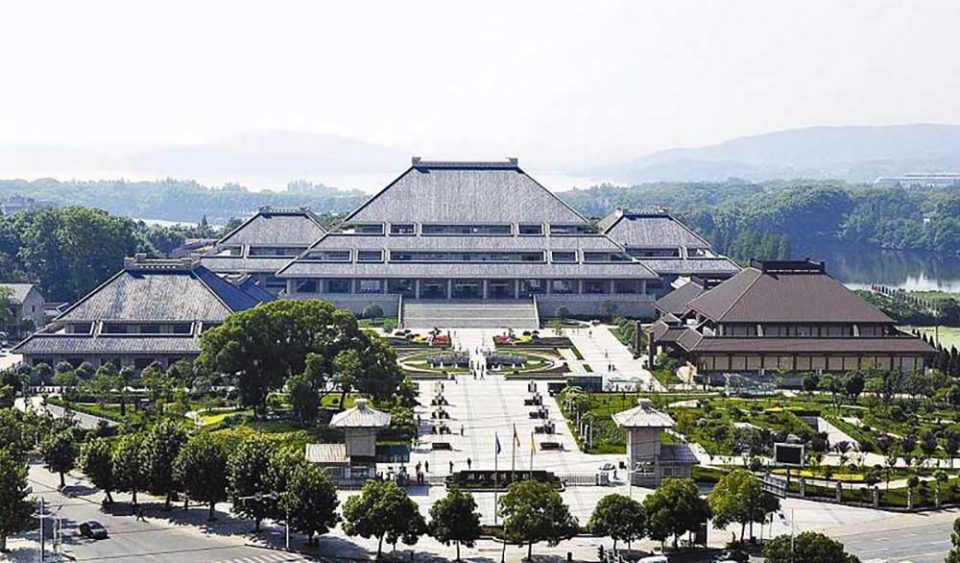
Hubei Provincial Museum

The building design, is based on traditional Chu culture’s architectural style. The complex features exhibition halls, high platforms, wide, multi-layered eaves, a large sloped roof and three buildings. In its great height, plan and other architectural features it reflects the overall layout Chu axial symmetry of a temple. Its construction area reaches 42,532 square meters, the exhibition hall covers an area of 13,427 square meters.
Panorama Hubei Museum

As the only comprehensive provincial museum, it contains 200,000 cultural relics discovered in the province ranging from ancient jade and bronze vessels, musical instruments, ceramics. Among these cultural relics, 812 are listed as first-class relics of China and 16 are considered national treasures. Hubei Provincial Museum is divided into three parts: the Chime Bells Exhibition Hall, the Chu (a state in the Spring and Autumn Period (770 – 476 BC)) Culture Exhibition Hall and the Comprehensive Exhibition Building.

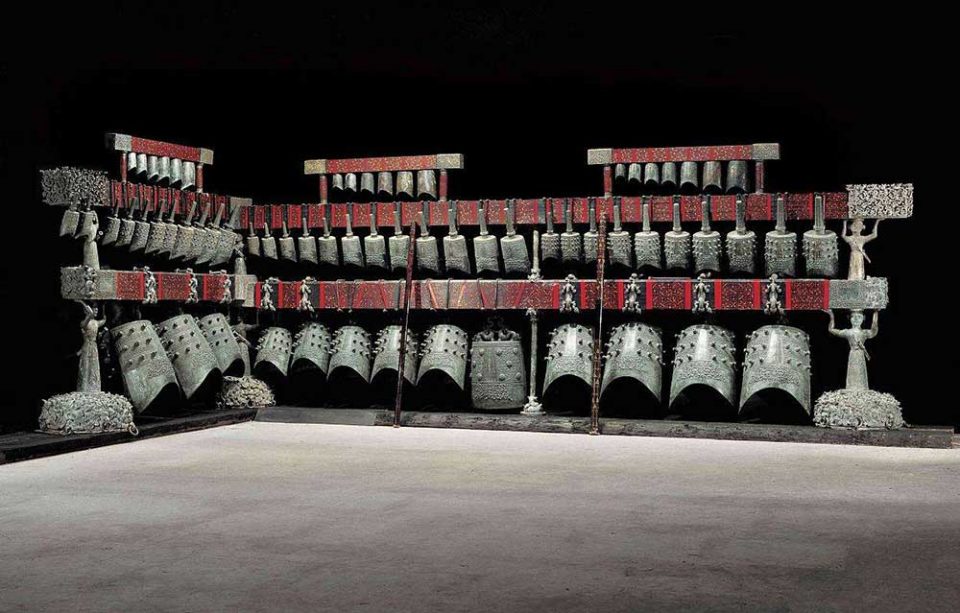
Chimes Warring States Period

The Chime Bells Exhibition Hall contains two parts: the Exhibition Hall and the Music Hall. In the Exhibition Hall you can see many cultural relics that have been unearthed from the tomb of Yi (the king of the Zeng Sate in the Warring States Period (476 – 221BC). The most famous treasure is the Chime Bells, which is the largest bronze musical instrument ever discovered. With a set of bells of different sizes it can play various tones of the musical scale. In the Music Hall, musicians wearing ancient clothes play a replica of the Chime Bells every day.

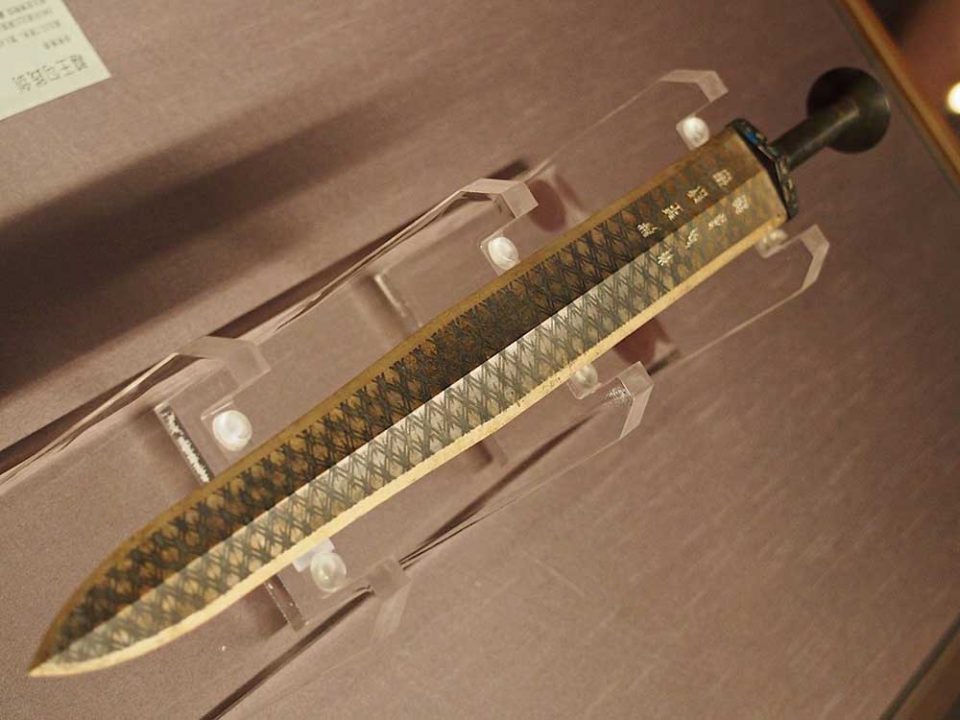
The Chu Culture Exhibition Hall are exposed bronze vessels, lacquer works, bamboo and wooden artifacts, and silk knitted products. There are also various ancient weapons of the Chu State such as the sword of Goujian (the king of the Yue State in the Spring and Autumn Period) and the shaft of Fu Chai (the king of the Wu State in the Spring and Autumn Period). After careful restoration, some of the chariots and horses of the Chu State are now displayed in this hall. Moreover, houses where the Chu population lived were rebuilt in order to give visitors a direct impression of the ancient Chu people’s lives.

Sword of Goujian
Lacquer Box
Lotus porcelain

VISIT

Address:  No. 160,East Lake Road,Wuchang District,Wuhan City,Hubei Province
Opening Hours: from Tuesday to Sunday 09: 00-17: 00 (no admission after 16:00), closed on Mondays (except legal holidays) and New Year’s Eve

CONTACTS:

Telephone: 027-86794127 / 027-86790329
Website: http://www.hbww.org/Home/EnglishIndex.aspx 

Credits:

https://www.travelchinaguide.com/attraction/hubei/wuhan/bronze_music.htmhttp://en.hubei.gov.cn/culture/facilities/201305/t20130521_450120.shtmlhttps://artsandculture.google.com

Photo credits:

http://www.china.org.cn/travel/2013-04/25/content_28655994.htmhttps://www.thechinaguide.com/sight/hubei-provincial-museumhttp://en.hubei.gov.cn/news/newslist/201712/t20171221_1236845_1.shtml

Categories
Museums 典藏故事

Museum | Hainan Provincial Museum-“Historical Heritage”-Haikou

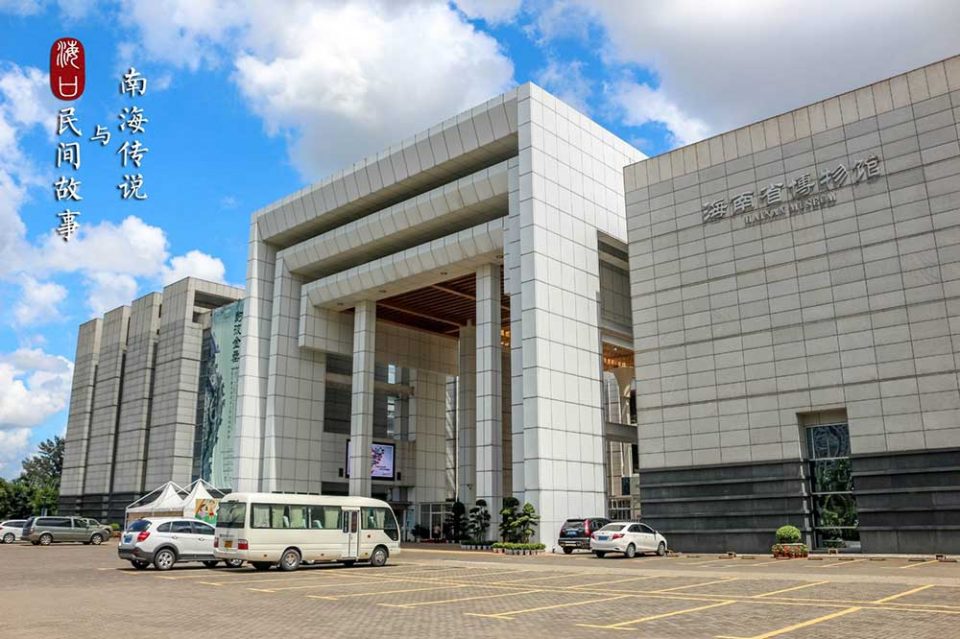
Hainan Provincial Museum

The Hainan Pr

Hainan Provincial Museum

ovincial Museum is located in Haikou, the capital city of Hainan Province. It was established in 1984, then moved to its permanent location in the Hainan Cultural Park at 68 Guoxing Avenue. Hainan Provincial Museum is the biggest  and the only comprehensive museum on Hainan Island officially opened on November 15, 2008. The entire museum area covers 40,000 square meters and houses over 20,000 objects including cultural and multimedia memorabilia.

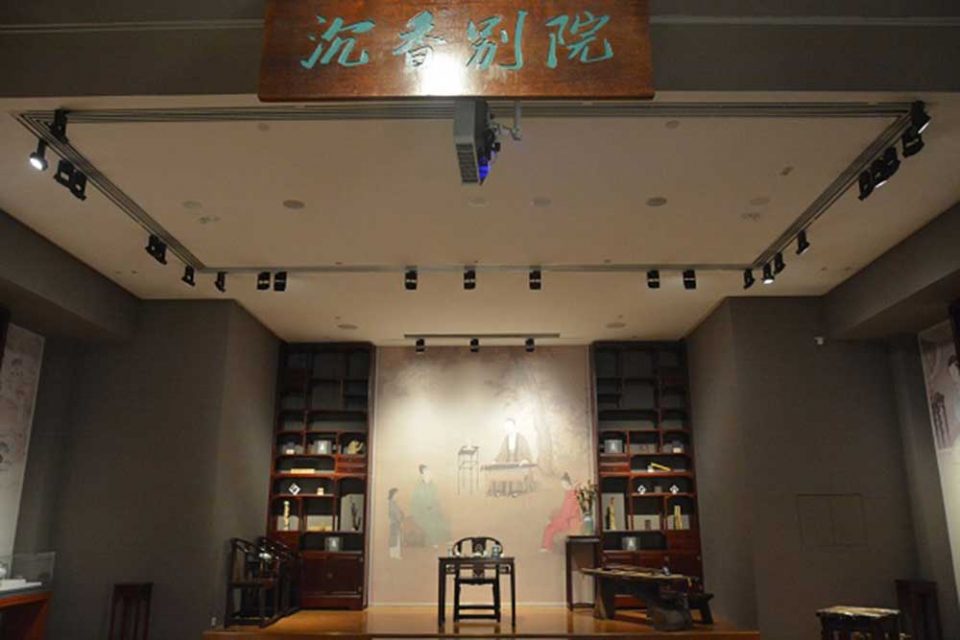
Agarwood Furniture Showroom

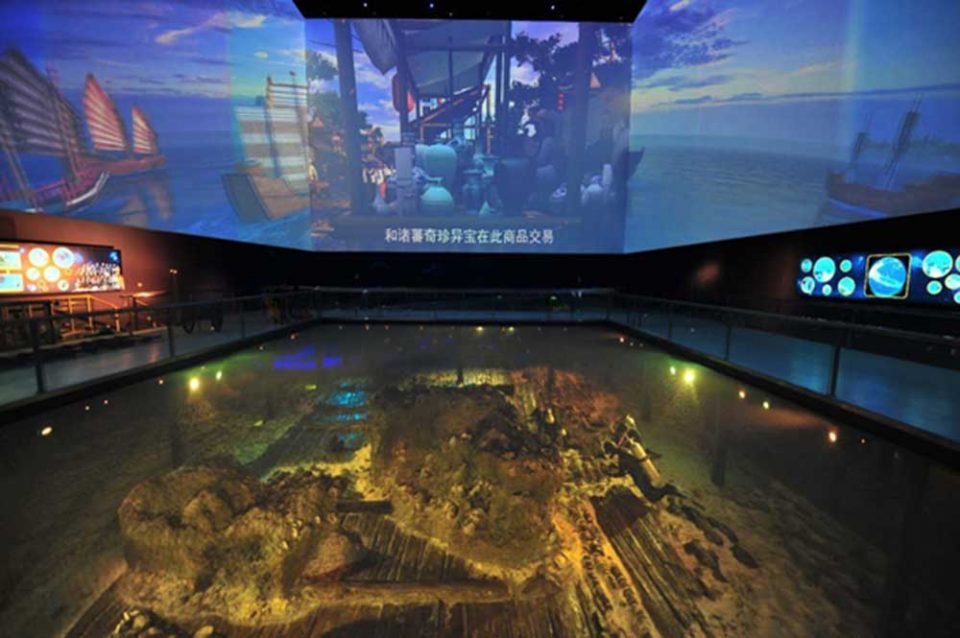
The museum is divided into two parts. The first phase contains 18,000 square meters which include an exhibition area of 8000 meters, a repository of cultural relics, technical rooms, service facilities and small office buildings. The second phase of the project is in planning. It will have an area of 7,000 square meters and will contain the wreck “Huaguangijao One”, where it will be restored and protected. It will host approximately 10,000 cultural relics and specimens relating to the history of the South China Sea, the Maritime Silk Road and elements related to geopolitics. It will also contain marine organisms and examples of mineral resources.

South Song Shipwreck

There are four basic permanent exhibitions: Exhibition of Collected Cultural Relics; Exhibition of History of Hainan; Exhibition of Minority Nationalities in Hainan; Exhibition of Intangible Cultural Heritage in Hainan. It is a good window to know more about Hainan Island History, Culture and Local Minority Nationalities. Since its opening in 2008, the Hainan Provincial Museum has held various Chinese and international exhibitions.

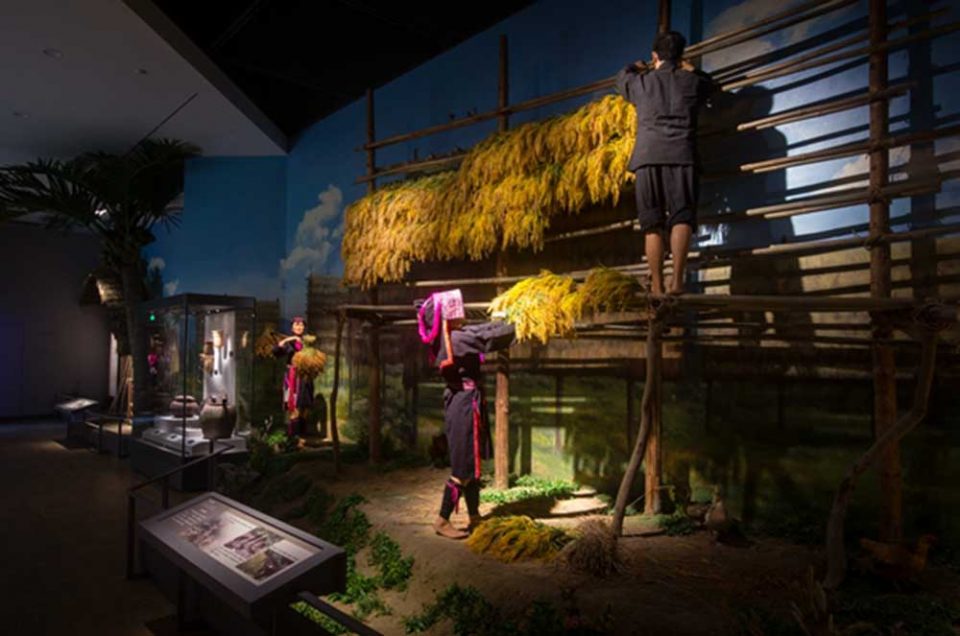
Life scenes of Hainan minority
Stone carving Woman’s head Ming Dynasty

VISIT

Address: No. 68, Avenue Guoxing, Haikou City, Hainan Province, China
Opening Hours: 9,00 – 17,00 from Tuesday to Sunday. Closed on every Monday

CONTACTS

Telephone: 65238880
Website: http://www.hainanmuseum.org/

Credits:

https://en.wikipedia.org/wiki/Hainan_Museumhttps://www.inspirock.com/china/haikou/hainan-museum-a470855979

Photo credits:

https://beijingfromthetopfloor.wordpress.comhttps://in.pinterest.com/pin/857443216529490610/?lp=truehttp://h.coniferhotels.com/TemplateEN/Details.aspx?s1=4551&s2=4560&hid=165

Categories
LAVORATO Museums 典藏故事

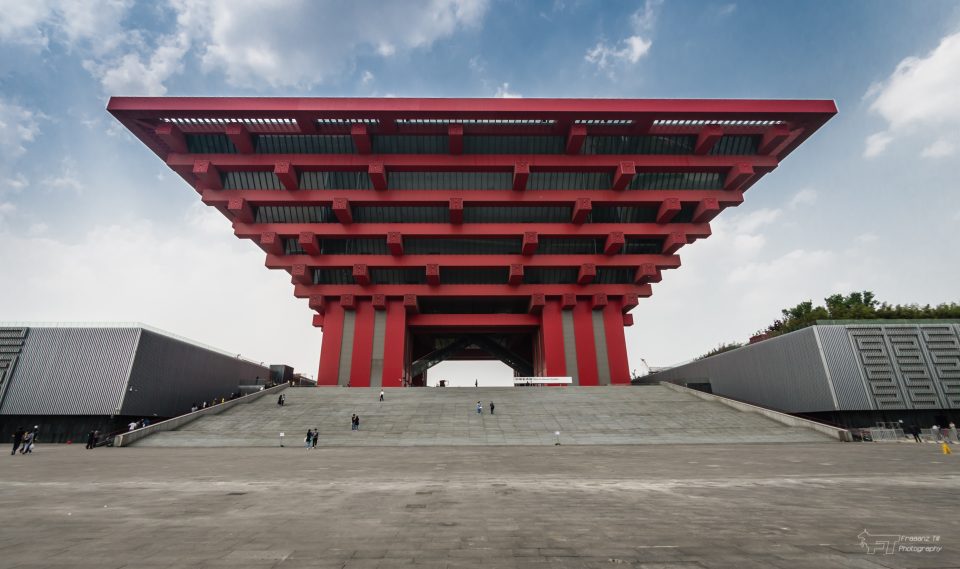
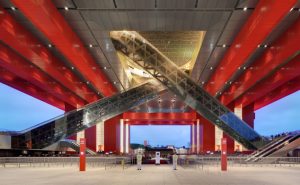
The China Art Museum(link), also called the China Art Palace, is a museum of modern chinese art located in Shanghai in Pudong New District near the Huangpu River. The museum, that was previously the China Pavilion of Expo 2010, opened its doors on October 1, 2012. It is one of the largest museums in Asia since the exhibition area of the China Art Palace covers 64,000 square meters with 27 exhibition halls that show the origin and development of modern Chinese art. The China Art Palace cooperates with other world famous art museums to hold exhibitions of modern art from other countries.

China Art Museum – Interior design

The predecessor of the China Art Museum was the Shanghai Art Museum, founded in 1956 and completely rebuilt in 1986. On March 18, 2000, the Shanghai Museum of Art was transferred to the former Shanghai Race Club. The city hosted the 2010 Expo and China Pavillion, due to its popularity, has been reopened for another six months after the end of the Expo. On November 13, 2011, the Shanghai Municipal Government announced that the China Pavilion would become the new home of the Shanghai Museum of Art under the name of China Art Museum. The new building is ten times larger than its predecessor.

The predecessor of the China Art Museum was the Shanghai Art Museum housed in the Shanghai Race Club building.

Construction for the China Pavilion of the Shanghai Expo began on 28 December 2007, and the building was completed on 8 February 2010. The 63-metre high pavilion, the tallest structure at the Expo, is dubbed “the Crown of the East” due to its resemblance to an ancient crown. The building was designed by a team led by the 72-year-old architect He Jingtang, the director of the Architectural Academy of the South China University of Technology. He was inspired by the Chinese corbel bracket called daugong as well as the ancient bronze cauldron called ding.

China Art Museum – View form the outside

Twenty-seven exhibition halls are mainly distributed among the 49-meter floor, the 41-meter floor, the 33-meter floor, the 5-meter floor and the 0-meter floor floors: the floors are named by their altitude. The works, about 14.000, introduce the ascent of modern art in Shanghai at the end of the 19th and start of the 20th century. The basic exhibitions include four themes: the origin of modern and contemporary Chinese art, the works of art with the historical and cultural development of Shanghai, the works of art by famous painters and the development of the arts in the new century.

China Art Museum – Main entrance

The path through the building is from the upper floor to the lower floors. The exhibition rooms 1-6 are on the 49-meter floor, the 7-10 rooms on the 41-meter floor, 11-13, which exhibit works of art from 7 other countries, are on the 33-meter floor, the floor 5 meters (pavilions 14-24) mainly exhibits works by famous contemporary artists while the ground floor of 0 meters (rooms 25-27), records the developments of Chinese art during modern and contemporary times. The museum also often hosts special themed exhibitions. In its first year of activity it has hosted over a dozen international level.

‘Voyage: A Journey through Contemporary Serbian Art’, installation view, 2017, China Art Museum, Shanghai.

VISIT

Address: 205 Shangnan Road, Pudong New Area, Shanghai
Opening Hours: from Tuesday to Sunday from 10:00 to 18:00 (17:00 stop). Closed on Mondays (except national holidays)

CONTACTS:

Telephone: 400-921-9021
Website: http://www.artmuseumonline.org/

Credits:

https://en.wikipedia.org/wiki/China_Art_Museumhttps://www.chinahighlights.com/shanghai/attraction/china-art-palace.htmhttps://www.travelchinaguide.com/attraction/shanghai/art-museum.htm

Photo credits:

http://www.timeoutshanghai.com/venue/Around_Town-Cultural_Centre-_Galleries/3095/China-Art-Museum.htmlhttps://steemkr.com/cn/@shovonbd/visit-the-china-art-museum-shanghaihttps://frieze.com/article/new-silk-road

Categories
LAVORATO Museums 典藏故事

Museum | Yunnan Provincial Museum of “The South of Colorful Clouds, The Dianchi Lake”-Kunming

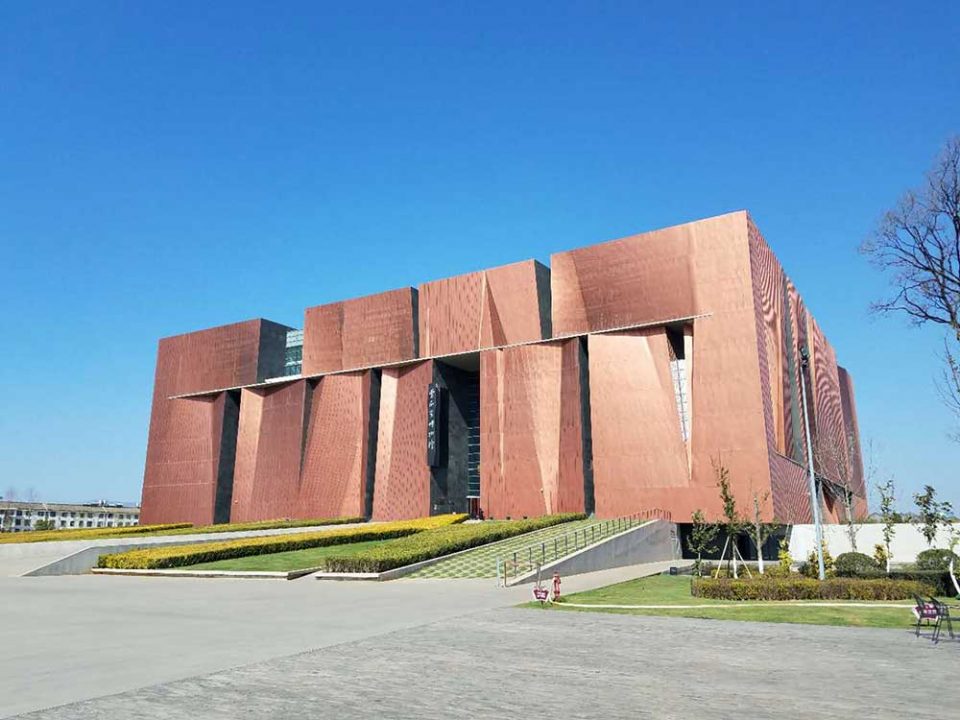
Yunnan Provincial Museum

Yunnan Provincial Museum is located south of Kunming, on Guangfu Road in Guandu District. It houses an exhibition centered on artifacts from tomb excavations at Jinning on the southern rim of Lake Dian. The museum, that officially opened its door to the public on May 18, 2015 has a rich collection of over 200,000 pieces that give the opportunity to better understand Yunnan and the ancient historical features of the Kingdom of Dian (278 – 115BC) and the culture of bronze.

Yunnan Provincial Museum

The museum covers an area of 150 hectares with a building area of 60,000 square meters. The design of the new museum comes from Rocco Design Architects and the external shape of the main building was inspired by the geological features of Stone Forest, an important grouping of limestone formations located in and from 2007 UNESCO heritage. Construction of the museum started in June 2009 and was completed in December 2014.

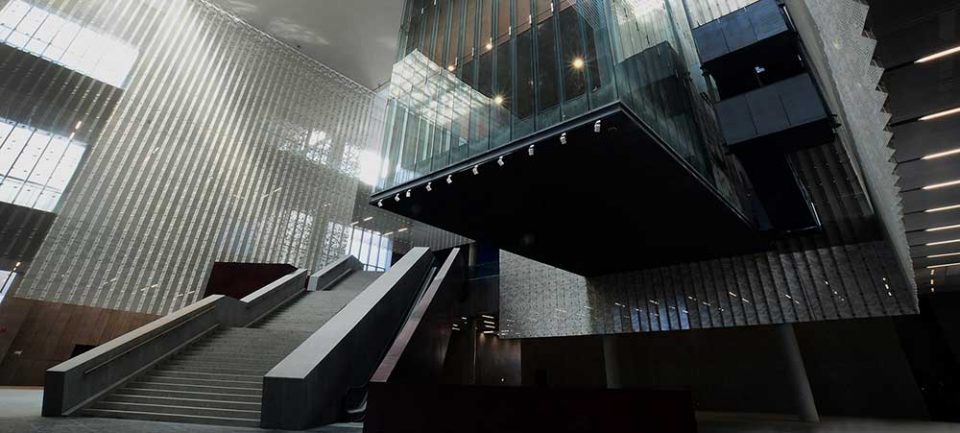
Internal Structure

The entrance experience to the museum takes place through a narrow passage, designed to induce the sensation of meandering through the stone forest, before suddenly finding itself faced with the vastness of the central space of the atrium.

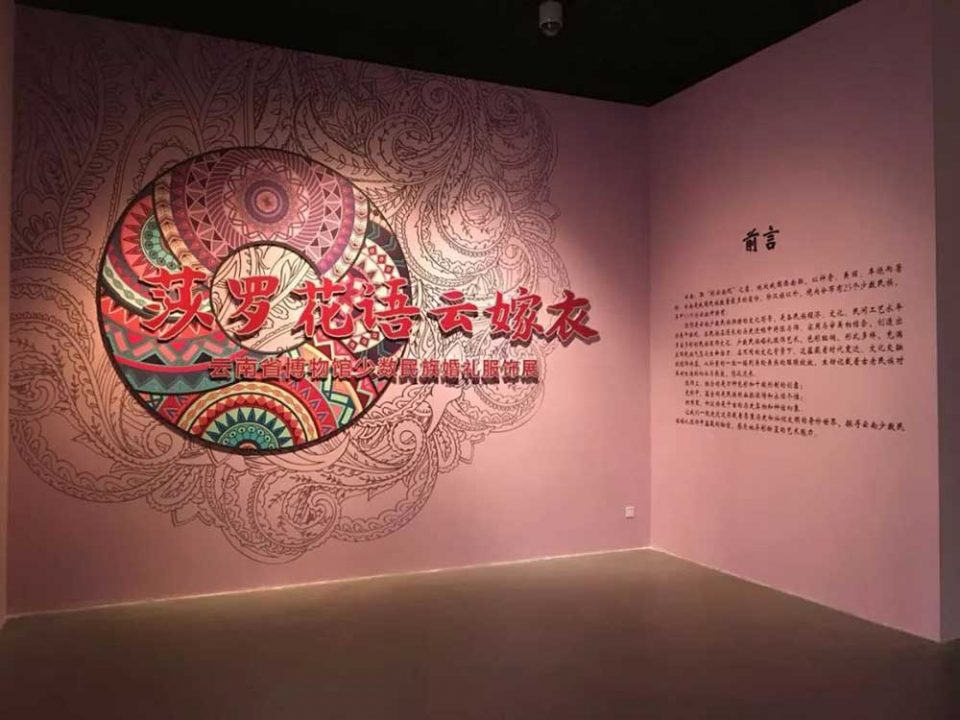
Yunnan Provincial Museum Minority Folklore Exhibition Hall

The external volume is marked vertically with a reference line which implies a distinction between exhibition and administration office space, which also recalls similar horizontal layers found in the natural rock formations of Yunnan. The museum has two storeys of underground back-of house supporting facilities & five storeys of public exhibition spaces and galleries overground.

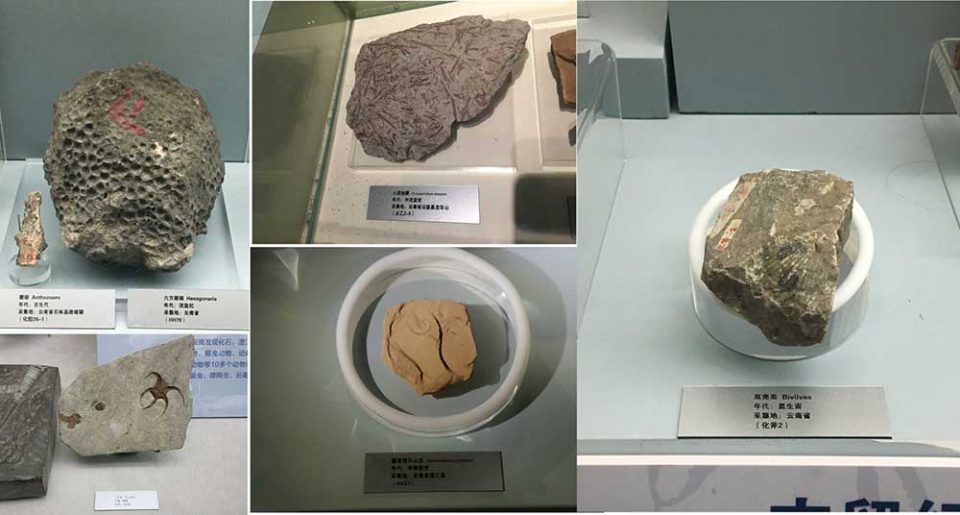
Ancient Fossils

The museum consists of six basic exhibitions and four theme exhibitions. The Six Basic Exhibitions are: Yunnan in the Prehistoric Era, Yunnan in the Bronze Era, Yunnan in the Period from the East Han Dynasty (25-220) to Wei (220-265) and Jin (265-420) Dynasties, Yunnan in the Tang and Sing Dynasties, Yunnan in the Yuan, Ming and Qing Dynasties, Yunnan in the Modern Times. The Four Theme Exhibitions are: Porcelains and Potteries, Exhibition of Paintings by Ms Liu Ziming, Exhibition of Rare and Precious Paintings and Exhibition of Ancient Golden Artefacts in China.

Bronzo Warring States Period

The displays and exhibits provide an insight into the history of Yunnan Province, from prehistory to 1949 when the People’s Republic of China was founded. The cultural artefacts on display highlight the development of the civilisation created by the multiple nationalities which make up the population of Yunnan province. The relics in Yunnan Provincial Museum mainly include bronze vessels, Buddhism relics, cultural relics of local ethnic minorities, art works, calligraphies and paintings, and porcelains, etc.

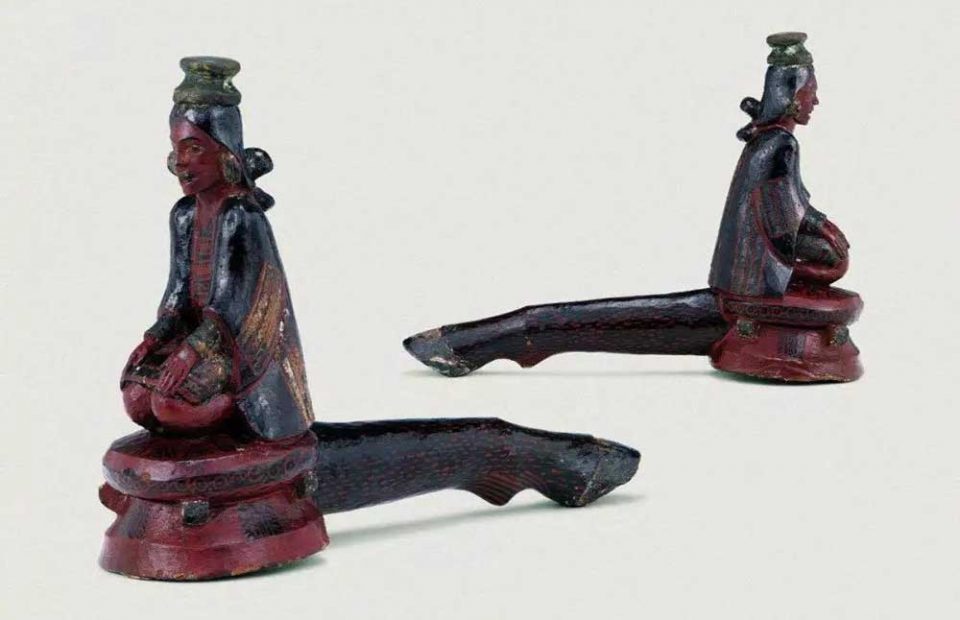
Lacquer Wood Kneeling Maid
Qing Emperor Qianlong-Alum Red Dragon Bowl
Ethnic Clothing
Zhuang’s Shawl

VISIT

Address: No.6393, Guangfu Road, Kunming City, Yunnan Province
Opening Hours: from Tuesday to Sunday 9,00-17,00. Closed on every Monday.

CONTACTS

Telephone: 0871-67286571
Website: http://www.ynmuseum.org/index.html

Credits:

https://www.travelchinaguide.com/attraction/yunnan/kunming/provincial-museum.htmhttp://wondersofyunnan.com/destinations/yunnan/popular-attractions/yunnan-provincial-museum-kunminghttps://www.archdaily.com/769671/yunnan-museum-rocco-design-architects

Photo credits:

http://www.chinakunming.travel/html/150604/471.htmlhttps://commons.wikimedia.org/wiki/File:Yunnan_Provincial_Museum_Treasure_Hall.jpghttp://www.yunnanadventure.com/index.php/Attraction/show/id/11.html