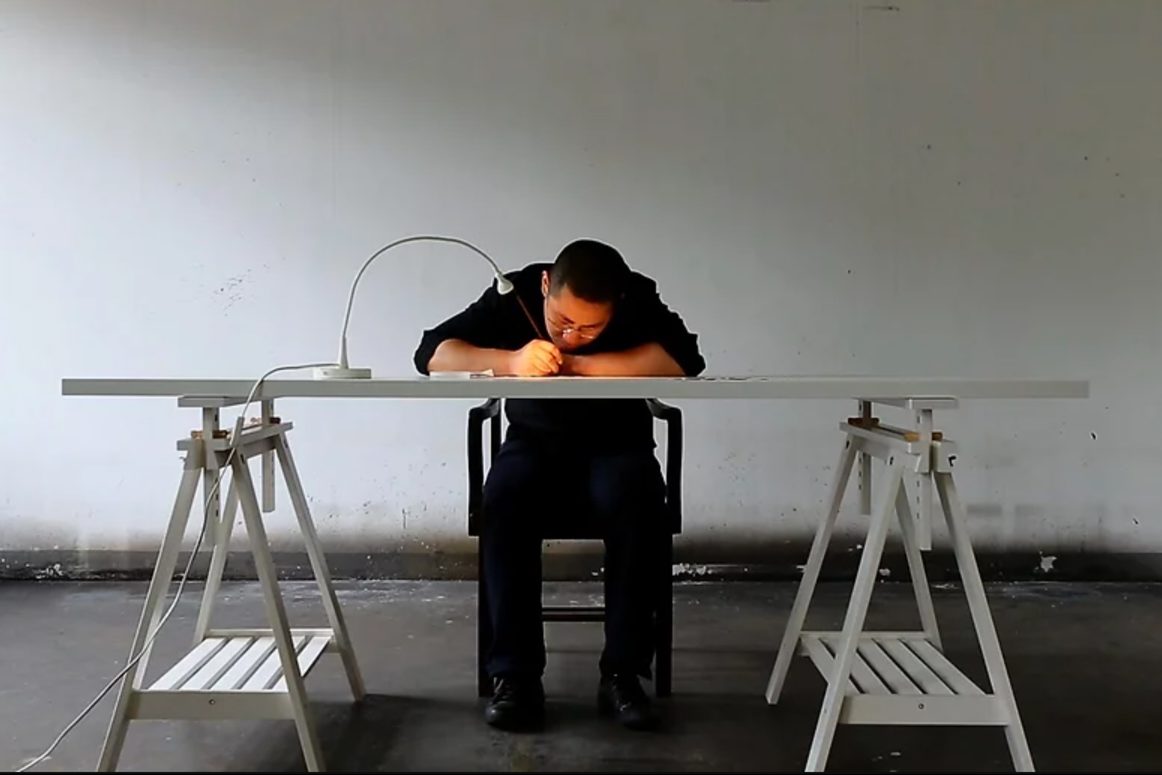
Ni Youyu is not just an artist; he is an observer, a researcher and a collector. In his spacious, industrial Shanghai studio, one encounters antique shards of ceramics, curious objects found in flea markets, stacks of notebooks and works in progress. Commonly overlooked found objects, many of which the artist discovered while traveling, are scattered around the room.

Ni strives to create a space where ideas historical and contemporary can intersect. Educated in traditional Chinese ink-wash painting, he draws from the rich and deep traditions of Song and Yuan Dynasty ink paintings, when the ancient artists pursued the unity between man and nature within the limited space of paintings. The Song and Yuan pieces emphasized the sense of historical grandeur and rationality, making a strong impression esthetically with their precise of brush strokes. Following Chinese radition, Ni studies and emulates the work of old Chinese masters as a daily ritual. However, he does not simply mimic these ancient artworks in his own work. Rather, he immerses himself in them to extract their essence and purposely does not include ink paintings on paper in his own work. Ni’s practice is equally informed by post-1960s conceptual art, such as the Italian modern art movement Arte Povera (1967-1972).
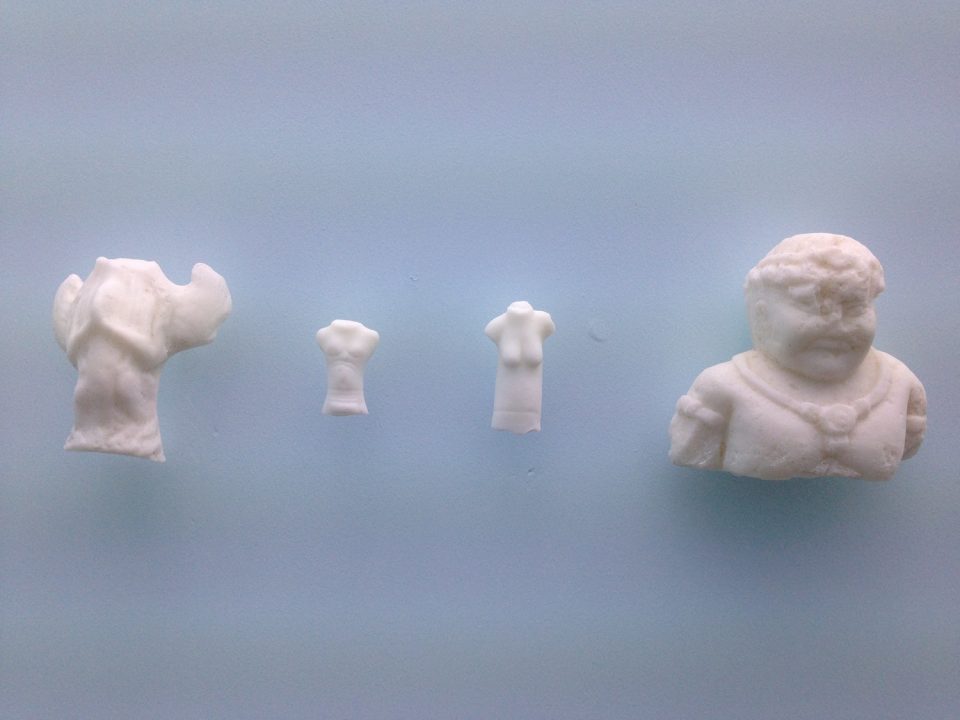
Ich the damaged relics Ni You yu
lch (2013), made from found objects, involves 100 small pieces of damaged and eroded relics of Chinese figurative sculptures of people, Buddha and animals, dating from the North Song (960-1127AD) to the Qing Dynasty (1644-1912AD) that Ni collected on research trips over several years. After making molds from these ancient pieces, the artist cast soap sculptures from them. Exhibited as though they are artifacts, the sculptures juxtapose the temporality of soap with the lifespan of hard stone antiquities. In doing so, they raise questions about change and permanency, exposing both materials’ essential fragility.

As part of the work, viewers are invited to become participants and “adopt” one piece of the soap, which they are free to use however they like. In exchange, they are asked to submit a photo of the object in their home. Their treatment of the soap becomes a reflection of their understanding of the sculpture’s function and its status as both a utilitarian and an aesthetic object.
The Song dynasty
Since 2011, Ni has been working on a series of paintings that exclusively use black matte and gold paint. Inspired by paintings from the Song dynasty and historical Japanese screen paintings. Sense of history, their color combinations and the precision of the brush strokes. Ni chose these colors in order to create a concrete yet illusionary visual effect. The contract of the gold semi-gloss against the black matte yields a contradictory quality. lending each scene a realistic yet dream-like aura.

Hoping to avoid solid lines, Ni developed a special method that uses pressurized water to wash away layers of paint. For each painting, he repeats this process several times; the result is a surface that appears worn, as though eroded by time. This effect is a similar to the visual device used in Song and Yuan Dynasty ink paintings. Ni creates scenes of waterfalls, landslides and flood-damaged landscapes by applying water to the painting’s surface. This interaction – between water both represented and actual – imbues the work with a sense of ingenuity and contradiction.

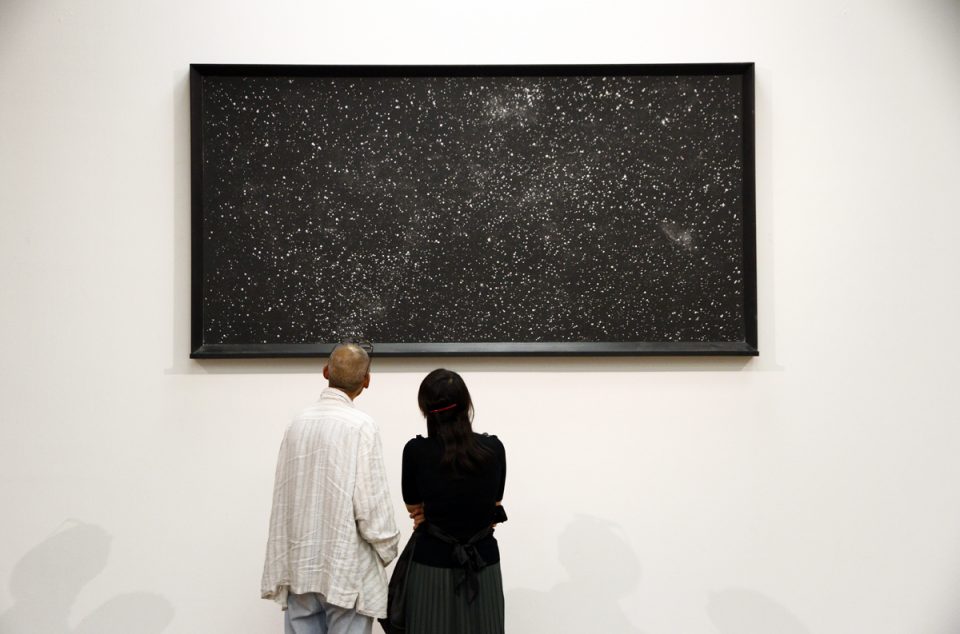
Galaxy the experience of childhood of Ni Youyu
Ni’s work Galaxy (2008-) re-examines and critiques the trend of costly large-scale art productions .that may be impressive but possess little meaning or content. In Chinese, the phrase “to pound the money” refers to spending a large amount of money without giving it much thought. Ni physically enacts this saying. repeatedly hammering coins he has collected from around the world until their surfaces are flat enough to paint on.
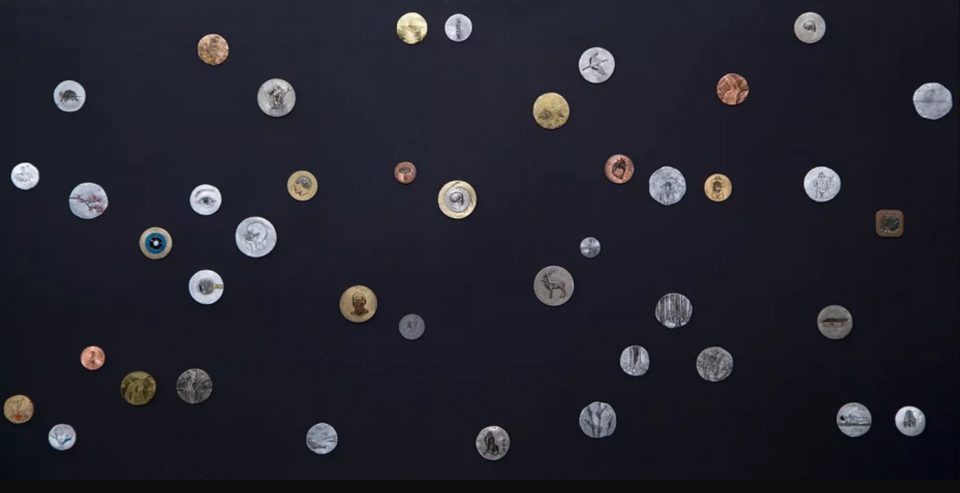
Building upon his preexisting interest in miniature painting, Ni trained himself to draw ink paintings on the coins.which he flattens to approximately one inch in diameter. As though representing “a galaxy of human knowledge,” these paintings depict a range of subjects, from landscapes to anatomy. This project furthers Ni’s exploration of the relationship between deduction and addition. In destroying the coins’ surfaces, he removes their monetary value. However, this process of destruction is also generative: it transforms .the coins into art objects, endowing them with a new value within the art market.
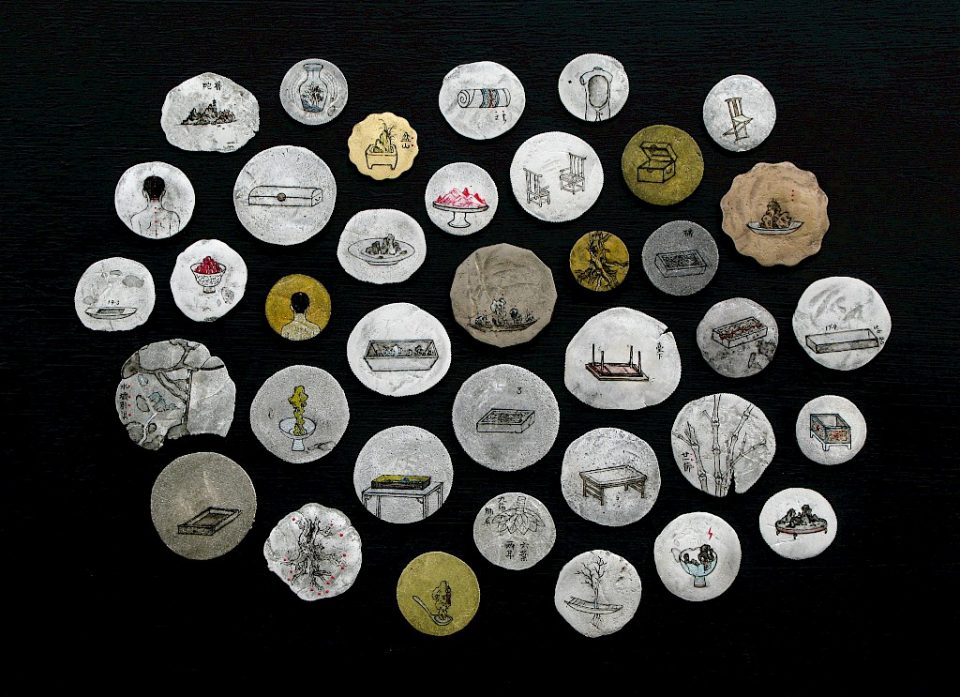
The inherent labor-intensive quality of his artworks requires the artist’s full attention and repetitive action. Ni often gets into a deep meditative state while in the process of creation. lending these works a sense of ease and grace. making his artistic practice an effortless endeavor.
From:
https://theartling.com/en/artists/ni-youyu/
http://www.guan-dian.org/ni-youyu
https://www.brooklynmuseum.org/opencollection/objects/216753
For more Chinese art: Abgstage01.