Categories
Contemporary 当代

Contemporary | Yuan Yuan – Architectural paintings

Chinese artist Yuan Yuan is known on the international art scene thanks to his distinctive paintings, focused on architectural subjects and executed with impeccable technique. They convey a unique atmosphere, that is materialized in the poetic of memory. 
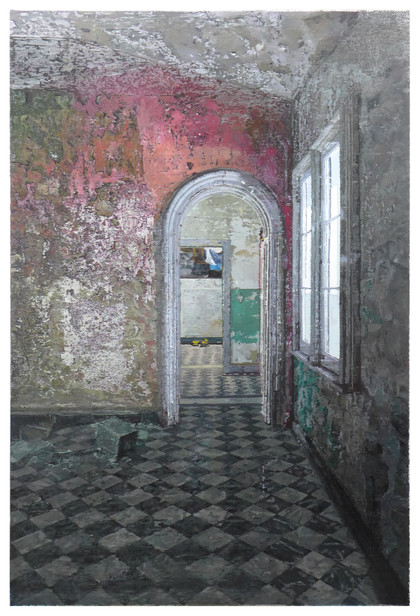
Yuan Yuan, Confessionary II, 2013, oil on linen
Confessionary II, 2013, oil on linen

Zheijang hometown

Yuan Yuan born in 1973 in Zhejiang province and studied in the Oil Painting Department of the China Academy of Art in Hangzhou. Where he gained a graduation in Fine Arts in 1996 and a Master in Fine Arts in 2008. When YuanYuan was studying there, while Chinese society was still very conservative. The Academy was “like a sunroof, always open for us” . And he benefited from a library well stocked with foreign periodicals. Currently lives and works in Hangzhou and Berlin.

His work is heavily influenced by traditional Chinese painting, which she studied when he was a secondary school student. Also, the painter was inspirited by Western artist such as Richard Long (Land Art) and Felix Gonzalez-Torres (Conceptual Art).  
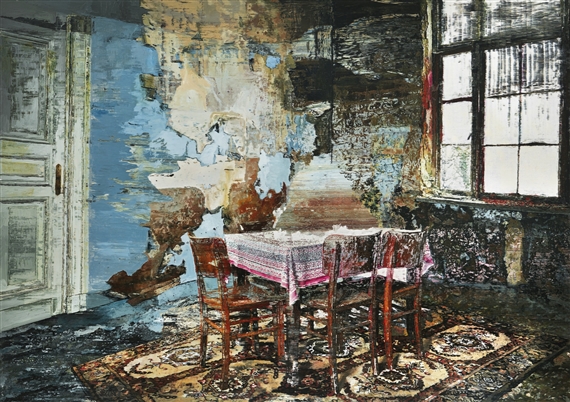
Yuan Yuan, Breakfast, 2013, oil on canvas.
Breakfast, 2013, oil on canvas.

YuanYuan subjects are mainly interiors and these are based on real places, with some imaginary elements added. Sometimes he also manipulates architectural details and as a result the scenes . He depicts seem to lie somewhere between reality and illusion. 

All Yuan Yuan’s paintings share a sense of abandonment, offering just a glimpse of their former glory.

The artist said

“Ruins give us a sense of security, they are living spaces without .A sense of pressure so you can do whatever you want. Abandoned places are also public, meaning that you may enter and visit. This is similar to the process of a viewer who is looking at an artwork. I am trying my best to identify the residual traces left behind – not so much what the place has now.But rather what this place used to be for a long time, which no one can take away and cannot be seen. “

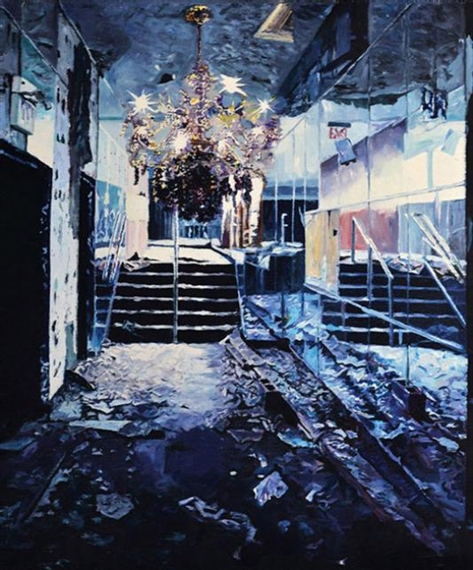
Yuan Yuan, A Home for Home, 2012, oil on canvas
YuanYuan, A Home for Home, 2012, oil on canvas
Yuan Yuan, Fairy Dream Liner 3, 2008, oil on canvas
YuanYuan, Fairy Dream Liner 3, 2008, oil on canvas

Paintings composition are highly structured and orderly, dictated by the geometric details of the   architecture depicted.  what sets Yuan Yuan’s paintings is the incredible detail with which he describes every individual surface within the composition. In particular, She is fascinated by mosaics and patterns of tiles, whether on floors, walls, or lining pools and showers.

He is able to play with an infinite variety of hues within the same color scheme to produce a stunning effect. The atmosphere often feels humid in his paintings, with water in pools or dripping from .the ceiling or decaying walls, and the mood is melancholy. In order to achieve the effect of wet surfaces, he applies several layers of diluted pigment. A classical Chinese painting technique.  
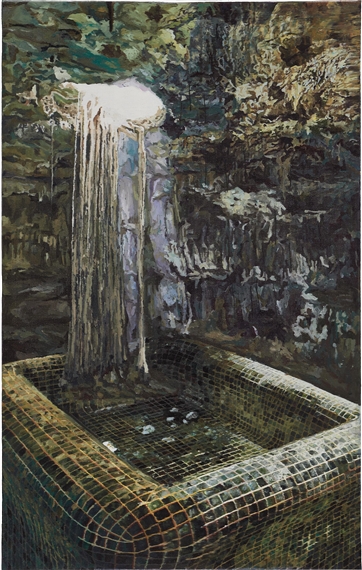
Yuan Yuan, Meteoric Water, 2011, acrylic on canvas
Yuan Yuan, Swimming Pool II, 2010, oil on canvas

At first glance, Yuan Yuan’s paintings seem devoid of any human presence. This is not quite true. She wants to represent people by depicting traces of human activity, which heighten our curiosity. 

Thus, She also conveys a sense of passing time, of transition and history. 

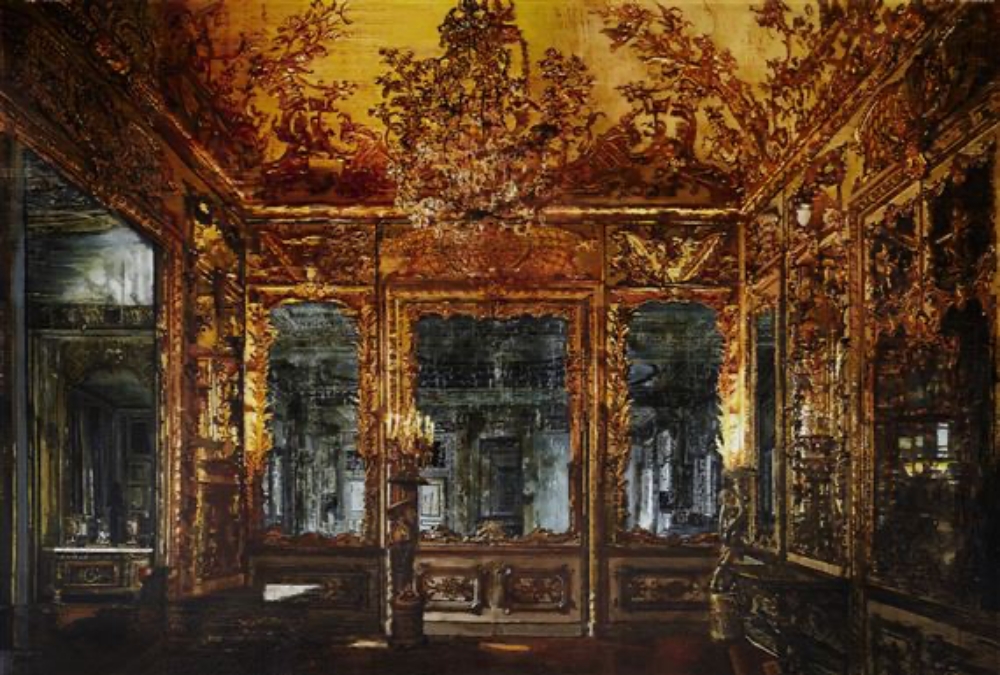
Yuan Yuan, Mirror, 2011, oil on canvas
Mirror, 2011, oil on canvas

For more Chinese art: Abgstage01. 

***

Categories
Contemporary 当代 纵观艺术 艺术家

Contemporary| Zhou Jun – The Thick Red Line

Zhou Jun is a contemporary conceptual chinese photographer. He was born in Nanjing Province in 1965 and graduated from Nanjing Normal University in 1990.

His work revolves around construction sites and the relationship between urbanization and the preservation of ancient cultural inheritance.

Zhou Jun
Zhou Jun

Zhou Jun’s technique

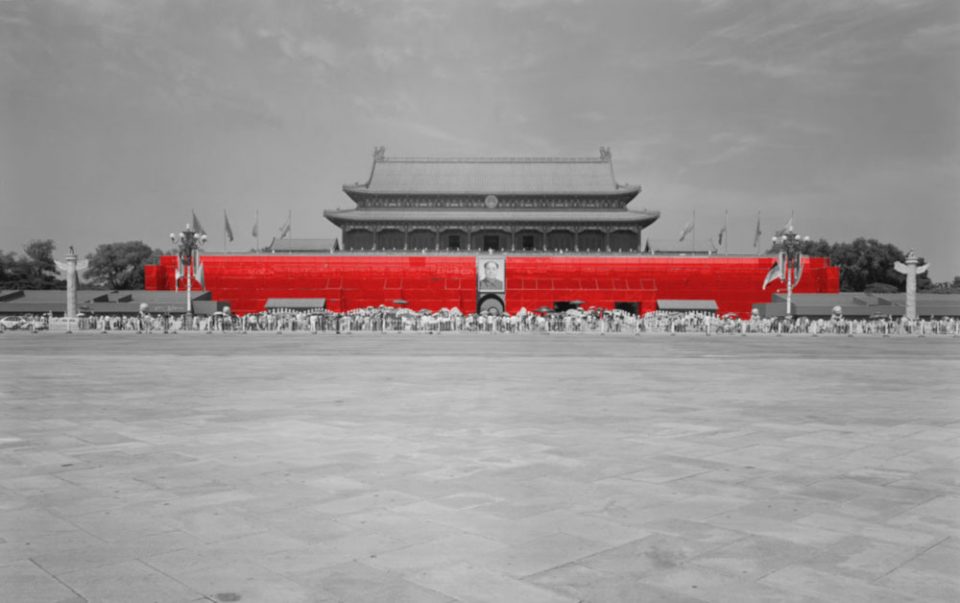
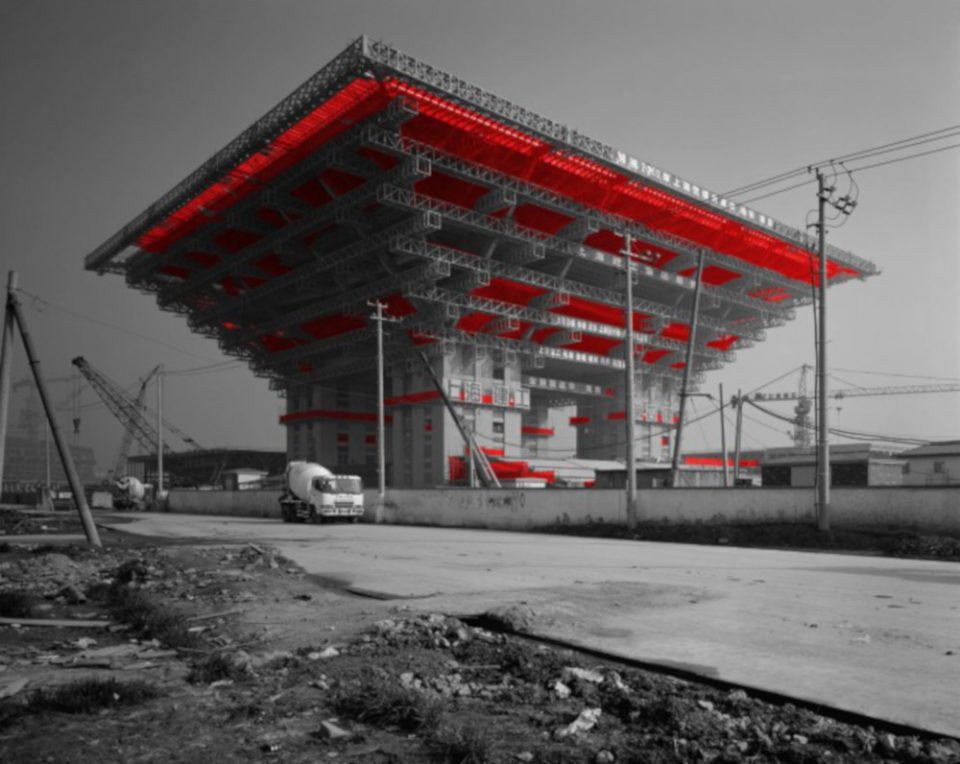
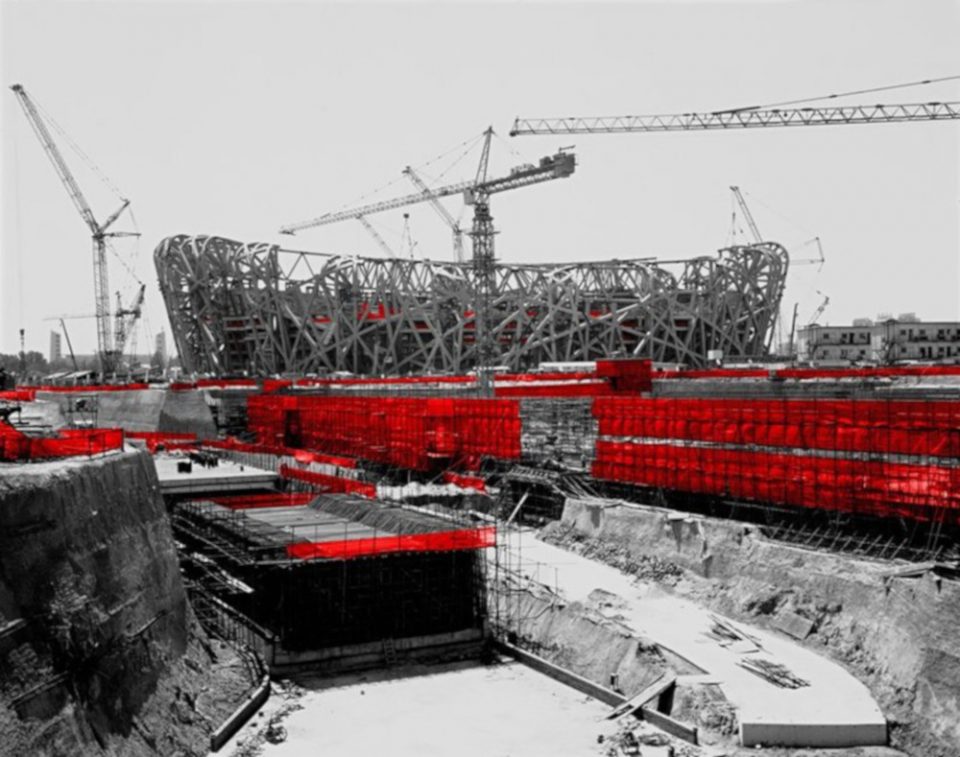
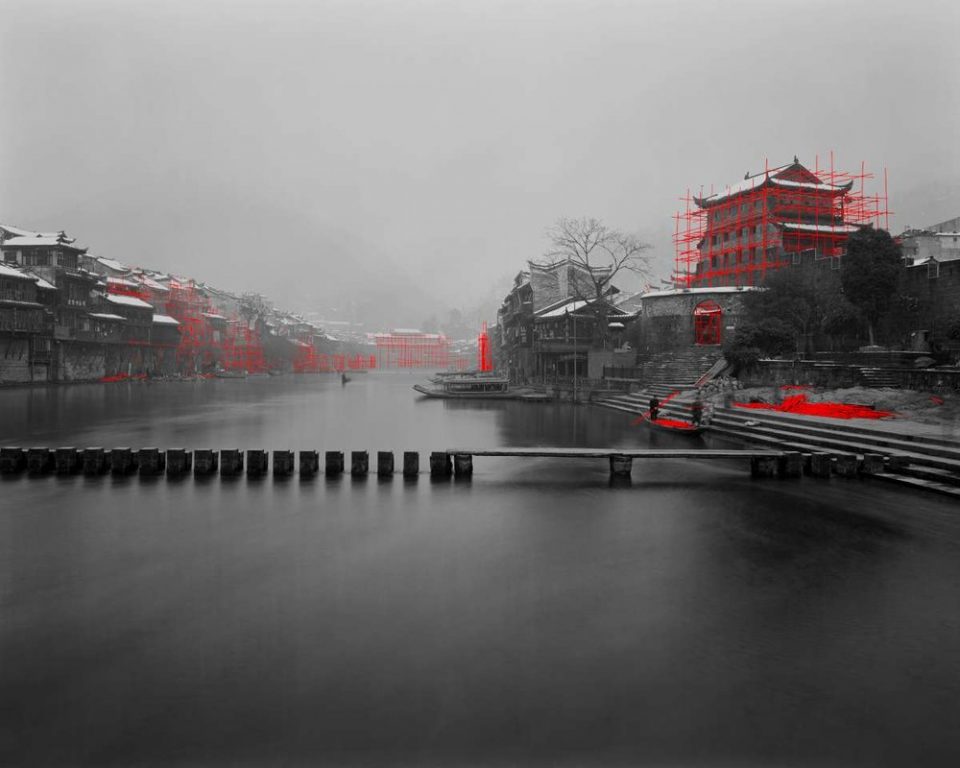
The artist is best known for his series – Scaffoldings; Bird’s Nest project; The Red and the Black – featuring Chinese cities in black and white with overlays of red streamers wrapped around under-construction buildings. Zhou Jun uses large format film cameras to produce negatives, which are scanned, digitally manipulated and printed to produce large unframed photographic works. Built environment is the subject of Zhou’s work in an analysis of China’s rapid and sometimes brutal redevelopment. Created since 1992, his photographs mainly treat the conflicting relationships between Chinese traditional architecture and contemporary buildings while continuously challenging the symbolic nature of the red color.

9th 2007, 2007, Digital C - print, 120 x 190 cm/180 x 286 cm
9th 2007, 2007, Digital C – print, 120 x 190 cm/180 x 286 cm
Expo 2010 Shanghai - China Pavillion, 2009, Digital C - print, 120 x 150 cm/220 x 180 cm
Expo 2010 Shanghai – China Pavillion, 2009, Digital C – print, 120 x 150 cm/220 x 180 cm

Building progress

The contradictions that are presented when trying to preserve the past in a time of China’s unprecedented economic growth underpin the work of Zhou Jun. During the last thirty years the most striking feature of China’s re-development has been its city construction. Demolition of whole villages to make way for high-rise development is a regular occurrence. The lead up to the 2008 Beijing Olympics saw massive building works and although it transformed Beijing into a modern city entire neighborhoods were ‘moved on’ in the name of progress.

Bird's Nest No. 2, 2006, Digital C - print, 50 x 60 cm/120 x 150 cm
Bird’s Nest No. 2, 2006, Digital C – print, 50 x 60 cm/120 x 150 cm

Zhou Jun’s work embodies a quality of yearning for the past to some extent and this is seen in his photographs of historic buildings from Beijing. He is acutely aware of the expansion of Chinese cities and the loss of traditional architecture. It is the loss of Chinese culture in the pursuit of globalisation.

Phoenix Ancient City, 2011, Digital C - print, 120 x 150 cm/180 x 220 cm
Phoenix Ancient City, 2011, Digital C – print, 120 x 150 cm/180 x 220 cm

Seeing red

The color red has significance in Chinese cultural memory as it is used for ceremonial occasions such as weddings but it also represents revolutionary communist ideology. It is a reminder of the turmoil of the recent past. Because of this, the wide variety of perspectives of each person means completely different feelings and reactions are aroused by the color red. The partnership between the black and white photographs and the red sections of scaffolding allows the audience to produce their own meanings.

“Hanging Red”, 2009, 120 x 150 cm, Archival Inkjet Print on Fine Art Paper

A word from the author

“The three decades of development China is experiencing – building to a crescendo with the Olympics – are unparalleled in history. The colour red, which I use to highlight specific parts of the photograph, can elicit different responses in people from different countries or cultures – at times, it can even have opposite meanings for people. I want my work to be interpreted differently by people depending on their response to the symbolic meaning of red. In this sense, the work has the potential to reveal international perspectives to common subject matter.”

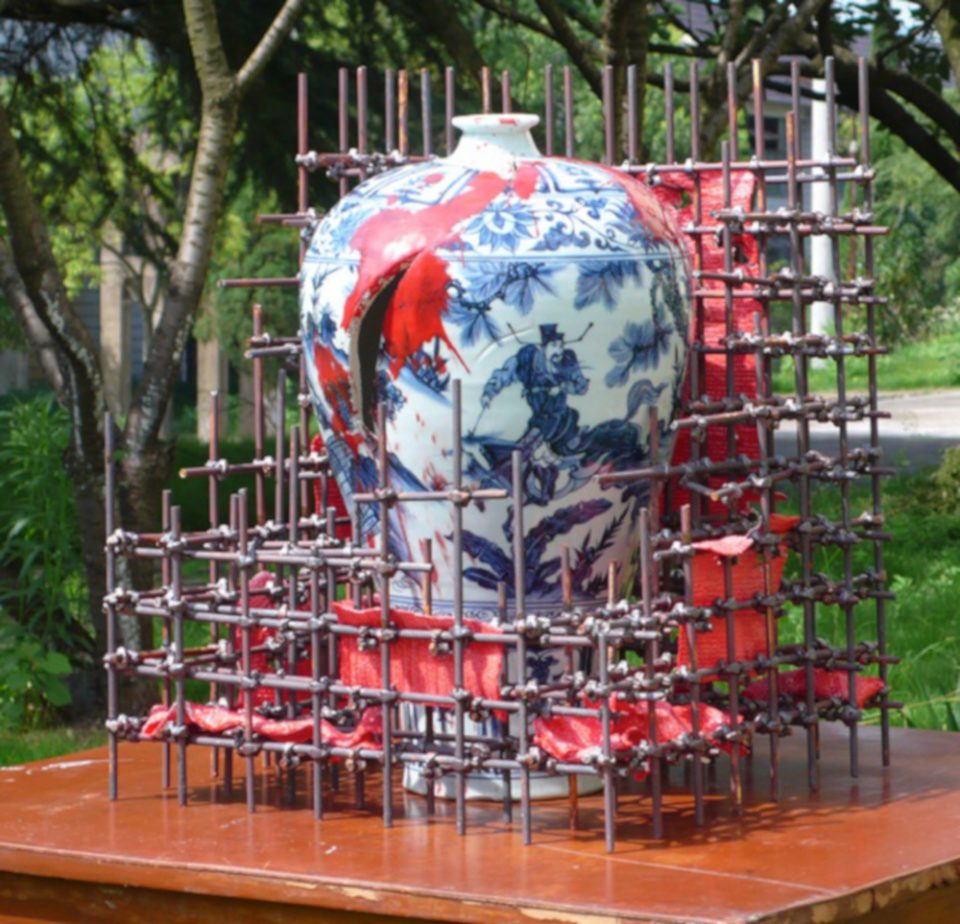
Zhou Jun also creates sculptural works using porcelain and other materials, always mantaining his distinctive style and his conceptual structure.

A
A “wounded” porcelain vase, surrounded by scaffoldings

For more informations about Zhou Jun’s work: https://www.redgategallery.com/Artists/Zhou_Jun-photography/index.html

or: http://www.artlinkart.com/en/artist/wrk_yr/dbabrws/1eccAtt/2006