Categories
Contemporary 当代

Contemporary | Lei Benben – Phone photographs

Lei Benben is an artist with strong consciousness, in other words, lei ben ben takes a simple and linear approach to think about her art style.
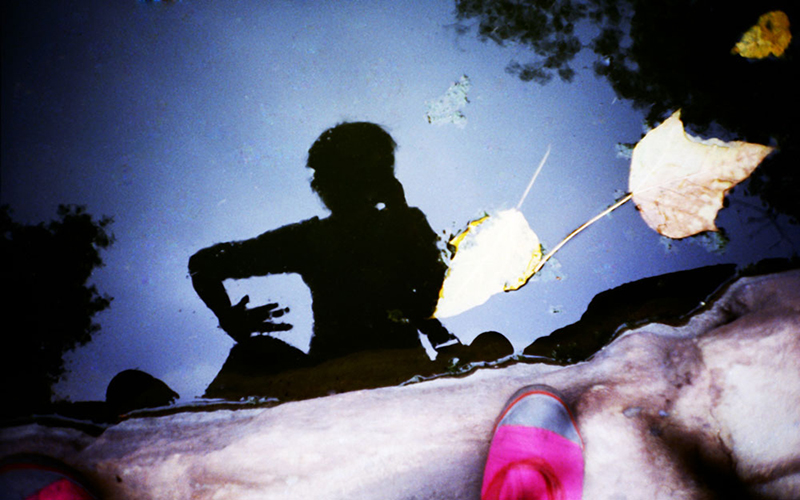
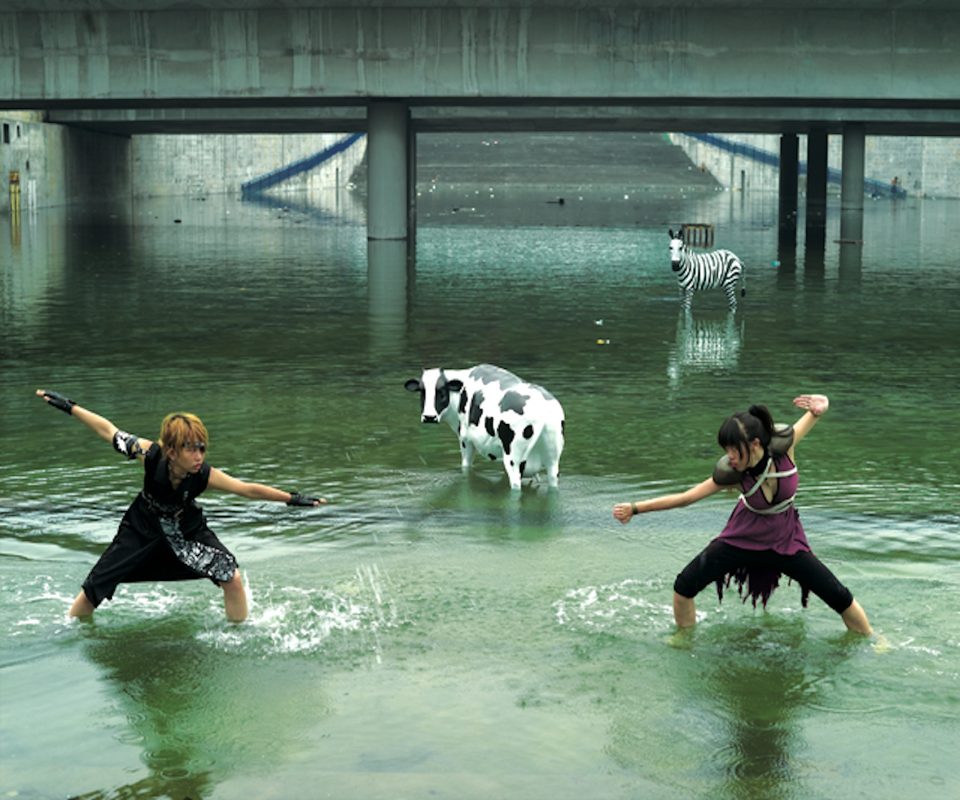
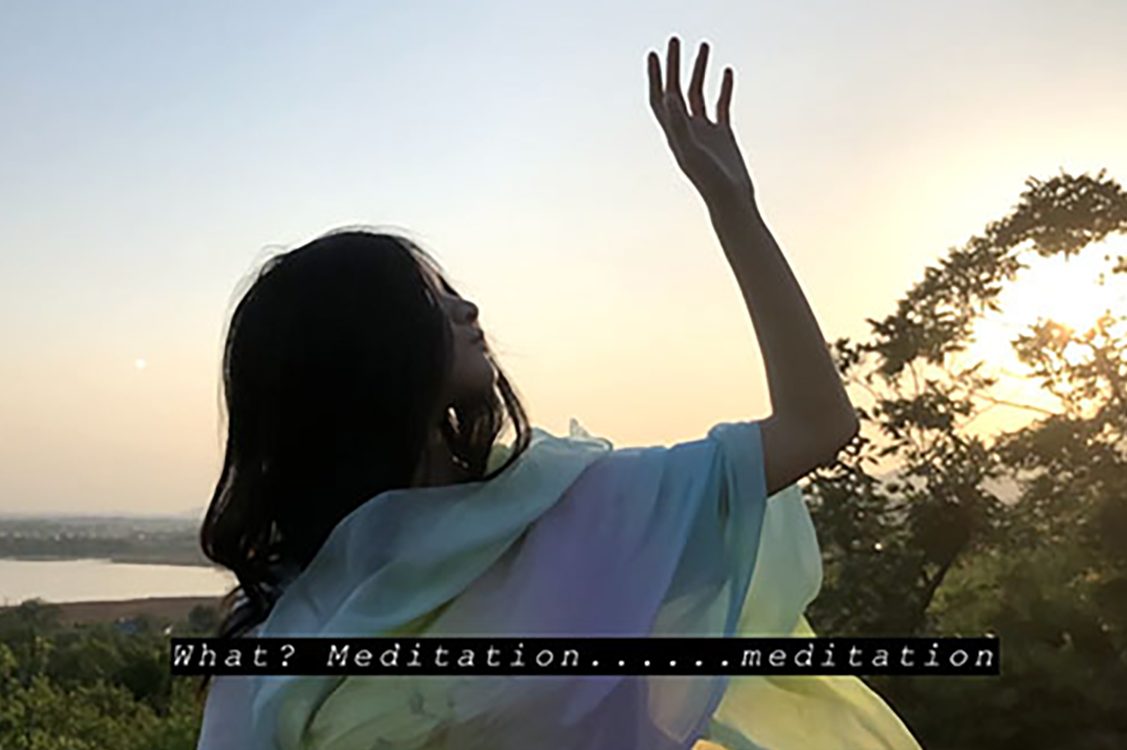
Lei Benben , Showder on the water, 2005, photography

lei ben ben used to be a dance teacher. To her, since dancing was very much challenged by other commercialized art formats, it somehow makes dancing a purer and soulful expression. One day, Lei Benben picked up a camera by accident. Camera’s view to the world and the way it captures images amazed her. So she gave up her dance career, and turned for another challenging profession.
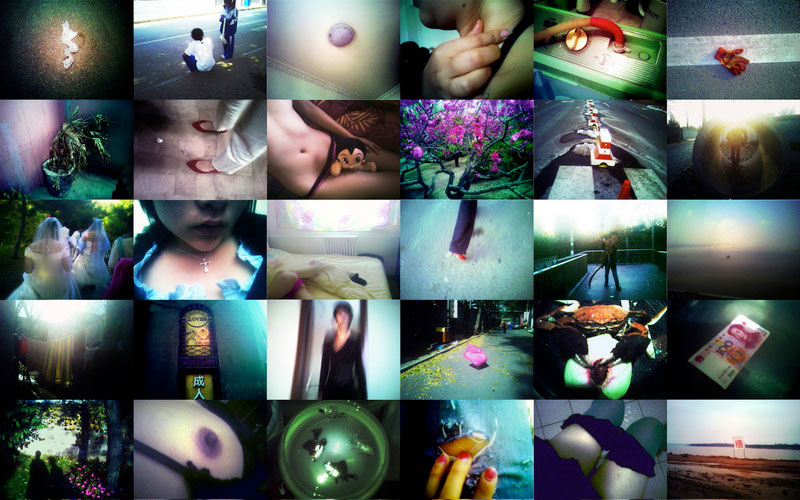
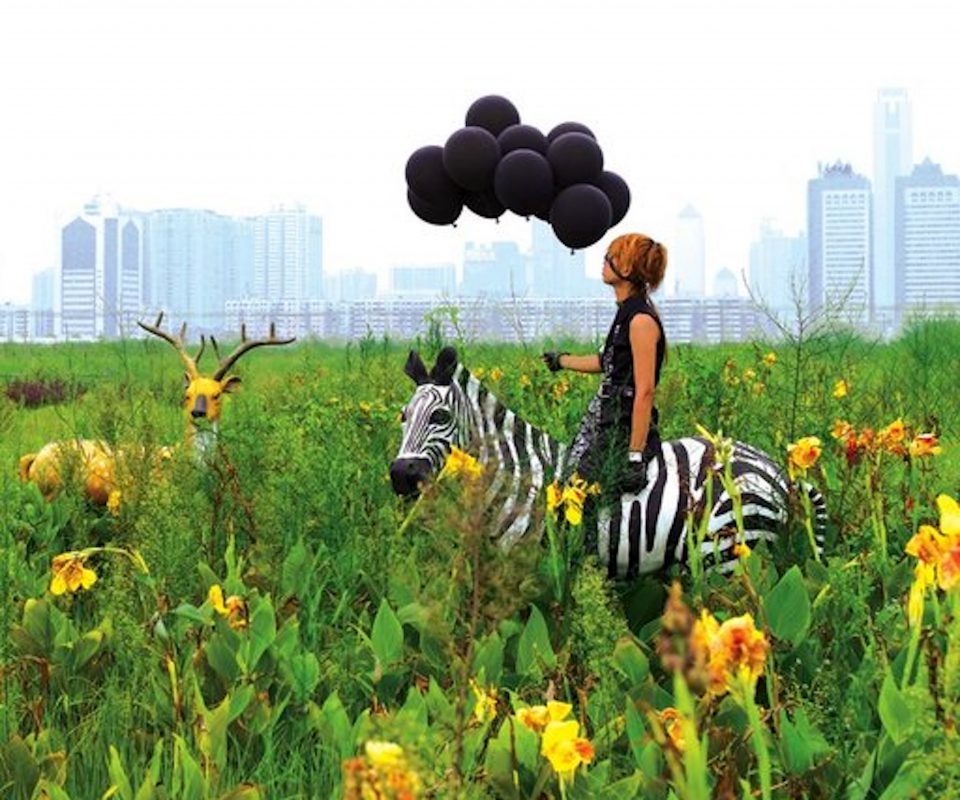
Lei Benben , The Passion of Life, 2005, photography

Lei Benben started her photograph career by using camera lenses on mobile phones. The style of her works is rather low key: the objects in her images give us the sense of joy with melancholy. The color of her images seemed to be purified to its original luster by the soft lights of a cloudy day, touching and vibrant.

Wisdom and beauty photographs

lei ben ben photograph works are random taken. Lei Benben is an artist with linear logic and her characteristics determines that her works would not be flourished with splendid colors. However, her works are full of straightforward wisdom and beauty. The underlying interpretation of social morals can be sensed throughout her images. In addition, the art of dance plays a significant role in Lei Benben’s photography; it makes her works delicate and sensitive, even if the themes of the works are somehow heavy or serious. The element also contributes to the permeating, gentle and subtle appearance of her photography without overloaded contents.
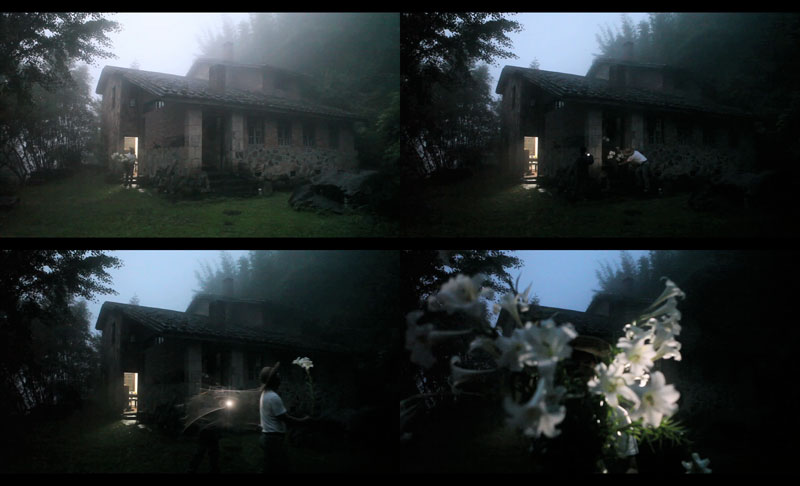
Lei Benben , Present, 2012, photography

Lei Benben’s mobile phone photography concentrates on story-telling rather than expressing opinions of displaying certain attitude. It is very similar to man traditional Chinese poetries that praise on nature phenomenon: the works only care about what is happening, not what would happen afterwards.

lei ben ben ‘s Hair is missing
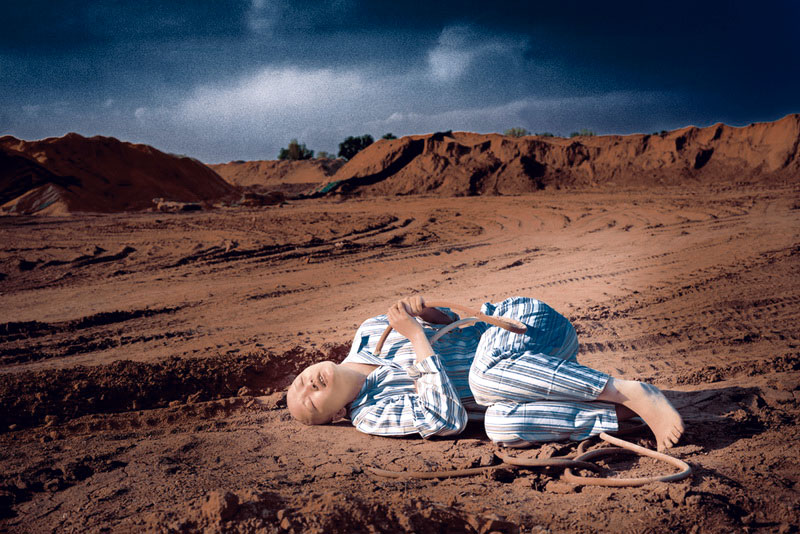
 Lei Benben , My Hair is missing , 2007, photography
Lei Benben , My Hair is missing , 2007, photography

A bald head could be a special code for certain groups or certain characters. For example, the bold head is commonly associated with prisoners, patients (those who are losing hair as result of chemotherapy), Buddhists, Punks, Skin Heads or artists. In this case, bald head actually becomes identity or the symbol of some groups with special characteristics. Some would obtain this special code or symbol to gain certain recognition or at the least the proof of an identity. Since the identity is such a hot topic in today’s society, the image of “bald head” drew Lei Benben’s attention and let her into a contemplative process to find her proof of identity. In the contemporary society, Bald Head is often linked to negative things.
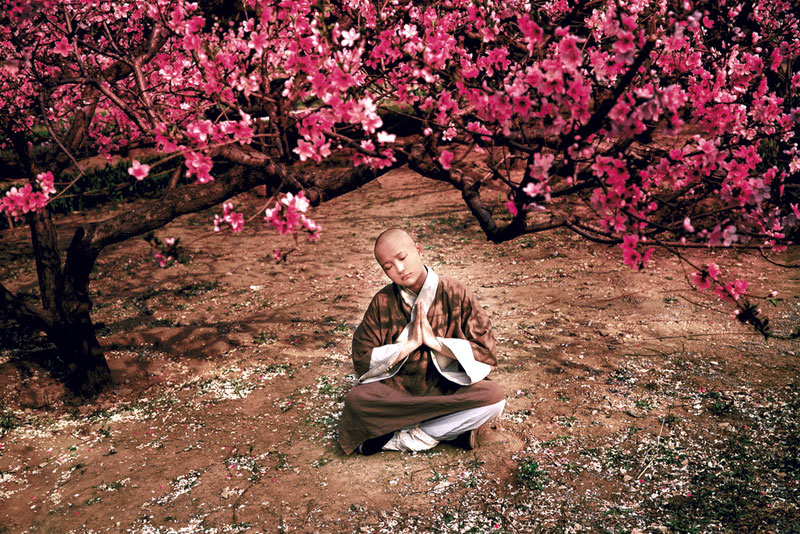
Lei Benben , My Hair is missing , 2007, photography

Sometimes, it is considered as a sign of politics, representing a class of people who are not respected politically or socially. In reality, the image of “bold head” has in fact been worshipped as an alternative subject by many. More and more people start to use the image to gain recognitions or identities. Along with other popular idols or distinctive personalities, the appearance of “bold head” makes the character identifying an even more intriguing and complicated process.

The institute of Zoology and Botany for Lei Benben
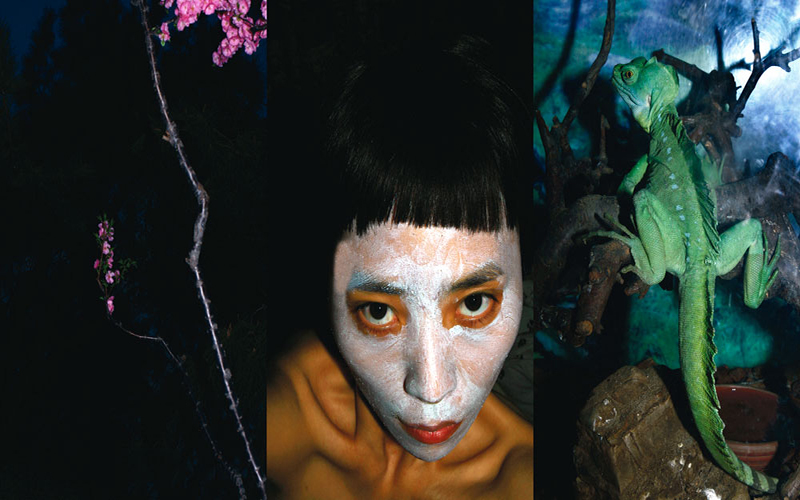
Lei Benben , The institute of Zoology and Botany , 2007, photography

“The institute of Zoology and Botany” is the work that Lei Benben has been expecting the most. The images attempt to create contrast and examine how life reacts and strives for survival under suppression. In this case, the forcible use of flash lights provides the unusual and surprising power for subject’s compulsory behavior. Because Lei Benben is not a scholar type of artist, she once again diverted from a serious and heavy topic by employing her romantic and sentimental nature. That’s why I believe that this photograph series is smart and poetic.
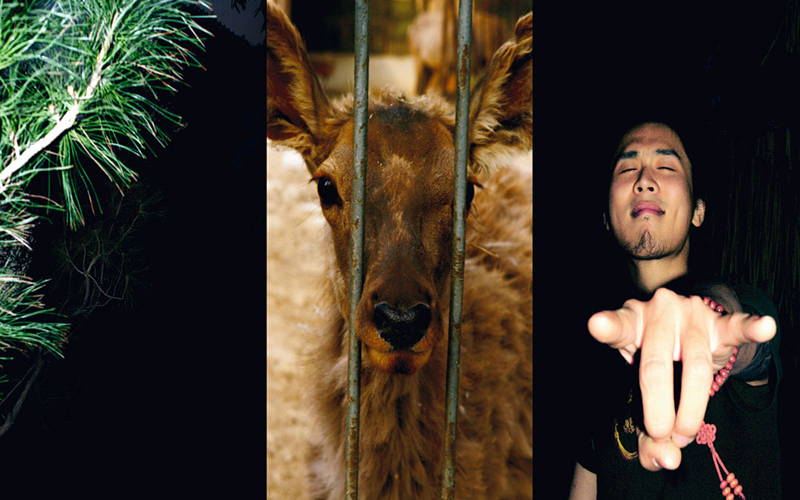
   Lei Benben , The institute of Zoology and Botany , 2007, photography
Lei Benben , The institute of Zoology and Botany , 2007, photography

From:

http://www.leibenben.com/EnIndex.aspx

https://ocula.com/artists/lei-benben/

http://www.artnet.com/artists/lei-benben/

http://www.artlinkart.com/en/artist/wrk_sr/d32atwt/2dcdsCq

For more Chinese art: Abgstage01. 
Categories
Contemporary

Contemporary | Cao Fei a new media artist

Who’s?

Cao Fei, daughter of a famous Chinese sculptor, was born in 1978 in Guangzhou, China. She currently lives and works in Beijing.
She is one of the most innovative young Chinese artists on the international scene. In his installations and videos, Cao Fei investigates the expectations and dreams of the young Chinese generations. Cao’s works are an outlet for invention, but behind her playful jokes lies an uncertain world of unfulfilled desires.

Combining popular aesthetics with a documentary vision and references to surrealism, in his works Cao Fei moves strong social criticism, reflecting on the inconsistencies and hopes of his country. He uses photography, video and digital media in innovative ways to expose the dramatic changes in his daily environment – since 1992 – and in his high economic growth, urban development and the rapid globalization of China focused on its native region of the Pearl River Delta.

Biennali and triennali

Cao Fei’s works have been exhibited in several international biennials and triennials, including the Shanghai Biennial (2004), the Moscow Biennial (2005), the Taipei Biennial (2006). And the 15th and the 17th Sydney Biennial (2006 and 2010), the Istanbul Biennial ( 2007), Yokohama Triennale (2008) and 50a, 52a and 56a Biennale di Venezia (2003, 2007 and 2015) where he presented the work “La Town”.

Cao Fei
“COSplayers”, 2004
Cao Fei

His fascination with local youth subcultures during his training period is reflected in his early photographic and video works.
In “Cosplayers” he explored the alienation and escape tried by young disaffected and displaced people. Who expressed themselves as fantastic game characters. The interaction between the virtual world and the real one, utopia and dystopia. Body and technology remained important themes for the artis

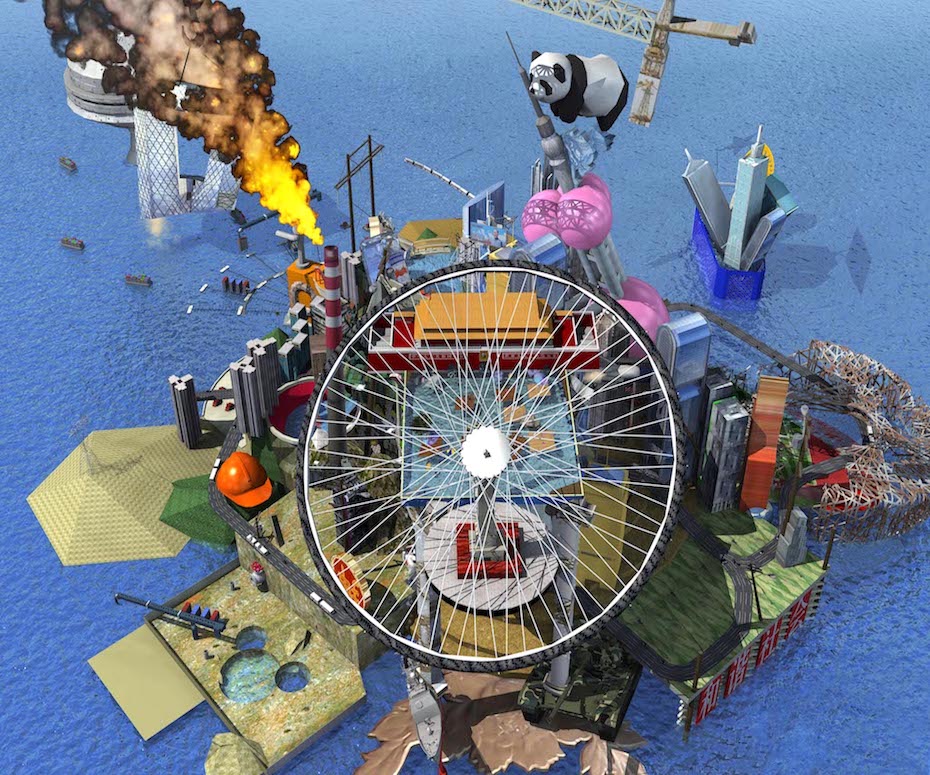
RMB City 2007

Fascinated by the potential of the virtual world, not only as a strategy of escape from reality. A virtual world that is as a real tool of online urbanization, Cao Fei founded RMB City. Using the famous computer platform Second Life Cao Fei realize her avatar China Tracy. The alter ego of the artist: Sexy, feminine, with dark hair and Sailor Moon style has given shape to a virtual art community. Lives and operates in an environment that embodies the unique characteristics of Chinese cities.

Cao Fei

RMB City states Manifesto: “New orders are born, so they are new, strange wisdom” 1-A statement appropriate to the ‘setting of the work, the virtual platform Second Life, in which users, through their chosen avatars, can buy and exchange objects, build urban structures and interact with other avatars in an artificial utopia that is also part of the apocalypse.

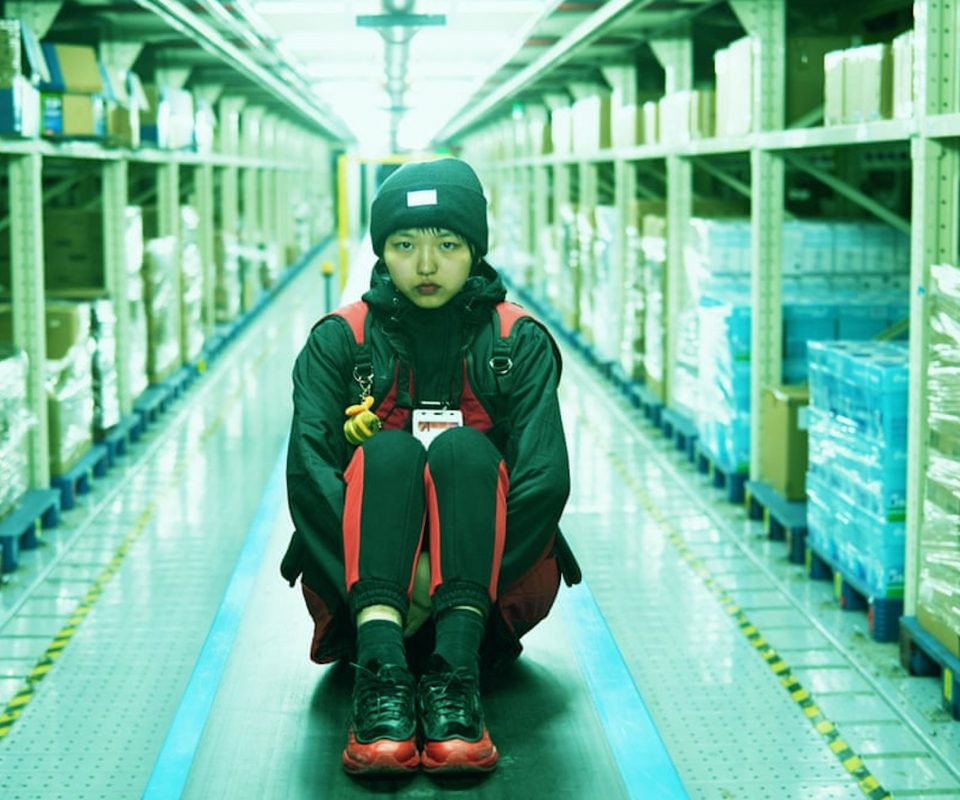
“Asia One”, 2018

Cao Fei says «Technology has developed beyond imagination»
For “Asia One” commissioned by the Guggenheim Museum, Cao visited some of China’s most advanced industrial facilities. Including the world’s first fully automated sorting center in Kunshan, in Jiangsu Province. For this project, a hyperreal vision of the near future shifted its focus from the present to our collective future by examining the effect of technology on human relationships.

Cao Fei
“Nova”, 2019

On the occasion of her solo exhibition Blueprints, at the Serpentine Galleries, Chinese artist Cao Fei has produced two new limited edition artworks. 
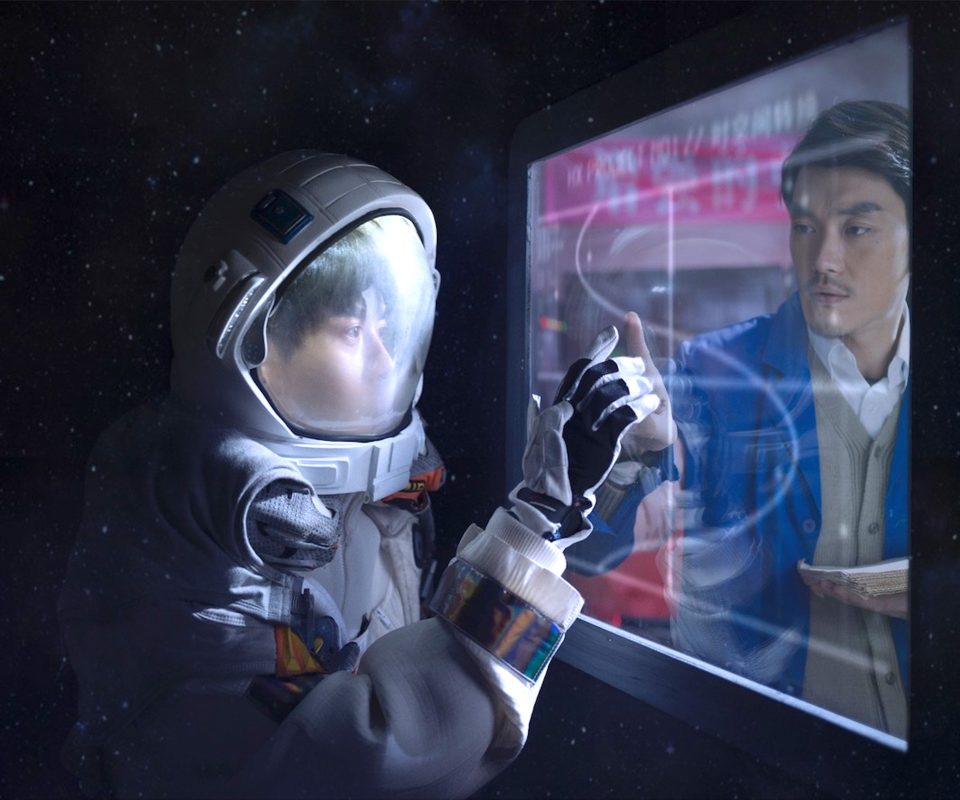
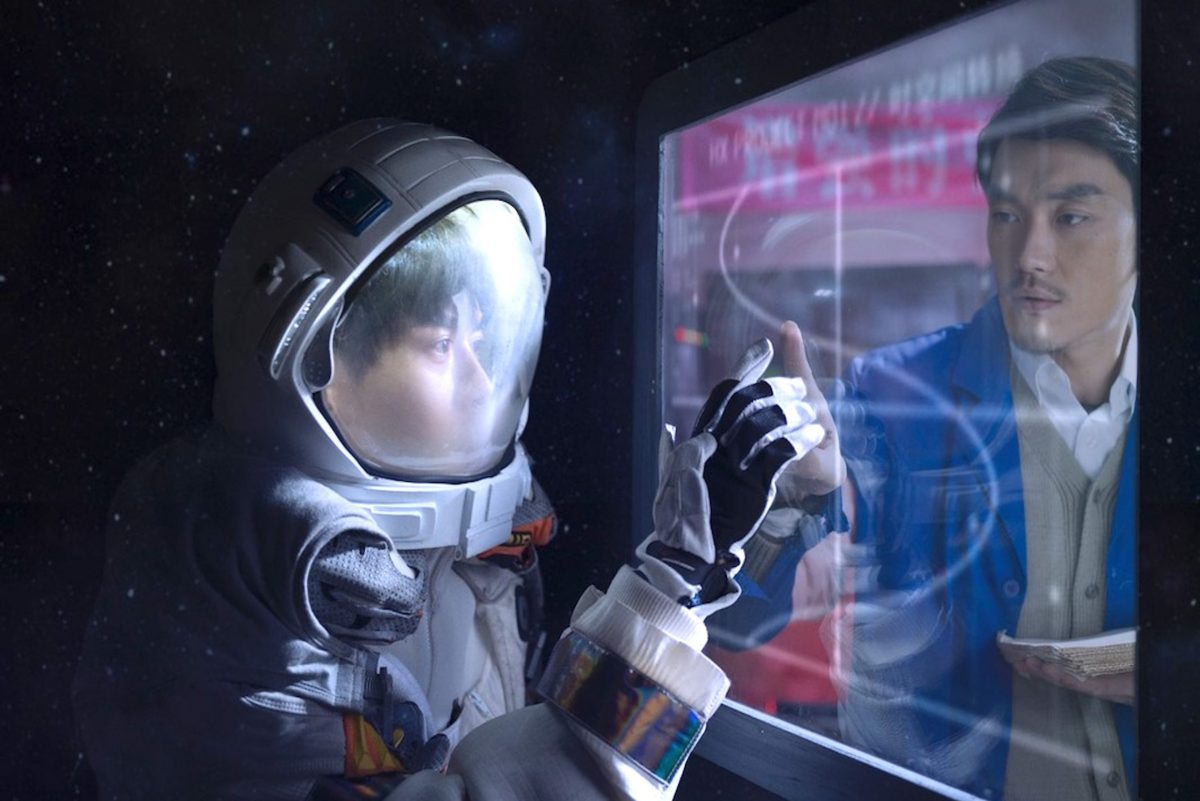
The two limited editions Nova 15a and Nova 18a are two film stills from Cao Fei’s HX’ research project. The film tells the story of a computer scientist working on a secret international project that attempts to turn humans into digital mediums.

Cao Fei

A failed attempt to use his son as a test case results in the young man becoming lost in cyberspace, a spectre haunting the past, present and future worlds that continuously interact and overlap throughout the film. By mining the history of her immediate context, Cao Fei takes us on a ‘retro-futurist’ journey that goes beyond chronological time and hovers between reality and fantasy. 

Fonti:
Palazzo Grassi
Portfolio
Guggenheim

Categories
Contemporary 当代 纵观艺术 艺术家

Contemporary| Zhou Jun – The Thick Red Line

Zhou Jun is a contemporary conceptual chinese photographer. He was born in Nanjing Province in 1965 and graduated from Nanjing Normal University in 1990.

His work revolves around construction sites and the relationship between urbanization and the preservation of ancient cultural inheritance.

Zhou Jun
Zhou Jun

Zhou Jun’s technique

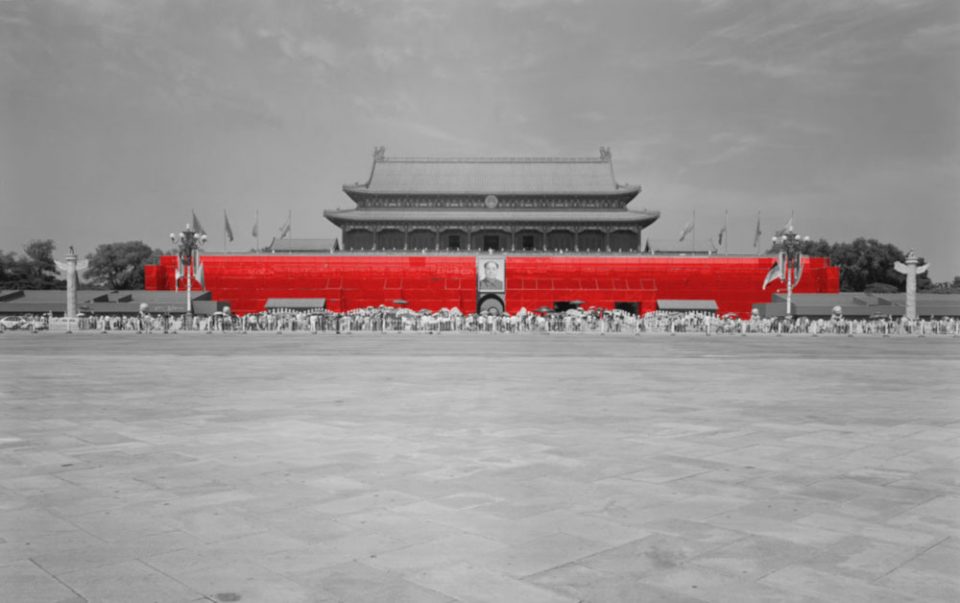
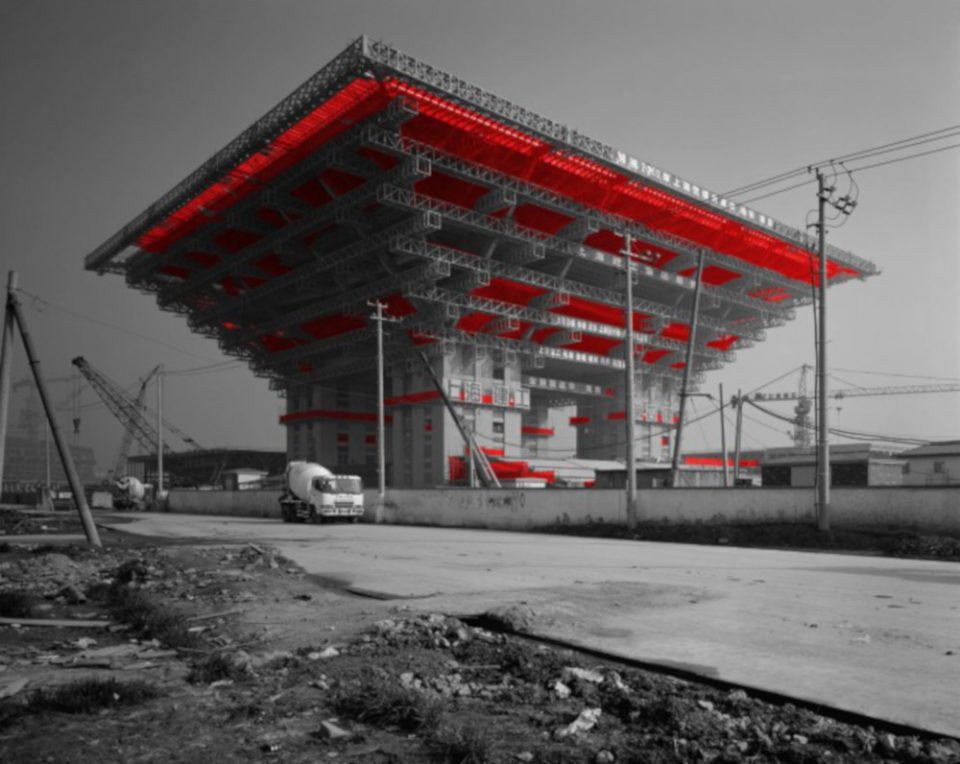
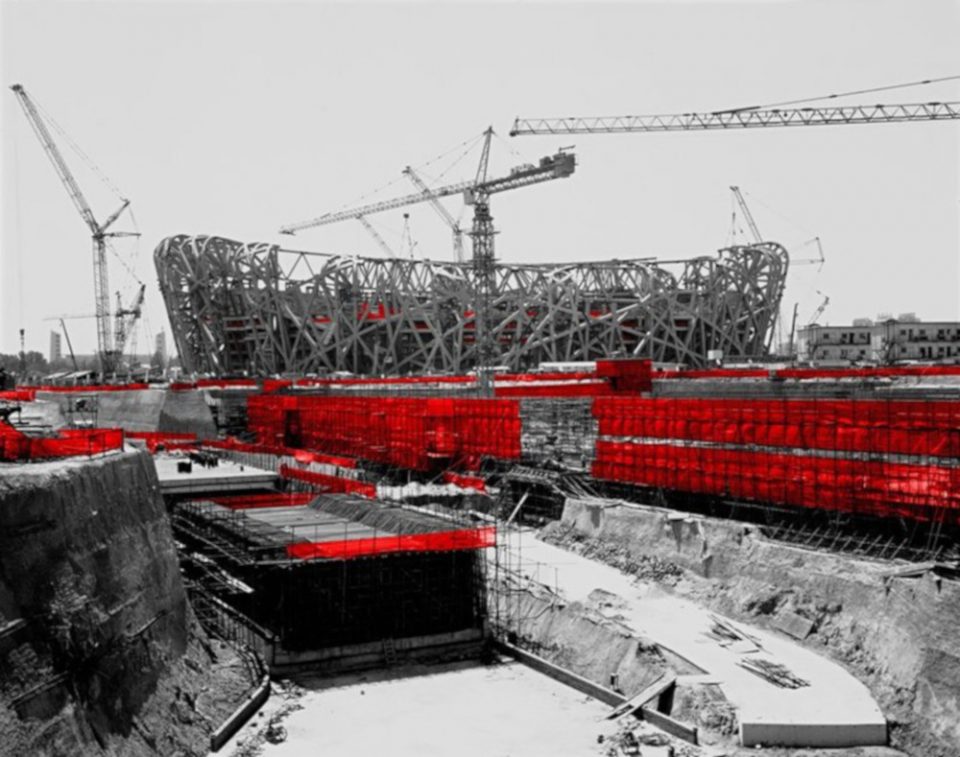
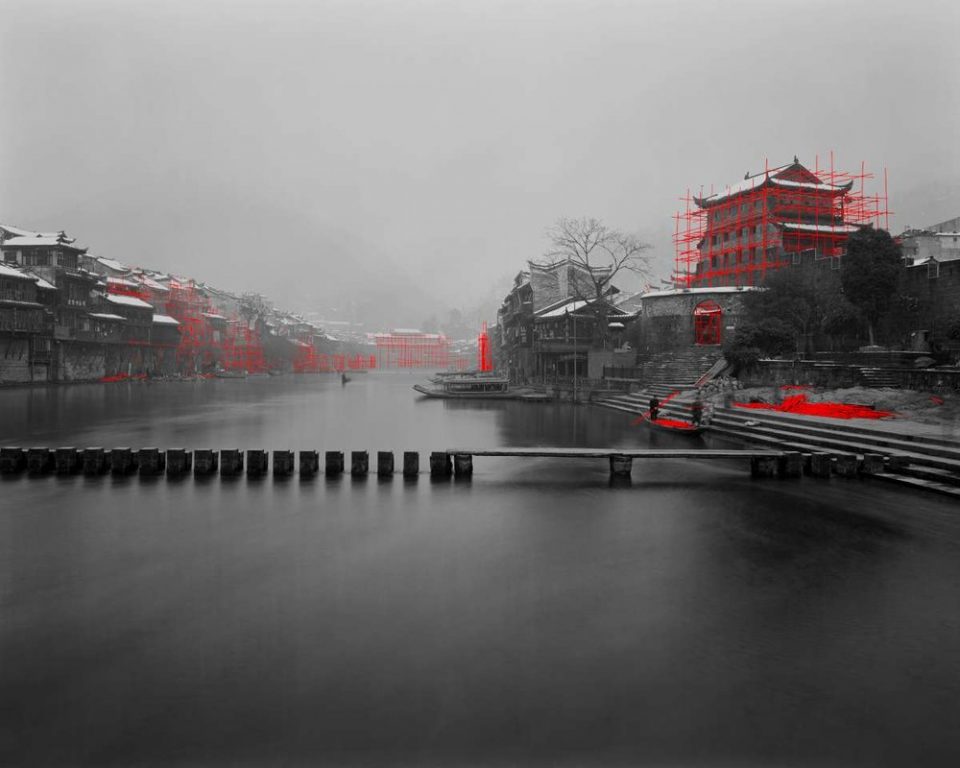
The artist is best known for his series – Scaffoldings; Bird’s Nest project; The Red and the Black – featuring Chinese cities in black and white with overlays of red streamers wrapped around under-construction buildings. Zhou Jun uses large format film cameras to produce negatives, which are scanned, digitally manipulated and printed to produce large unframed photographic works. Built environment is the subject of Zhou’s work in an analysis of China’s rapid and sometimes brutal redevelopment. Created since 1992, his photographs mainly treat the conflicting relationships between Chinese traditional architecture and contemporary buildings while continuously challenging the symbolic nature of the red color.

9th 2007, 2007, Digital C - print, 120 x 190 cm/180 x 286 cm
9th 2007, 2007, Digital C – print, 120 x 190 cm/180 x 286 cm
Expo 2010 Shanghai - China Pavillion, 2009, Digital C - print, 120 x 150 cm/220 x 180 cm
Expo 2010 Shanghai – China Pavillion, 2009, Digital C – print, 120 x 150 cm/220 x 180 cm

Building progress

The contradictions that are presented when trying to preserve the past in a time of China’s unprecedented economic growth underpin the work of Zhou Jun. During the last thirty years the most striking feature of China’s re-development has been its city construction. Demolition of whole villages to make way for high-rise development is a regular occurrence. The lead up to the 2008 Beijing Olympics saw massive building works and although it transformed Beijing into a modern city entire neighborhoods were ‘moved on’ in the name of progress.

Bird's Nest No. 2, 2006, Digital C - print, 50 x 60 cm/120 x 150 cm
Bird’s Nest No. 2, 2006, Digital C – print, 50 x 60 cm/120 x 150 cm

Zhou Jun’s work embodies a quality of yearning for the past to some extent and this is seen in his photographs of historic buildings from Beijing. He is acutely aware of the expansion of Chinese cities and the loss of traditional architecture. It is the loss of Chinese culture in the pursuit of globalisation.

Phoenix Ancient City, 2011, Digital C - print, 120 x 150 cm/180 x 220 cm
Phoenix Ancient City, 2011, Digital C – print, 120 x 150 cm/180 x 220 cm

Seeing red

The color red has significance in Chinese cultural memory as it is used for ceremonial occasions such as weddings but it also represents revolutionary communist ideology. It is a reminder of the turmoil of the recent past. Because of this, the wide variety of perspectives of each person means completely different feelings and reactions are aroused by the color red. The partnership between the black and white photographs and the red sections of scaffolding allows the audience to produce their own meanings.

“Hanging Red”, 2009, 120 x 150 cm, Archival Inkjet Print on Fine Art Paper

A word from the author

“The three decades of development China is experiencing – building to a crescendo with the Olympics – are unparalleled in history. The colour red, which I use to highlight specific parts of the photograph, can elicit different responses in people from different countries or cultures – at times, it can even have opposite meanings for people. I want my work to be interpreted differently by people depending on their response to the symbolic meaning of red. In this sense, the work has the potential to reveal international perspectives to common subject matter.”

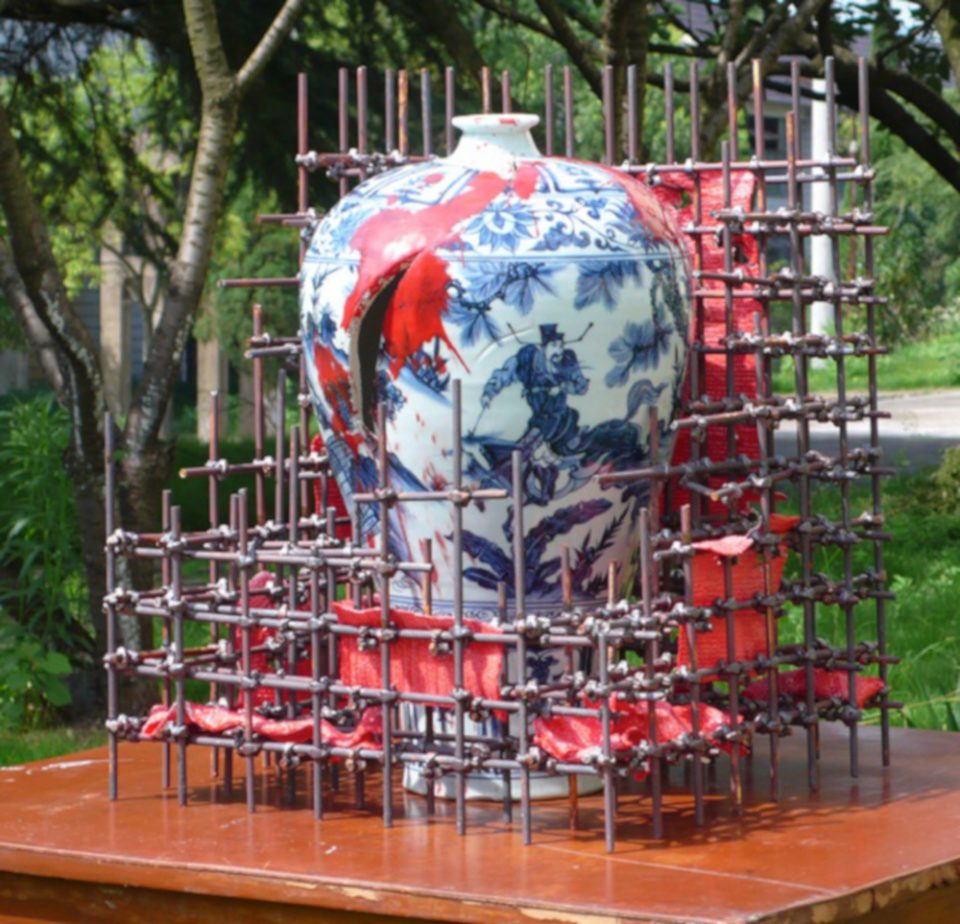
Zhou Jun also creates sculptural works using porcelain and other materials, always mantaining his distinctive style and his conceptual structure.

A
A “wounded” porcelain vase, surrounded by scaffoldings

For more informations about Zhou Jun’s work: https://www.redgategallery.com/Artists/Zhou_Jun-photography/index.html

or: http://www.artlinkart.com/en/artist/wrk_yr/dbabrws/1eccAtt/2006