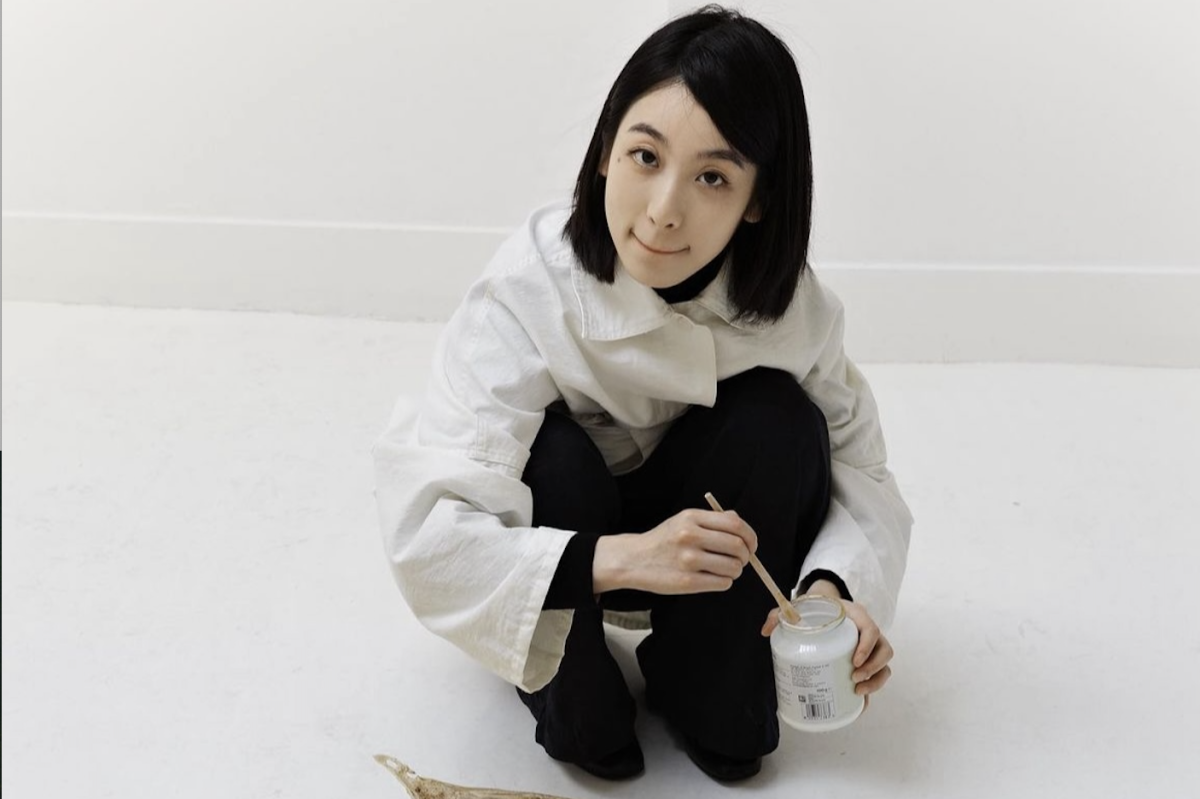
Qian Ningyue is a student at the Royal College of Arts in the UK and a Chinese sculptor currently living in London.
She has her own independently created brand called Fanyuan, which is an art furniture brand derived from the Century 1080 Project.
Inspired by the unique charm of ancient gardens in the East, it combines quality and smooth yet visually appealing stainless steel materials.
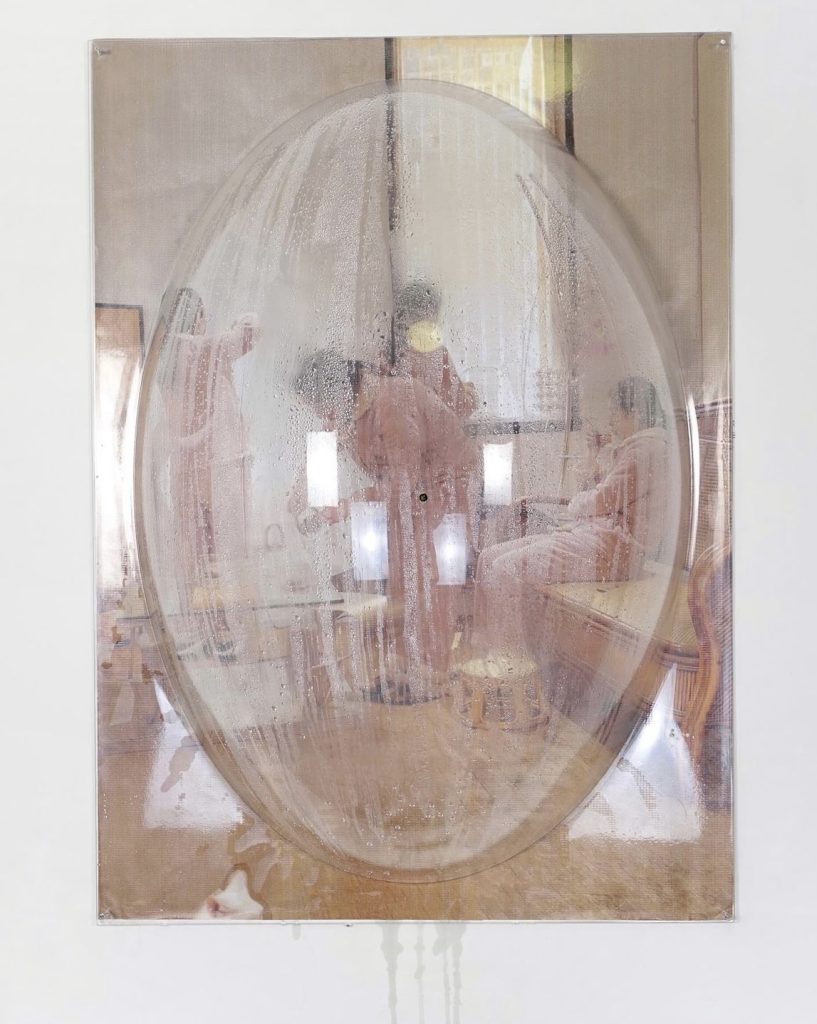
Qian Ningyue, as an artist, often uses her insights as an observer of daily life to achieve artistic works.
She has established a research method using recording as a means to explore what we overlook in the process of discovery.
And what things have the potential to break through real-time memory.
Qian Ningyue magnifies individual features that are easily overlooked in daily life through his works.
In this way, Qian Ningyue creates opportunities for contradictions to overlap and carries out a corrective operation in a balanced state. This is an experiment conducted by artists on the logic rooted in the audience’s minds.
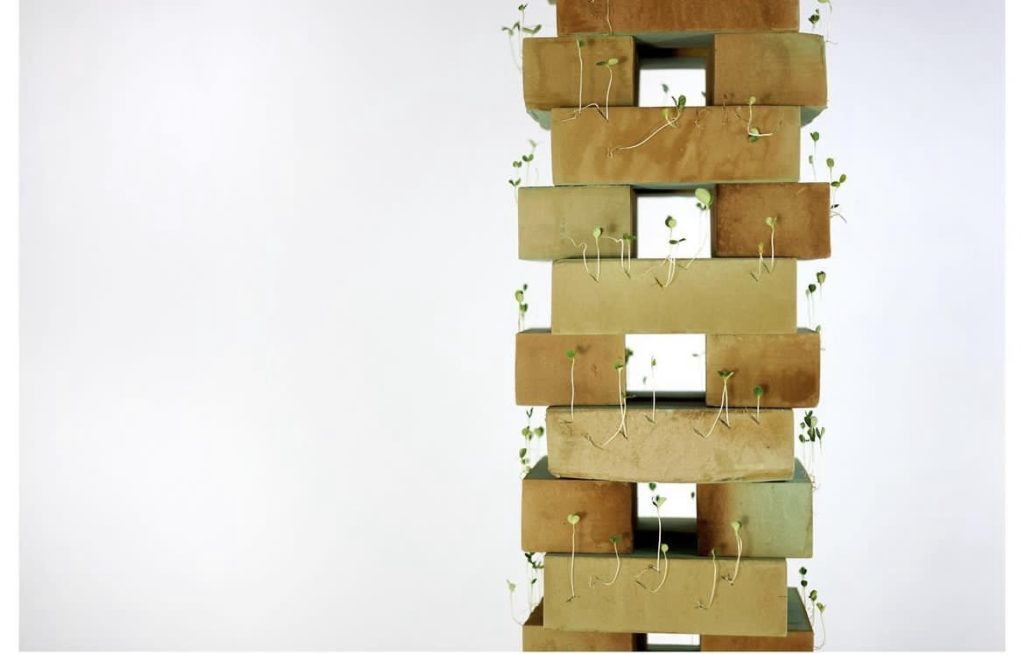
Qian Ningyue:Pillar
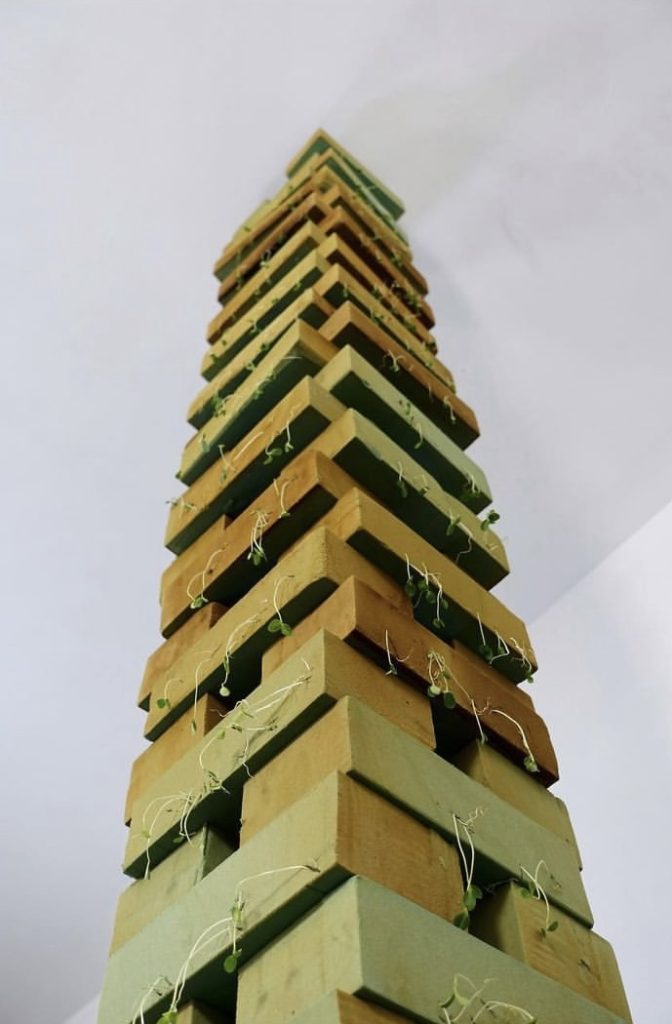 Qian Ningyue’s artwork “Pillar”, she planted plant seeds in the flower mud and constantly watered them to help them grow.
The bricks used in the building and the naturally growing plants left behind after demolition attract it. For artists, it is like a symbol, like the unity of “you have me, I have you” in the home. However, due to its strong permeability, plants can only choose to survive and cannot grow during the growth process.
They can only maintain a fixed posture to maintain life, without a complete circulatory system.
Qian Ningyue:Cooking always accompanies me and gives me a soothing feeling
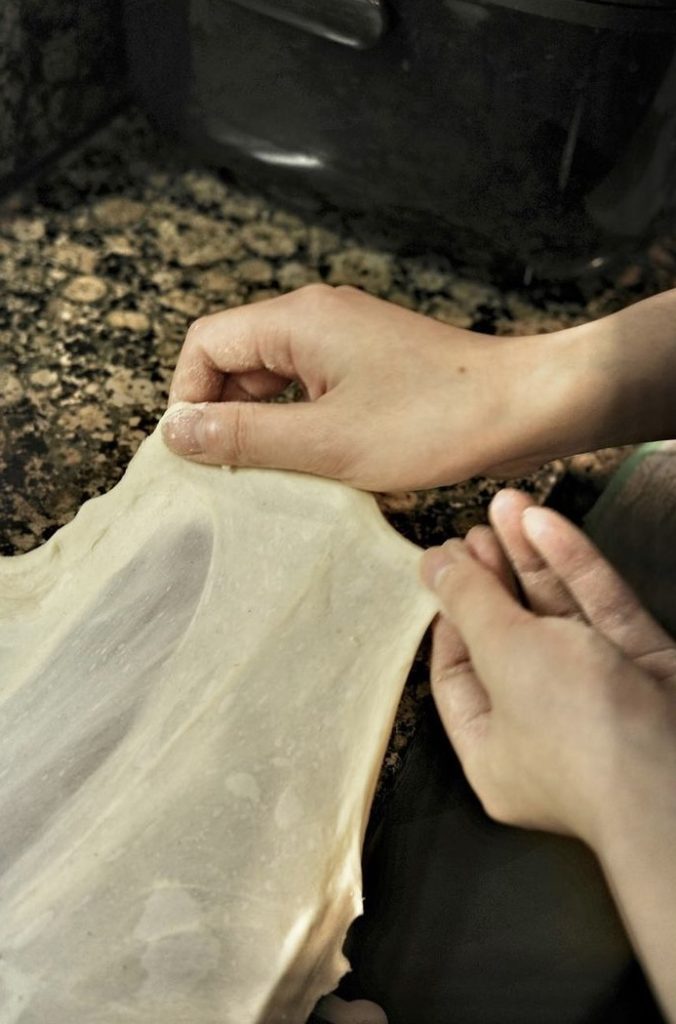 when the artist came to London to study, Qian Ningyue, as a non-native speaker, cured her unsafe emotions through cooking. She said, “Cooking always accompanies me and gives me a soothing feeling”.
Baking expert Xiaoqu once said, “Dough has emotions. Only when you treat it gently will it repay your tenderness.”
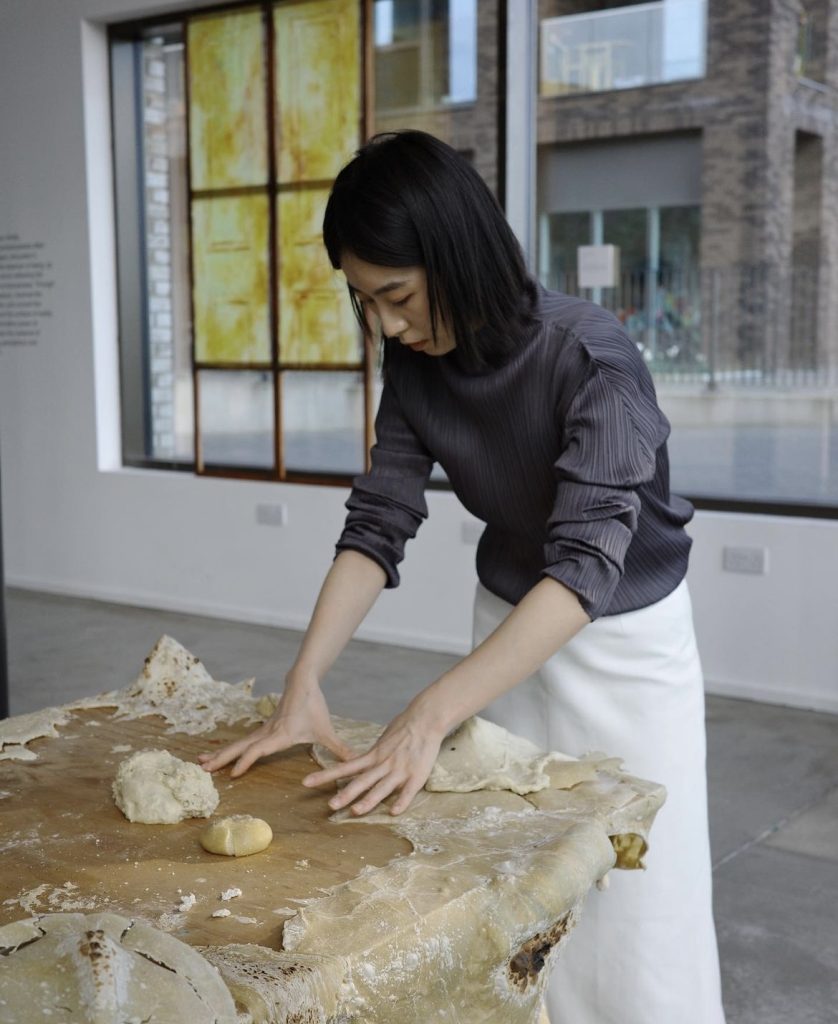
Qian Ningyue’s creative inspiration comes from cooking works. She uses materials such as dough and sugar, and uses time as a medium to change its extensibility state and on-site cooking methods. These seemingly fragile materials are combined to create structures and continuously expand unstable boundaries. By controlling the state of the dough material, Qian Ningyue divides it into two states. Firstly, after cooking, it can slowly dry and crack over time. Secondly, controlling the dryness of the dough allows it to maintain a permanent state, making it convenient to move and transport the same substance in different states.
The different contexts in which the material is in the environment are expressions.
Qian Ningyue has been using and enjoying in her creations.
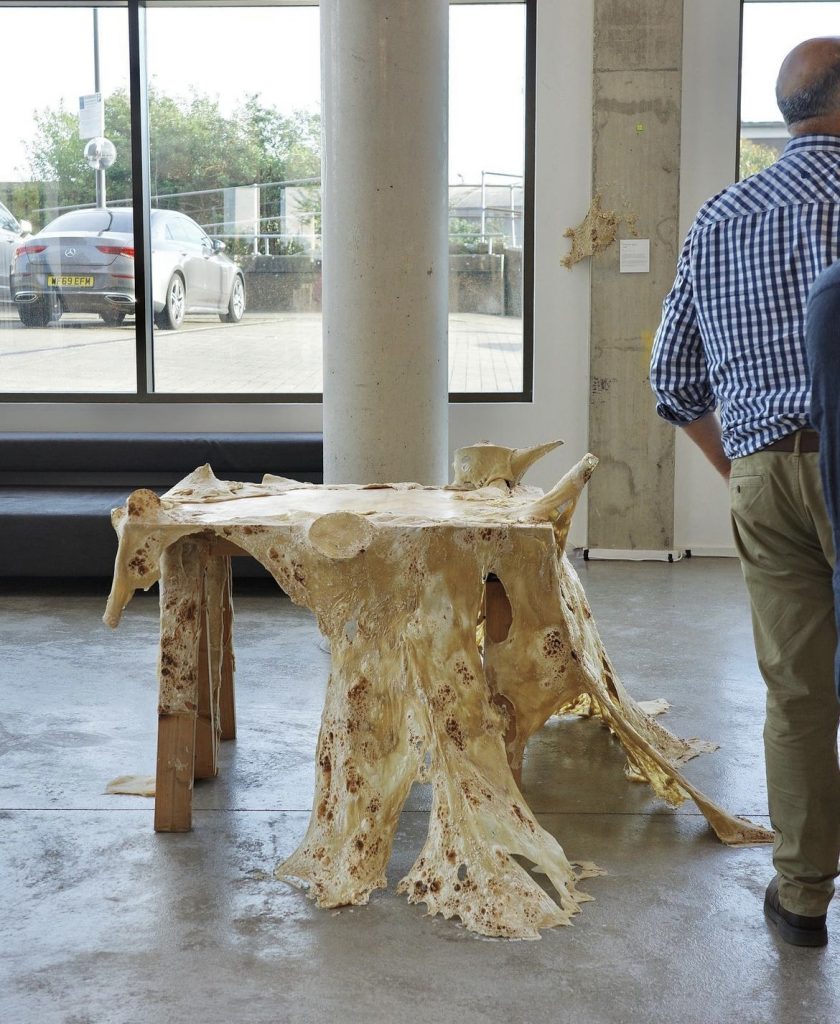 Bread fermentation is a long process that requires appropriate temperature and humidity.
As well as the patience and gentleness of the baker. Flour, butter, eggs, milk… You combine these raw materials in a certain proportion, and watch them turn into dough in your hand.
At the temperature of your palm, it spreads from a small ball of dough to a large, soft, and white ball of dough. In this process, you can let go to a state where you forget everything.
Licking one’s own life is like a maltose
And Camus also said, “Licking one’s own life is like a maltose, shaping it, sharpening it, loving it, and searching for the final decisive word, image, or sentence that can be used as a conclusion, starting with it, and seeing everything through it from then on”.
Based on Qian Ningyue’s exploration of cooking materials in art, she integrates daily kitchen ingredients into the artistic process. Inspired by the transformative nature of cooking and the extensibility of ingredients, Qian Ningyue’s creations blur the boundary between culinary art and visual art.
She providing a unique sensory experience that challenges the limitations of traditional art.
Qian Ningyue unexpectedly manipulated dough and sugar, breaking through the limits of materiality and temporality in her artistic works. The interaction between the perishability of cooked dough as it dries and breaks over time.
And the controllable preservation of the dough in its permanent state.
In addition, her exploration of different states of the same material and the influence of environmental context on material expression have added complexity and depth to her artistic practice.
By utilizing the brevity of materials and the fluidity of explanations, the audience also contemplates the brevity of art and the constantly changing relationship between materials and the surrounding environment.
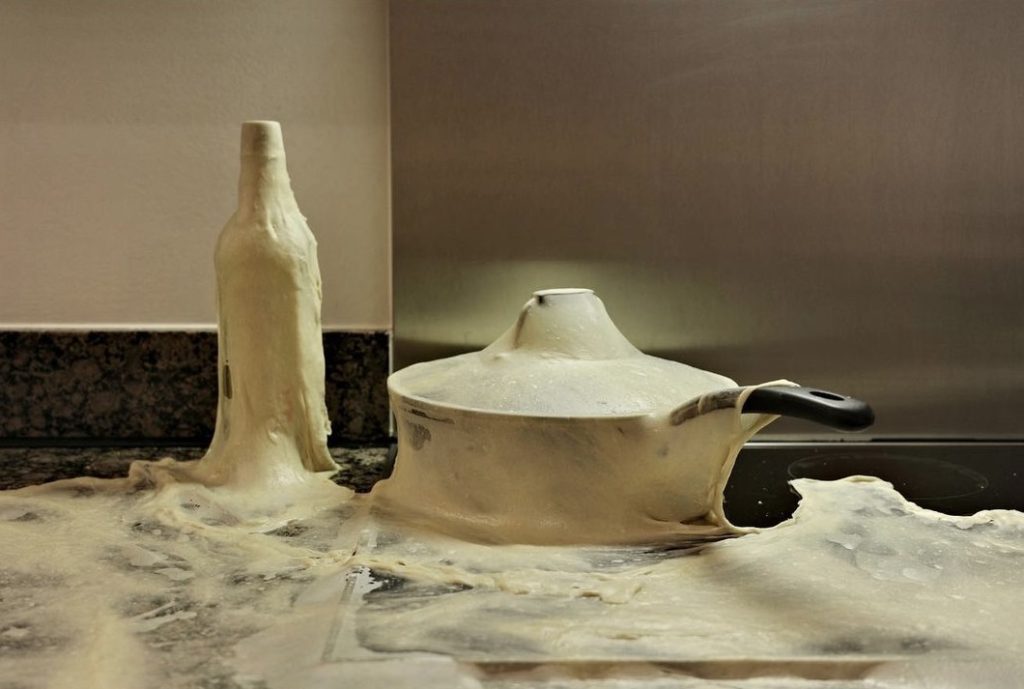 Sources