Categories
Contemporary

Contemporary | Slime Engine – new digital world

Why Slime Engine

Enter the Shanghai-based collective’s interactive shows, hosted in dystopian amalgamations of well-known cities. In oceanic abysses, on roller coasters and desert islands.COVID-19 has instigated an onslaught of online initiatives that have saturated the digital art world with fairs, exhibitions, social-media campaigns. In an attempt to play catchup to a now overwhelmingly online industry. While many institutions have scrambled to repackage their programming. Others have taken this opportunity to build new models for exhibition-making and new means for connecting with audiences. Prior to the pandemic, in China, apart from ongoing projects like Rhizome (a pioneering nonprofit dedicated to new media art). Few endeavours have put forward serious efforts to cater to digital art hosted in its native environment – a void artists are, and have been, looking to fill. Slime engine.
Slime,Stand-on-the-ground
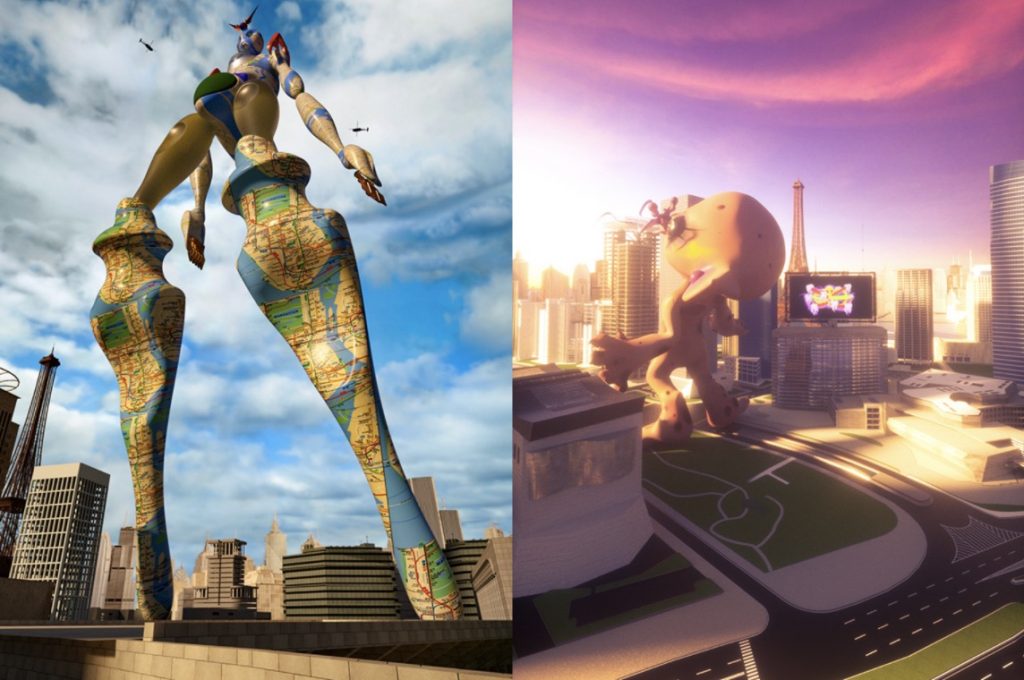
(Left) Yi-Chengtao, XXX Stands on the Ground, 2020 and (right) Shan Liang, Baby, 2019, included in Slime Engine’s exhibition Territory, 2020, internet-hosted digital work. Courtesy the artists

Shanghai-based artist collective Slime Engine, or 史莱姆引擎. Has been utilising digital space since 2017 with different projects that manipulate the user’s understanding of physical space. Possibility of place when it comes to exhibition-making for art-seekers on and offline. In a practice that is ‘as flexible as “slime” and as inclusive as a “search engine”’.

Who are the Slime Engine?

Founded by four photography students – Li Hanwei, Liu Shuzhen, Fang Yang and Shan Liang – Slime Engine treats the internet not as a replacement for physical institutions.

But as a platform with properties specific to digital and virtual media that would be nearly impossible to replicate in the ‘real world’. Although that’s not exactly how they see it.
slime-engine Inventing-Landscape Producing-the-Earth-Engine-Bar
Advent: Inventing Landscape, Producing the Earth Engine Bar

“We don’t think too much when designing exhibition spaces,” the collective tells me over an array of messages, and emails. “Many people might think we’re creating a space, but for us, these spatial forms have already been integrated into our vision.” Over the last two decades, China has become home to the world’s fastest-growing movie-industry. Coupled with that, lax copyright enforcement has seen scores of pirated Hollywood films flood streaming websites like Youku. Making the twenty-something-year-old artists of Slime Engine part of an internationally minded generation growing up with an intense exposure to special effects. “It wasn’t so much a space we created, but material we chose to use.”

Works by Slime Engine
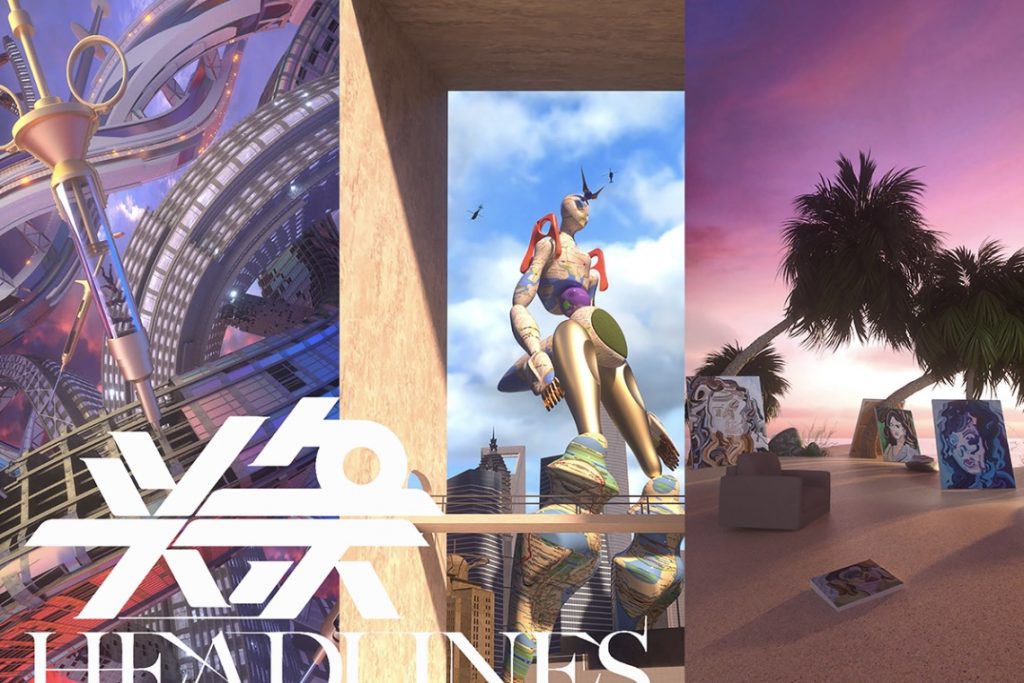
Headlines 2020
Slime Engine, Headlines, 2020, internet-hosted digital work, dimensions variable.
Courtesy the artist

The work parodies media and broadcasting institutions, overwhelming concerns about the financial side-effects of a deadly virus with feel good. Content like ‘New century fat-reducing rave gymnastics’ where viewers can watch a five-minute video of an anime-style young woman in a very small bikini robotically perform fractured cardio in her living-room-turned-home-gym. Headlines simultaneously visualises shadows of what is. In a world that could be, through a reformatted newspaper that encourages user engagement and activity. All the while presenting us with characters that react but don’t respond.
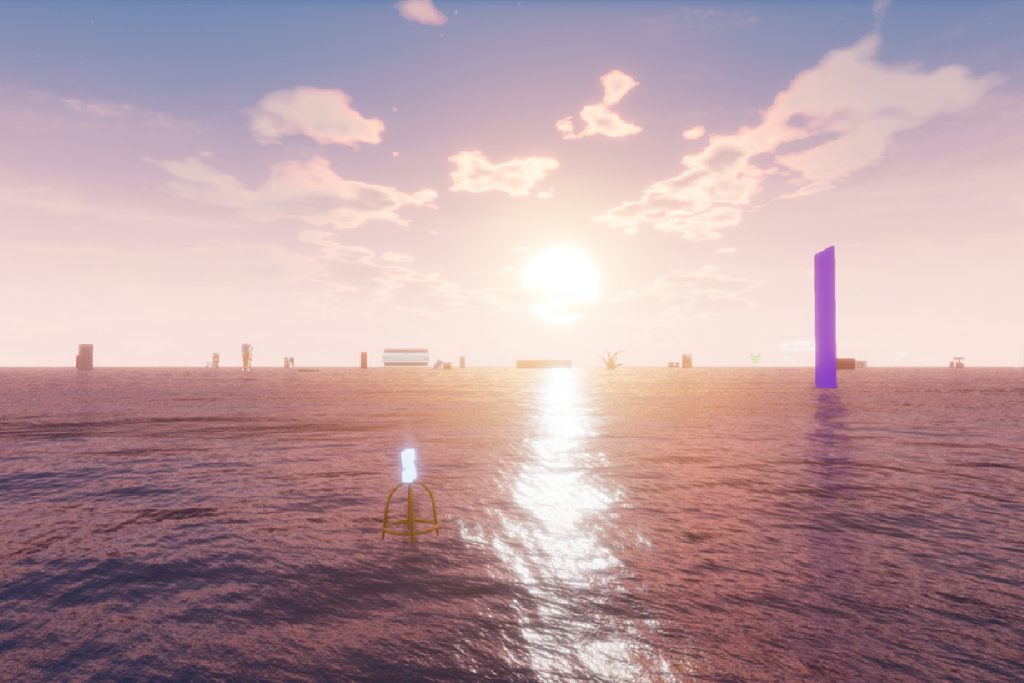
Slime-Engine Ocean2019
Slime Engine, Ocean, 2019, digital exhibition, dimensions variable. Courtesy the artist

Slime Engine’s 2019 online/offline exhibition Ocean demands a different kind of user engagement, resembling a videogame more than any exhibition you’re likely to find in a museum or gallery. Although it is available for access on their website.I prefer the downloadable version of the program.Which enables you to have the exhibition at hand without internet access, at anytime. Surely not what Nicolas Bourriaud had in mind when he coined the term ‘relational aesthetics’: the user has no direct contact with any art ‘object’, so to speak; instead the work’s interactivity and closeness are mediated through keyboards and mouse pads.

Exhibition Ocean

The collective functions as the curator, while Slime Engine exhibit their own works as participating artists in the group show. Upon loading, the program deposits you in the middle of an endless, virtual oceanic plane surrounded by artworks hovering just above the water. But the computer installation enables the viewer to move between the videos, digital sculptures via keyboard control. Activating time-based works only when in close proximity to them. You get the sense that it exists both for you, and entirely independent of you.
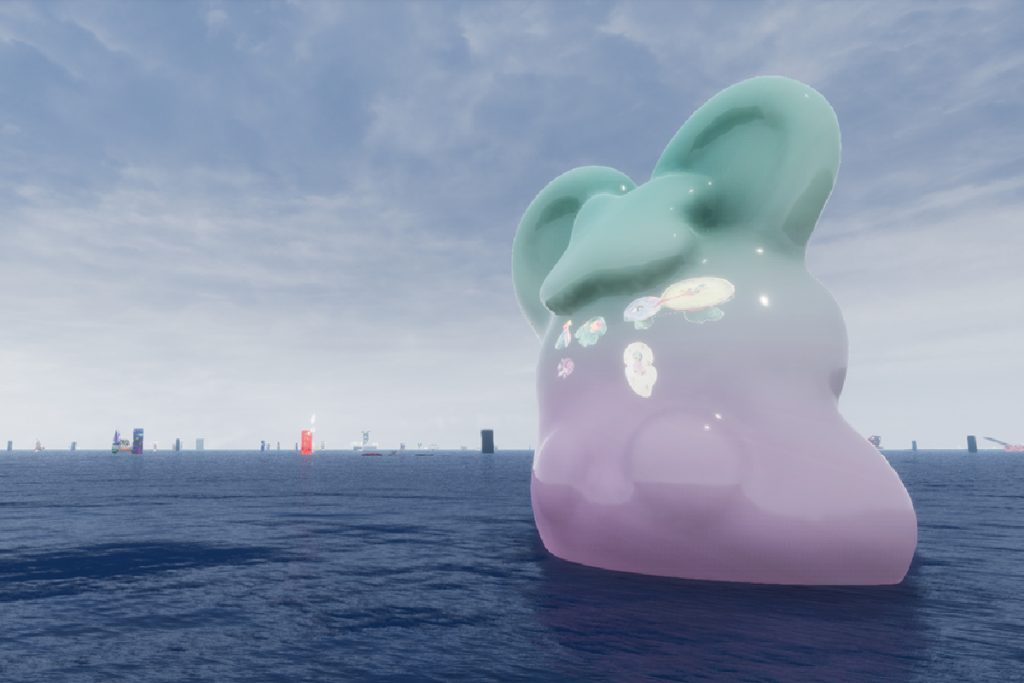
slime-engine exhibition ocean
Nhozagri, Lotus Leaves Buddy In The Rain, 2019, included in Slime Engine’s exhibition Ocean, 2019, digital work, dimensions variable. Courtesy the artist

Categories
Contemporary 艺术家

Contemporary | Aaajiao – deep simulator

Who is Aaajiao

Aaajiao is the online handle for Xu Wenkai. Who coined the name in the years he downloaded mp3s from Soundseek and chatroom users. His username chromatic_corner to ‘A Jiao’ (literally in Chinese: corner).

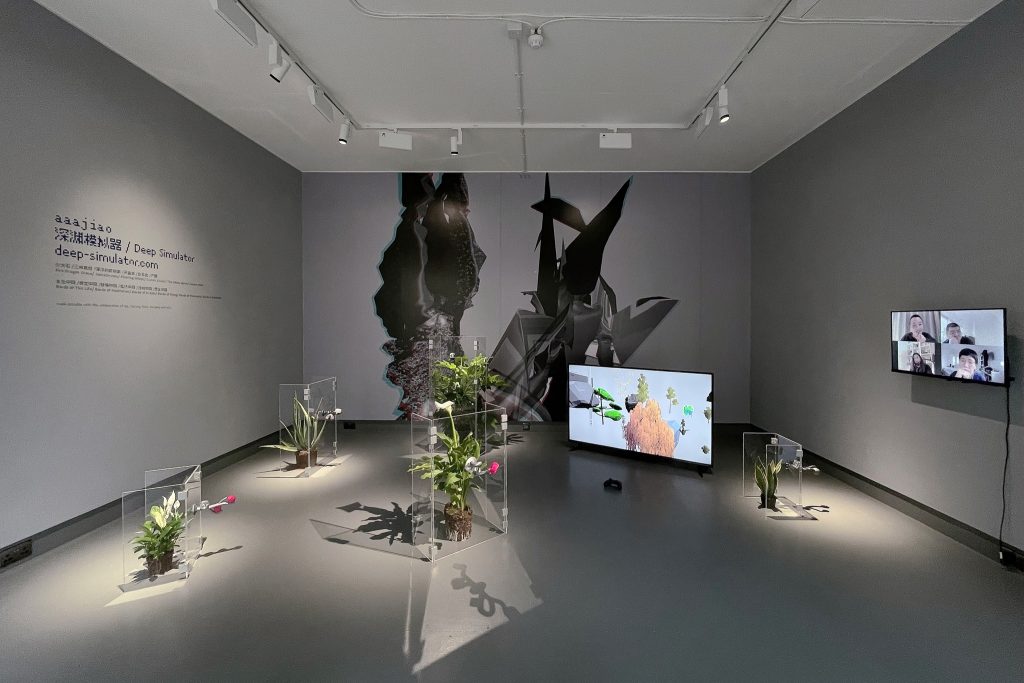
Aaajiao, Deep Simulator, at Tabula Rasa Gallery in London

Aaajiao Deep Simulator

That sense of double play, in which a seemingly straightforward work is laid bare as a labyrinthine critique that feels at once accessible and obscure, comes through, also, in the artist’s latest exhibition, Deep Simulator, at Tabula Rasa Gallery in London (4 June–31 July 2021). The work was first shown in the project room of Castello di Rivoli Museo d’Arte Contemporanea in 2020, marking the artist’s first exhibition at an Italian institution.

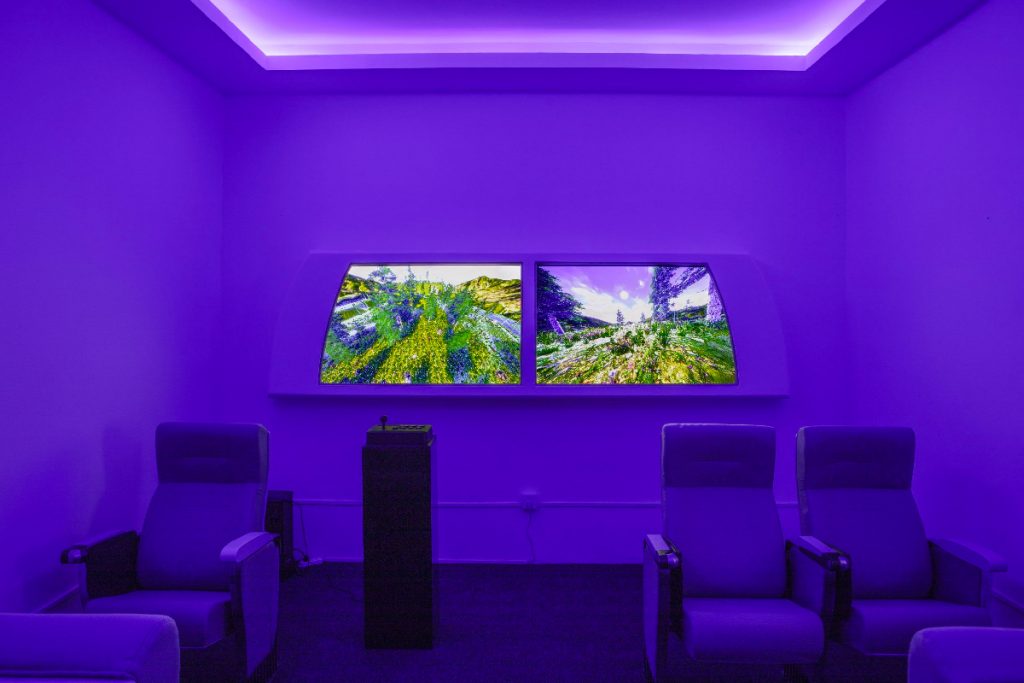
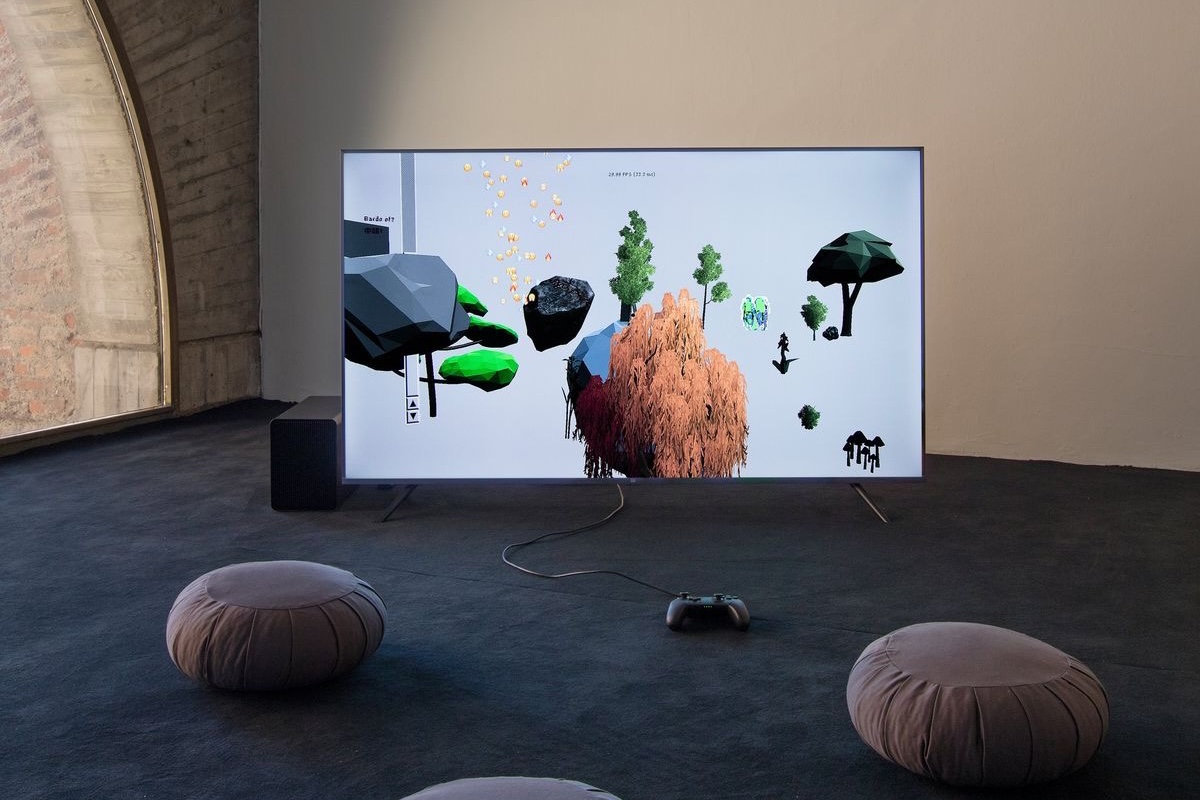
Aaajiao, Deep Simulator, at the project room of Castello di Rivoli Museo d’Arte Contemporanea, 2020

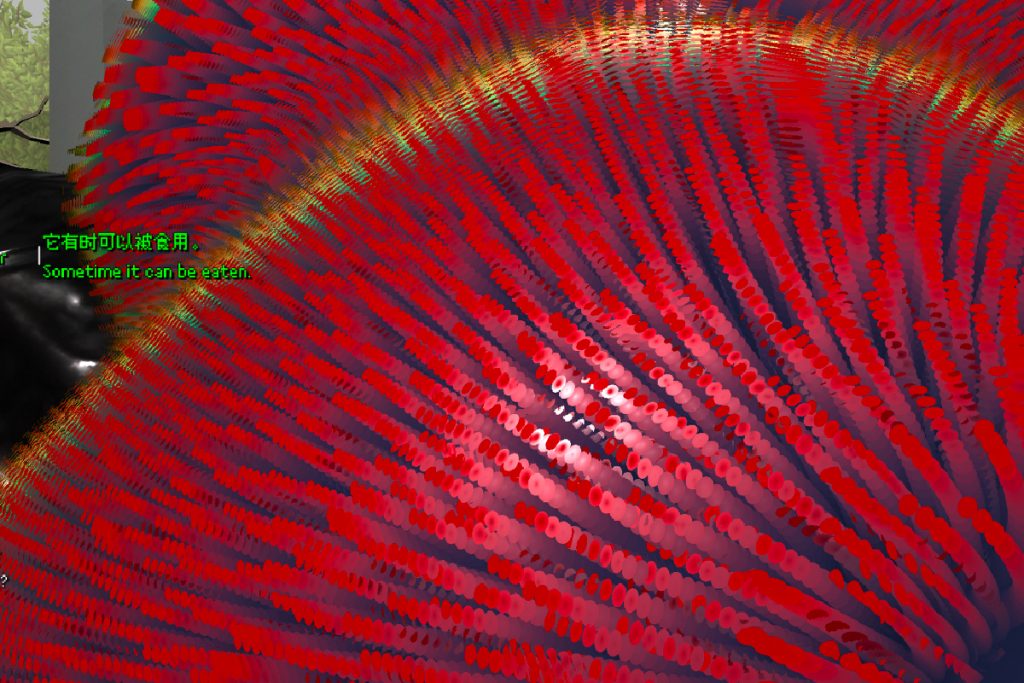
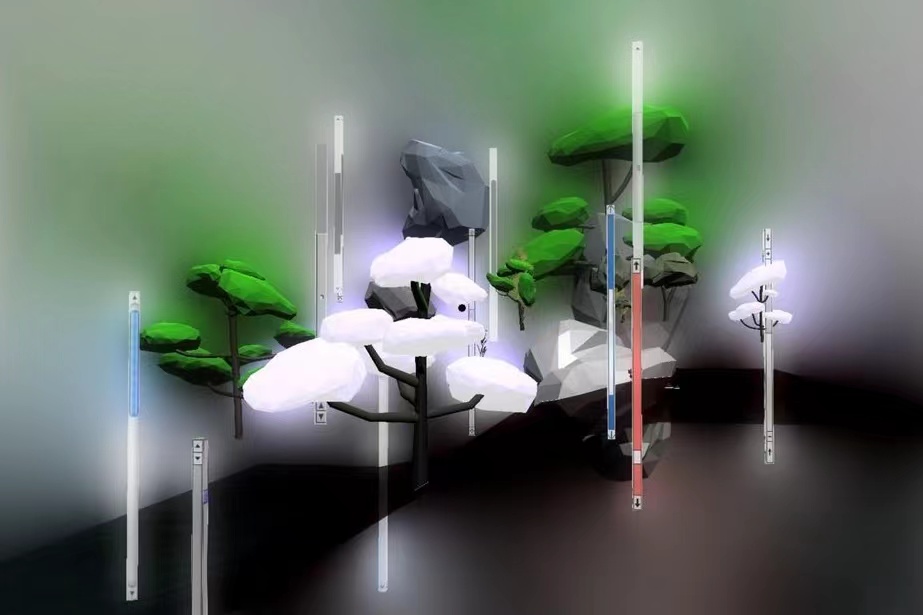
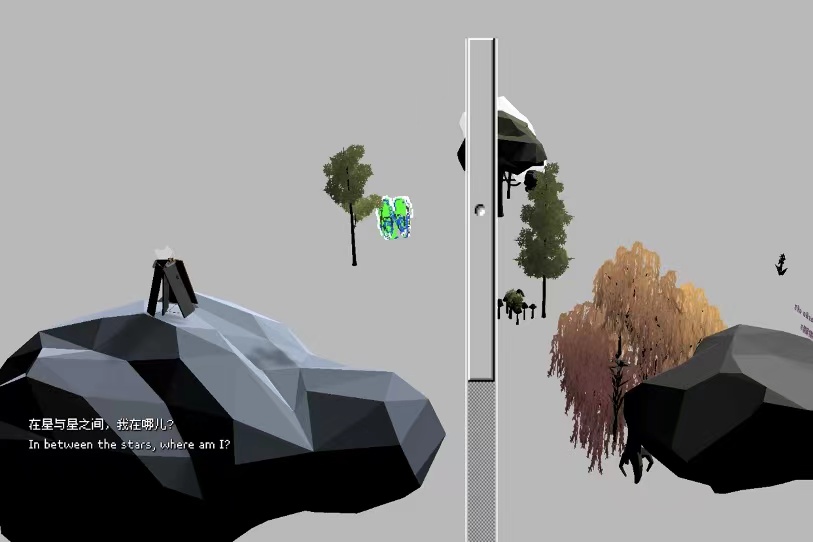
In a room set up with a gaming station and standalone. Surreal objects evocative of tree branches rendered by digital algorithm. Aaajiao’s metagame Deep Simulator invites the viewer to partake in a space exploration at once both real and virtual.

Aaajiao, Deep Simulator, 2020

The prime engine

Deep Simulator sees computational power as the prime engine that generates the state of our world. The six possible states of Bardo—a term originated from Buddhism that describes the intermediate state between death and rebirth—can be retrieved by the player via six levels of computational power. “Deep Wanderer,” defined as the protagonist of the metagame, is an amalgamated persona consisting of the viewer of the exhibition, the player at the game station, and the wanderer in the metaphorical journey within the simulation. Upon seeing and being the “Deep Wanderer”, individuals such as us come closer to understanding the truth of our existence.  

Aaajiao, Deep Simulator, 2020

Human Identity

As the artist’s continuous reflection on the evolution of human identity along the transformative power of the Internet sphere, the forming of The Player in Deep Simulation is a transmutative process carried out by the artist over the years. It passes through the figure of The User presented on the artist’s solo exhibition User, Love, High-frequency Trading in 2017, and The Bot as an information crawler for the project bot in 2018. The spectator’s ability to see the player playing while awaiting his or her own turn opens up a path to observe an “other” him- or herself, and underlines the controversial notion of the real in the world of new technologies, the Internet and the circulation of digital data. 

Aaajiao, Deep Simulator, 2020

It is worth noting that Deep Simulator was specially conceived for the project room of Castello di Rivoli in 2020. Making aaajiao the first Chinese artist to exhibit at an Italian institution. Due to the pandemic, only domestic visitors in Italy were allowed. We hope that through presenting the work for a second time at our London space, the work will be able to reach a broader audience.

source

https://ocula.com/magazine/conversations/aaajiao-nft-blockchain-future/

http://gallerytabularasa.com/exhibitions/page.php?id=31aaajiao-deepsimulator

https://eventstructure.com/

Categories
Contemporary

Contemporary | Cao Fei a new media artist

Who’s?

Cao Fei, daughter of a famous Chinese sculptor, was born in 1978 in Guangzhou, China. She currently lives and works in Beijing.
She is one of the most innovative young Chinese artists on the international scene. In his installations and videos, Cao Fei investigates the expectations and dreams of the young Chinese generations. Cao’s works are an outlet for invention, but behind her playful jokes lies an uncertain world of unfulfilled desires.

Combining popular aesthetics with a documentary vision and references to surrealism, in his works Cao Fei moves strong social criticism, reflecting on the inconsistencies and hopes of his country. He uses photography, video and digital media in innovative ways to expose the dramatic changes in his daily environment – since 1992 – and in his high economic growth, urban development and the rapid globalization of China focused on its native region of the Pearl River Delta.

Biennali and triennali

Cao Fei’s works have been exhibited in several international biennials and triennials, including the Shanghai Biennial (2004), the Moscow Biennial (2005), the Taipei Biennial (2006). And the 15th and the 17th Sydney Biennial (2006 and 2010), the Istanbul Biennial ( 2007), Yokohama Triennale (2008) and 50a, 52a and 56a Biennale di Venezia (2003, 2007 and 2015) where he presented the work “La Town”.

Cao Fei
“COSplayers”, 2004
Cao Fei

His fascination with local youth subcultures during his training period is reflected in his early photographic and video works.
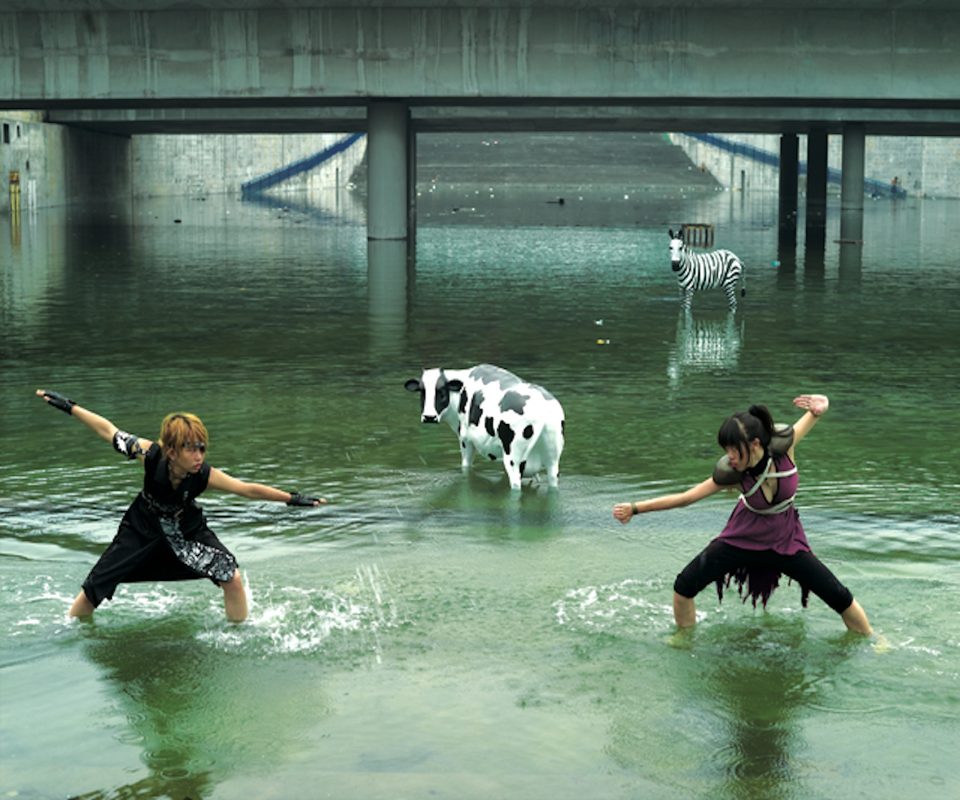
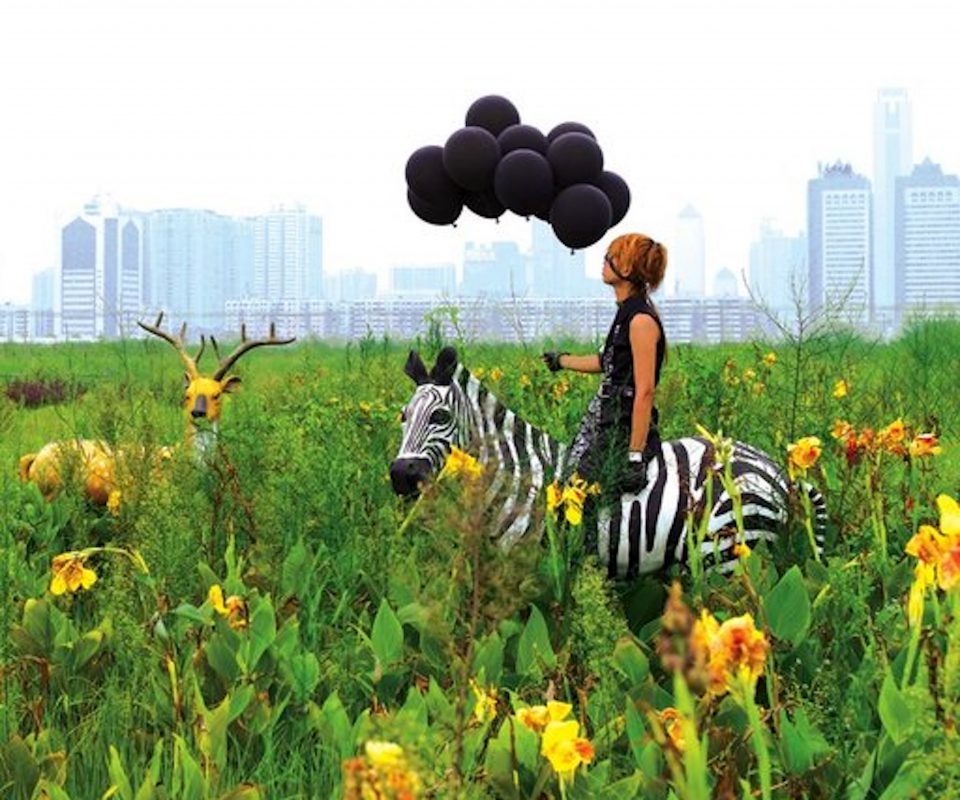
In “Cosplayers” he explored the alienation and escape tried by young disaffected and displaced people. Who expressed themselves as fantastic game characters. The interaction between the virtual world and the real one, utopia and dystopia. Body and technology remained important themes for the artis

RMB City 2007

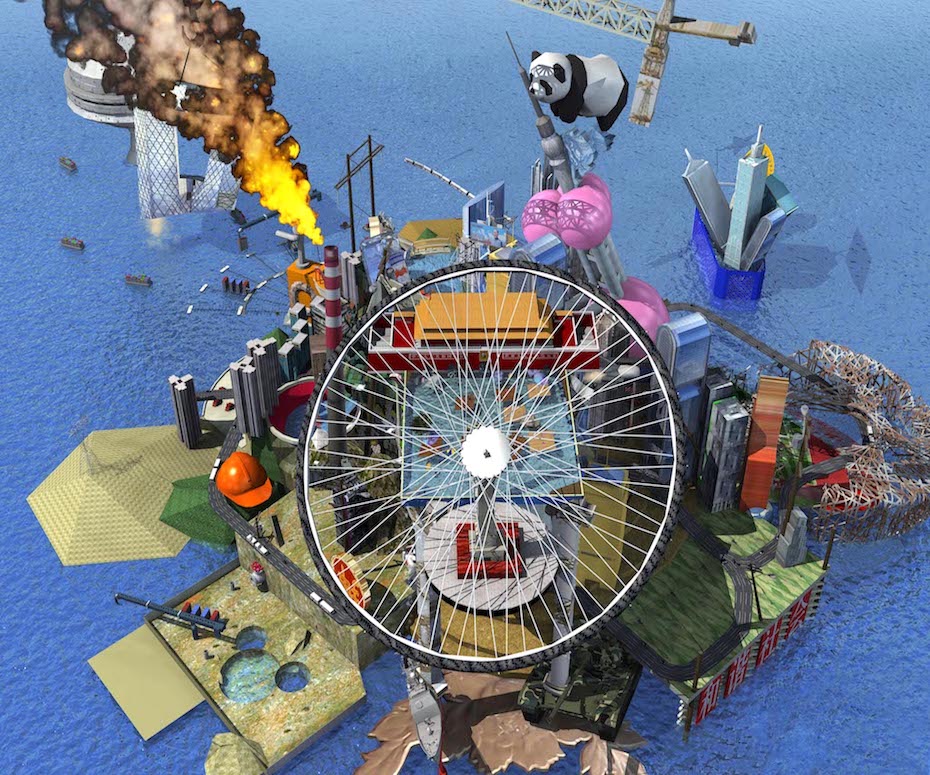
Fascinated by the potential of the virtual world, not only as a strategy of escape from reality. A virtual world that is as a real tool of online urbanization, Cao Fei founded RMB City. Using the famous computer platform Second Life Cao Fei realize her avatar China Tracy. The alter ego of the artist: Sexy, feminine, with dark hair and Sailor Moon style has given shape to a virtual art community. Lives and operates in an environment that embodies the unique characteristics of Chinese cities.

Cao Fei

RMB City states Manifesto: “New orders are born, so they are new, strange wisdom” 1-A statement appropriate to the ‘setting of the work, the virtual platform Second Life, in which users, through their chosen avatars, can buy and exchange objects, build urban structures and interact with other avatars in an artificial utopia that is also part of the apocalypse.

“Asia One”, 2018

Cao Fei says «Technology has developed beyond imagination»
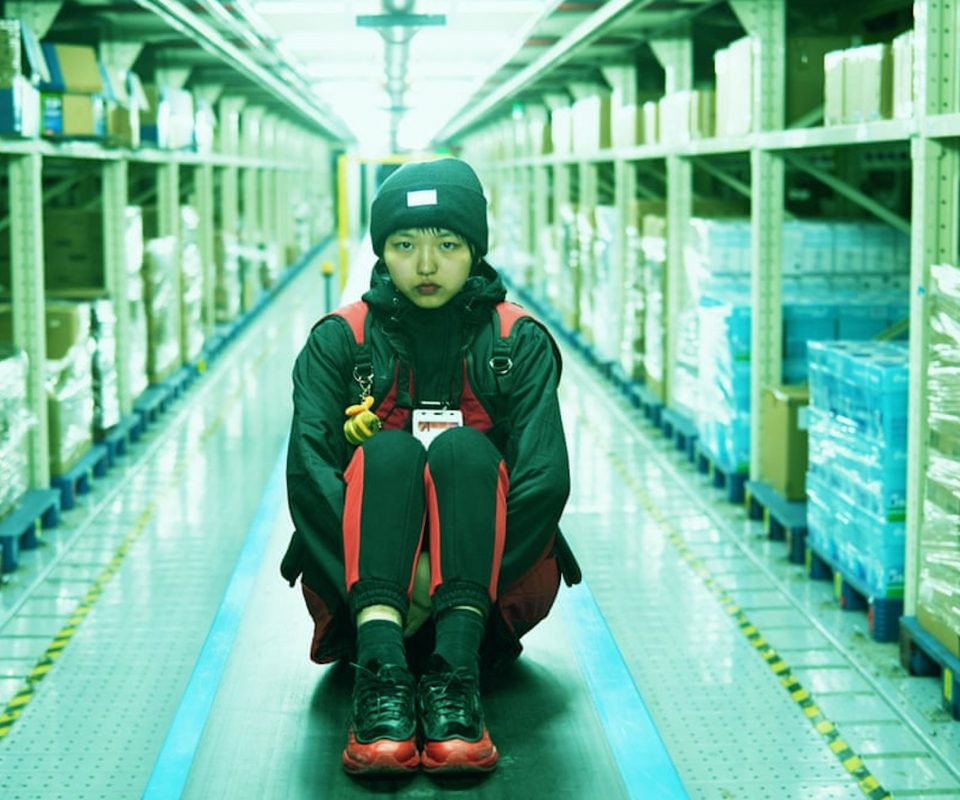
For “Asia One” commissioned by the Guggenheim Museum, Cao visited some of China’s most advanced industrial facilities. Including the world’s first fully automated sorting center in Kunshan, in Jiangsu Province. For this project, a hyperreal vision of the near future shifted its focus from the present to our collective future by examining the effect of technology on human relationships.

Cao Fei
“Nova”, 2019

On the occasion of her solo exhibition Blueprints, at the Serpentine Galleries, Chinese artist Cao Fei has produced two new limited edition artworks. 
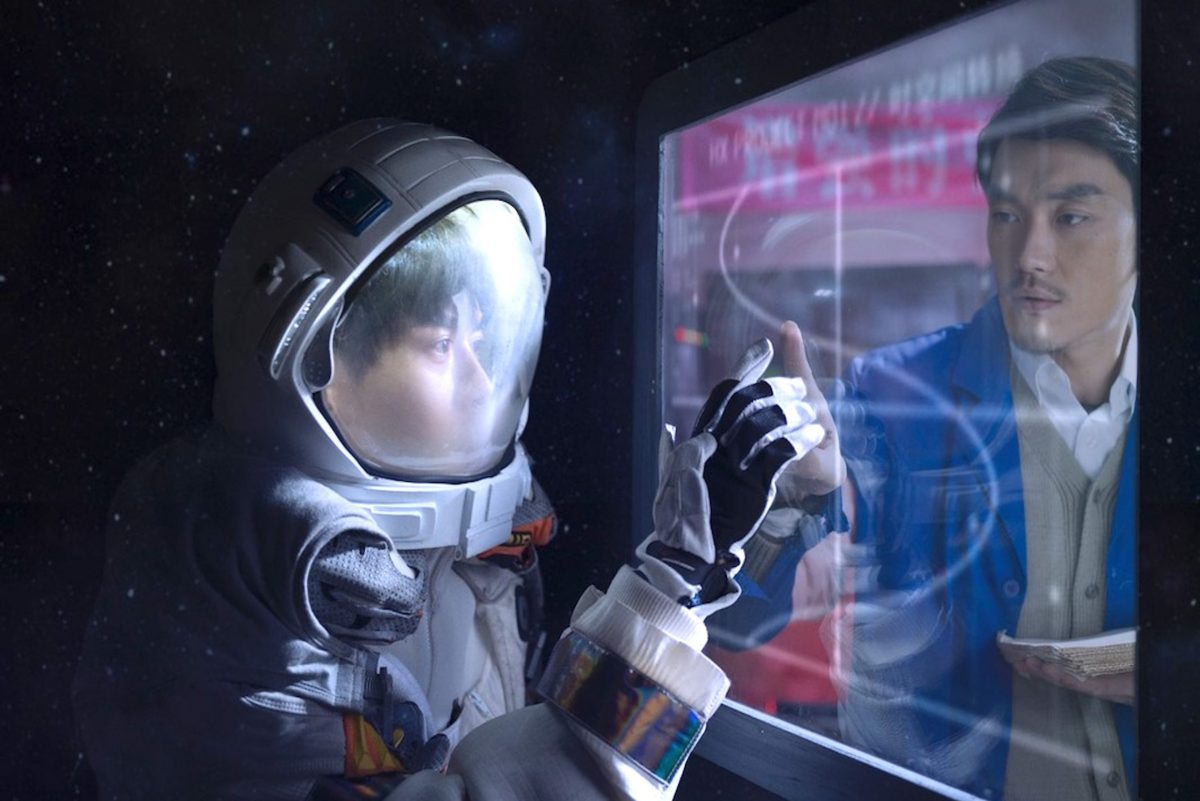
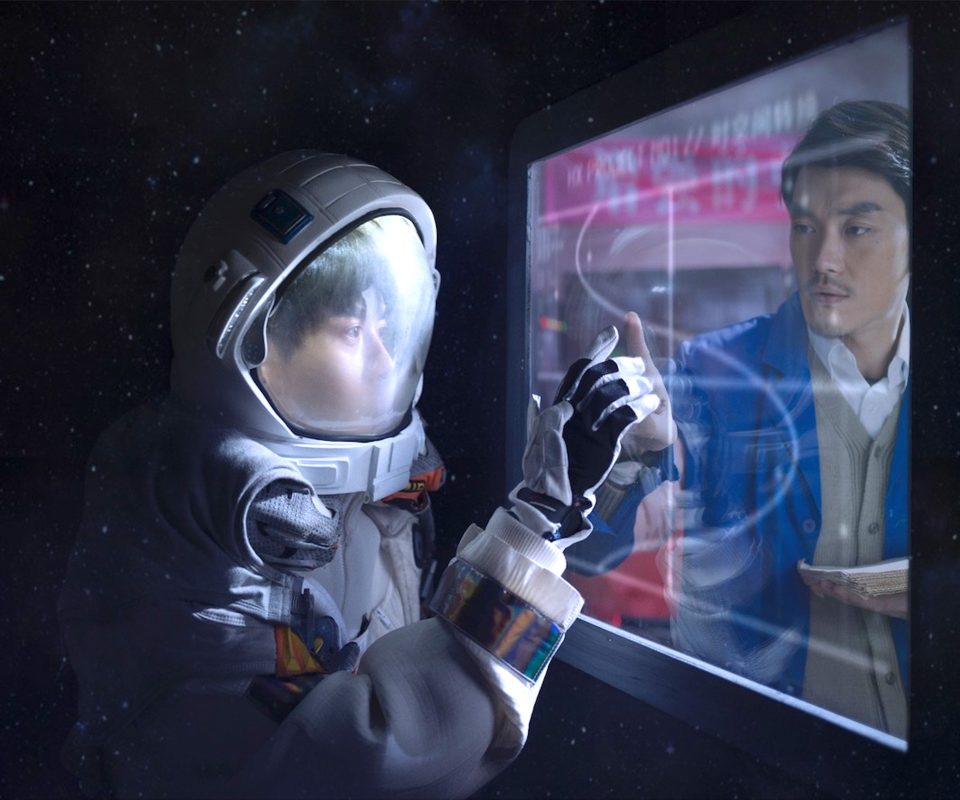
The two limited editions Nova 15a and Nova 18a are two film stills from Cao Fei’s HX’ research project. The film tells the story of a computer scientist working on a secret international project that attempts to turn humans into digital mediums.

Cao Fei

A failed attempt to use his son as a test case results in the young man becoming lost in cyberspace, a spectre haunting the past, present and future worlds that continuously interact and overlap throughout the film. By mining the history of her immediate context, Cao Fei takes us on a ‘retro-futurist’ journey that goes beyond chronological time and hovers between reality and fantasy. 

Fonti:
Palazzo Grassi
Portfolio
Guggenheim