Categories
Contemporary 对话

Contemporary | Chen Ke sad girl

Chen Ke is born in 1978 in Tonjiang, China’s Sichuan province. She’s graduated from the Sichuan Academy of Fine Arts, where artists had many opportunities to explore their emotions and instincts. 
This free environment, alongside cartoons, fairy tales and comics, helped her to build her identity as an artist.
After participating in numerous national and international exhibitions, she worked on a variety of media, including painting, sculpture and fashion design.
Chen Ke is recognized as the most representative artist of the New Generation of Cartoon of China.
Background

Various images of little girls, representing the core of human nature, flow like a thread through the works of Chen Ke.
Although references to the art of comics are evident, when one analyzes her works in more detail, they become visible elements of style of Western masters such as Caspar David Friedrich, as well as the influence of traditional Chinese paintings, creating an exciting tension. 
Being eager to experience Chen Ke often surprises her viewers. Not only does she produce her own paper, she embroiders canvases with beads, but she also applies oil paint to stretch cotton fabrics that are popular in her childhood days.

Chen Ke sad girl

Chen Ke is considered the most representative artist of the new generation of Chinese artists. Her melancholic paintings, which express the loneliness of growing up as an only child, show digital images made of bright and colorful light from her kaleidoscopic and dazzling imagination.
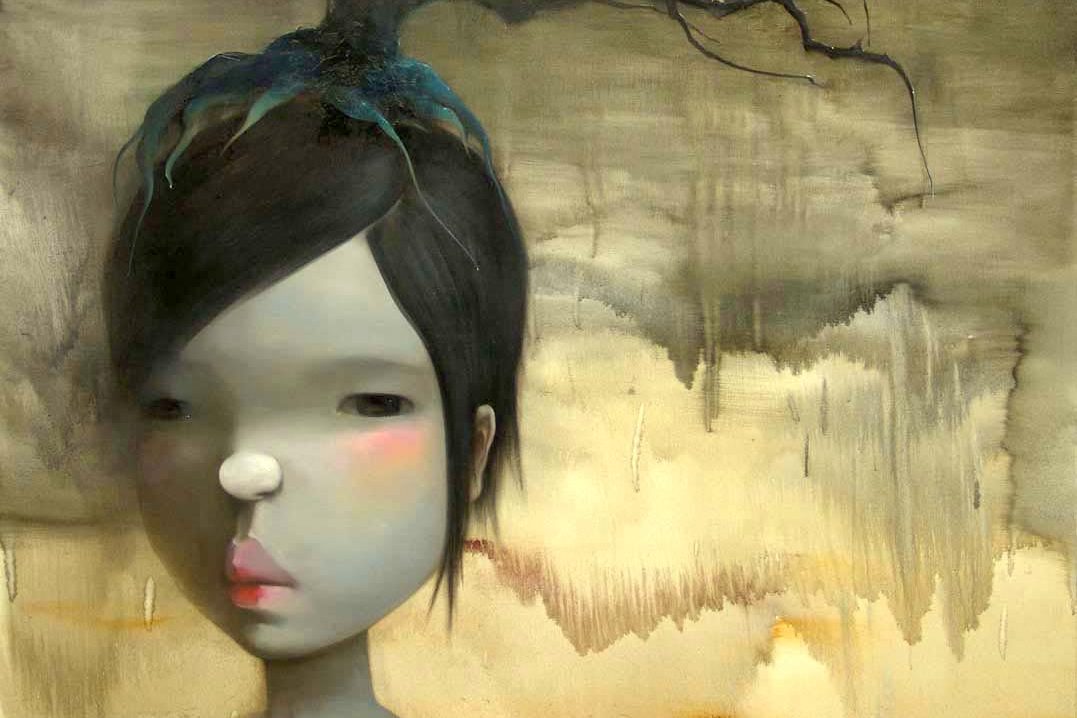
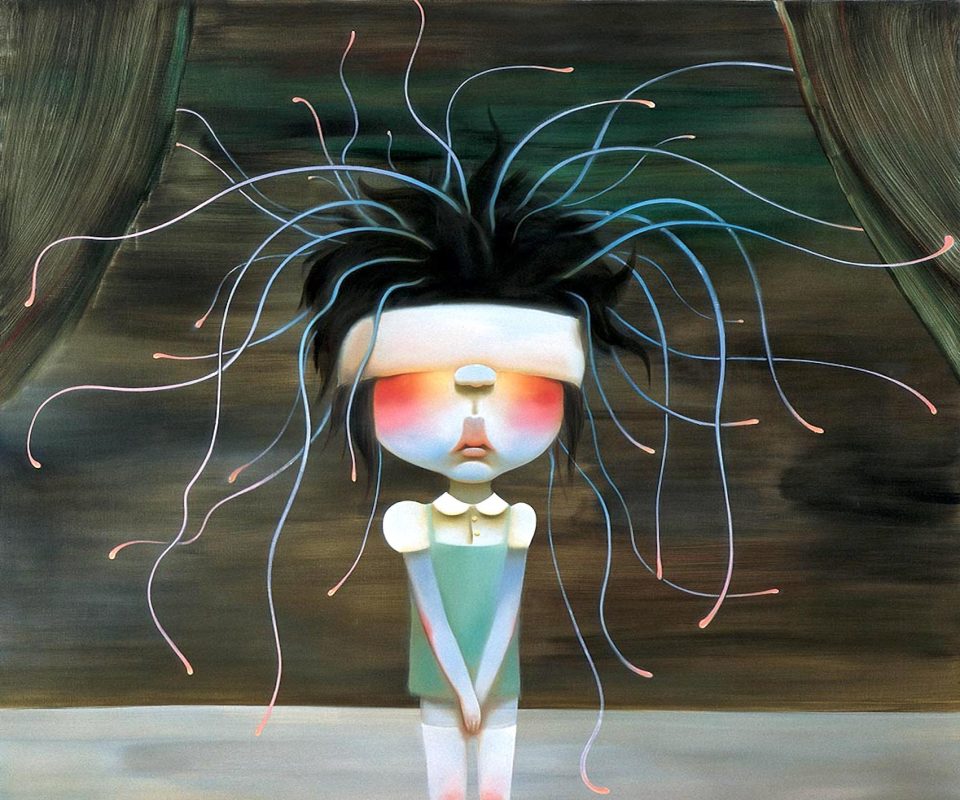
That’s why the artist says: “My characters are somewhat sad, isolated and powerless and this is exactly how I feel sometimes. My art is as real as my spirit.”As classical artworks of Chen Ke, almost every piece of work shows a little girl with a round nose, who is lost in depression, limited to herself, living in an unreal space, and seems to keep a distance from the human world.
Chen Ke
Like porcelain paintings

Usually, the sad girl takes up the center of the whole artwork. With the full expression of the blank as well as the grain like porcelain paintings, the artist fully shows the opposition of the reality. A reality that buries the audience in the waves of the sense of unknown sadness. The sad girl seems to be jumping between the virtual world and the reality, which makes the audience lost in the endless loneliness and long distraction.
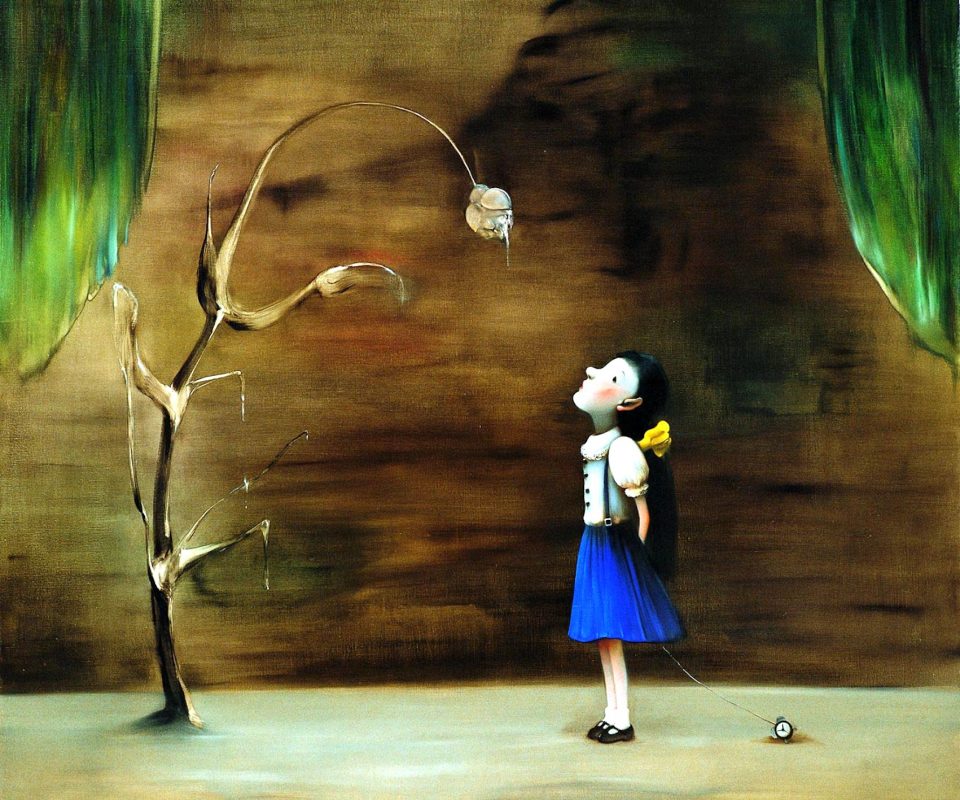
Chen Ke
Chen Ke and Beijing

In her first two years in Beijing, she felt lonely and what she could do was to paint and put her moods into the painting. She believed this is the reason why many people think that the girl in her painting was actually her self. And the girl in her painting grew up with the growth of the artist. She believed her art appeared from her daily life, so she hoped art could enter the daily lives of people. 
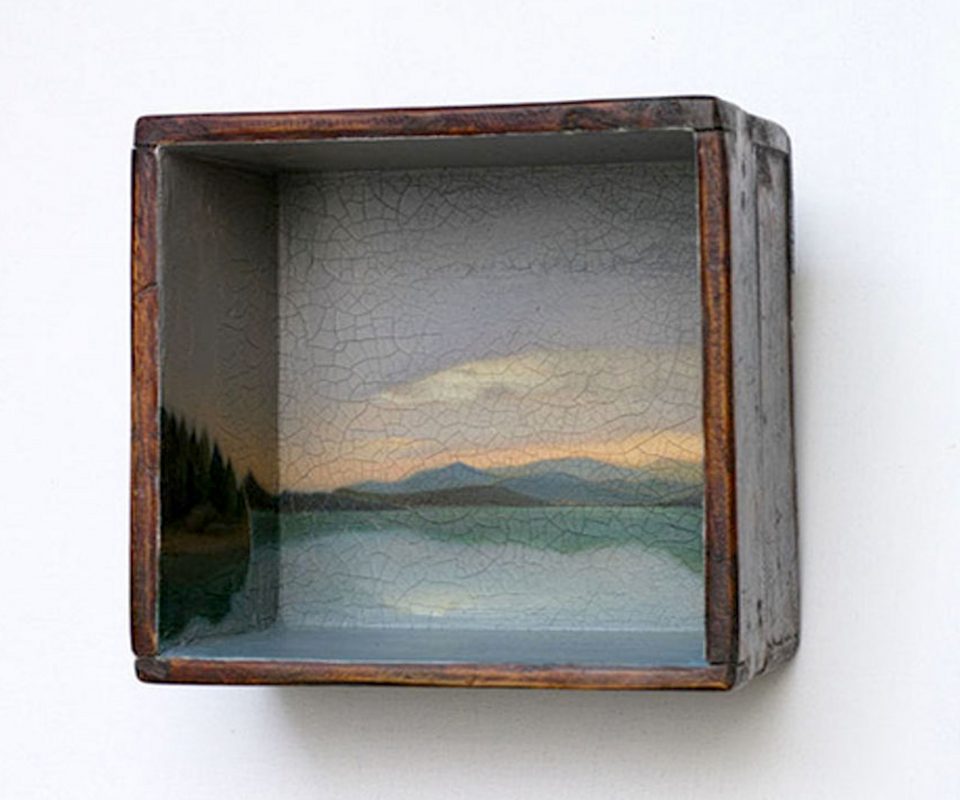
Chen Ke and Fashion

She thought fashion and art have no differences at the top point. She has cooperated with many fashion brands. In 2008, Fendi invited Chen Ke to join the Fendi special handbags Baguette Anniversary commemorative edition series; she designed a handbag for the series. In 2014, Chen Ke designed for the Vogue FNO series to celebrate the ninth anniversary of Vogue magazine.
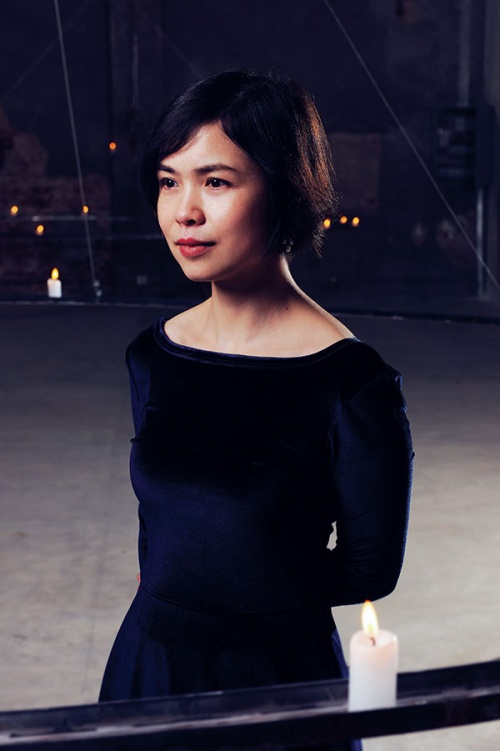
Chen Ke

Fonti:
Artsy
Wikipedia
Perrotin

Categories
LAVORATO 当代 艺术家

Contemporary | Fusion of traditional and modern Liu Jiahua

Liu Jiahua was born in Sichuan in 1979, and graduated at the Sichuan Academy of Fine Arts. He came to Beijing in 2009 to work as an independent artist. Thanks to his work, he’s been invited to participate in important exhibitions is his country but also abroad and has won different awards. Recently, Liu Jiahua has attracted a lot of attention among the new generation of artists with his unique form of picture expression.

As an artist who enters the city from the countryside, the order, rules and even civilization of the city undoubtedly subvert the existing cognition of Liu Jiahua. In the visual, psychological and lifestyle aspects, and so, he truly feels the impact of the so-called urbanization process.

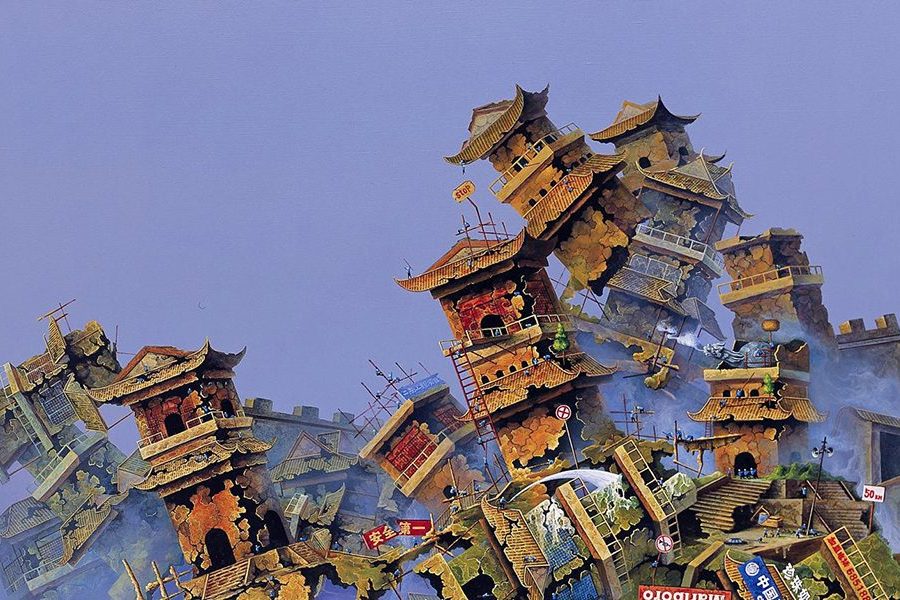
Therefore, in the works of his artistic creation, “Returning to Peach Blossoms”, the architectural symbols representing the urban civilization and the traffic symbols and the nature with its mountains and rivers, both have a yearning for urban civilization and a decadent agriculture. “The Return to Peach Blossoms” has a metaphor of “spiritual utopia” from the subject.

“Building” is more than a “City”. “City” is like a book, a testimony to the modern historical process. Gorgeous skin of human civilization, and a legend and dream in the memory of the nation. The confession of “City” reflects the distress of people, although one is material and the other is flesh. To describe “city” between affirmation and loss is to describe “people” themselves.” ——Liu Jiahua

There’s a proverb talking about winds: it is says that the distance between the two places is one hundred miles. For example, the “wind” will be different, and the “vulgar” will change with a thousand miles.

The artist Liu Jiahua’s work “Red City” was born like a juxtapose of traditional symbols and contemporary phenomena. Causing visual confusion. This surrealistic theme and the sense of suspension of dreamy colors create a lost world that is also true and illusory.

The work “Red City” has a long history and a splendid Chinese culture, and it has been draped in the era of the colorful clouds. The collection of ancient and modern Chinese and foreign architectural creations is infiltrated into the works. Consequently allowing it to be distributed spirituality and vitality.

“Why did you choose ancient architecture?”

At his question Liu Jiahua said: “The pavilion” has a double dimension of meaning, which can represent the ancient architecture that has disappeared, or it can be transformed into a symbol that of traditional and cultural heritage.”

“Next, the red rope began to appear in his picture. Why did you draw this rope?”

Liu Jiahua explained: “It is actually a disbanded Chinese knot. It no longer has the original meaning of harmony, happiness, etc. It is used to bind, Wrapping and hanging Chinese ancient buildings.

Therefore I hoped to use two traditional things to create a current visual experience and social problems. A little bit of “cooking beans and burning soybean meal”.

Most of the works created by artist Liu Jiahua are the series of “Red City Records”. So some critics have divided his creation into four periods: the “New City Period”. Which is the period in which Liu Jiahua began to re-examine, recognize,establish and construct himself. At this time, Liu Jiahua was in self-deconstruction and negation of self. Looking for the development period of the true self; the third period was the “Behind the City”. And the ancient architecture depicted in his paintings has begun to transform into the expression of self-centered orientation. The last period is the “unmanned period” is a period of psychological and ideological maturity created by Liu Jiahua. That is to say that it seems to have entered the realm of “no self”.

Categories
LAVORATO 传统 艺术家

Tradition | Master of Chinese Painting “Qiao Weiming”


The master of Chinese painting Qiao Weiming

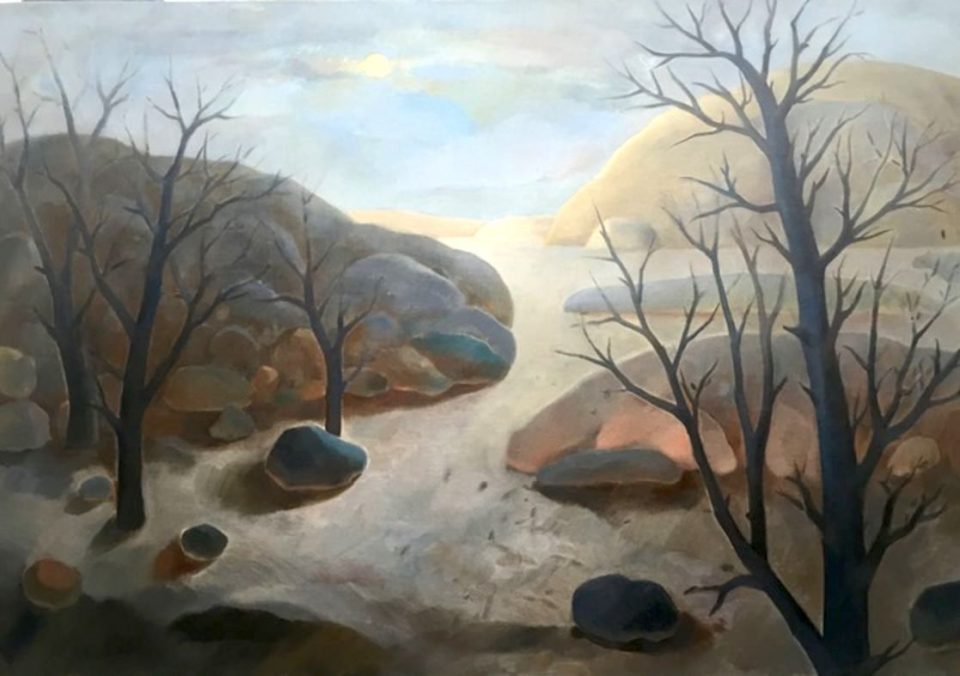
Chinese painting emphasizes him as an excellent artist, who needs to learn from the outside world and get the source from his heart, in order to have the wonderful feeling of creating the gods, mountains and rivers at the same time. Helping artists understand the true meaning and essence of art.
Canzone d’autunno
Chinese art requires saving the intention with the pen first, when the painting is finished the existence of the intention is still here. Emphasize the dissolution of things, create an artistic conception, arrive at drawing mien with form, form and spirit that must be established together.
Silenzio

And him, he did it. He is the outstanding Chinese artists – Qiao Weiming, born in 1961 in Luo yang Xiaolangdi. He is the member of China artists association. The researcher at the Chinese poem calligraphy institute of fine arts. The visiting professor of Lu Xun Academy of Fine Arts. Hebei Academy of Fine Arts and PLA Information Engineering University, the expert of cultural relics appreciation.the member of Luoyang CPPCC. The dean of Luoyang University Painting and Calligraphy Institute, and the art teacher of Luoyang Institute of Technology.

Chinese painting

Untitle

His material comes from the flowers and birds in his hometown. The composition of painting is a concrete embodiment of years of experience. For example, the basket series of paintings. All of which are mainly composed of baskets, are composed in the middle. However, the most annoying part of the composition of Chinese painting is that the main body is placed in the middle. which is precisely because the basket series is placed in the middle, which makes it very comfortable to look at. It breaks the limitation of the traditional painting composition from Song dynasty to modern times, which also forms its personal characteristics.

Fish Basket
Childhood Fun

In 1982, the work “Underestimating the wealth”, won the first prize of the Army Art Exhibition.

Red and fragrant peony

In October 1988, he held his solo exhibition in the Cultural Center in Tainan City, Taiwan.

In 1992, the work “Red and fragrant peony ” won the bronze medal in the International Chinese Painting Grand Prix.

In July 1993, he was graduated from the Fine Arts Department of Xinjiang Normal University.

From September 1993 to July 1994. he studied master’s degree in flower and bird painting at the Chinese Painting Department of Guangzhou Academy of Fine Arts. His creation “Red Kaki” was collected by the college.

In October 1994, his work “Reminiscences of Childhood” was selected for the 8th National Art Exhibition and won the first prize of Henan Art Exhibition.

In July 1997, his work “People in the Country” was selected by the China Artists Association, which held the Exhibition of  welcoming Hong Kong return to the Chinese artists .

In November 1997, the work “The Nest” won the second prize of contemporary Chinese meticulous paintings organized by the Ministry of Culture.

In August 1999, the work “Return” was selected by the China Artists Association which held the “welcome Macao to return to China’s calligraphy and painting exhibition.”

In October 1999, the work “Homeland” was awarded the Achievement Award by the China Artists Association for. “Celebrating the 50th Anniversary of the Founding of the Republic of China”.

In November 1999, the work “Bumper Harvest” was selected into the National Second Flower and Bird Painting Exhibition organized by the China Artists Association.

In February 2001, he participated in a joint exhibition of eight paintings and calligraphy organized by the Ministry of Culture of the People’s Republic of China to Egypt, Britain, France and Italy.

Hometown
Flowers

SEE FOR DETAILS:http://qiaoweiming.orgcc.com/works/v3710.html