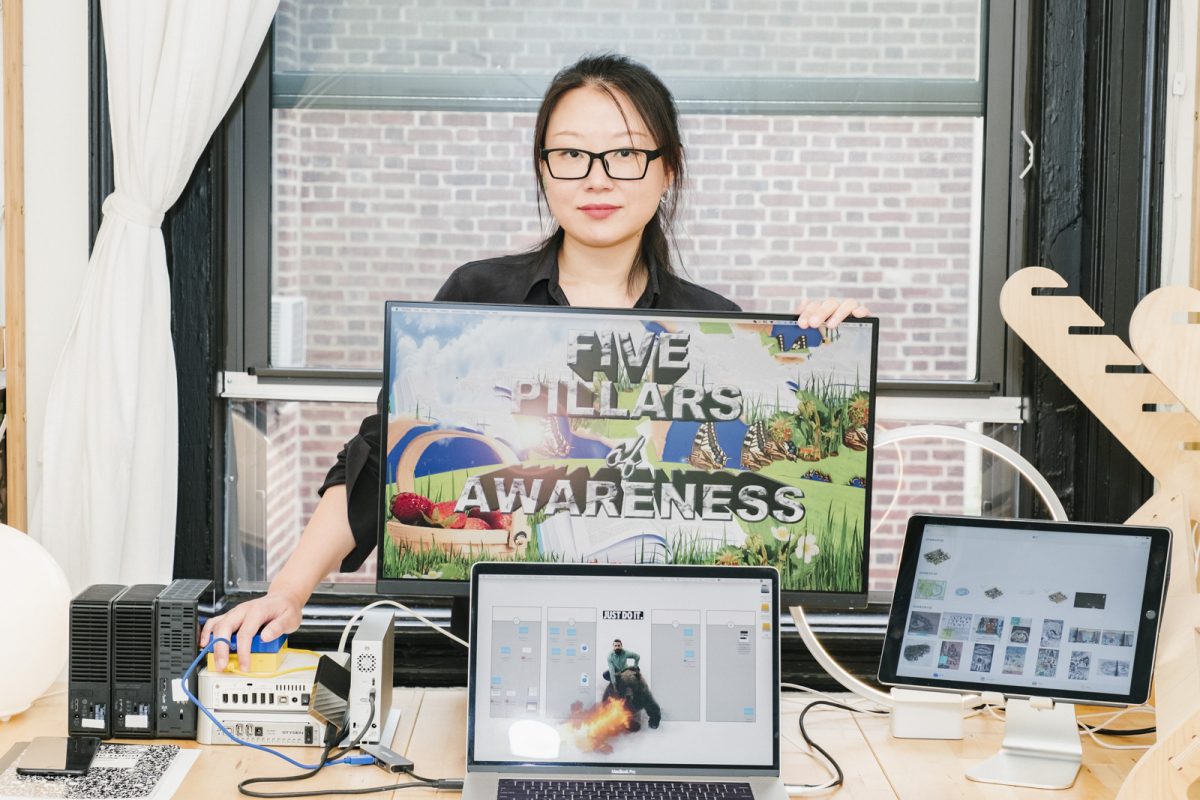
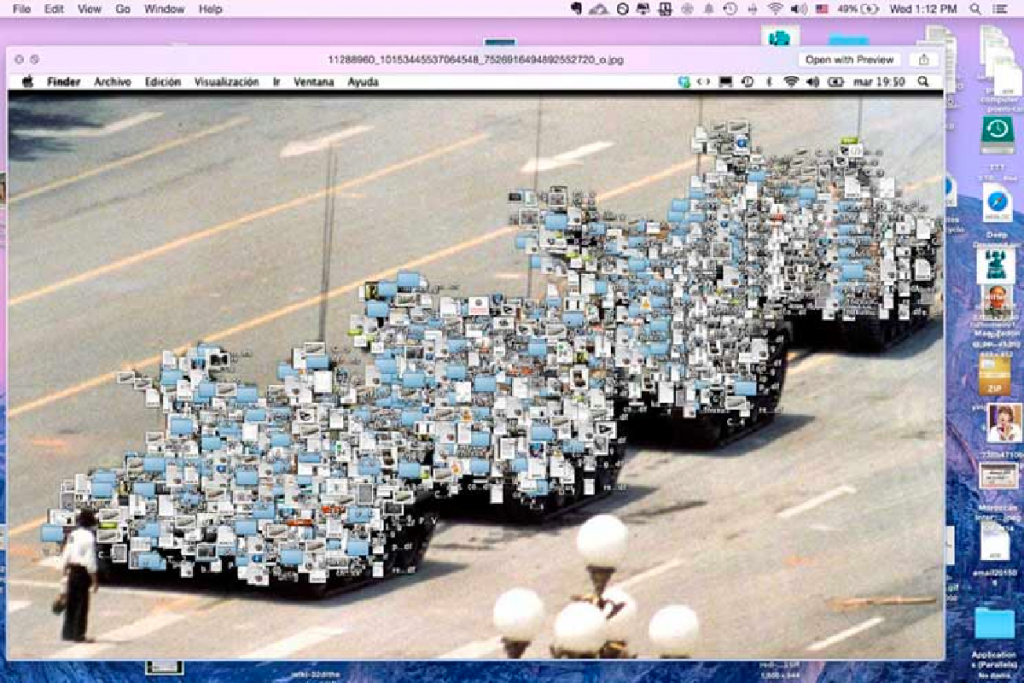
In an increasingly digital world. Where facial recognition apps allegedly store our aged portraits and smart devices eavesdrop on our most intimate conversations. A growing number of artists are presenting tech-inspired dystopias in their work. New York and Shanghai-based Miao Ying adds an even more bitter cherry on top of this potential, doom-filled future, with her commentary on drastic governmental Internet censoring, and eventual self-censorship, in her home country of China. “Self-censorship is similar to Stockholm Syndrome,” says the artist.
Miao Ying last decade
However about becoming frenemies with censorship over the last decade, since she graduated from graduate school. “I never read George Orwell’s 1984 because I live in it and it’s pretty dark already.
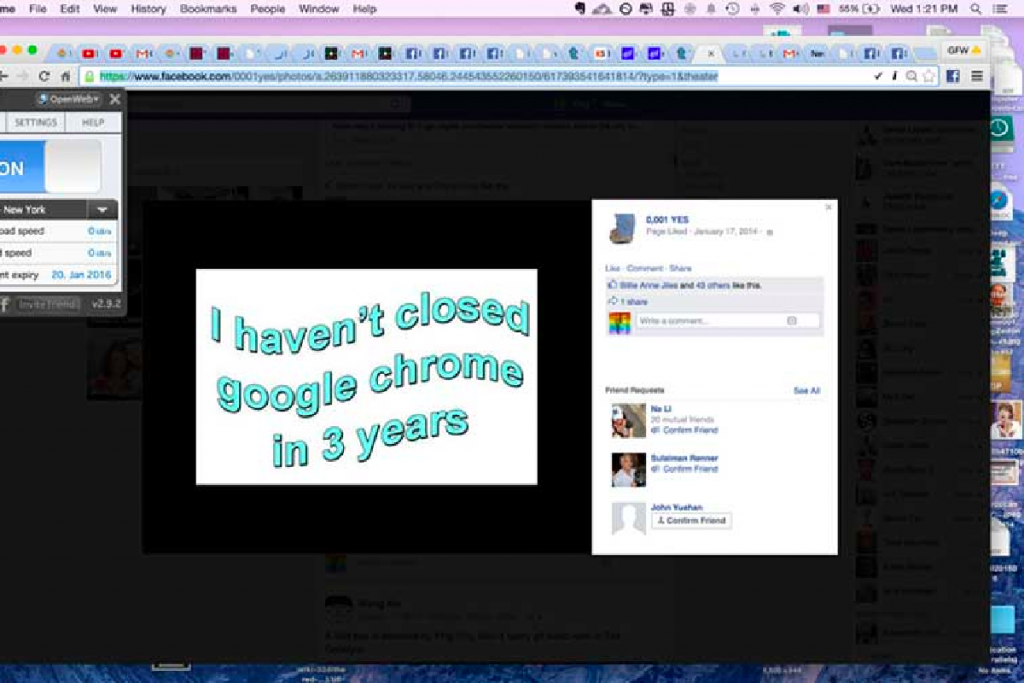
Miao YiMiao Ying, I haven’t closed google chrome in 3 yearsMiao Ying, I haven’t closed google chrome in 3 years
Gif works
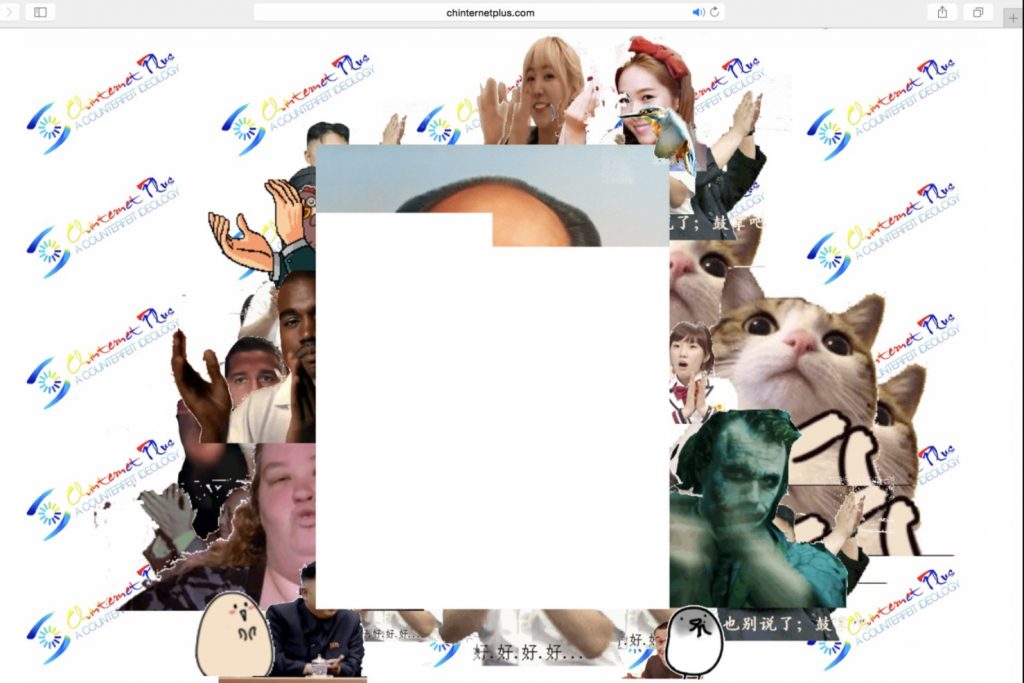
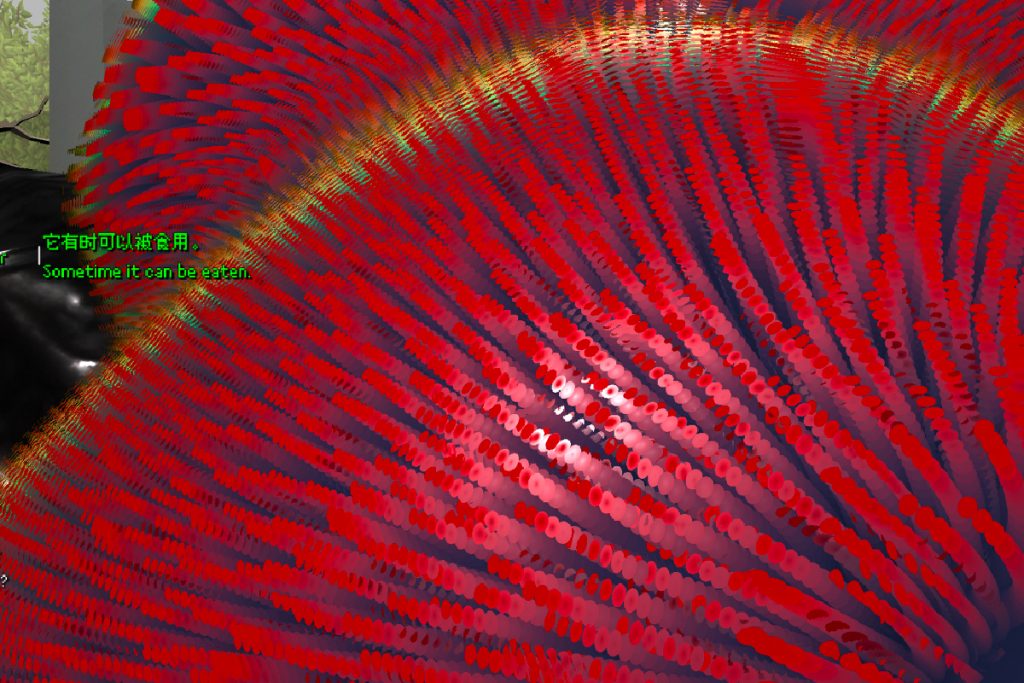
It’s easy to think censoring is wrong—few would argue with that.But the artist has been practicing ways of working with it. While playfully bending the rules. Miao showed a GIF of a half-loaded image of Chairman Mao as part of her mixed media installation Chinternet . Plus in the group exhibition The New Normal: China, Art, and 2017 at Beijing’s UCCA Center for Contemporary Art. The cultural bureau, during one of their usual trips to institutions to eliminate “threat”. Deemed the work inappropriate because of the clear resemblance of the former leader’s forehead. The artist’s solution was to raise the image’s pixilation to such a degree of unclarity that she was able to exhibit the work. Which was about China’s economy slowly getting stuck in a manner similar to a buffering image.
Miao Ying, Chinternet Plus (detail), 2016. Courtesy the artist
Miao’s mixed media installations—or promotional showrooms, as she calls them—bring her web art pieces into the gallery space, but exist almost secondary to her work in the digital realm. For Miao, her work strictly “resides online” and physical installations . She has started showing at museums result from an outside demand to prompt the audience to go to the Internet. “The work always starts with a digital core, which relates to a communist ideology. Starting with an abstract vision and adding up to build an idea.”
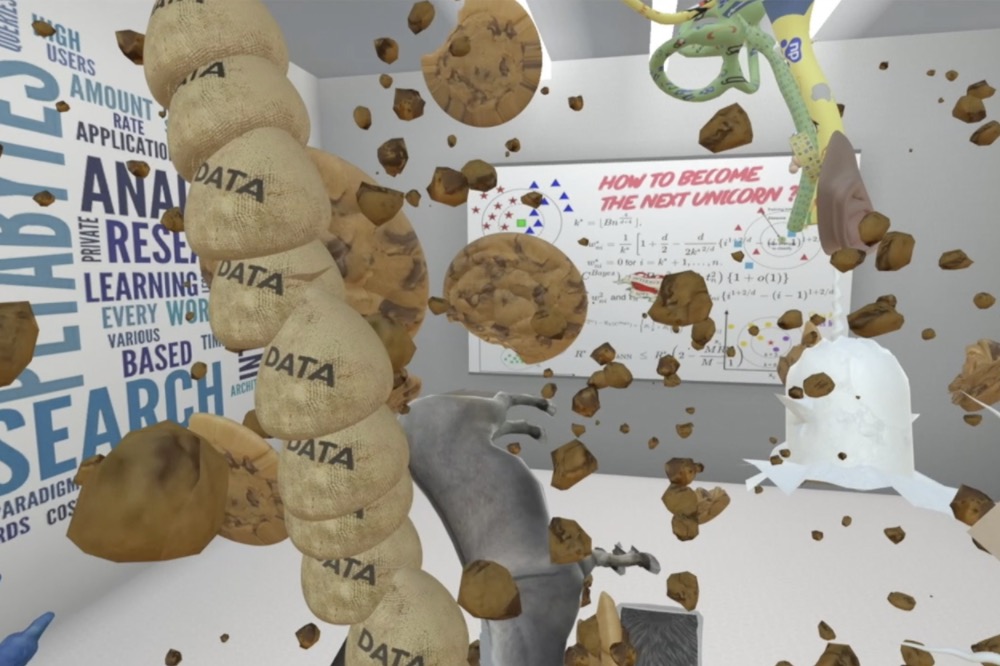
Miao Ying, data
Miao Ying Grey Area
“There has always been a grey area to play with; however, that area is constantly getting narrower,” explains the artist. Who believes the current digital-political landscape has reached new realms of horror. With an in-progress credit system to collect personal data, similar to the purchase-based credit system of online shopping platform Taobao. Which grants visa-free access to Canada or Singapore for those holding the desired score. A pilot programme is currently being tested on smaller cities. The new deductive system gives each citizen 1,000 points, which drop based on their online and real-life presence. Monitored through governing web companies and people observing and noting others’ public behaviours. “The plan is to have each Chinese citizen scored by 2020.” says Miao, adding that a low score will limit travel and access to certain benefits.
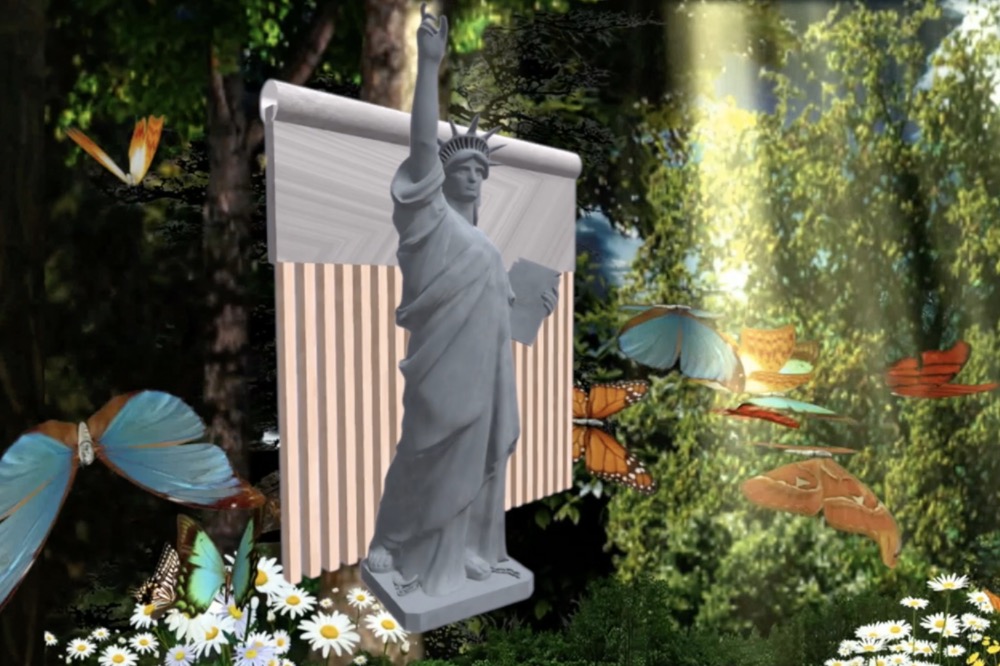
Miao Ying, Happily Contained (detail), 2018. Courtesy the artist
Aaajiao is the online handle for Xu Wenkai. Who coined the name in the years he downloaded mp3s from Soundseek and chatroom users. His username chromatic_corner to ‘A Jiao’ (literally in Chinese: corner).
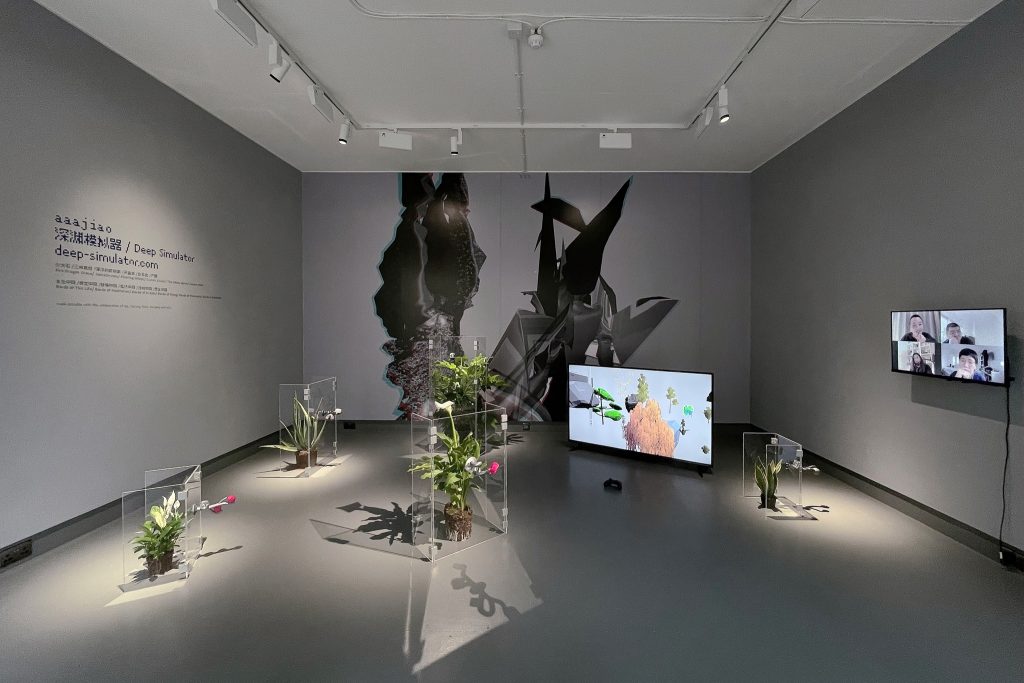
Aaajiao, Deep Simulator, at Tabula Rasa Gallery in London
Aaajiao Deep Simulator
That sense of double play, in which a seemingly straightforward work is laid bare as a labyrinthine critique that feels at once accessible and obscure, comes through, also, in the artist’s latest exhibition, Deep Simulator, at Tabula Rasa Gallery in London (4 June–31 July 2021). The work was first shown in the project room of Castello di Rivoli Museo d’Arte Contemporanea in 2020, marking the artist’s first exhibition at an Italian institution.
Aaajiao, Deep Simulator, at the project room of Castello di Rivoli Museo d’Arte Contemporanea, 2020
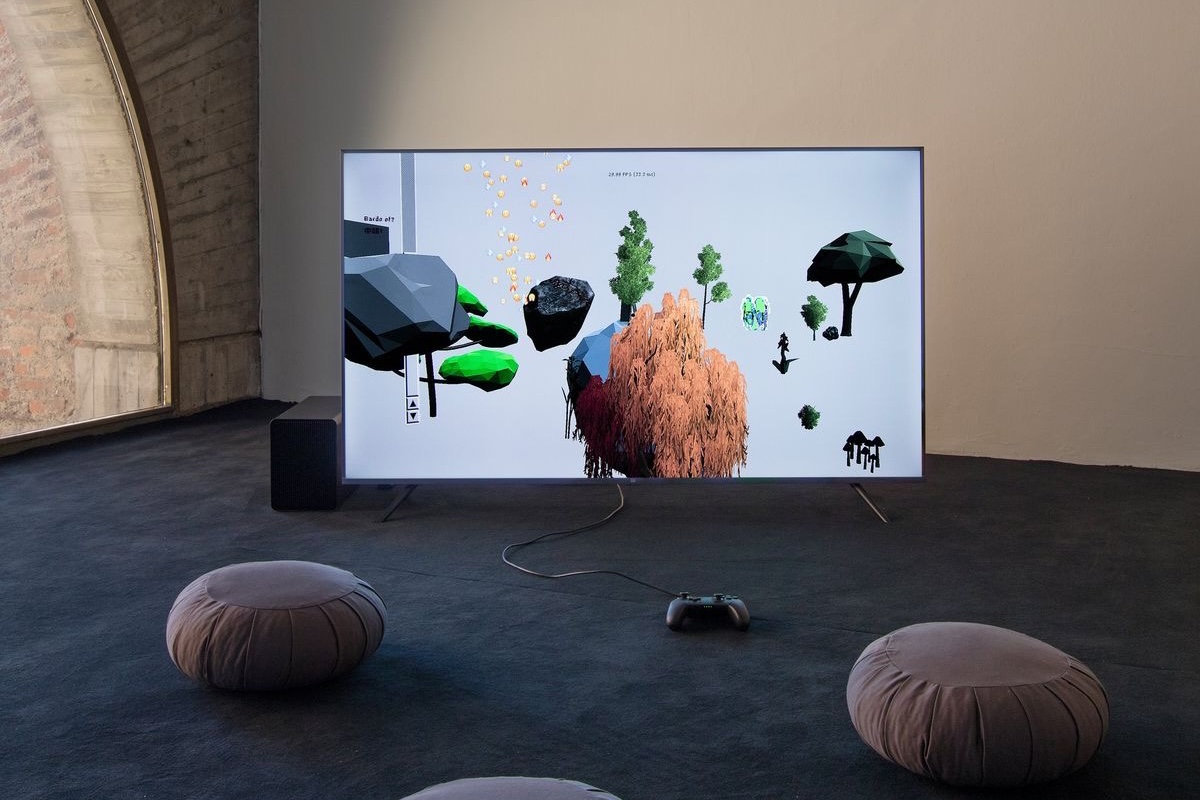
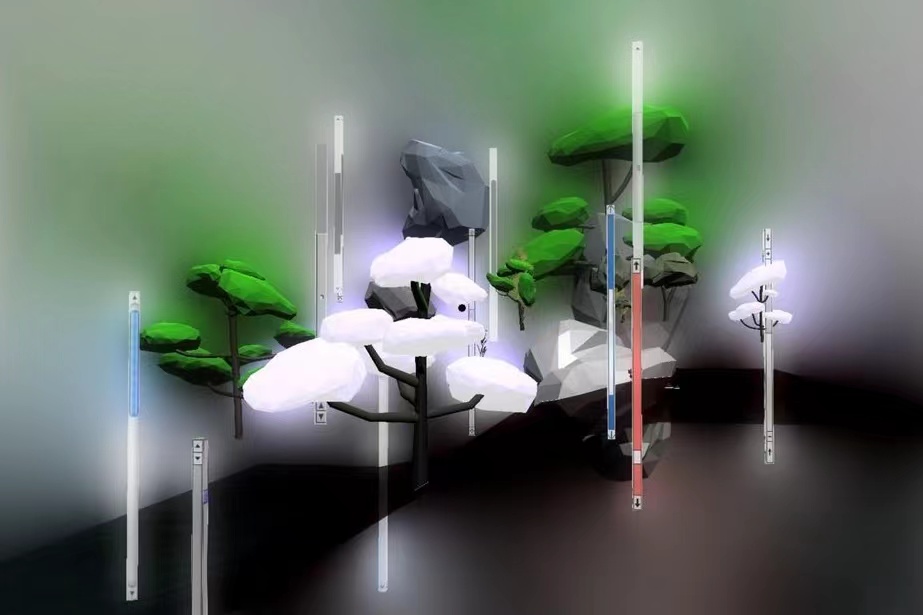
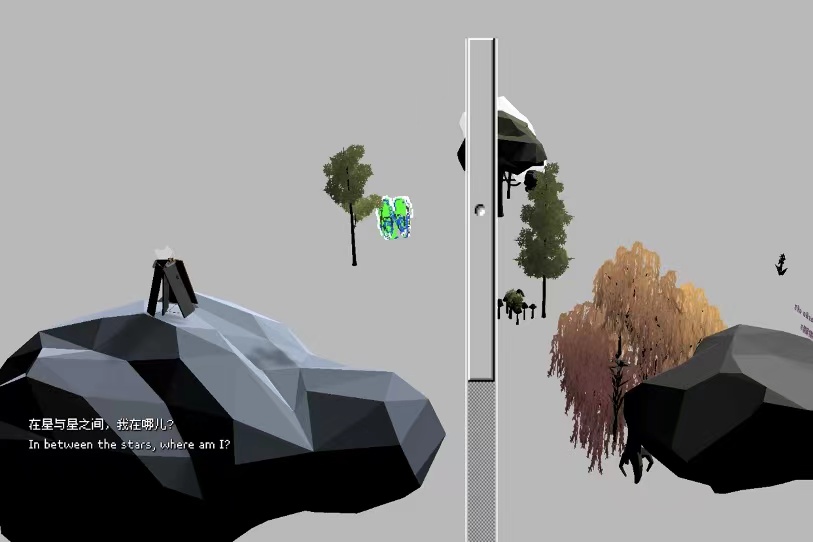
In a room set up with a gaming station and standalone. Surreal objects evocative of tree branches rendered by digital algorithm. Aaajiao’s metagame Deep Simulator invites the viewer to partake in a space exploration at once both real and virtual.
Aaajiao, Deep Simulator, 2020
The prime engine
Deep Simulator sees computational power as the prime engine that generates the state of our world. The six possible states of Bardo—a term originated from Buddhism that describes the intermediate state between death and rebirth—can be retrieved by the player via six levels of computational power. “Deep Wanderer,” defined as the protagonist of the metagame, is an amalgamated persona consisting of the viewer of the exhibition, the player at the game station, and the wanderer in the metaphorical journey within the simulation. Upon seeing and being the “Deep Wanderer”, individuals such as us come closer to understanding the truth of our existence.
Aaajiao, Deep Simulator, 2020
Human Identity
As the artist’s continuous reflection on the evolution of human identity along the transformative power of the Internet sphere, the forming of The Player in Deep Simulation is a transmutative process carried out by the artist over the years. It passes through the figure of The User presented on the artist’s solo exhibition User, Love, High-frequency Trading in 2017, and The Bot as an information crawler for the project bot in 2018. The spectator’s ability to see the player playing while awaiting his or her own turn opens up a path to observe an “other” him- or herself, and underlines the controversial notion of the real in the world of new technologies, the Internet and the circulation of digital data.
Aaajiao, Deep Simulator, 2020
It is worth noting that Deep Simulator was specially conceived for the project room of Castello di Rivoli in 2020. Making aaajiao the first Chinese artist to exhibit at an Italian institution. Due to the pandemic, only domestic visitors in Italy were allowed. We hope that through presenting the work for a second time at our London space, the work will be able to reach a broader audience.
Cao Fei, daughter of a famous Chinese sculptor, was born in 1978 in Guangzhou, China. She currently lives and works in Beijing. She is one of the most innovative young Chinese artists on the international scene. In his installations and videos, Cao Fei investigates the expectations and dreams of the young Chinese generations. Cao’s works are an outlet for invention, but behind her playful jokes lies an uncertain world of unfulfilled desires.
Combining popular aesthetics with a documentary vision and references to surrealism, in his works Cao Fei moves strong social criticism, reflecting on the inconsistencies and hopes of his country. He uses photography, video and digital media in innovative ways to expose the dramatic changes in his daily environment – since 1992 – and in his high economic growth, urban development and the rapid globalization of China focused on its native region of the Pearl River Delta.
Biennali and triennali
Cao Fei’s works have been exhibited in several international biennials and triennials, including the Shanghai Biennial (2004), the Moscow Biennial (2005), the Taipei Biennial (2006). And the 15th and the 17th Sydney Biennial (2006 and 2010), the Istanbul Biennial ( 2007), Yokohama Triennale (2008) and 50a, 52a and 56a Biennale di Venezia (2003, 2007 and 2015) where he presented the work “La Town”.
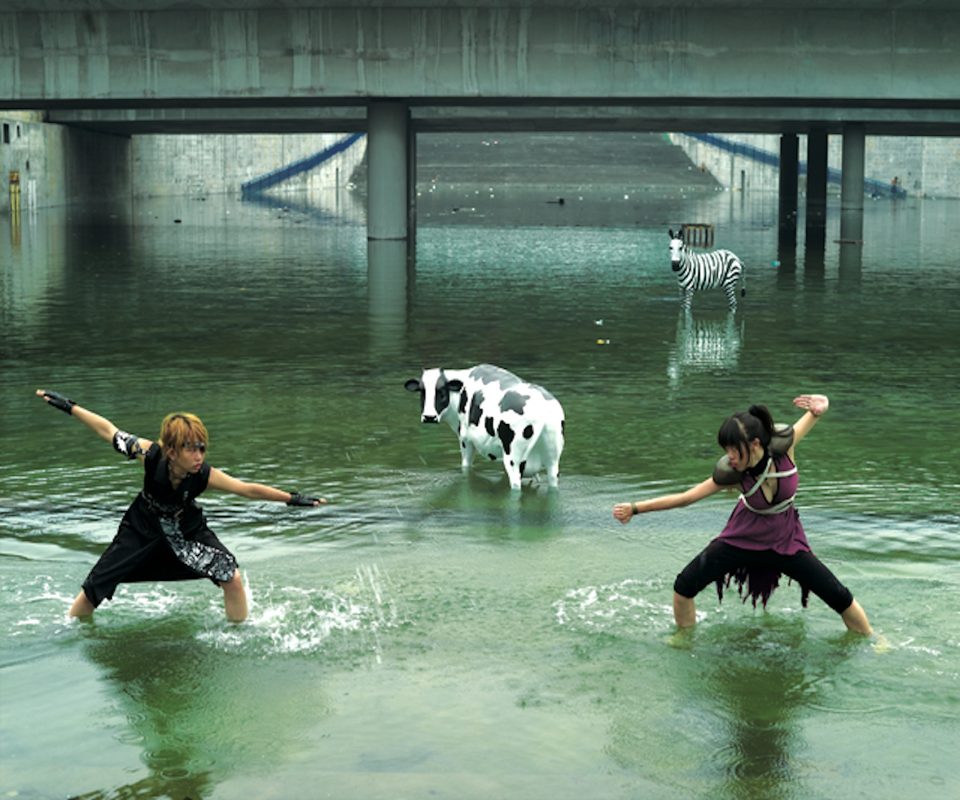
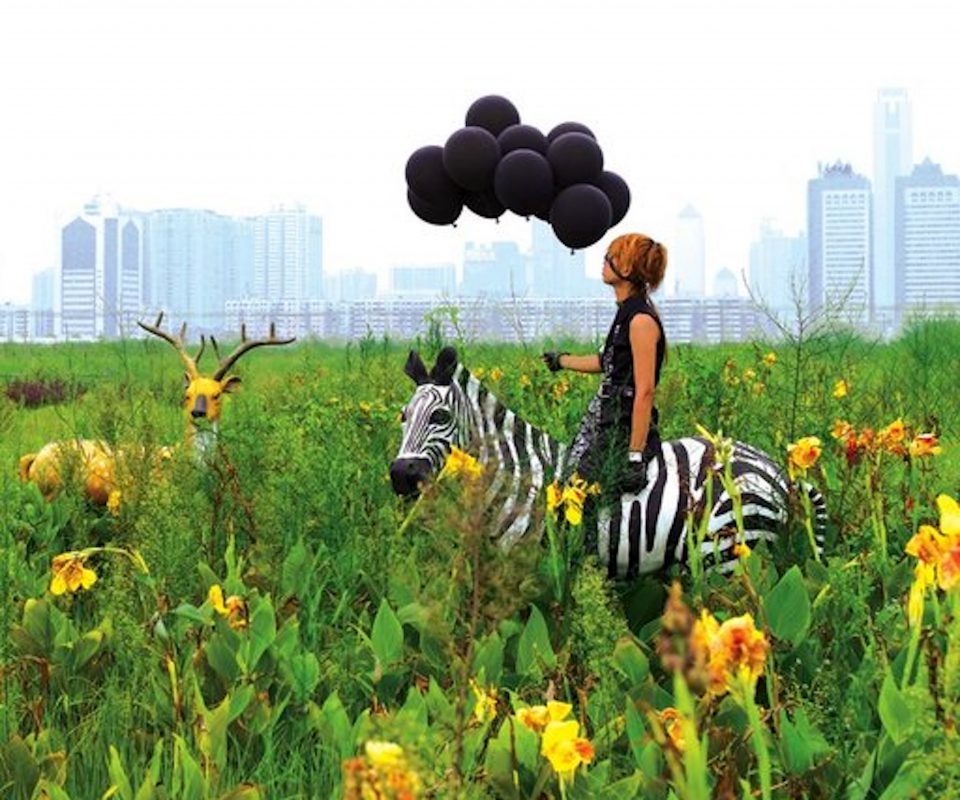
“COSplayers”, 2004
His fascination with local youth subcultures during his training period is reflected in his early photographic and video works. In “Cosplayers” he explored the alienation and escape tried by young disaffected and displaced people. Who expressed themselves as fantastic game characters. The interaction between the virtual world and the real one, utopia and dystopia. Body and technology remained important themes for the artis
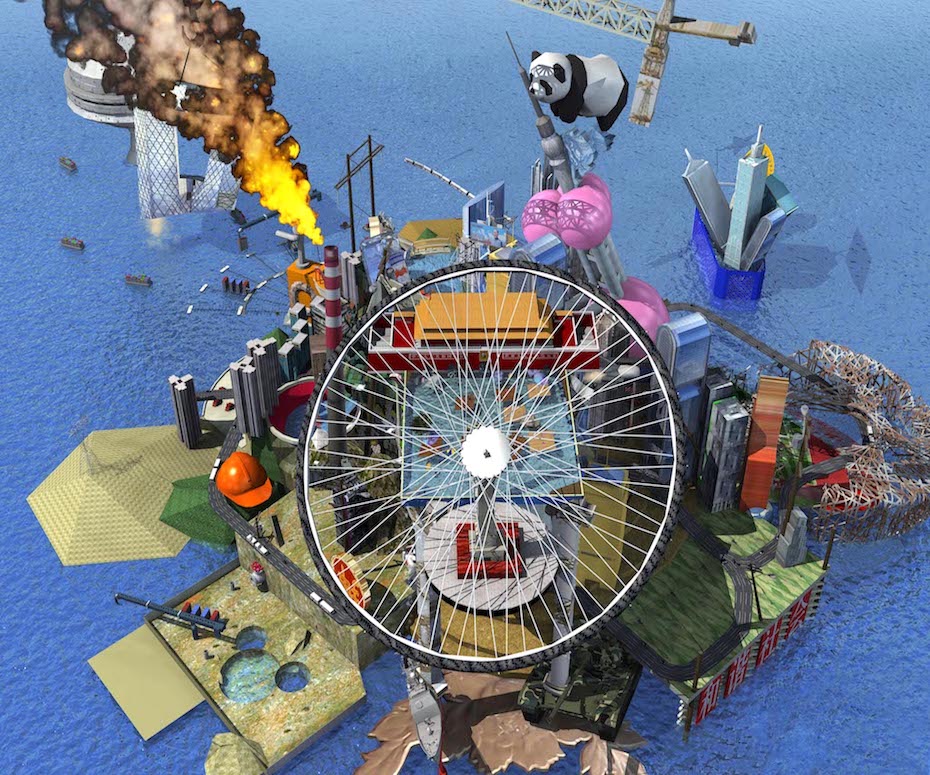
RMB City 2007
Fascinated by the potential of the virtual world, not only as a strategy of escape from reality. A virtual world that is as a real tool of online urbanization, Cao Fei founded RMB City. Using the famous computer platform Second Life Cao Fei realize her avatar China Tracy. The alter ego of the artist: Sexy, feminine, with dark hair and Sailor Moon style has given shape to a virtual art community. Lives and operates in an environment that embodies the unique characteristics of Chinese cities.
RMB City states Manifesto: “New orders are born, so they are new, strange wisdom” 1-A statement appropriate to the ‘setting of the work, the virtual platform Second Life, in which users, through their chosen avatars, can buy and exchange objects, build urban structures and interact with other avatars in an artificial utopia that is also part of the apocalypse.
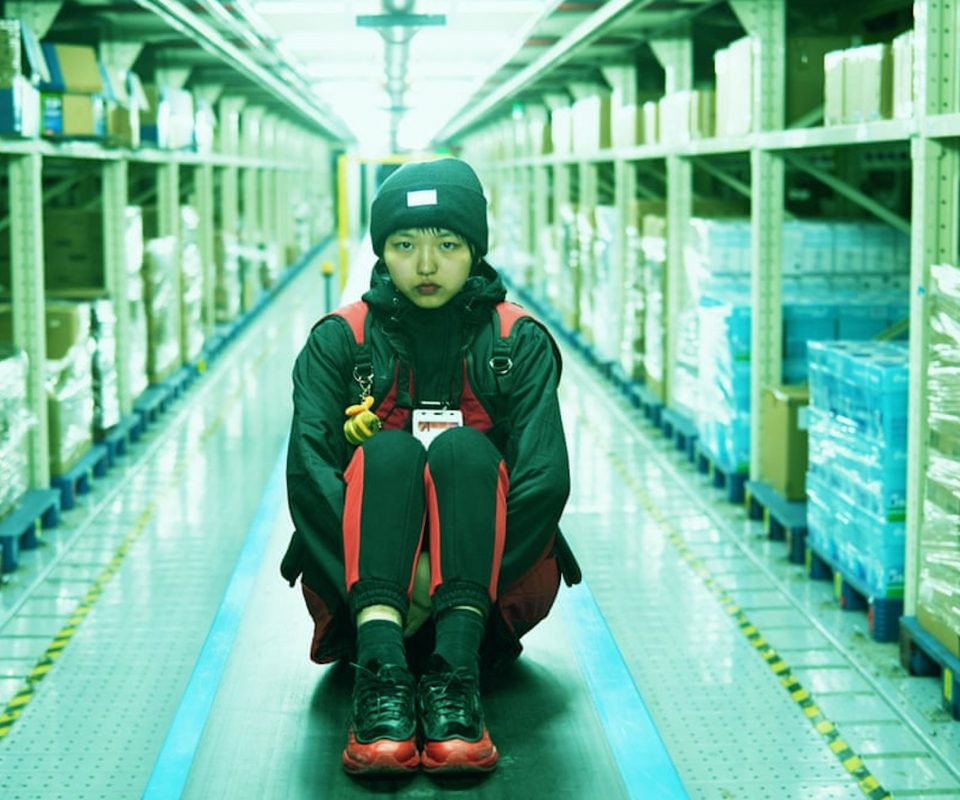
“Asia One”, 2018
Cao Fei says «Technology has developed beyond imagination» For “Asia One” commissioned by the Guggenheim Museum, Cao visited some of China’s most advanced industrial facilities. Including the world’s first fully automated sorting center in Kunshan, in Jiangsu Province. For this project, a hyperreal vision of the near future shifted its focus from the present to our collective future by examining the effect of technology on human relationships.
“Nova”, 2019
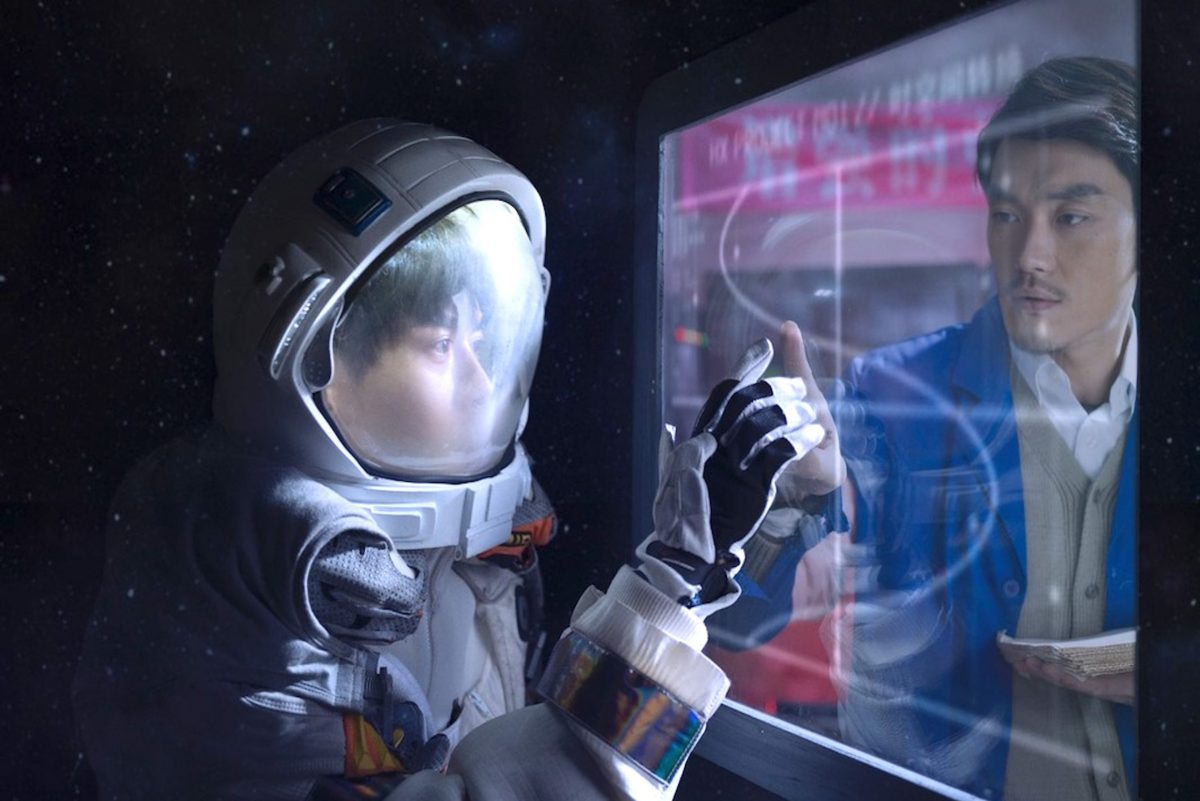
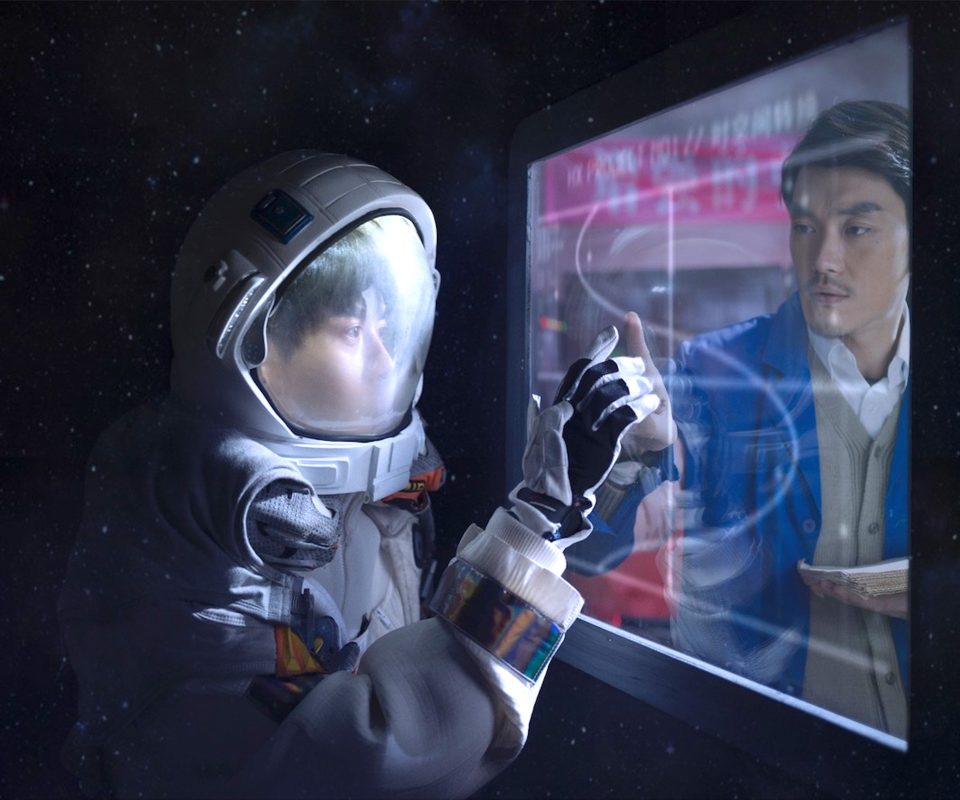
On the occasion of her solo exhibition Blueprints, at the Serpentine Galleries, Chinese artist Cao Fei has produced two new limited edition artworks. The two limited editions Nova 15a and Nova 18a are two film stills from Cao Fei’s HX’ research project. The film tells the story of a computer scientist working on a secret international project that attempts to turn humans into digital mediums.
A failed attempt to use his son as a test case results in the young man becoming lost in cyberspace, a spectre haunting the past, present and future worlds that continuously interact and overlap throughout the film. By mining the history of her immediate context, Cao Fei takes us on a ‘retro-futurist’ journey that goes beyond chronological time and hovers between reality and fantasy.
Zhou Jun is a contemporary conceptual chinese photographer. He was born in Nanjing Province in 1965 and graduated from Nanjing Normal University in 1990.
His work revolves around construction sites and the relationship between urbanization and the preservation of ancient cultural inheritance.
Zhou Jun
Zhou Jun’s technique
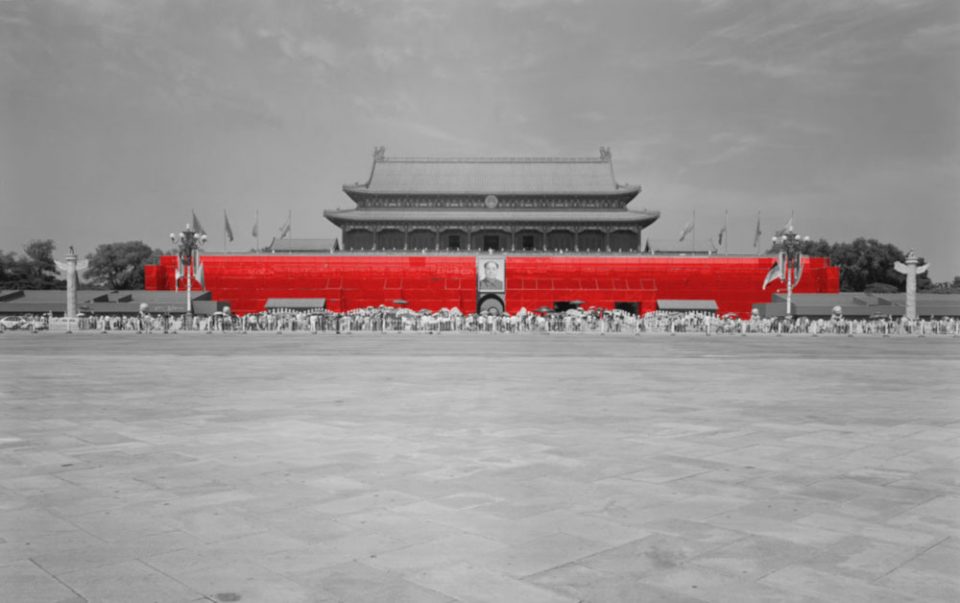
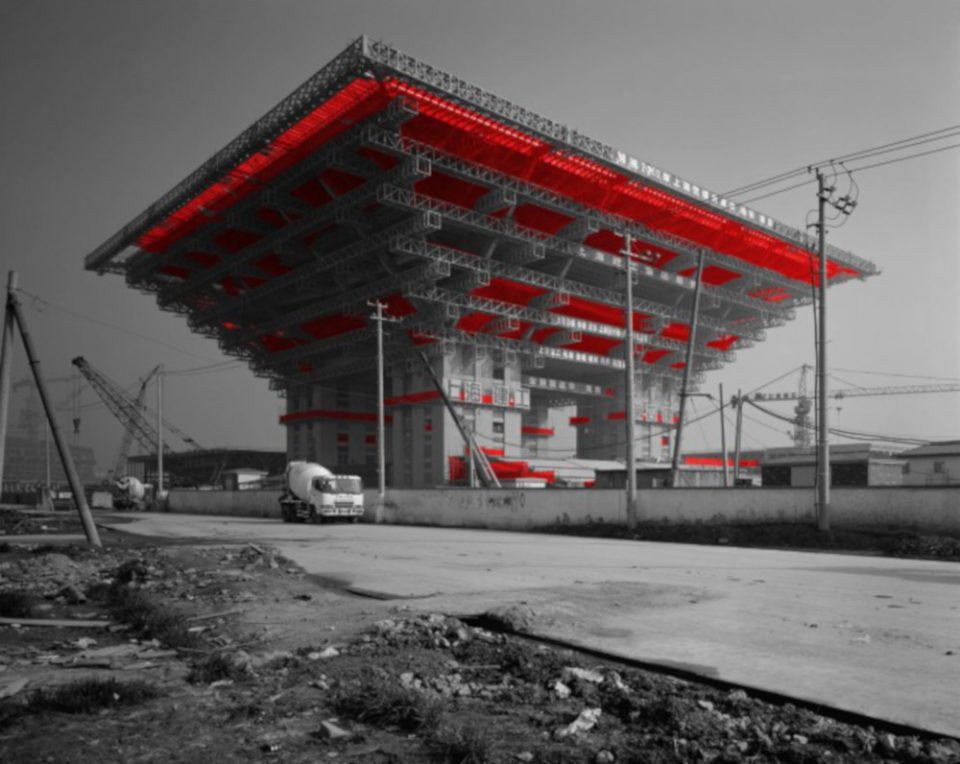
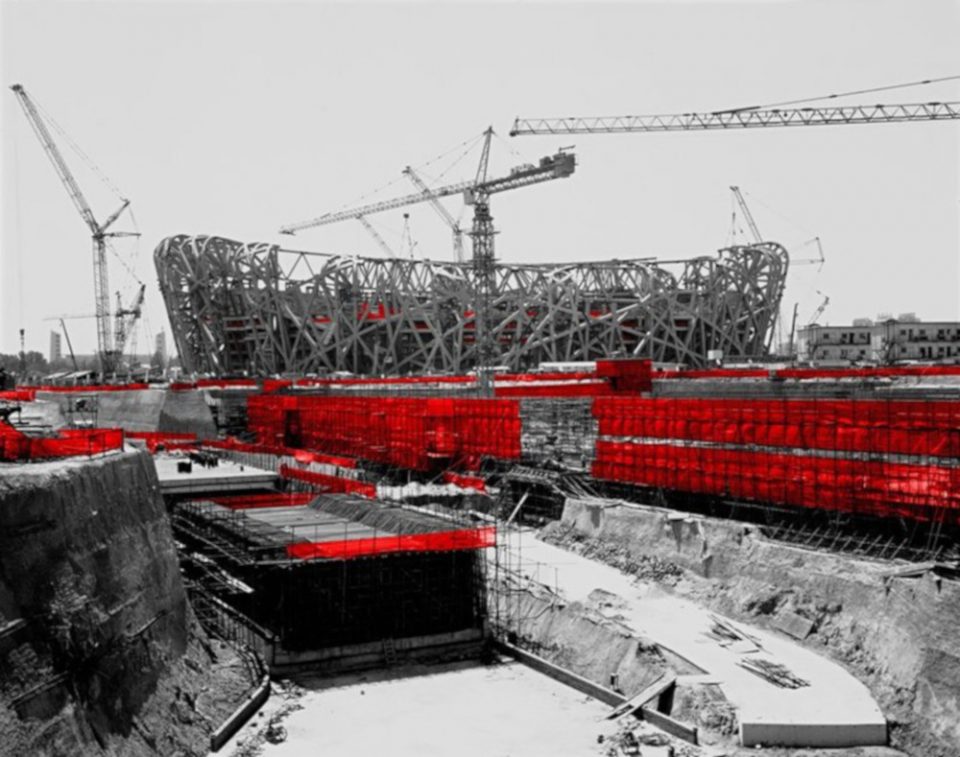
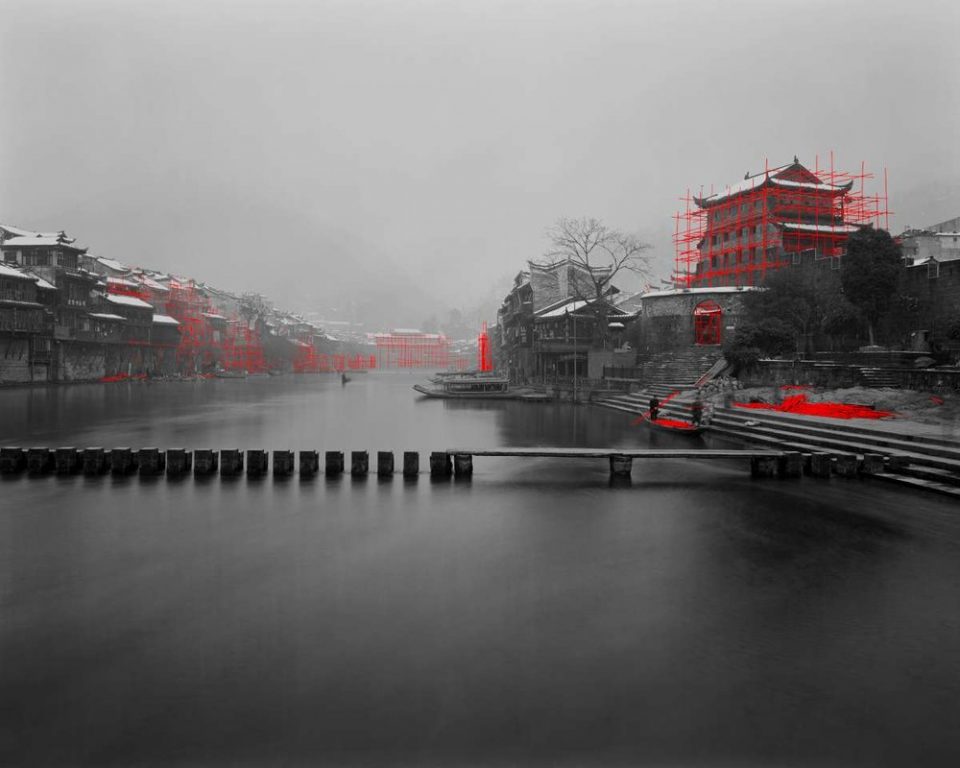
The artist is best known for his series – Scaffoldings; Bird’s Nest project; The Red and the Black – featuring Chinese cities in black and white with overlays of red streamers wrapped around under-construction buildings. Zhou Jun uses large format film cameras to produce negatives, which are scanned, digitally manipulated and printed to produce large unframed photographic works. Built environment is the subject of Zhou’s work in an analysis of China’s rapid and sometimes brutal redevelopment. Created since 1992, his photographs mainly treat the conflicting relationships between Chinese traditional architecture and contemporary buildings while continuously challenging the symbolic nature of the red color.
9th 2007, 2007, Digital C – print, 120 x 190 cm/180 x 286 cm
Expo 2010 Shanghai – China Pavillion, 2009, Digital C – print, 120 x 150 cm/220 x 180 cm
Building progress
The contradictions that are presented when trying to preserve the past in a time of China’s unprecedented economic growth underpin the work of Zhou Jun. During the last thirty years the most striking feature of China’s re-development has been its city construction. Demolition of whole villages to make way for high-rise development is a regular occurrence. The lead up to the 2008 Beijing Olympics saw massive building works and although it transformed Beijing into a modern city entire neighborhoods were ‘moved on’ in the name of progress.
Bird’s Nest No. 2, 2006, Digital C – print, 50 x 60 cm/120 x 150 cm
Zhou Jun’s work embodies a quality of yearning for the past to some extent and this is seen in his photographs of historic buildings from Beijing. He is acutely aware of the expansion of Chinese cities and the loss of traditional architecture. It is the loss of Chinese culture in the pursuit of globalisation.
Phoenix Ancient City, 2011, Digital C – print, 120 x 150 cm/180 x 220 cm
Seeing red
The color red has significance in Chinese cultural memory as it is used for ceremonial occasions such as weddings but it also represents revolutionary communist ideology. It is a reminder of the turmoil of the recent past. Because of this, the wide variety of perspectives of each person means completely different feelings and reactions are aroused by the color red. The partnership between the black and white photographs and the red sections of scaffolding allows the audience to produce their own meanings.
“Hanging Red”, 2009, 120 x 150 cm, Archival Inkjet Print on Fine Art Paper
A word from the author
“The three decades of development China is experiencing – building to a crescendo with the Olympics – are unparalleled in history. The colour red, which I use to highlight specific parts of the photograph, can elicit different responses in people from different countries or cultures – at times, it can even have opposite meanings for people. I want my work to be interpreted differently by people depending on their response to the symbolic meaning of red. In this sense, the work has the potential to reveal international perspectives to common subject matter.”
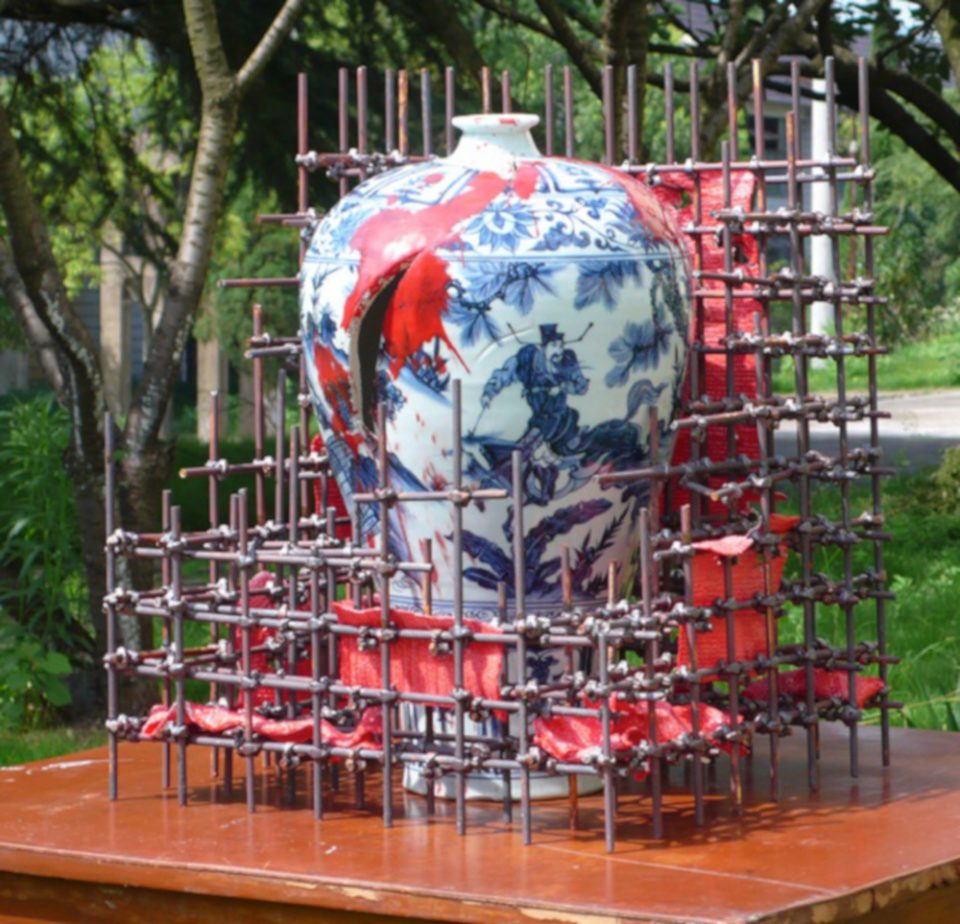
Zhou Jun also creates sculptural works using porcelain and other materials, always mantaining his distinctive style and his conceptual structure.
A “wounded” porcelain vase, surrounded by scaffoldings
ZHU YANING: My name is Zhu Yaning and I am 23 years old. I’m currently studying sculpture at the Academy of Fine Arts in Florence, and graduated on September of this year.
ART BAIGUAN: When did you start to learn and get in touch with art? Which was the original intention of learning art?
ZHU YANING: When I was young, I had a really interesting art class and slowly I became more and more interested. In high school, I studied at the CAFA , where I studied Western traditional art, with its oil paintings. At the same time, I was also learning the fundamental aspects of history of art.
ART BAIGUAN: What made you choose contemporary art instead of traditional art? In your opinion, traditional art has an impact of contemporary art?
ZHU YANING: I know how to understand contemporary art from the traditional art thanks to the opportunity I had of studying abroad. It’s common opinion thinking that I should be at home because of my young age. Teachers are basically relatively traditional so after going abroad. I began to get in touch with some new things, and learned the contemporary art of the 20th century and the development of Western avant-garde art.
Materials and themes are not really important aspects, artists’ point is completely beyond the art range I once understood. In the beginning, it was actually very overwhelming. Because there was always something I didn’t know about that I should have tried understanding harder. But than if you leave the past and choose new things.you will eventually find a path that suits you better. Although there are still many confusions, it is indeed more than just going abroad.
In my opinion Chinese students abroad feel themselves bound between their tradition and the culture they are in contact with. I later discovered that the concepts and knowledge of the traditional art that I have learned have already penetrated into my own thoughts.and will be reflected whenever I do what I do. But it is a kind of wealth for me. The most important thing is a relatively peaceful attitude to get in touch with new things. In this way, your artistic concept will become more diversified, which means more possibilities for creation.
Zhu Yaning
In fact, I don’t have the ability to define objectively and undergroundly contemporary art and traditional art, Some people may think that some avant-garde art of the last century can represent contemporary art. However, for some contemporary art practitioners they have already become a thing of the past. They are already tradition. In the second half of the last century, there was a conceptual artist who wrote a thesis on the topic of philosophy as art. This is enough to prove that the definition of art in the last century has changed dramatically.
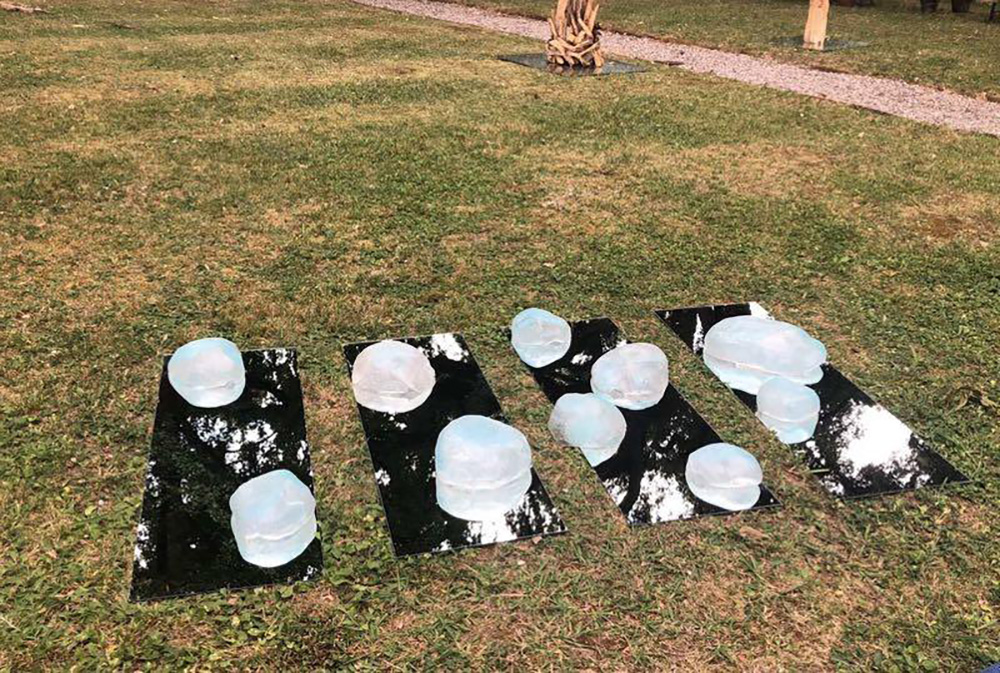
Zhu Yaning’s ArtWork
ART BAIGUAN As far as I know, you used to study sculpture. Why did you choose to do installation art?
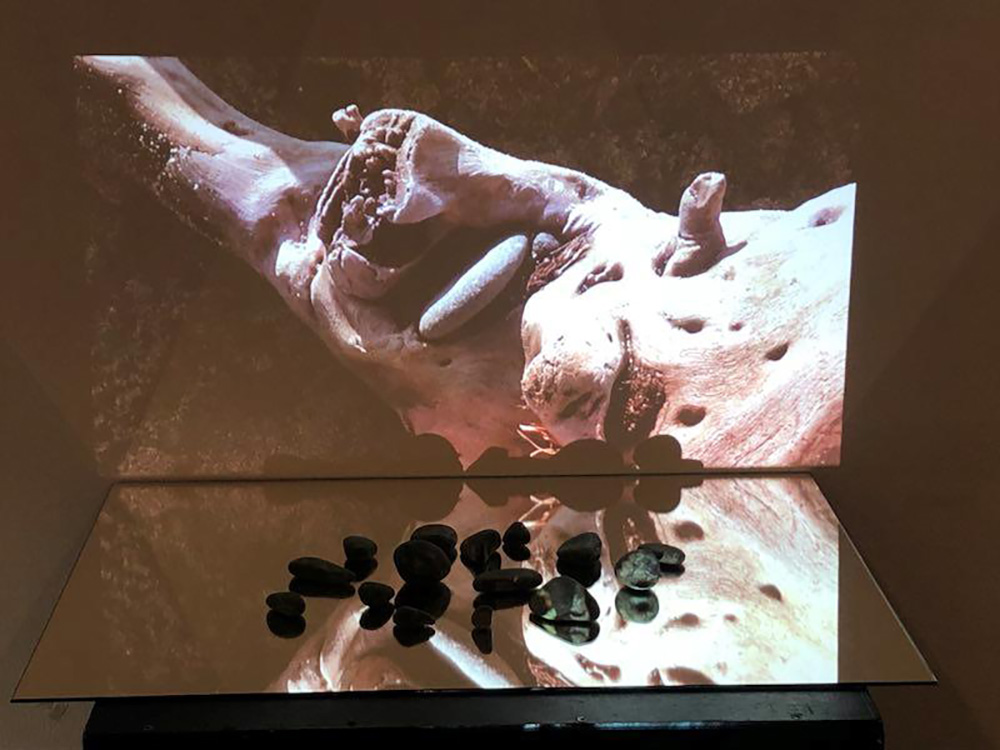
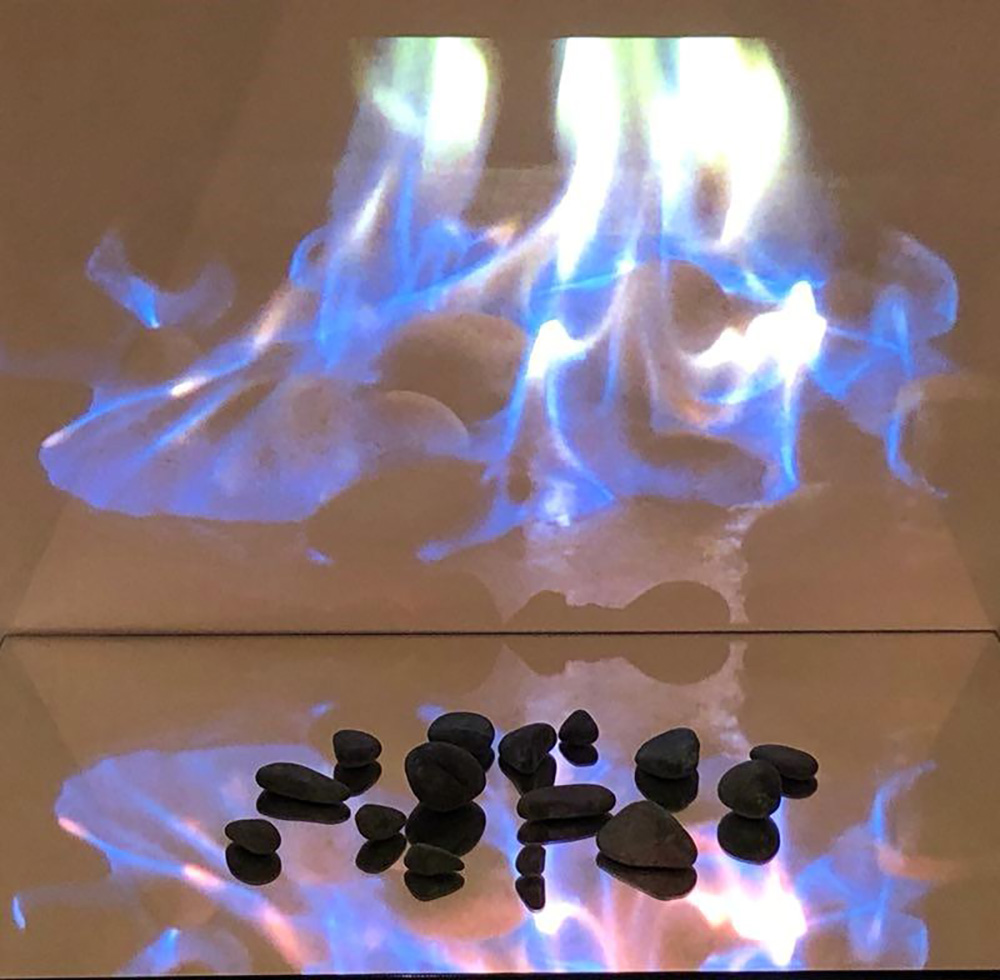
ZHU YANING: Because the content we are studying is within the scope of visual art. In which we distinguish the direction of sculpture, oil painting, printmaking and the like. But to put it bluntly, we have chosen a way, like a tool or a category. it’s not a transformation, because in the end all forms are meant to express what you want to express. Then the device is a language that I think is relatively comprehensive, it can create more possibilities. It gives you more possibilities and more ways to express what you want to behave,
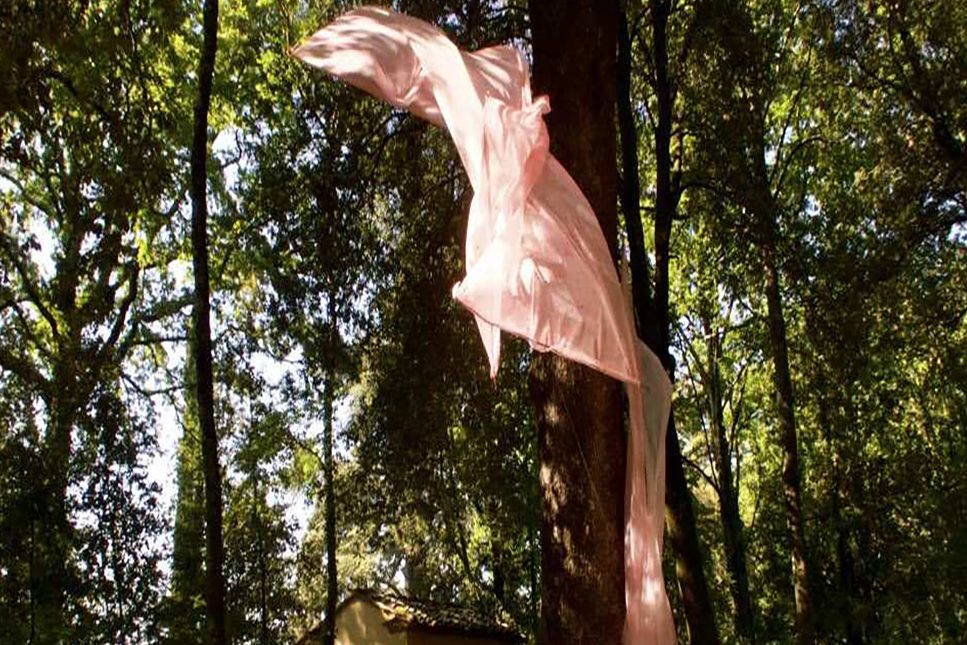
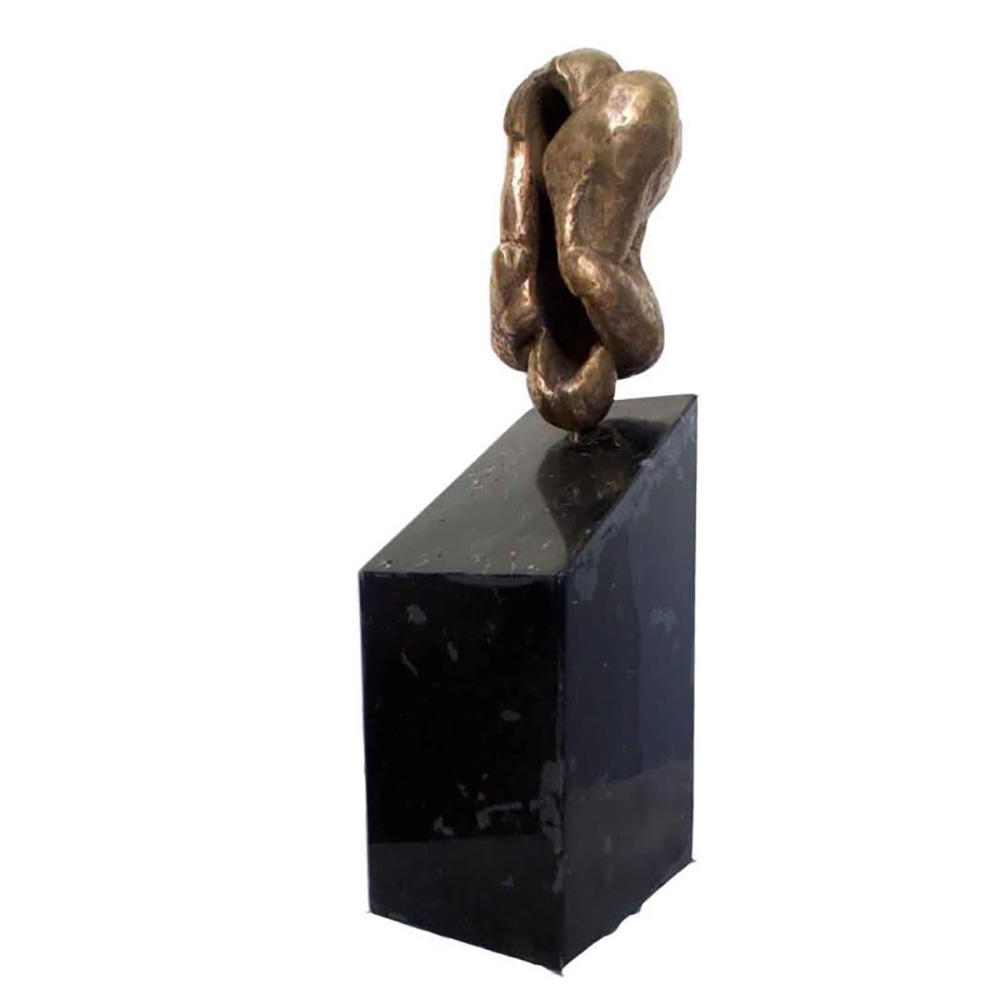
Zhu Yaning’s Sculpture
ART BAIGUAN: What is your work expressing? How do you think about material choices?
ZHU YANING I just want to give the audience a feeling A comparison and a discussion about time. Time, such a serious thing, is gentle.I tried to make people feeling the passing of time the more delicate i could. This is what I want to do, but whether the expression is sufficient or not is still open to question. In fact, because I am also a young and new artist, I am not as comprehensive as the mature artists. I think materials serve to the expression, the choice is because it is suitable, there is no deep reason. The final product can only be said to be within the scope of my ability to express the content in the best way possible.
ART BAIGUAN: Which is the work you are more satisfied with?
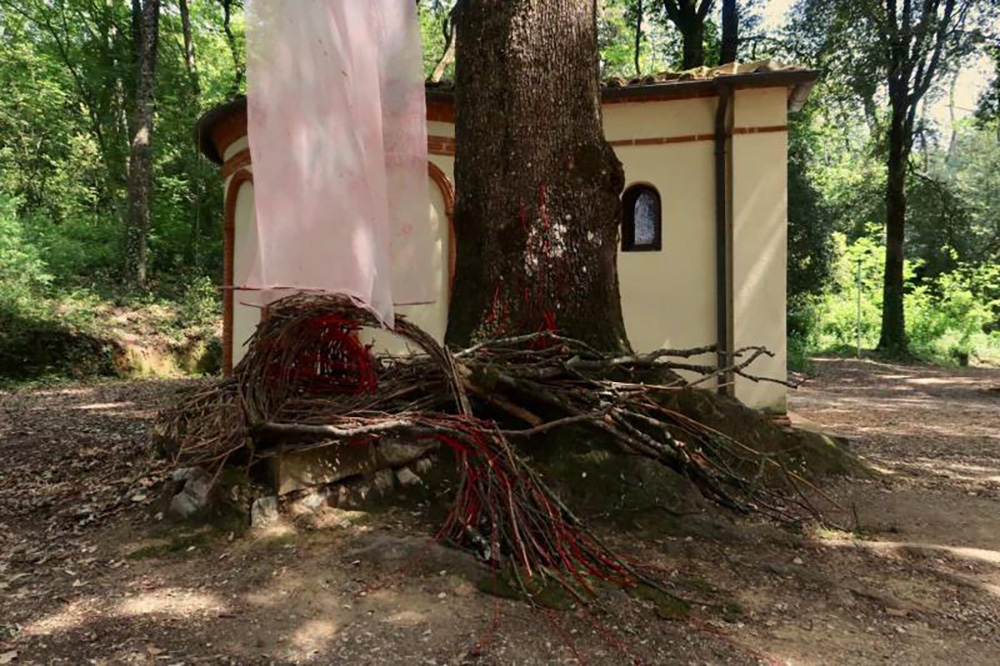
ZHU YANING: My favorite work is the third one, made with an italian girl, Fiamma. This work is my first contact with the image, and through this work I understood that cooperation is a very important thing. Before this experience I used to think that artists were independent individuals. or that everyone has their own independent ideas,so that it is difficult to integrate with other artists. But unexpectly, in this work, we had a very good cooperation, so I am really satisfied.
ART BAIGUAN: What do you think about installation art, new media art and the future development trend?
ZHU YANING: Installations and new media will become mainstream, and any of these devices that serve the things of life will ultimately serve art. Since the art has broken every boundaries, we have been free to use any form and medium. I think AR technology and 3D modeling have been used a lot until now but both will be used more in the future.
This is very good, we don’t have to stay in the past, we need just to accept it, because it’s not that you use new things to abandon some of the cultural heritage of the past, so I think it is creating more possibilities, and at the same time the viewer also has a better experience, and it is still a positive thing.
Zhu Yaning’s ArtWork
ART BAIGUAN: Have you ever encountered difficulties in your creation?
ZHU YANING: The most difficult problems are still some real problems. For example, what kind of materials, venues, and equipment are allowed to be made and used but most important: the maturity of creation.
The difficulty I have encountered now is that my creation is not mature enough and my position is not strong enough.
Zhu Yaning’s ArtWork
ART BAIGUAN: Can you express your own creed or thought? Do you have somthing to suggest to younger generation who are still groping on the art road?
ZHU YANING: The most fundamental suggestion is simple: it is sincerity. There are many problems and as long as we insist on sincerity, we will be able to solve them. Sometimes we fall into self-doubt, we don’t trust anyone or we do not have confidence in what we do. But we can understandd whether we are doing this in good faith, as long as you are doing is in good faith all the things you do have value.
I got two advices for the young generation: the first is to look at the individual’s orientation, and the second is to maintain interest. If you are not interested in something you do not have to learn it. It doesn’t make sense and wastes time. Because many of the students I met in the art think, “Ah, this subject is just like this, it doesn’t mean anything,” because they didn’t feel the meaning of it sincerely.
Zhu Yaning’s ArtWork
When I first saw her work, it gave me a feeling of calmness and quietness. I was full of thinking about time and life. I thought she should be a quiet and mature girl. I can’t help but feeling that she is really a cute little girl. She has the characteristics of not following the trend and the ones of being alone and not alone at the same time.
Isn’t this the quality and attitude that the new young artists?