Categories
在博物馆 人物 传统 典藏故事 古代 艺术家

Palace Museum | Nymph of the Luo River

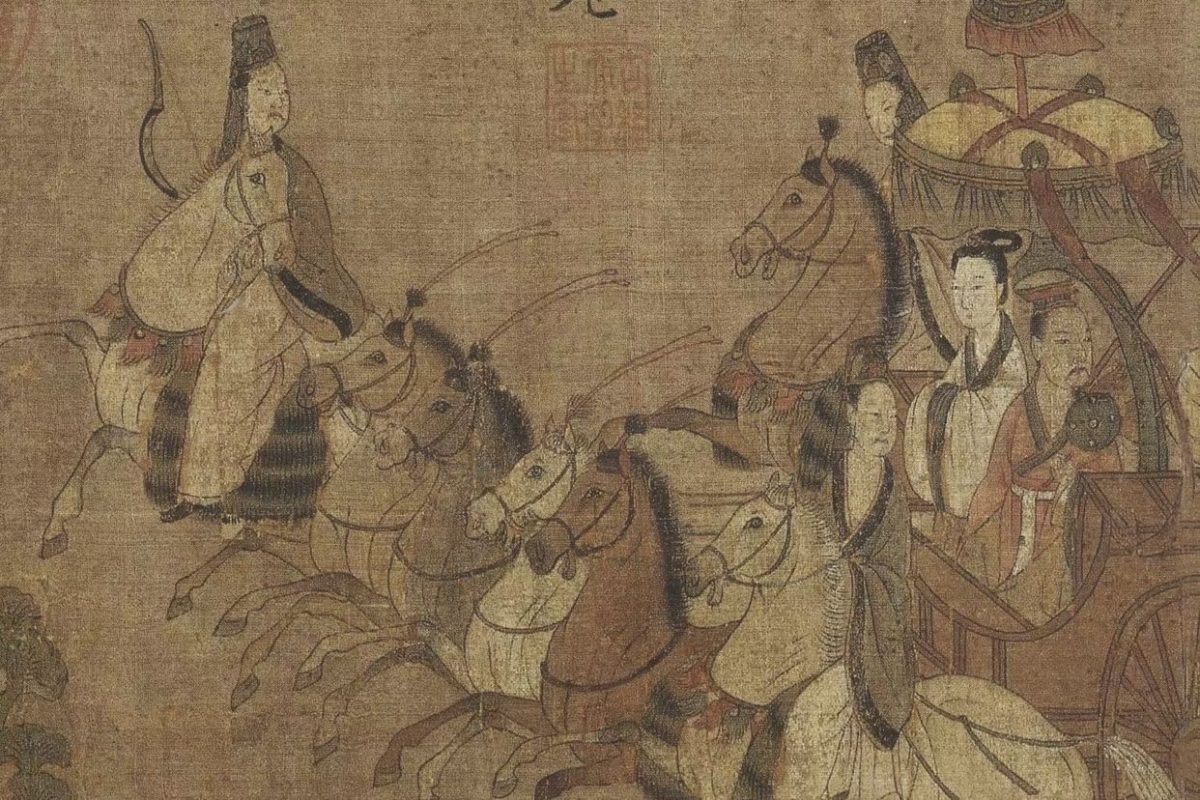
The painting Nymph of the Luo River is a work of Gu Kaizhi, a famous painter of the Eastern Jin Dynasty. Gu Kaizhi painted it after reading Cao Zhi’s poetry Nymph of the Luo River. This painting is one of the treasures of classical Chinese painting in terms of its content, artistic structure, character modelling and other methods of expression. The painting now in the National Palace Museum is a copy of Gu Kaizhi’s Nymph of the Luo River by a Song dynasty artist.
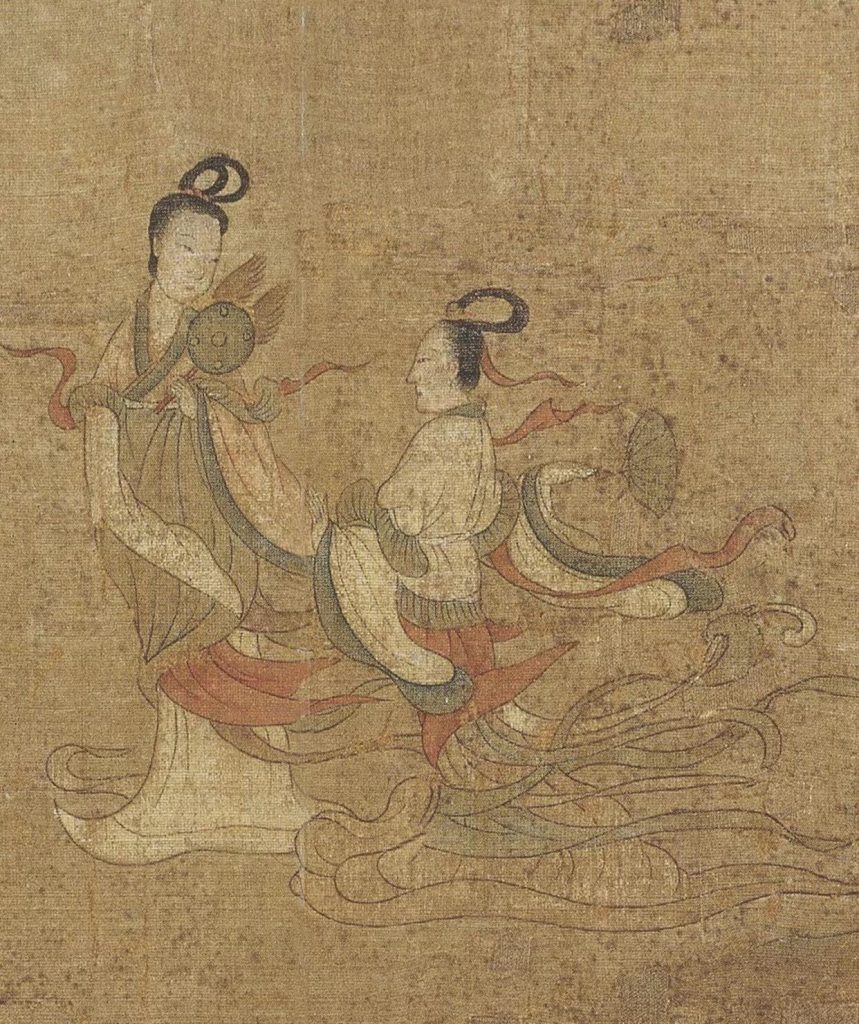
a part of Nymph of the Luo River
Palace museum
Gu Kaizhi

Introduction to the painting Nymph of the Luo River

Creative Background

Legend has it that Cao Zhi is the author of the poetry Nymph of the Luo River. He fell in love with Zhen Yi’s daughter when he was young. But Zhen Yi’s daughter was later forced to marry Cao Zhi’s brother. She died after giving birth to a son. Cao Zhi wrote poetry Nymph of the Luo River as a memorial after her death. Gu Kaizhi was so moved by this story, he painted a picture of Nymph of the Luo River.
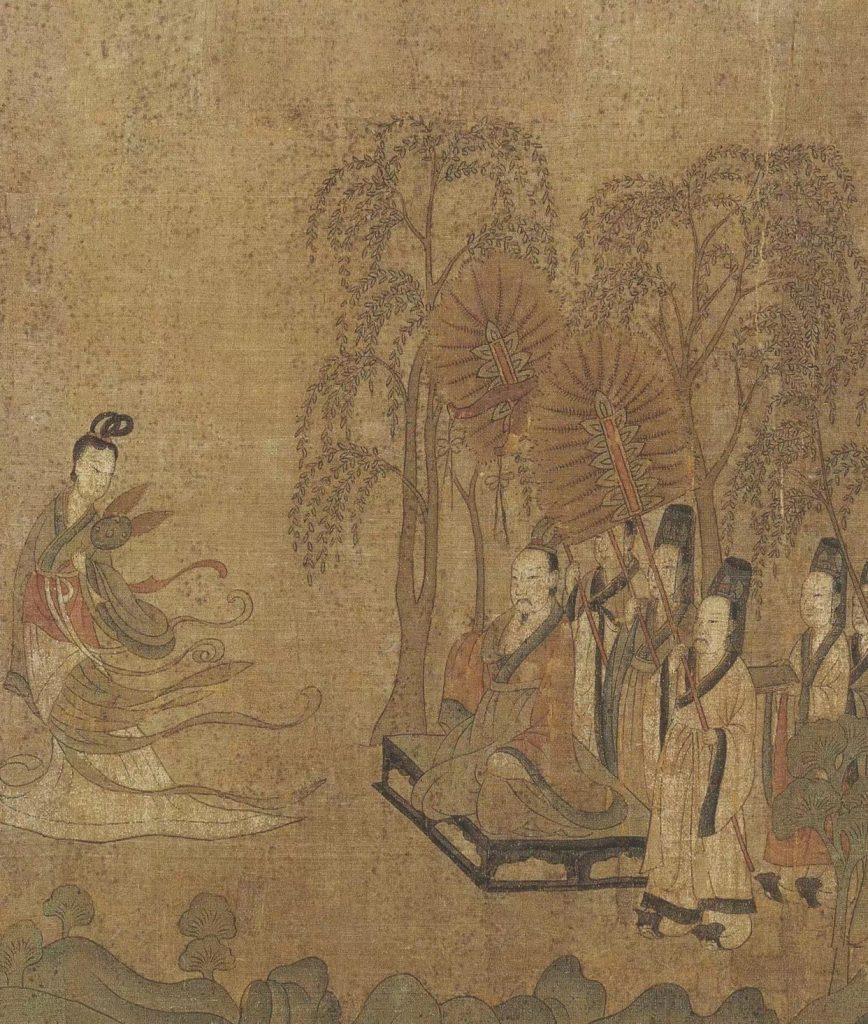
a part of Nymph of the Luo River
Palace museum
Gu Kaizhi

Figures

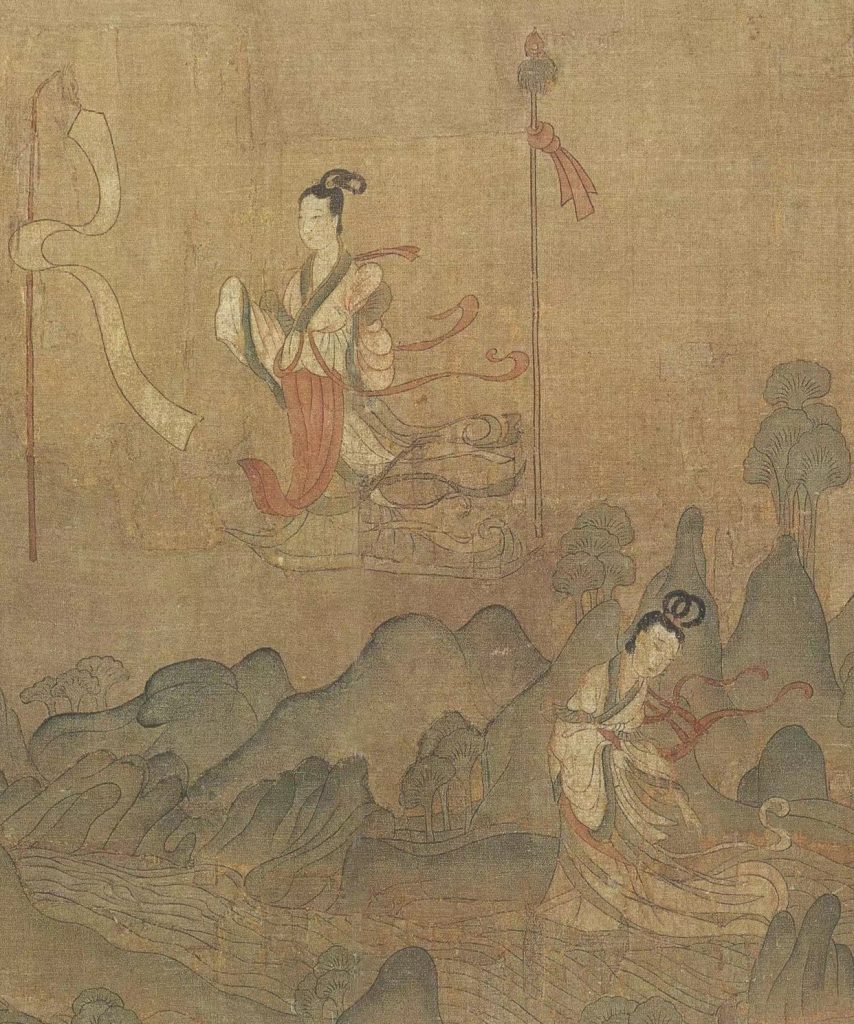
The main characters of this painting are Cao Zhi and Nymph. Cao Zhi, standing on the shore, has a stagnant expression, and his eyes are gazing at Nymph who stands on the water, very fascinated. Nymph, with her hair in a high bun and her clothes blown up by the wind, has a feeling of floating from the heavenly realm, and she wants to go but still stays, with a look of admiration between her eyes. Throughout the scroll, Gu Kaizhi repeatedly arranges for Cao Zhi to meet with Nymph, but even though she falls in love with Cao Zhi, Nymph eventually has to leave, leaving Cao Zhi standing on the shore, pining for her all day long, and ultimately departing in despair.
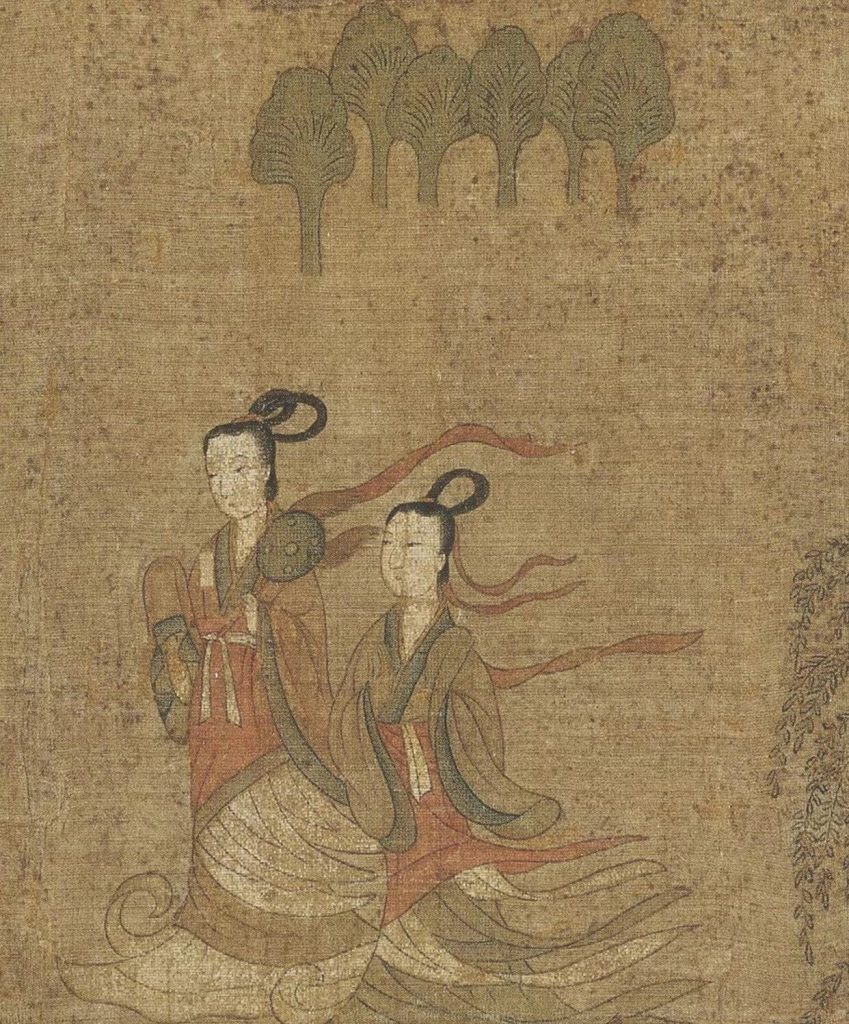
a part of Nymph of the Luo River
Palace museum
Gu Kaizhi

When Gu Kaizhi was portraying the characters, he deliberately handled Cao Zhi’s attendants in a dull manner, thus showing Cao Zhi’s excitement. What the audience sees at this point is Cao Zhi’s concentration and excitement, which is difficult to express in words. This is in line with Gu Kaizhi’s artistic philosophy. He believed that one should not only portray the character’s appearance, but also the character’s inner personality. This viewpoint had a great influence on the development of Chinese painting in the later period. It laid the foundation for the pursuit of ‘ depicting the spirit ‘ in Chinese painting.
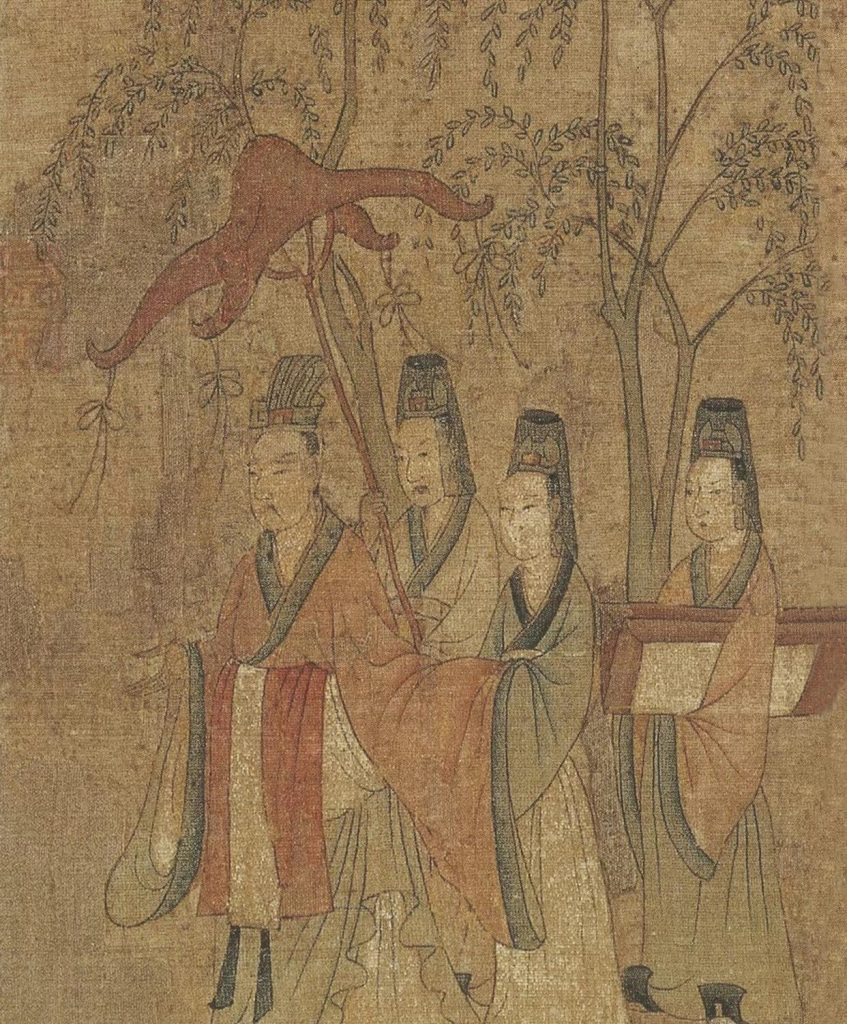
a part of Nymph of the Luo River
Palace museum
Gu Kaizhi

Landscapes

In this painting the relationship between the figures and the background is out of kilter, and the close-ups are not distinguished from the distant landscapes; the figures are as tall as the mountains. This was also the situation in early Chinese paintings and did not improve until the Sui and Tang dynasties.
a part of Nymph of the Luo River
Palace museum
Gu Kaizhi

Animals

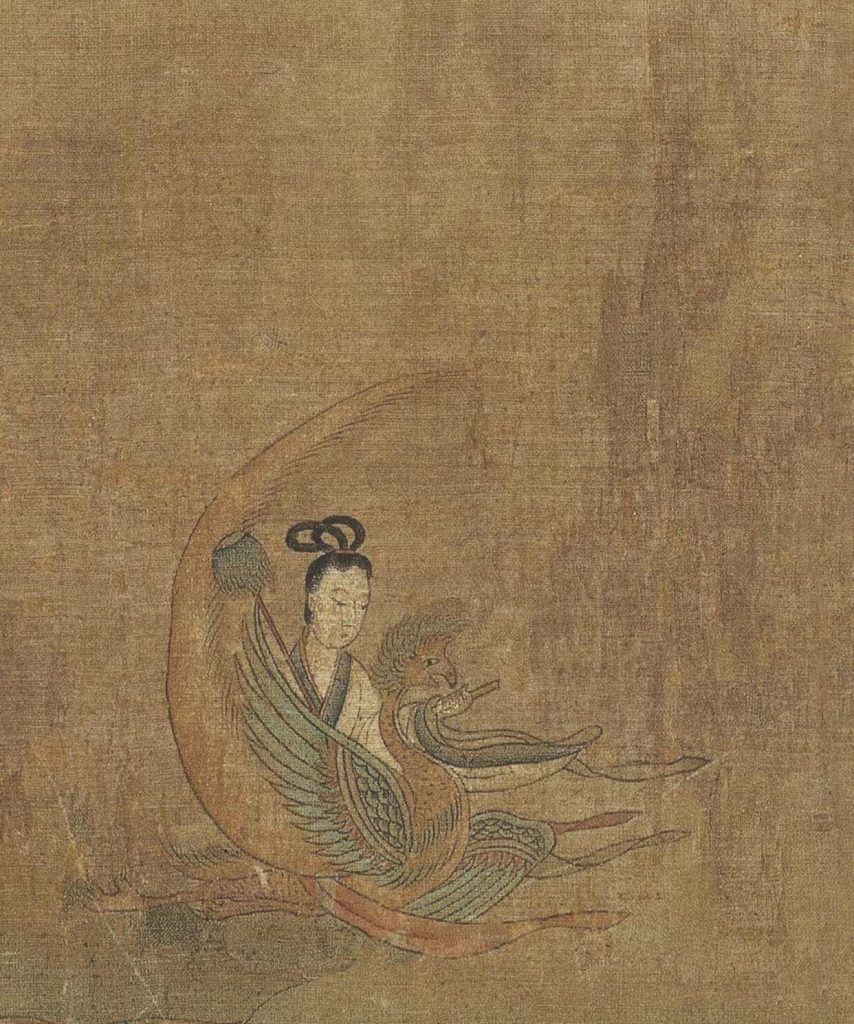
Gu Kaizhi created many rare birds and exotic animals based on the depiction of poetry Nymph of the Luo River. In fact, these animals didn’t exist in life . They were entirely imagined by Gu Kaizhi. For example, the dragons he painted had antlers, and the fish he painted had the head of a leopard. They run on the river without splashing, as if they were flying through the air.
a part of Nymph of the Luo River
Palace museum
Gu Kaizhi

The significance of the painting Nymph of the Luo River

The painting not only represents the highest level of painting in the Eastern Jin Dynasty, but also Gu Kaizhi’s art theories influenced the development of Chinese painting in the later period, which made Chinese painting develop in the direction of paying more attention to the ” spirit “.
Source

Nymph of the Luo River

Palace Museum

Gu Kaizhi

Categories
Museums 在博物馆 传统 典藏故事 古代

Hunan Provincial Museum | Mawangdui Han Tomb

Mawangdui Han Tomb [Tomb of the Western Han Dynasty (202-8 B.C)] unearthed in Changsha, Hunan Province in 1972. Mawangdui Han Tomb is one of the Chinese cultural relics not allowed to leave the country for exhibition. It is now in the Hunan Provincial Museum and is one of the treasures of the Hunan Provincial Museum.
Mawangdui Han Tomb
Hunan Provincial Museum
Madam XinZhui

Introduction to the painting

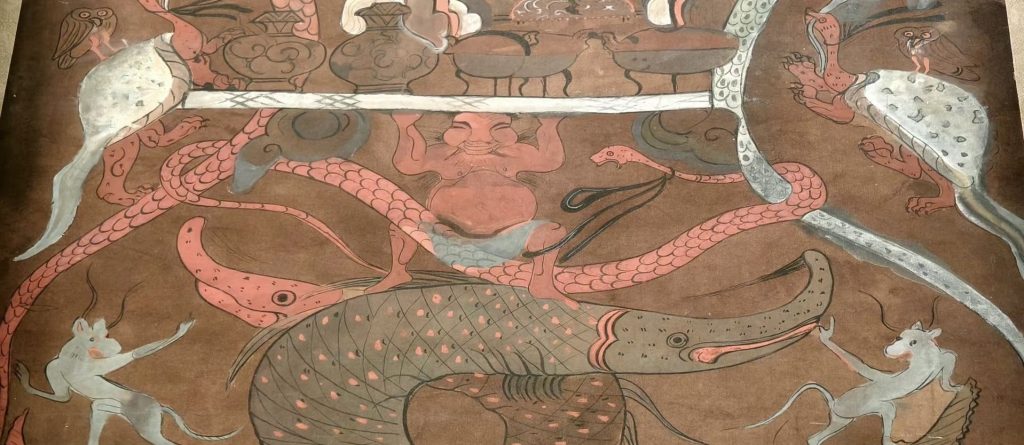
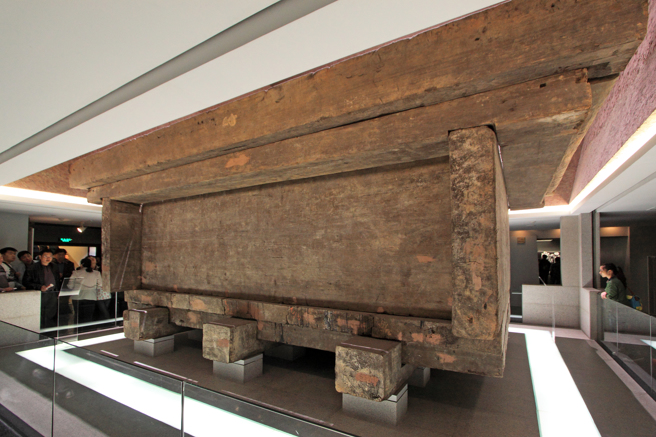
There are three tombs in the Mawangdui Han Tomb. Today we are mainly talking about Tomb One. Tomb One is the tomb of Madam XinZhui(a Chinese noblewoman. She was the wife of Li Cang.(the Chancellor of the Changsha kingdom, during the western Han Dynasty of ancient China) And this painting is on the inner coffin of Madam XinZhui.

Mawangdui Han Tomb
Hunan Provincial Museum
Madam XinZhui

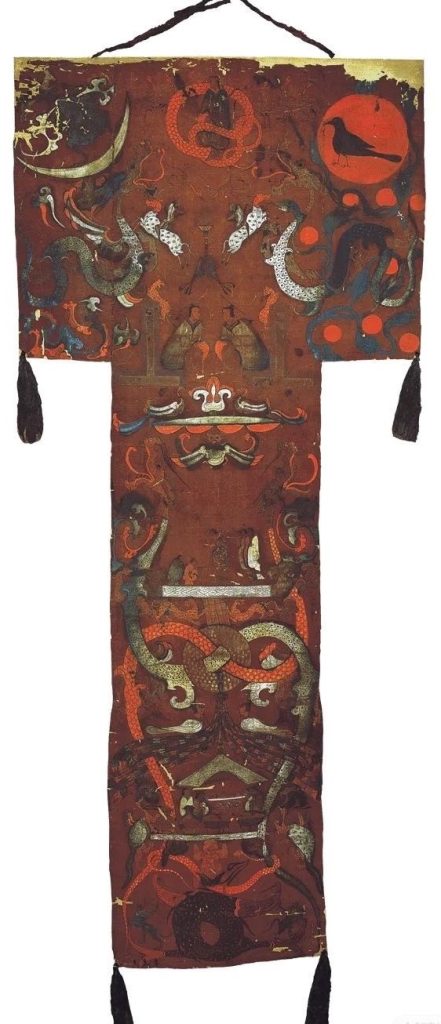
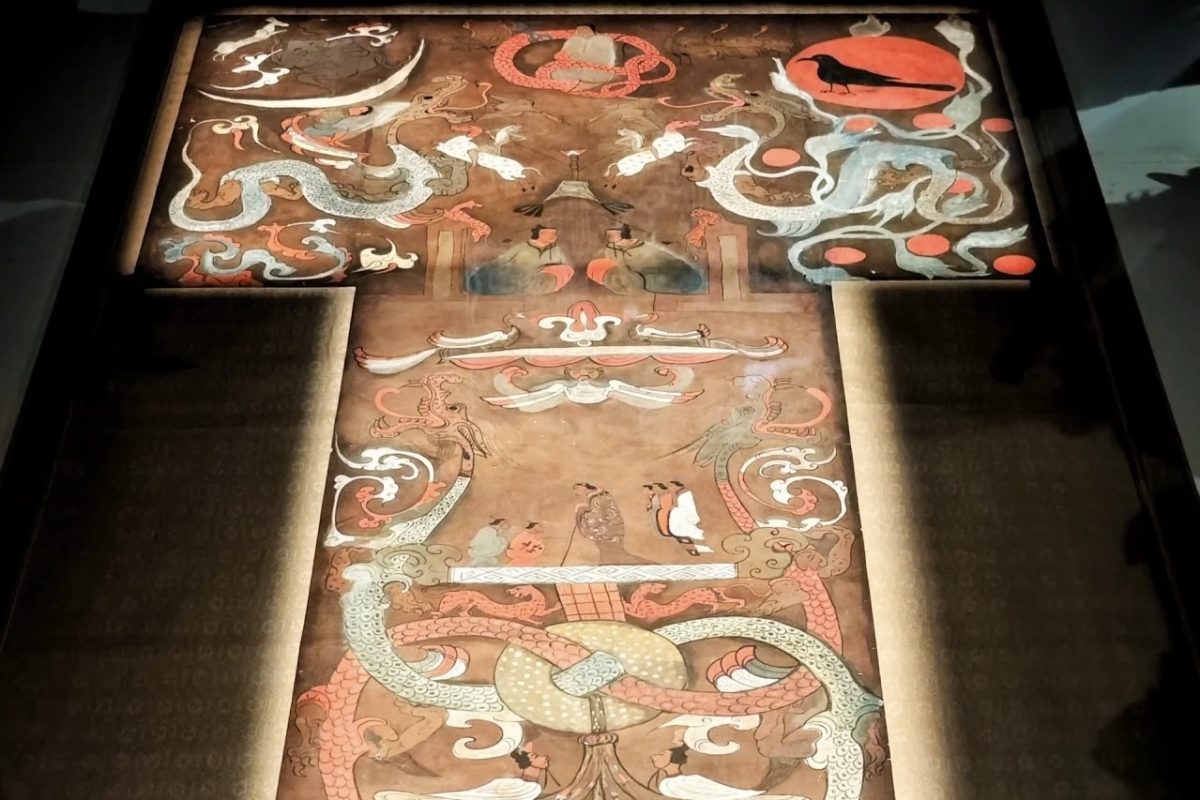
The painting is 92cm wide at the top, 47.7cm wide at the bottom, and
205cm long, in the shape of “ T”. It is divided into three sections from
top to bottom: heaven, the human world and underworld.

Mawangdui Han Tomb
Hunan Provincial Museum
Madam XinZhui

Heaven

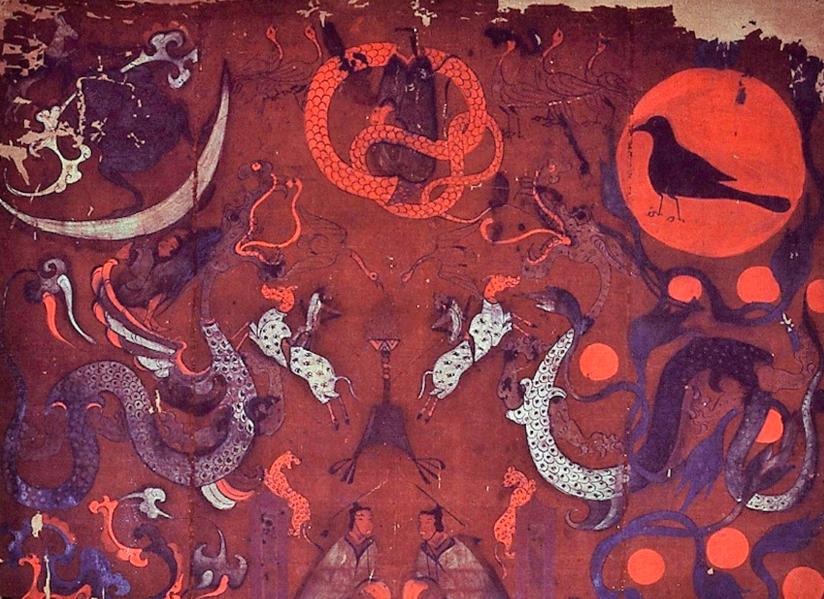
Upper right corner: there is a sun with a golden crow (Chinese mythological bird capable of driving a sun chariot) surrounded by eight other suns (Chinese myth: there were once 10 suns in the sky that shone on the earth and brought drought to the earth, so in order to save the earth a man named HouYi shot the remaining nine suns with an arrow).

Upper left corner: a woman holding the moon rising slowly, which is
related to the story of Chang’e Running to the Moon (Chinese legend: a woman named Chang’e, who ate an elixir of immortality and then ascended to become a god).

Right in the middle: in the middle of the sun and the moon, there sits a heavenly god with a human head and a snake’s body, surrounded by
cranes (a symbol of auspiciousness). This is to show that the god in the
sky takes care of Madam XinZhui.

Mawangdui Han Tomb
Hunan Provincial Museum
Madam XinZhui

The human world

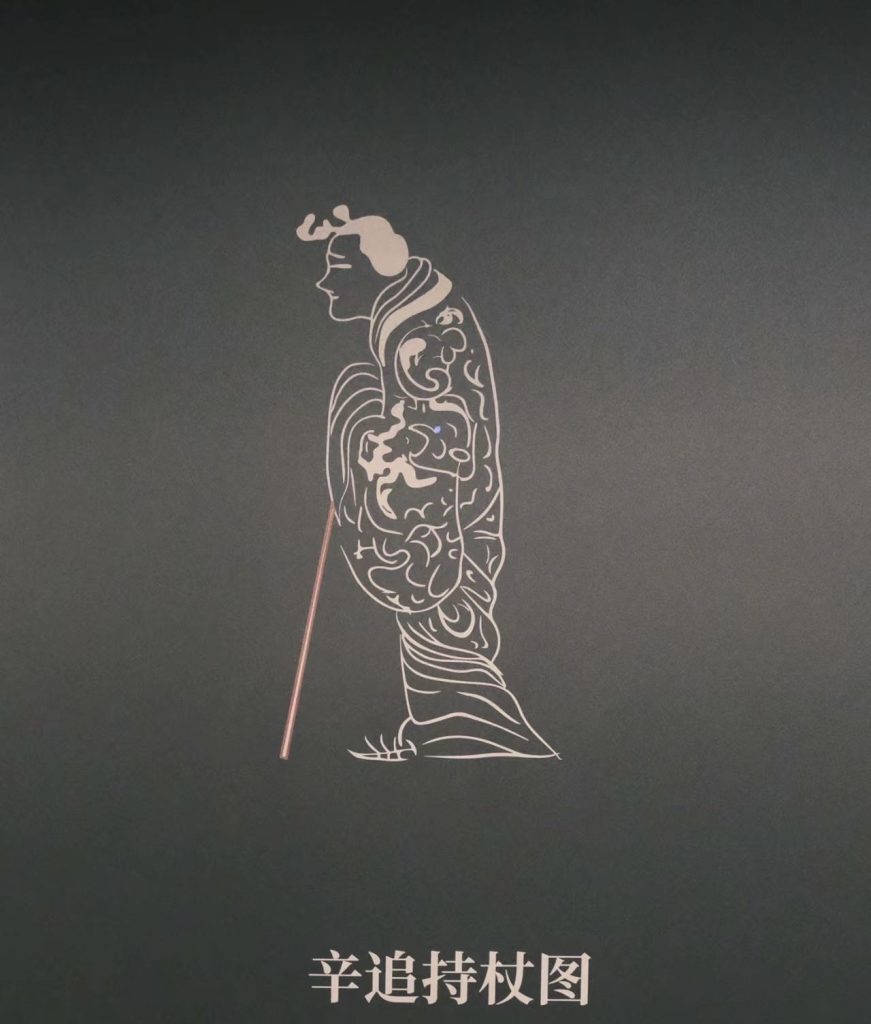
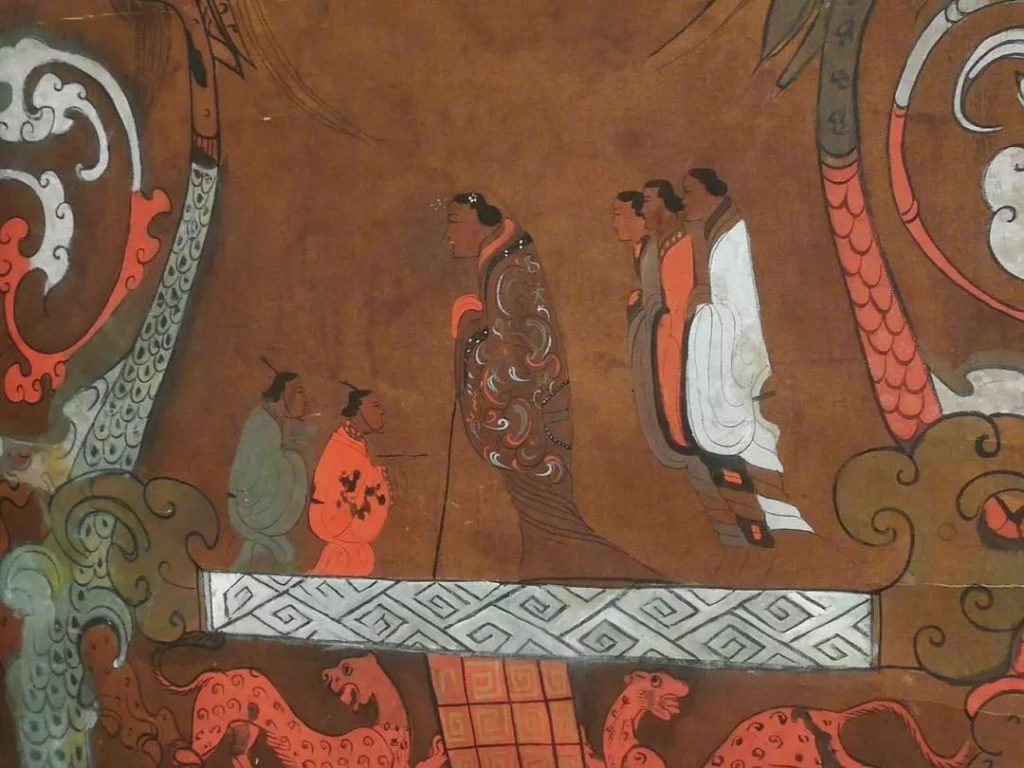
Here is a profile of an old woman walking slowly on crutches, with two
people kneeling in front of her, followed by three attendants. Judging
from the dress, this should be the owner of the tomb, Madam XinZhui.

Mawangdui Han Tomb
Hunan Provincial Museum
Madam XinZhui

Underworld

A naked man (someone thinks he is the earth god Gun) was holding a white flat object symbolizing the earth, with two huge fishes “Ao” under his feet. Legend has it that god Gun is the only one who can stabilize the fish “Ao”.

Mawangdui Han Tomb
Hunan Provincial Museum
Madam XinZhui

Cosmology in the Han Dynasty

According to historical records, the T-shaped painting is called “Fei Yi”. The so-called “Fei Yi” has two meanings: one is like clothing but not clothing. A special person held it in front of the funeral procession and used to lead the soul to heaven; the second is that “非 Fei” equals “飞 Fei”, so “Fei Yi” also means that the deceased can fly up to heaven by wearing the Fei Yi. No matter what the interpretation is, the purpose is to fly into the heavenly realm.

The threefold division of heaven, the human world and underworld in this silk painting also reflects the cosmology of the people during the HanDynasty. They observed the sun rising in the east and setting in the west, the four seasons of spring, summer, autumn and winter, and so on, so they also believed that the universe ran in cycles. Since the universe runs in cycles, human life should also run in cycles. That being the case, death was not the end of human life, but another continuation of life, and they hoped that their souls would be reborn in heaven.

Source

Hunan Provincial Museum

Interview

Mawangdui Han Tomb

Categories
Museums 在博物馆 传统 典藏故事 古代

Palace Museum | The Night Revels of Han Xizai

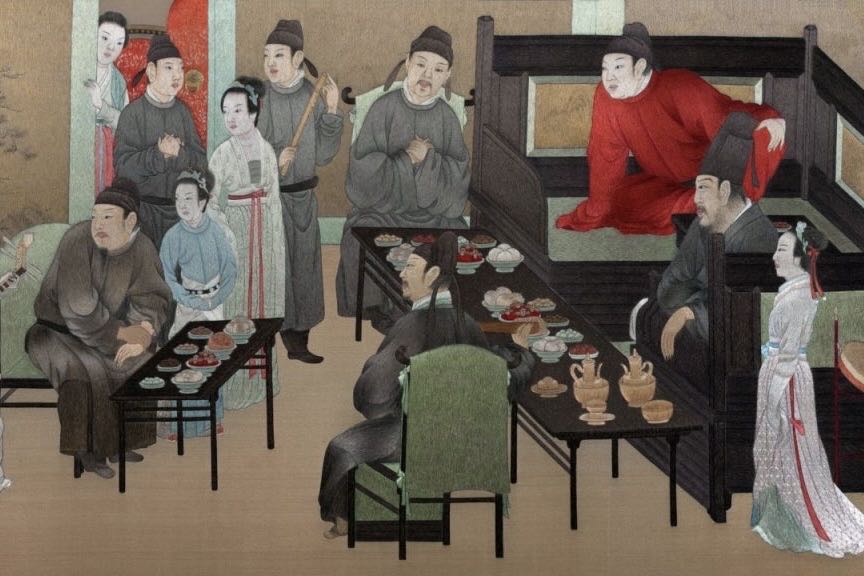
The Night Revels of Han Xizai is a work by Gu Hongzhong (910-980). He was a painter of the Southern Tang Dynasty (937-975). This painting has two copies. A reproduction from the Song Dynasty(960-1279), currently housed in the Palace Museum at Beijing. The another one replica from the Ming Dynasty(1368-1644), under the collection of the Three Gorges Museum at Chongqing. This painting is one of China’s masterpieces.

Background of The Night Revels of Han Xizai

According to the history, Han Xizai was born into a noble family and had excellent ability. He worked as an official in the Southern Tang Dynasty. However, seeing that the politics of the Southern Tang Dynasty was deteriorating. But he knthat could not do anything about it, so Han Xizai indulged himself. Li Yu was the later lord of the Southern Tang Dynasty. He wanted to reuse Han Xizai. So he sent his painter Gu Hongzhong to Han Xizai’s home to record the scene of Han Xizai’s feasts and invitations to his guests. He wanted to observe whether Han Xizai was really unrestrained, but also wanted to use this painting to advise Han Xizai to stop his debauchery. Gu Hongzhong painted this painting through his own imagination and observation.

Content of The Night Revels of Han Xizai

The painting has five segments. Gu Hongzhong used folding screens、beds and orchestral music to separate the images. This way breaked the traditional notion of composition and unifying the sequential events in a single image.

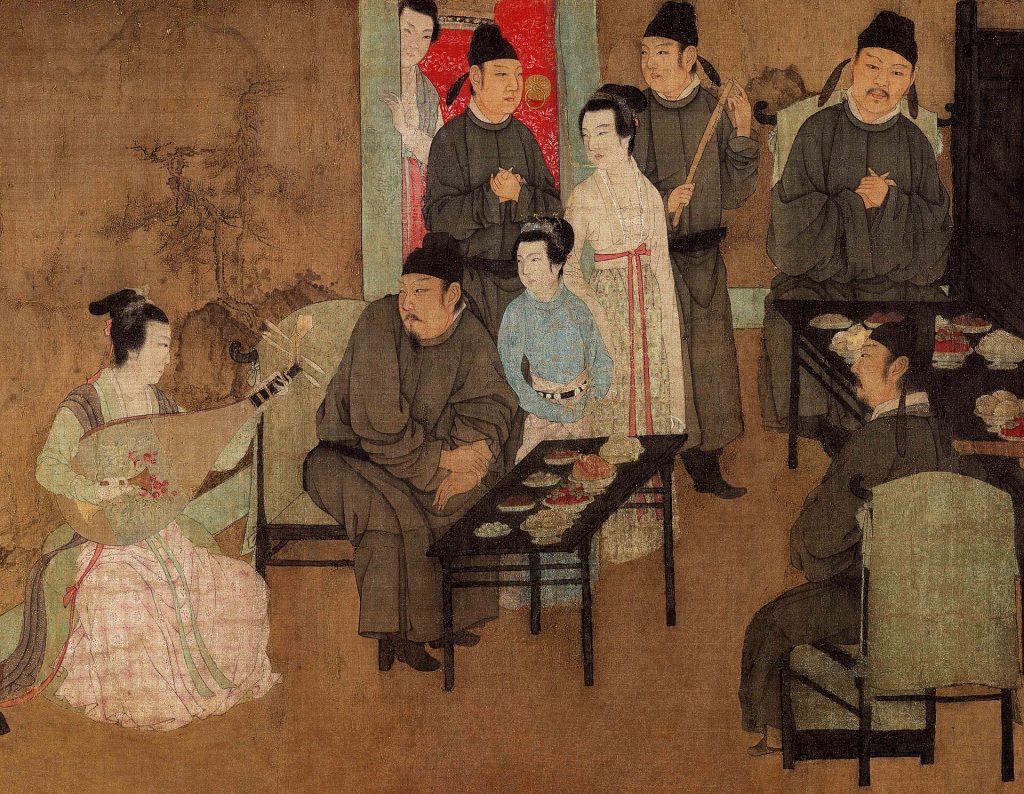
Paragraph 1: Listening to Music.

Han Xizai and zhuangyuan are sitting on a couch, listening to Li Jiaming’s sister play the pipa . Li Jiaming is on her left and looks at her, listening intently and always concerned about the technique she plays.

The Night Revels of Han Xizai
Palace museum
Gu Hongzhong

Paragraph 2: Watch the dance.

The people are watching Wang Wushan jump ‘Liu Yao ’dance (It’s a traditional dance from ancient China). Han Xizai played ‘Jiegu’ (It was a drum used in ancient china) to help the celebrate, his friend De Ming monk unexpectedly met this scene, awkwardly arched back stand.

The Night Revels of Han Xizai
Palace museum
Gu Hongzhong

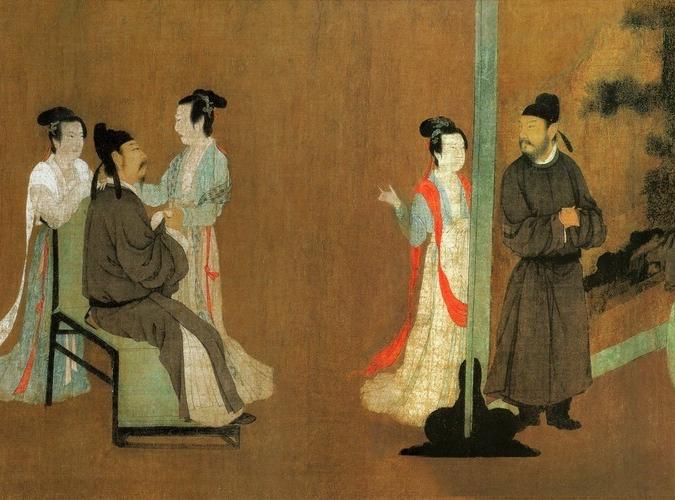
Paragraph 3: A nap between feasts.

This depicts Han Xizai sitting on a couch, washing his hands and talking to his maids. At this point, the pipa and flute are both being carried inside by a woman, followed by a woman carrying cups and saucers. The two women seemed to still be talking about tonight’s banquet, adding to the relaxed atmosphere. Red candles have been lit and pillows have been placed so that people can lie down and rest at any time. At this time we can easily associate the banquet scene with the ancients, they cover the window and drink at night, singing and dancing, tired to rest for a while, often forgetting the change of day and night.

The Night Revels of Han Xizai
Palace museum
Gu Hongzhong

Paragraph 4: Wind and Music Ensemble.

Han Xizai changed out of his formal attire and sits cross-legged in a chair, waving a fan while commanding something to an attendant.

The Night Revels of Han Xizai
Palace museum
Gu Hongzhong

Paragraph 5: Guests talked each other.

This paragraph depicts the end of the banquet and the departure of the guests.

The Night Revels of Han Xizai
Palace museum
Gu Hongzhong

Significance of The Night Revels of Han Xizai

The main character in this painting is Han Xizai. We observe that he listened to the music, beated the drum by himself, and enjoyed the dance. But even in this joyful atmosphere, Han Xizai was preoccupied and his brows were locked, which contrasted sharply with the joyful atmosphere. At that time, the politics of the Southern Tang Dynasty was in turmoil, and through the image of Han Xizai in this painting, we can also understand Han Xizai’s hardship. The painting details the intense psychological struggle of the protagonist under the complexity of the time, revealing the contradictions within the political class.

In summary ,The Night Revels of Han Xizai is not only an extremely valuable painting in China, but also an important document for us to study the society, culture and art in the Southern Tang Dynasty.

The Night Revels of Han Xizai
Palace museum
Gu Hongzhong

Source

Palace Museum

The Night Revels of Han Xizai

Gu Hongzhong

Han Xizai

Categories
Contemporary

Contemporary | He Jing – “Made In China”

The phrase “Made In China” is synonymous with cheap, knockoff copies of major brands in fashion,
technology, furniture and numerous other industries.
Recent headlines have even gone so far as to warn
Kickstarter users to prepare to have their ideas stolen before they’re funded. The open-source manufacturing culture in the country means that thousands of small and major production operations.It could spot an idea online and begin mass producing cheaper, near-identical copies of the idea. So what
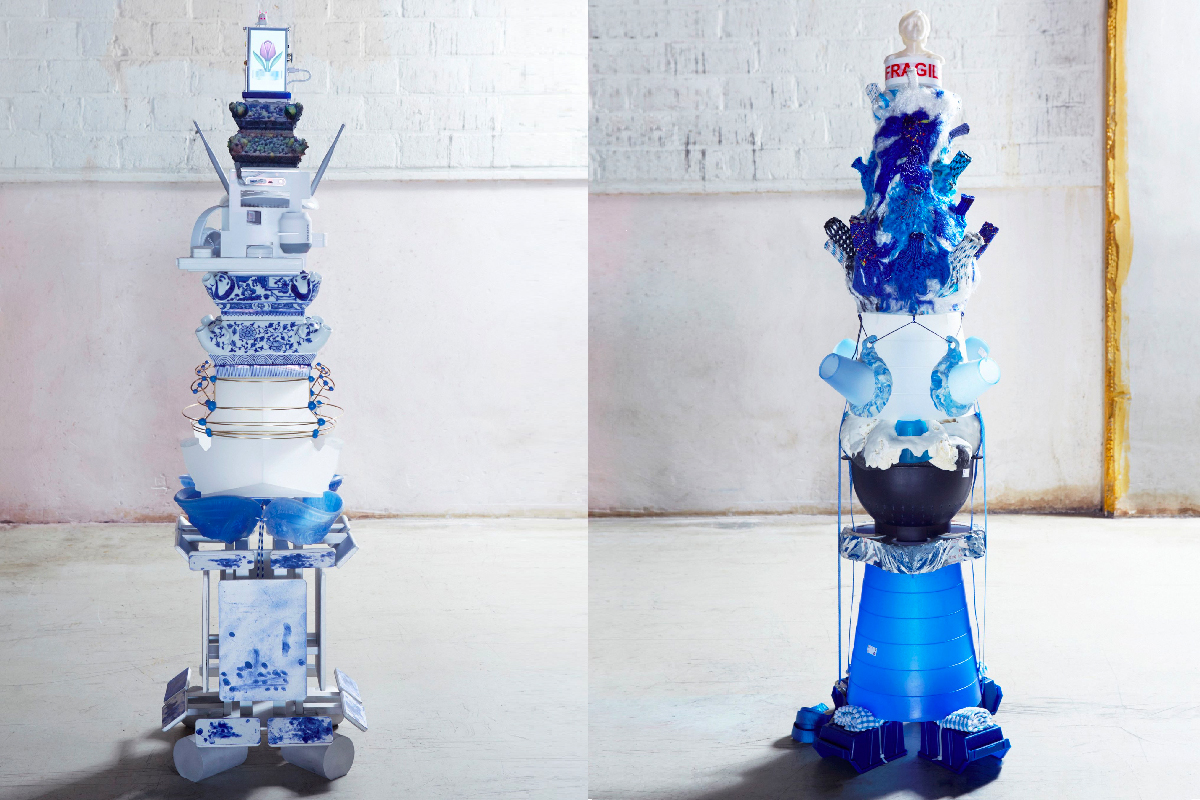
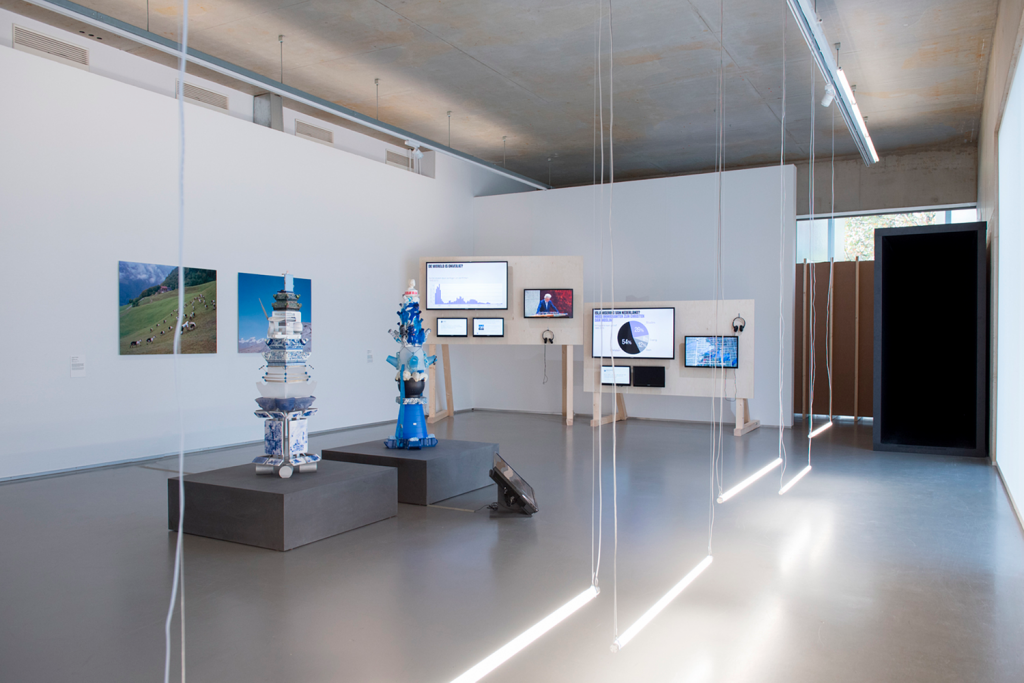
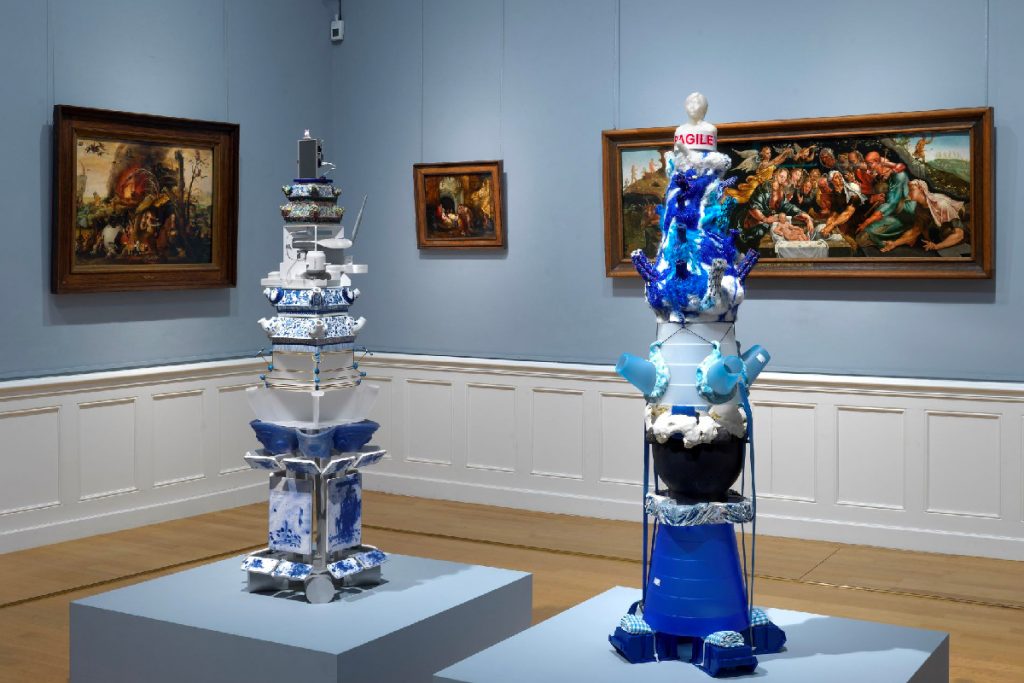
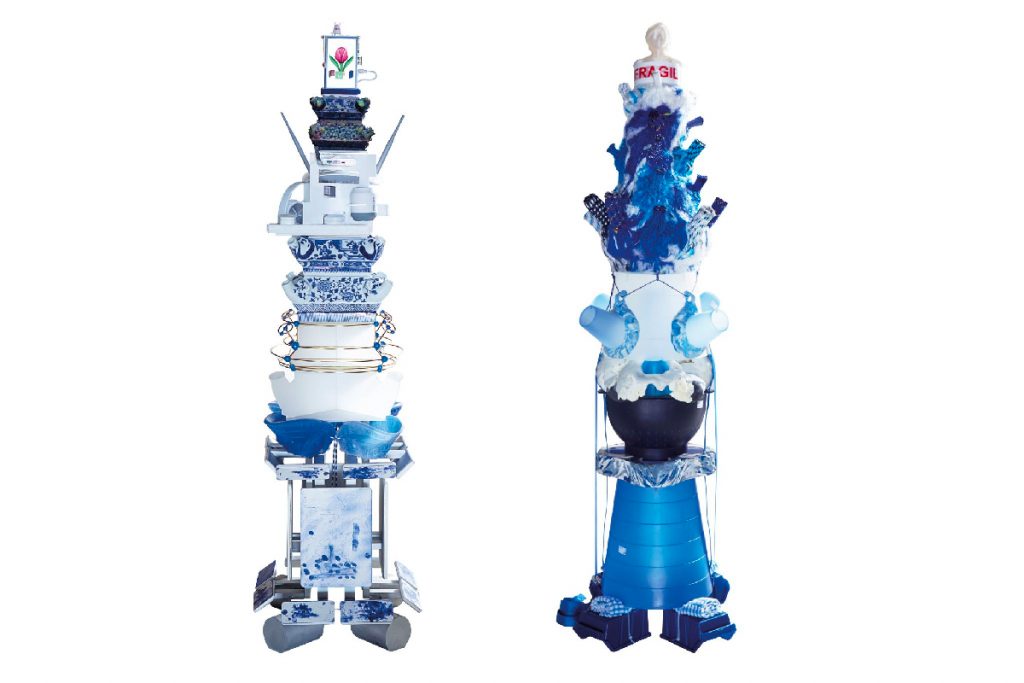
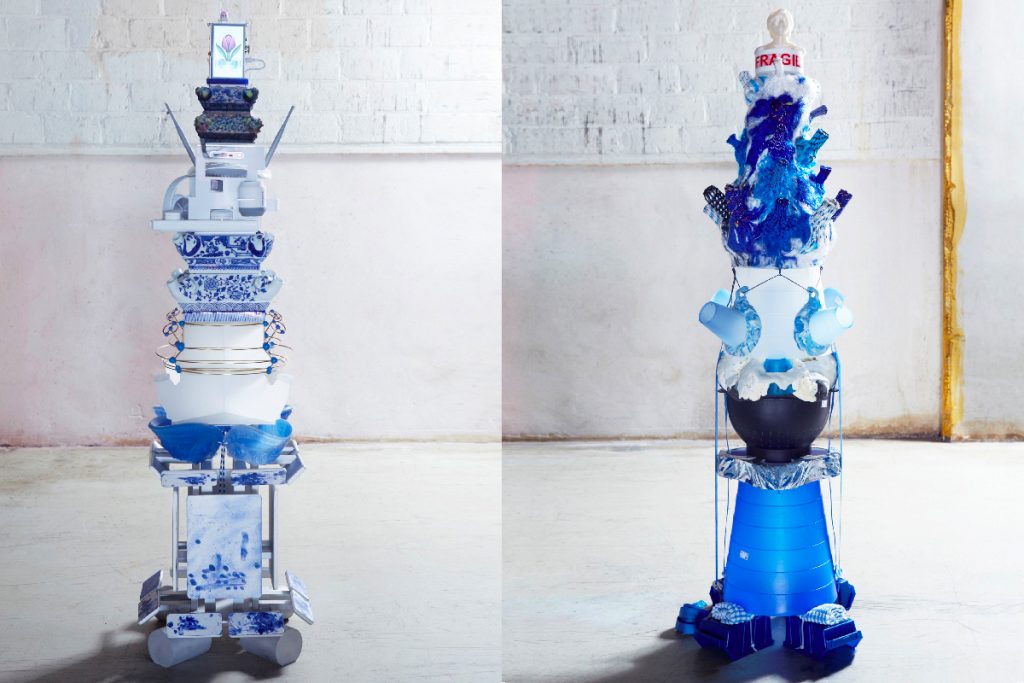
does this mean for the Chinese creative? Is there room for original design in an economy driven by the cheap cost of reproduction? It’s what Design Academy Eindhoven graduate Jing He calls the “Chinese identity crisis”. Her MA project, The Tulip Pyramid in an attempt to unpack some of the complexities of the Chinese creative scene.

Chinese identity crisis

Tulip Pyramid in Frans Hals Museum, Harlem, NL

As a Chinese designer, she is frequently asked whether her work reflects her Chinese identity. She wondered: What dose that mean? What is Chinese design? And in what way does it differ from design made by people with other nationalities? 

Tulip Pyramid, He Jing, 2016

China has undergone fast economic growth in the past 30 years, and the quick changing of life and culture triggered a crisis of identity. Large factories producing counterfeits of ‘original’ designs are in large part responsible for China’s economic growth. She researched the historical, political, economic and cultural reasons behind the phenomenon of copying in China. Considering that the design profession is one of creativity, it should not come as a surprise that Chinese designers are sensitive to the subject of copying;

It supposedly conflicts with the creativity of the profession.As such. Chinese designers are facing the fact that a large amount of counterfeits have been produced in China are left questioning their identity. In a mass-production industry, copying is an important method, thus people need intellectual property laws to protect their investment and profits.

Tulip Pyramid, He Jing, 2016

Think for instance aboutthe ongoing legal and cultural conflict between Joyme and IKEA. Or the Chinese acquisition of the Bauhaus collection, in an attempt to transform ‘Made in China’ to ‘Designed in China’. To understand the significance of copying in China, despite any critical connotation that might arise, herself, as a designer.She try to incorporate this reality in her work.

What is identity for He Jing?

To answer these questions, I started with a general question: What is identity? I think that one’s identity cannot be separated from where and how one is raised . I question the notion of identity in the system of capitalism, where one’s identity probably consists of a collection of products.

Thousands of mass products and advertisements are designed to encourage people to purchase the commodities that match many sorts of designed identities. Thus in design, what does ‘Chinese’ mean? Is it a sort of flavor, taste, style or commercial strategy?

Tulip Pyramid, He Jing, 2016

As China grew to be the world’s second-largest economy, counterfeiting became an important subject. In recent decades, products that are manufactured in China are familiar in daily life all over the world. But ‘Made in China’ also means ‘cheap’ and ‘low-quality’. Added to this is a huge amount of products that have been produced in China without the label of ‘Made in China’. And these are considered ‘fakes’.

But how to define ‘fake’? Is copying always a negative word? Can a designer learn from copies and fakes, while still finding the practice somewhat deplorable? She believes facing the confusion of her cultural background is an important step to assess her identity as an individual designer; a design method may come from the careful observation of the chaos.

Therefore, she believes that one’s identity reflects where and how one grew up, and she wants to learn from the phenomenon of copying in China instead of denying it. She aims for a design method inspired by the practice of copying in Chinese culture. In the last Chapter, she describes her own design proposal where she take copying and being copied as a natural process and create an opportunity to copy the project itself. Although the project is not a famous design that will be copied by others. Copying has already taken place inside this design project: A Tulip Pyramid created and transformed by the practice of copying.

Categories
Contemporary 人物 当代 艺术家

Contemporary | Zhao Qi: like works

The Chinese art

Artist: Zhao Qi

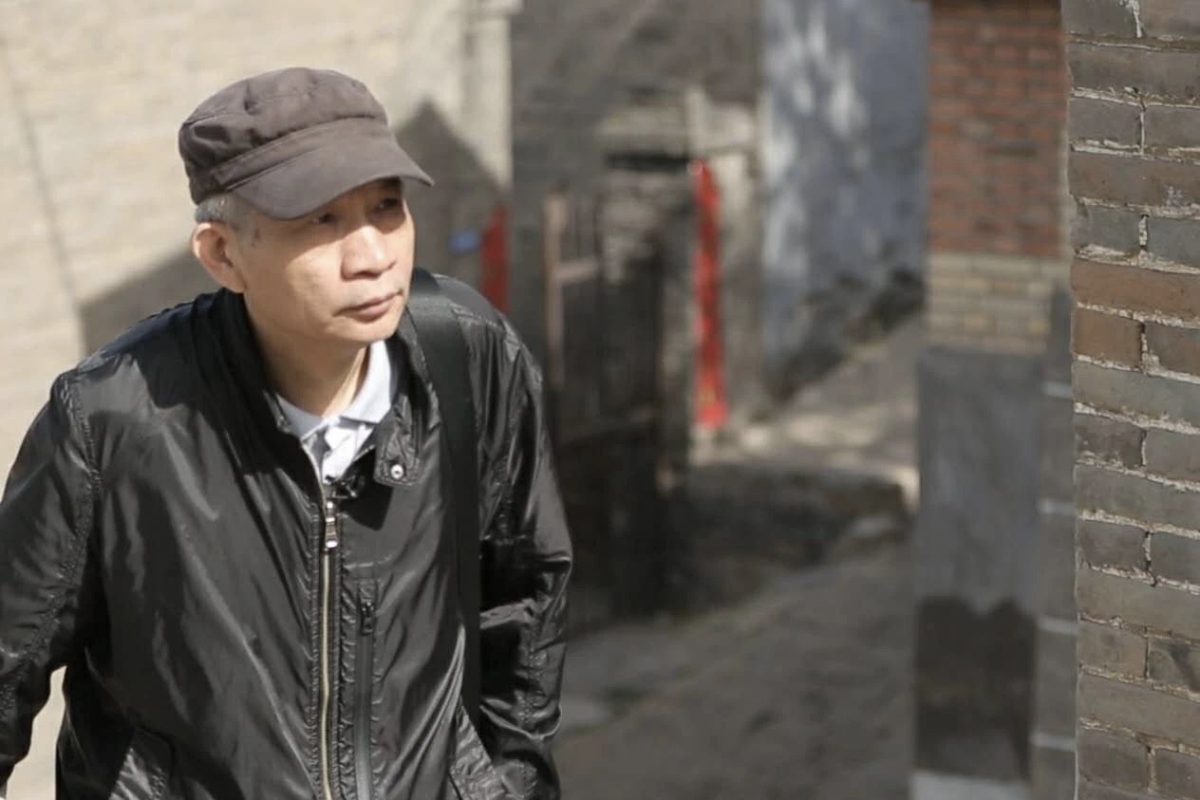
zhao qi Born in Jin County, Liaoning Province in 1954
He currently works and lives in Beijing

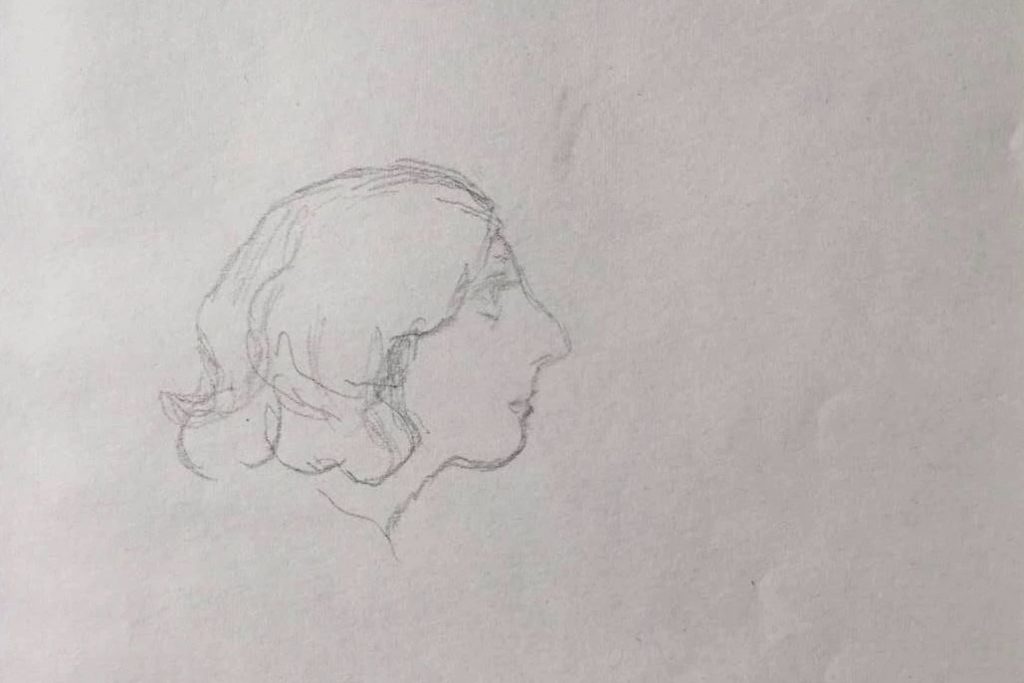
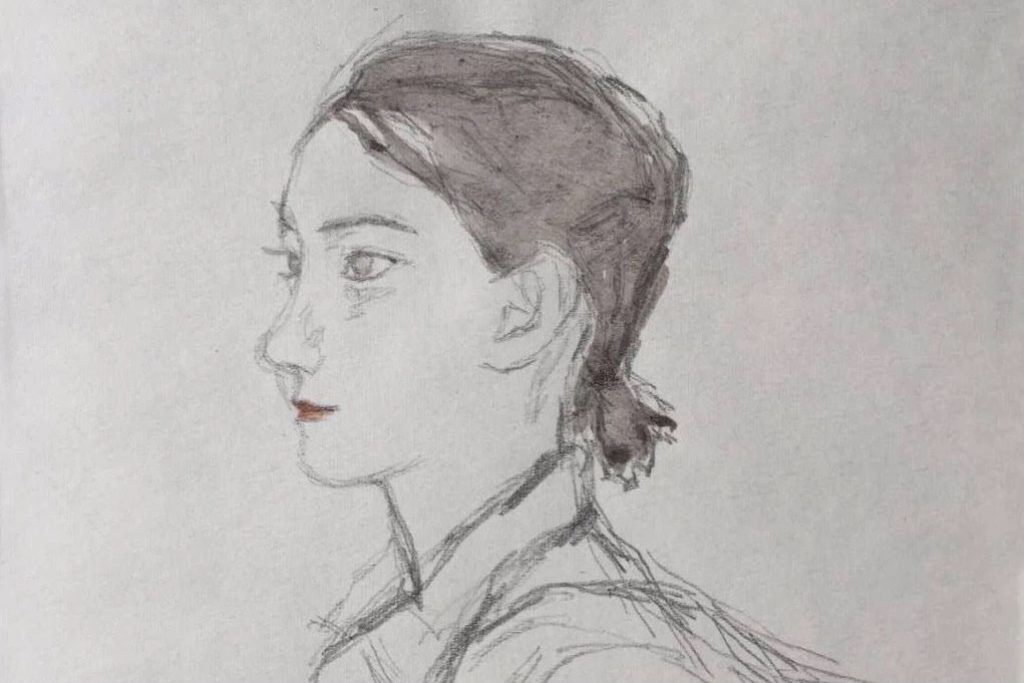
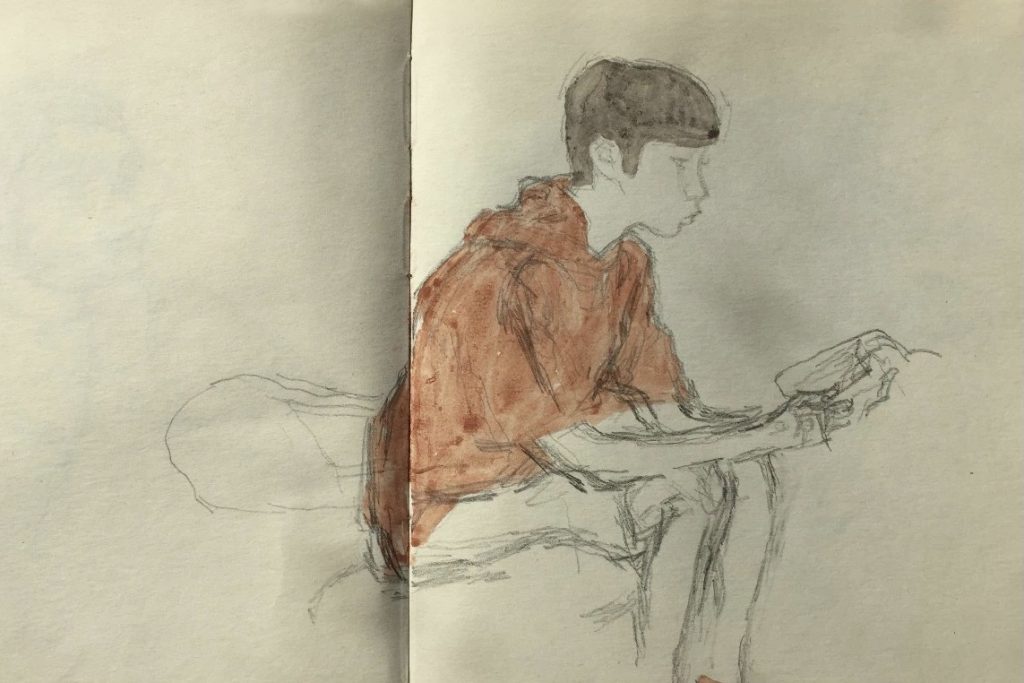
zhao qi would like to call these paintings on small notebooks works. Therefore, this point is emphasized because according to custom. We often call this type of painting “studio”, or shorthand or something like that. What zhao qi don’t understand is, why can’t sketches and sketches be placed in the exhibition halls of art museums such as Chinese paintings, oil paintings and prints?

Zhao Qi work

Outside of zhao qi understanding of painting, I think the work is a kind of narrative and the painter expresses his ideas through the painting. Although these paintings on small books are not “formal” like the works on display, their essence is still something thoughtful.

These paintings are random, sometimes standing, sometimes sitting, sometimes leaning against where. This way, I can see that when I painted. I must have been moved by the image in front of me. Yes, these images are painted in front of the object, it is not an imagination from nothing. ——This is different from other jobs, right?

——All the works are sent with feelings. suddenly I feel wrong to tell this fact. Because some images are also boring when I hold a pen and first draw carelessly. When painting, the picture looks interesting. Painting is indeed a very magical act, we cannot know where the end of the brush is attached.

Contemporary art usually refers to art that has innovated and subverted existing norms in the fields of oil painting, sculpture, and printmaking since China implemented economic reforms in 1979 and opened to the outside world, including photography. Installation.Concept.Performance. Video. Multimedia and other new art forms . The Chinese art circle regards an art exhibition in 1979 as the beginning of Chinese contemporary art history.

Categories
Contemporary

Contemporary | Miao Ying ’s promotional showrooms

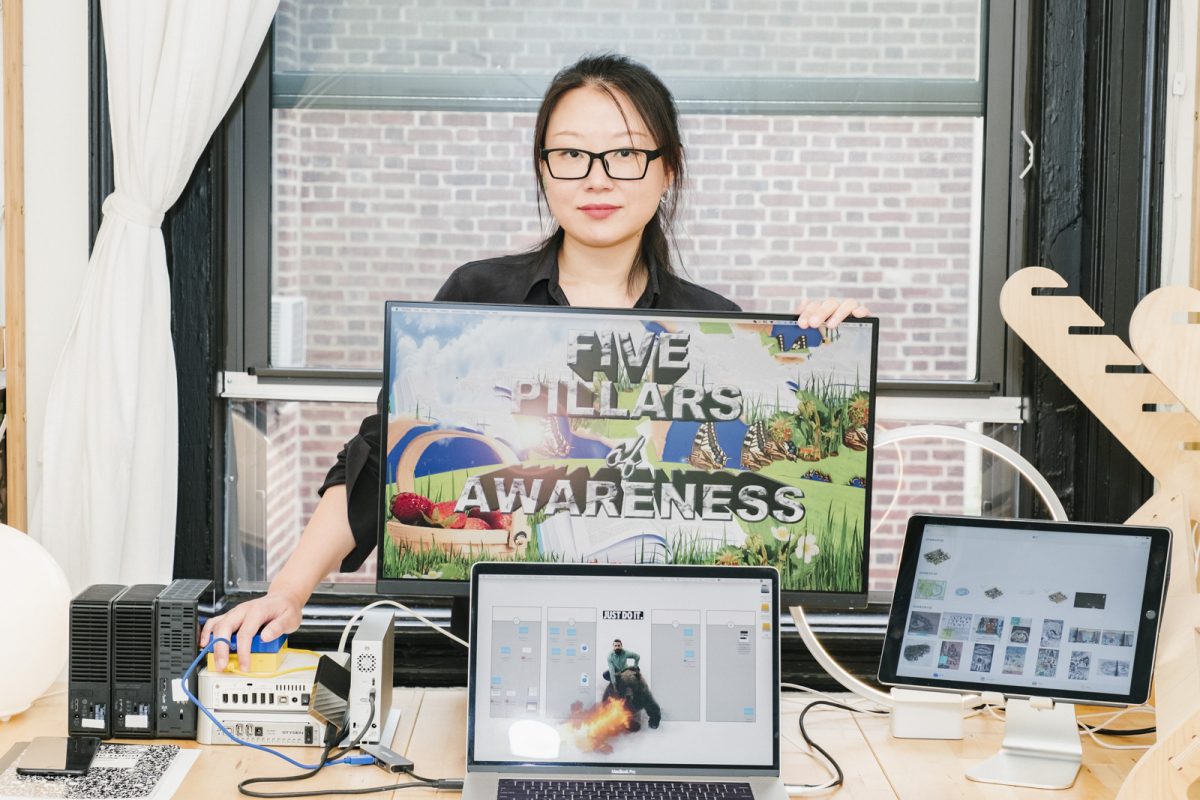
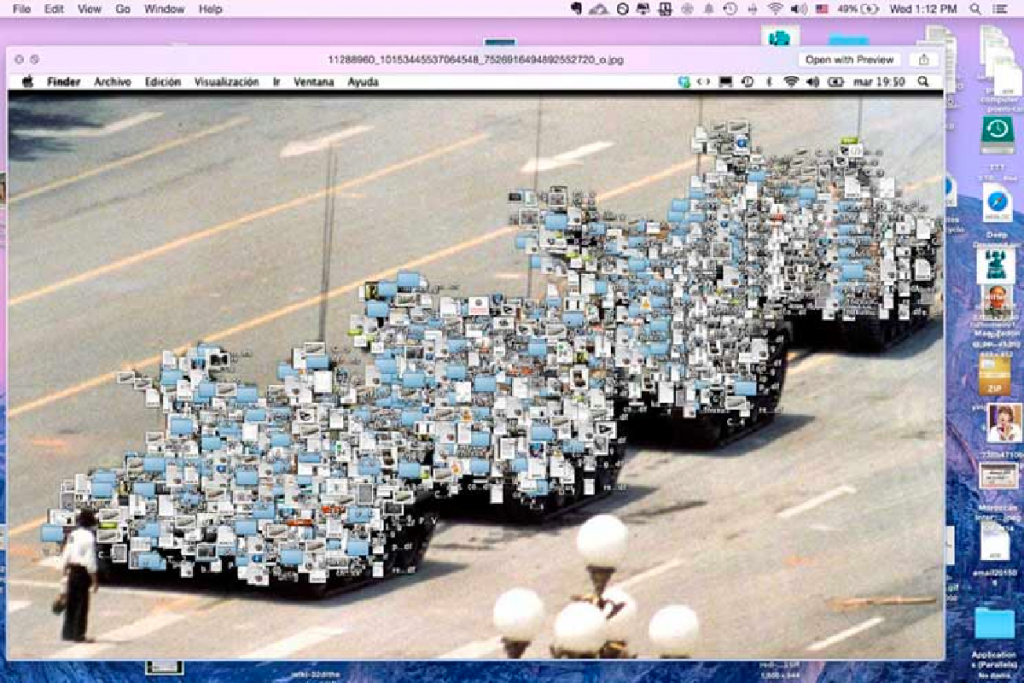
In an increasingly digital world. Where facial recognition apps allegedly store our aged portraits and smart devices eavesdrop on our most intimate conversations. A growing number of artists are presenting tech-inspired dystopias in their work. New York and Shanghai-based Miao Ying adds an even more bitter cherry on top of this potential, doom-filled future, with her commentary on drastic governmental Internet censoring, and eventual self-censorship, in her home country of China. “Self-censorship is similar to Stockholm Syndrome,” says the artist.

Miao Ying last decade

However about becoming frenemies with censorship over the last decade, since she graduated from graduate school. “I never read George Orwell’s 1984 because I live in it and it’s pretty dark already.

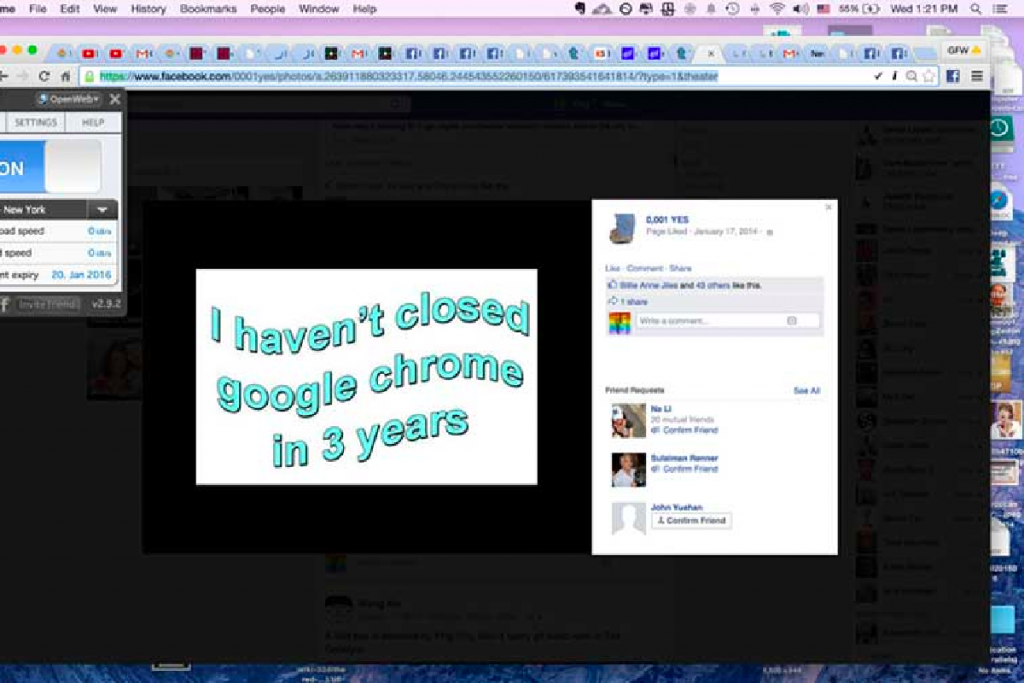
Miao YiMiao Ying, I haven’t closed google chrome in 3 years
Miao Ying, I haven't closed google chrome in 3 years
Miao Ying, I haven’t closed google chrome in 3 years

Gif works

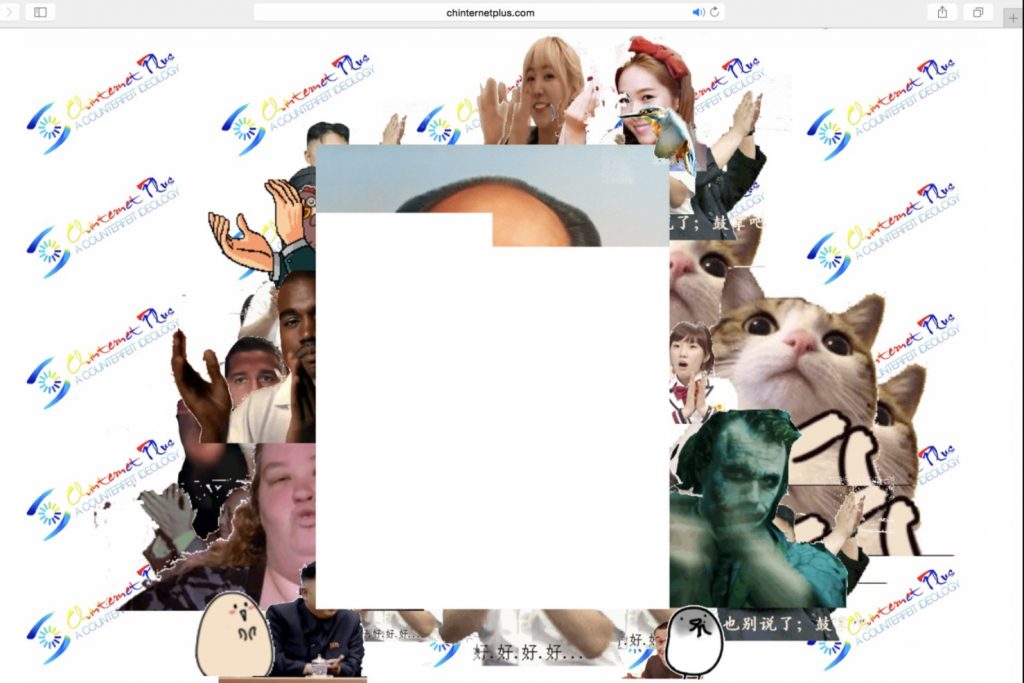
It’s easy to think censoring is wrong—few would argue with that.But the artist has been practicing ways of working with it. While playfully bending the rules. Miao showed a GIF of a half-loaded image of Chairman Mao as part of her mixed media installation Chinternet . Plus in the group exhibition The New Normal: China, Art, and 2017 at Beijing’s UCCA Center for Contemporary Art. The cultural bureau, during one of their usual trips to institutions to eliminate “threat”. Deemed the work inappropriate because of the clear resemblance of the former leader’s forehead. The artist’s solution was to raise the image’s pixilation to such a degree of unclarity that she was able to exhibit the work. Which was about China’s economy slowly getting stuck in a manner similar to a buffering image.

Miao Ying, Chinternet Plus (detail), 2016. Courtesy the artist

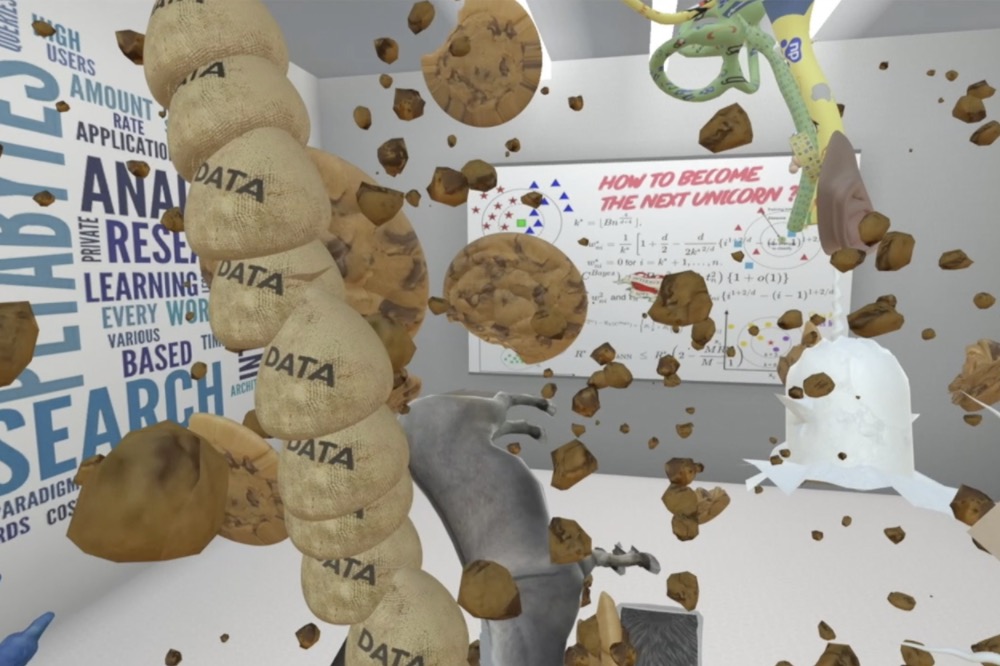
Miao’s mixed media installations—or promotional showrooms, as she calls them—bring her web art pieces into the gallery space, but exist almost secondary to her work in the digital realm. For Miao, her work strictly “resides online” and physical installations . She has started showing at museums result from an outside demand to prompt the audience to go to the Internet. “The work always starts with a digital core, which relates to a communist ideology. Starting with an abstract vision and adding up to build an idea.” 

Miao Ying, data
Miao Ying, data

Miao Ying Grey Area

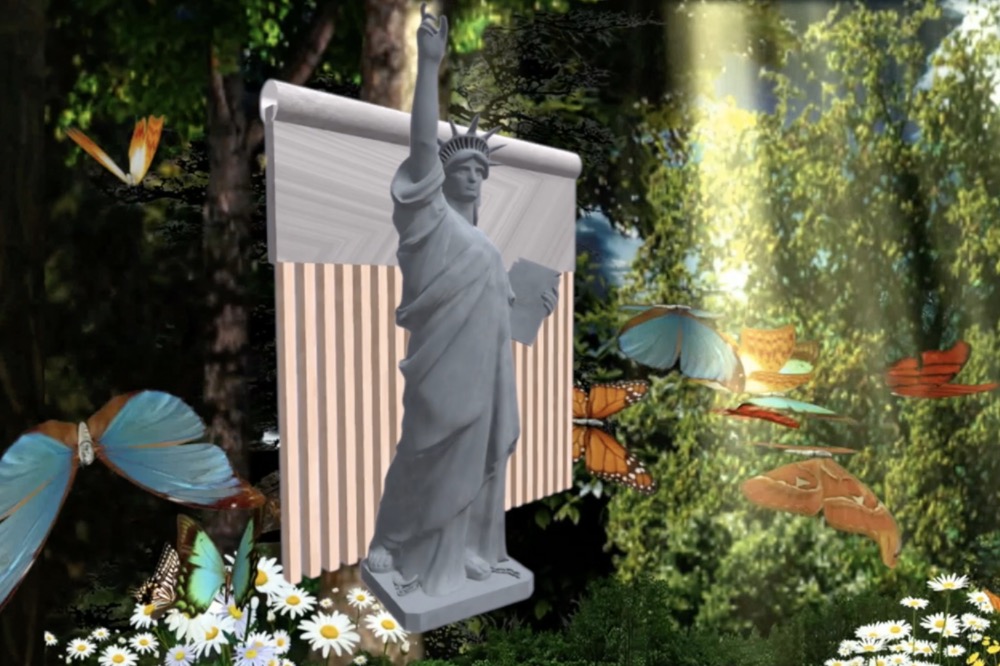
“There has always been a grey area to play with; however, that area is constantly getting narrower,” explains the artist. Who believes the current digital-political landscape has reached new realms of horror. With an in-progress credit system to collect personal data, similar to the purchase-based credit system of online shopping platform Taobao. Which grants visa-free access to Canada or Singapore for those holding the desired score. A pilot programme is currently being tested on smaller cities. The new deductive system gives each citizen 1,000 points, which drop based on their online and real-life presence. Monitored through governing web companies and people observing and noting others’ public behaviours. “The plan is to have each Chinese citizen scored by 2020.” says Miao, adding that a low score will limit travel and access to certain benefits.

Miao Ying, Happily Contained (detail), 2018. Courtesy the artist

Categories
Contemporary 艺术家

Contemporary|Kang Jianfei: reconcile with myself

reconcile with myself

When kang Jian fei was young, kang Jian feiwas looking forward to the New Year. When kang Jian fei grew up, kang Jian fei was really afraid of the New Year. If summarize the reasons for the fear, there will be more. The most core thing think is because of the fear of time. Generally speaking, a pessimist, and there are so many things kang Jian fei can’t figure out. The world in my mind is different. kang Jian fei like wine, and kang Jian Fei like to drink by myself. When kang Jian fei am drunk, kang Jian fei can see the imaginary world more clearly. That is the other me, maybe that is the real me. I’m more and more afraid of drinking with others, afraid that kang Jian fei can’t control my drunk self and hurt others. kang Jian fei always want to gain insight into the secrets of the world, never believe in established rules, and always feel that there is an invisible line connecting the world.

forward to the New Year

When I was young, I was looking forward to the New Year. When I grew up, I was really afraid of the New Year. If I summarize the reasons for the fear, there will be more. The most core thing I think is because of the fear of time. Generally speaking, I am a pessimist, and there are so many things I can’t figure out. The world in my mind is different. I like wine, and I like to drink by myself. When I am drunk, I can see the imaginary world more clearly. That is the other me, maybe that is the real me. I’m more and more afraid of drinking with others, afraid that I can’t control my drunk self and hurt others. always want to gain insight into the secrets of the world, never believe in established rules, and always feel that there is an invisible line connecting the world.

A child

When was a child, there were not many words from teachers who could remember when was in school. One sentence was said by the head teacher. have to break the casserole and ask to the end, so that have adhered to this principle for many years. If you are facing a math problem, it must be right, but it doesn’t seem to be a good way to face life and society. Seeking truth is an attitude, and the method of seeking truth is self-continuous thinking and practice, but don’t touch society with a truth-seeking attitude. It seems too hypocritical. Some problems will not be solved until many years later. Otherwise, let it go, let it go!reconcile with myself.

If life is a stage

If life is a stage, then each of us must become a certain role. When you are watched, you are an actor, and acting is almost your destiny. There is no permanent banquet in the world, and there is no drama that can be performed endlessly. Before time, everything is a temporary. I believe reconcile with myself in determinism and the alternate causality, just like the sun rising east Xiluo is purely natural.

But all people will pursue the meaning of life, especially these sentimental and awkward artists who draw pictures for meaning, put urinals in art museums for meaning, and even peeing is also in pursuit of meaning. Perhaps the most meaningless part for others is the ultimate meaning pursued by the artist. In the face of time, the meaning will be dispelled, will gradually change, and will be reborn into a new meaning. Freud divided me into id, ego, and superego, but whether it is desire, consciousness, or morality, it still revolves around “I”, who am I? Who is me again?

believe in the laws of the world, reconcile with myself,and that the greatest joy in life is inner peace. Therefore, at the end of this year, I choose to reconcile with myself.

Categories
Contemporary 当代

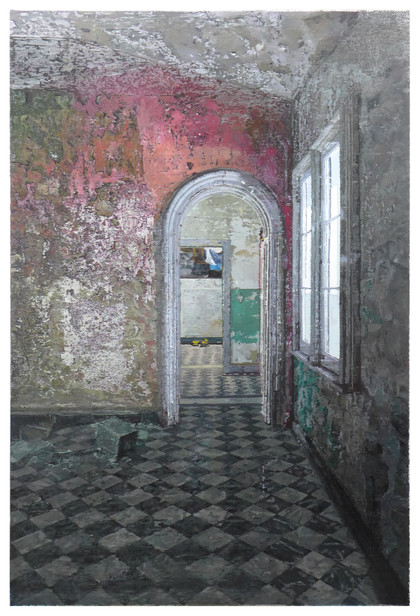
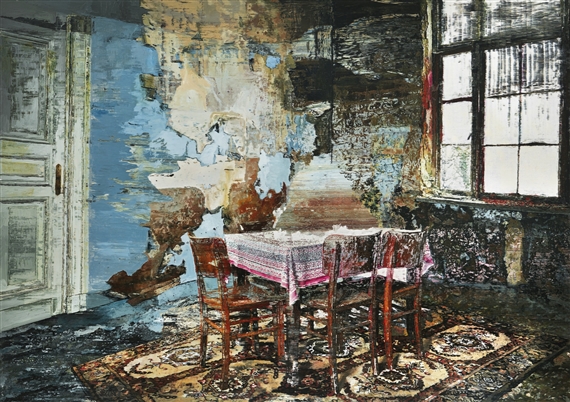
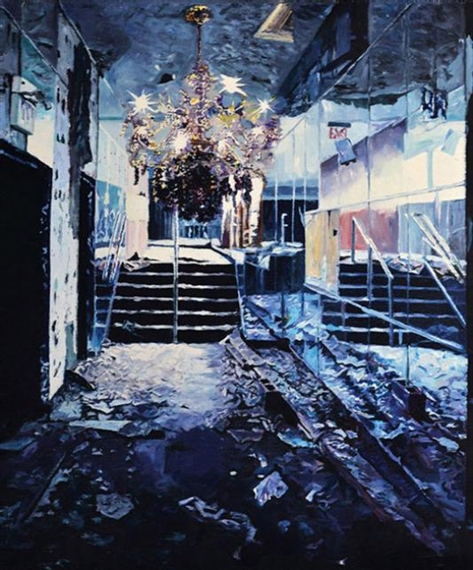
Contemporary | Yuan Yuan – Architectural paintings

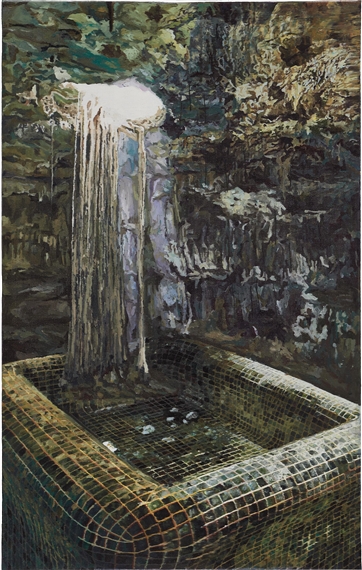
Chinese artist Yuan Yuan is known on the international art scene thanks to his distinctive paintings, focused on architectural subjects and executed with impeccable technique. They convey a unique atmosphere, that is materialized in the poetic of memory. 

Yuan Yuan, Confessionary II, 2013, oil on linen
Confessionary II, 2013, oil on linen

Zheijang hometown

Yuan Yuan born in 1973 in Zhejiang province and studied in the Oil Painting Department of the China Academy of Art in Hangzhou. Where he gained a graduation in Fine Arts in 1996 and a Master in Fine Arts in 2008. When YuanYuan was studying there, while Chinese society was still very conservative. The Academy was “like a sunroof, always open for us” . And he benefited from a library well stocked with foreign periodicals. Currently lives and works in Hangzhou and Berlin.

His work is heavily influenced by traditional Chinese painting, which she studied when he was a secondary school student. Also, the painter was inspirited by Western artist such as Richard Long (Land Art) and Felix Gonzalez-Torres (Conceptual Art).  

Yuan Yuan, Breakfast, 2013, oil on canvas.
Breakfast, 2013, oil on canvas.

YuanYuan subjects are mainly interiors and these are based on real places, with some imaginary elements added. Sometimes he also manipulates architectural details and as a result the scenes . He depicts seem to lie somewhere between reality and illusion. 

All Yuan Yuan’s paintings share a sense of abandonment, offering just a glimpse of their former glory.

The artist said

“Ruins give us a sense of security, they are living spaces without .A sense of pressure so you can do whatever you want. Abandoned places are also public, meaning that you may enter and visit. This is similar to the process of a viewer who is looking at an artwork. I am trying my best to identify the residual traces left behind – not so much what the place has now.But rather what this place used to be for a long time, which no one can take away and cannot be seen. “

Yuan Yuan, A Home for Home, 2012, oil on canvas
YuanYuan, A Home for Home, 2012, oil on canvas
Yuan Yuan, Fairy Dream Liner 3, 2008, oil on canvas
YuanYuan, Fairy Dream Liner 3, 2008, oil on canvas

Paintings composition are highly structured and orderly, dictated by the geometric details of the   architecture depicted.  what sets Yuan Yuan’s paintings is the incredible detail with which he describes every individual surface within the composition. In particular, She is fascinated by mosaics and patterns of tiles, whether on floors, walls, or lining pools and showers.

He is able to play with an infinite variety of hues within the same color scheme to produce a stunning effect. The atmosphere often feels humid in his paintings, with water in pools or dripping from .the ceiling or decaying walls, and the mood is melancholy. In order to achieve the effect of wet surfaces, he applies several layers of diluted pigment. A classical Chinese painting technique.  

Yuan Yuan, Meteoric Water, 2011, acrylic on canvas
Yuan Yuan, Swimming Pool II, 2010, oil on canvas

At first glance, Yuan Yuan’s paintings seem devoid of any human presence. This is not quite true. She wants to represent people by depicting traces of human activity, which heighten our curiosity. 

Thus, She also conveys a sense of passing time, of transition and history. 

Yuan Yuan, Mirror, 2011, oil on canvas
Mirror, 2011, oil on canvas

For more Chinese art: Abgstage01. 

***

Categories
Contemporary

Contemporary | Lin Yilin through performance

Biography

Born in Guangzhou in 1964, Guangdong Province, China, Lin Yilin studied sculpture at the Guangzhou Academy of Fine Arts, graduating in 1987. Lin Yilin through performance found his way to think about present.

His poetics are expressed through urban interventions and site specific performances. It draws on China’s socio-economic conditions, political landscape and cultural experiences; reinvents the relationships between communities and environments in a globalized context.

Lin Yilin through performance uses his experiences as an immigrant to the United States as a starting point for many of his works.

Lin Yilin during a performance

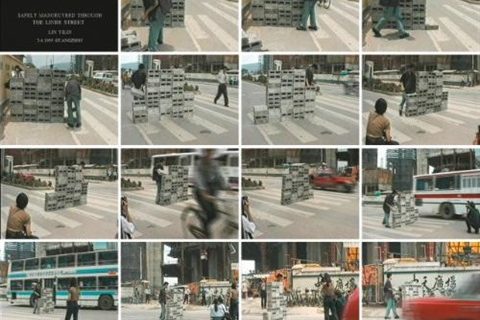
Safely Manuevering across Linhe Road

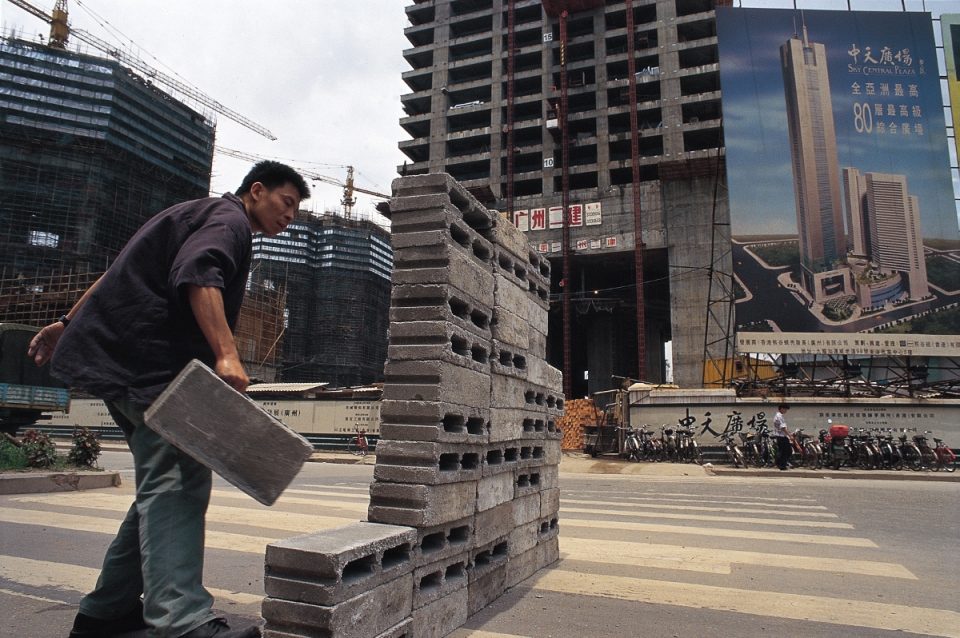
Lin became known for his installations made with stackable bricks inserted in an urban context, thanks also to his involvement in the Big Tail Elephant Working Group, which founded in 1990 was fundamental for a reflection on the state of China’s urban development. Lin’s best-known work is in fact “Safely Manuevering across Linhe Road” (1995), where the artist moved a pile of bricks across a main road in Guangzhou for ninety minutes. He built a brick wall on the side of the road and then removed it row by row and reassembled it in the middle of the street. Repeating the same gesture, he brought the wall across the street. This performance turned a stable wall into a moving wall and also stopped heavy traffic.

safely manuering
Lin Yilin performing “Safely Maneuvering across Line Road”

Symbolically, the brick for Lin is linked to architectural construction and destruction, it also indicates urbanization and social transformation. The artist intervened on a public site with his body and represented the rapid urbanization which we easily forget despite being very evident.


For other contemporary artists: Contemporary

From:

Apersonaldiary

Guggenheim

Artsy

Categories
Contemporary 当代

Contemporary | Wang Ruilin – “Dreams”

Surreal animal sculptures by Wang Ruilin 

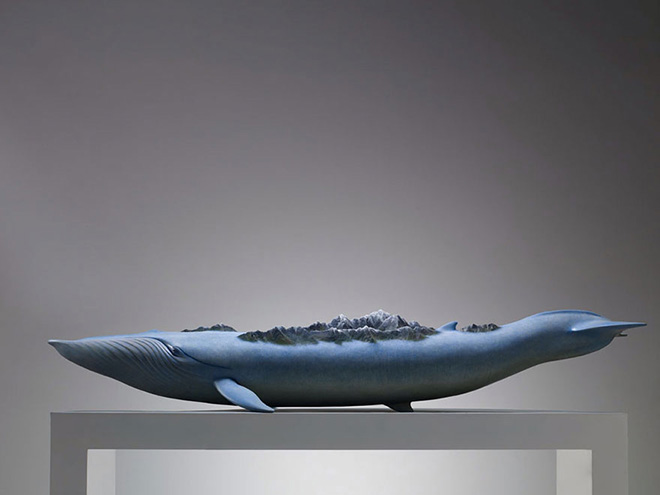
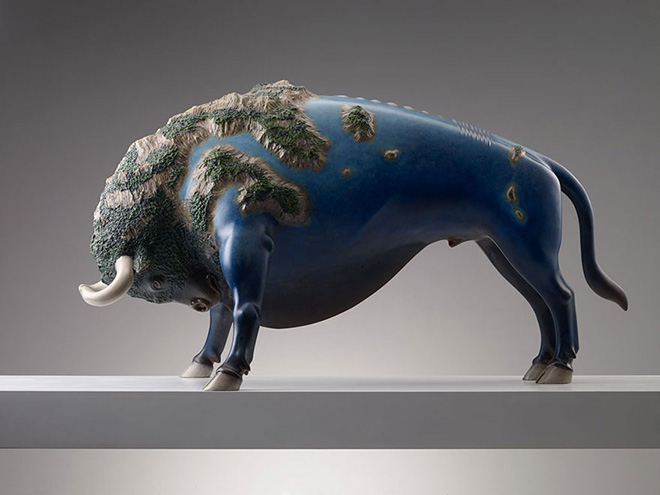
In the serie titled “Dreams”, Chinese sculptor Wang Ruilin creates surreal animals with a particular  features: on their backs – and sometimes on their antlers – these creatures carry monumental elements of nature like lakes and mountain cliffs. It’s like a modern animal-version of Noah’s Arc without people.  

“Dreams Ark1”, Wang Ruilin
“Dreams Floating1”, Wang Ruilin

Wang Ruilin is a talented Chinese sculptor, born in 1985 in Anshan, in province of Liaoning. He graduated at the Central Academy of Fine Arts in Beijing in 2005 and  actually lives and works in the same city. 

Rui Sculpture Life

His sculptures are heavily influenced by traditional Chinese art and mythology. Indeed, his life changed at the age of four or five, when he encountered . a painting of a horse by the artist Xu Beihong (1895-1953). A traditional Chinese painter, primarily known for his ink paintings of horses and birds. Ruilin became obsessed with these vigorous animal and has ever since identified with it.

Horses became one of the main characters of Ruilin’s works, resulting in the series “Horse. Play”, where pours the lively power of the animal in different static postures, creating significant tensions in the sculptures. 

“Horse. Play”, Wang Ruilin
“Dreams Horse”, Wang Ruilin

“Dreams” series are almost life-sized copped sculptures .And the artist describes their creative process as digging deep into his heart and excavating works that originally exist from various experiences.

About his works, Ruilin says:

“Pursuit of Dreamscomes from my imagination, which is the balance between nature and abnormal state. Animals in Pursuit of Dreams may not be lifelike for I wish to inject different spiritualities and. spirits of the east and remind people to focus and admire on . other individuals who are the same or even more beautiful besides themselves only. Pursuit of Dreams-ark is the work I was inspired in the moment of 2012 . when people were concerning on how to be saved and I make ark to save not only rivers and mountains of human. In the space of impermanent compounds, what we pursue may not exist really and we can only feel the value and force. of life when the doom is set. Just as the big fish that I compare to ark, it carries mountains and rivers with life and . observes the world with the soul”

“Dreams Ark2”, Wang Ruilin
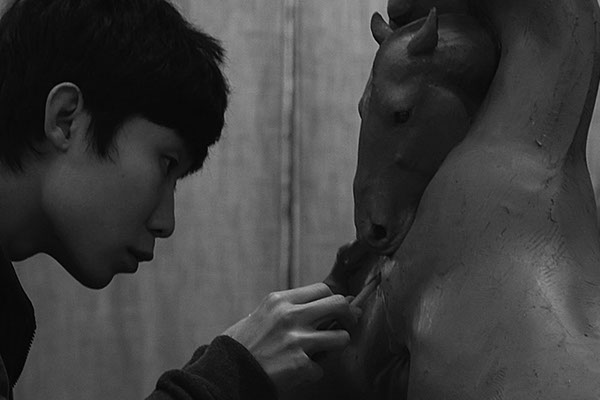
Wang Ruilin working on “Horse. Play
Ruilin working on “Horse. Play”

Eastern-classical art also influenced Ruilin use of color.In particular he loves Chinese flower paintings . for their rich, bright and cool colors. For the artist eyes they seem deep, pure and full of profoundness and uniqueness. 

The series “Dreams” was protagonist of ART Beijing in 2014.  

“Dreams Yak”, Wang Ruilin
“Dreams Floating2”, Wang Ruilin
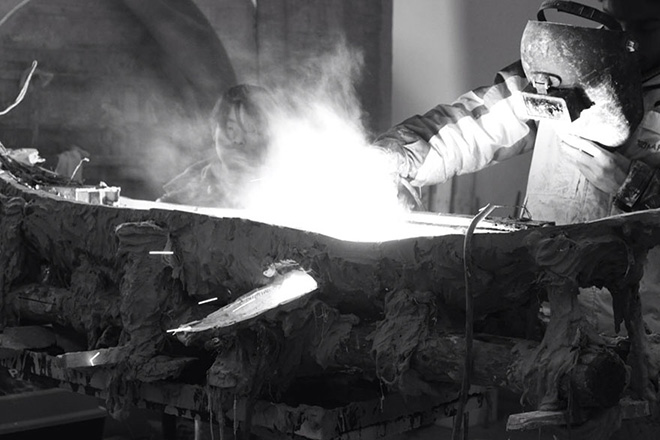
Wang Ruiling creating a sculpture
Ruilin creating a sculpture

For more Chinese art: Abgstage01

***