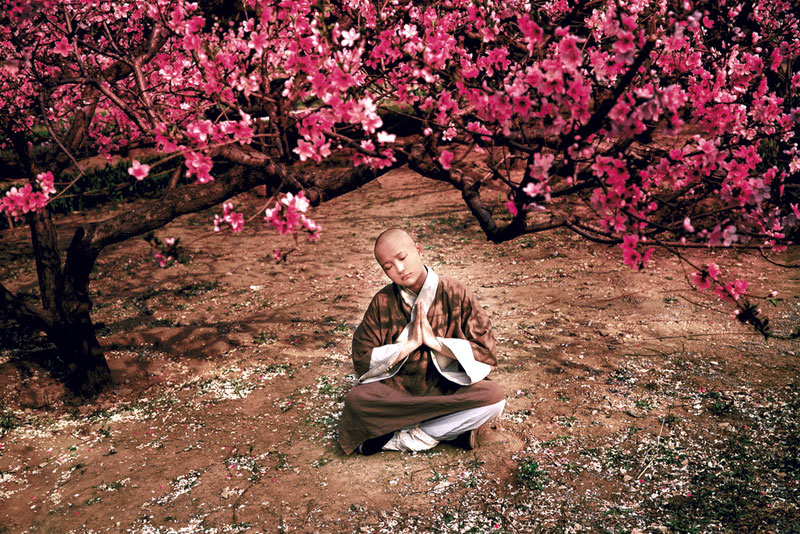
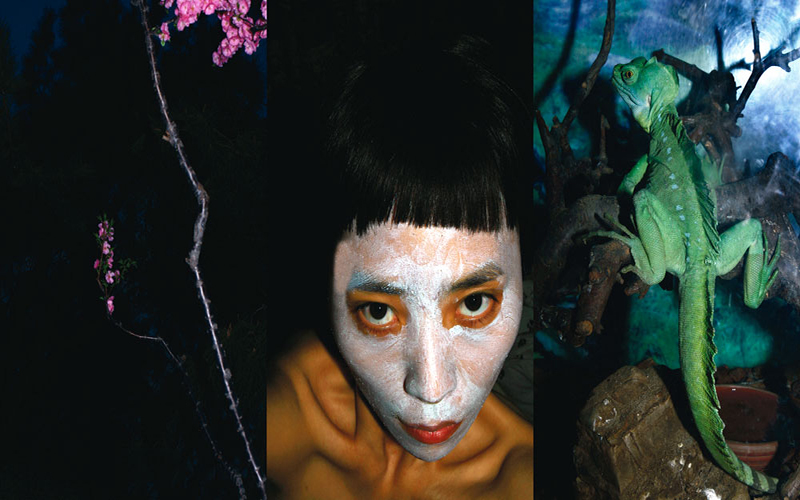
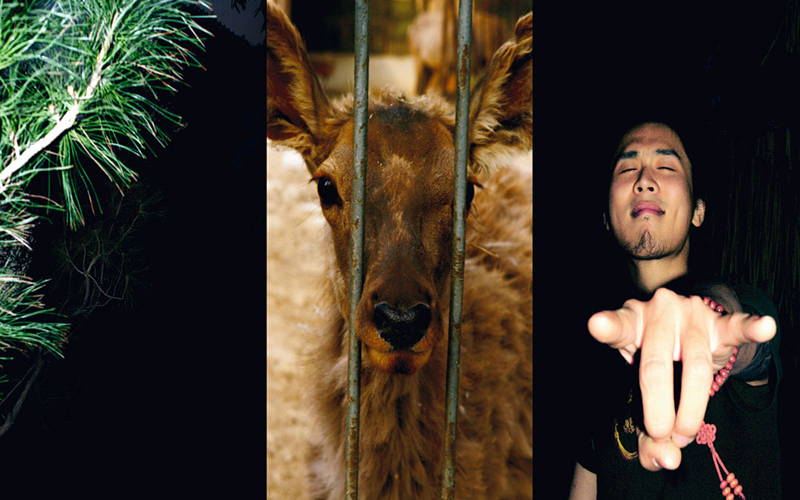
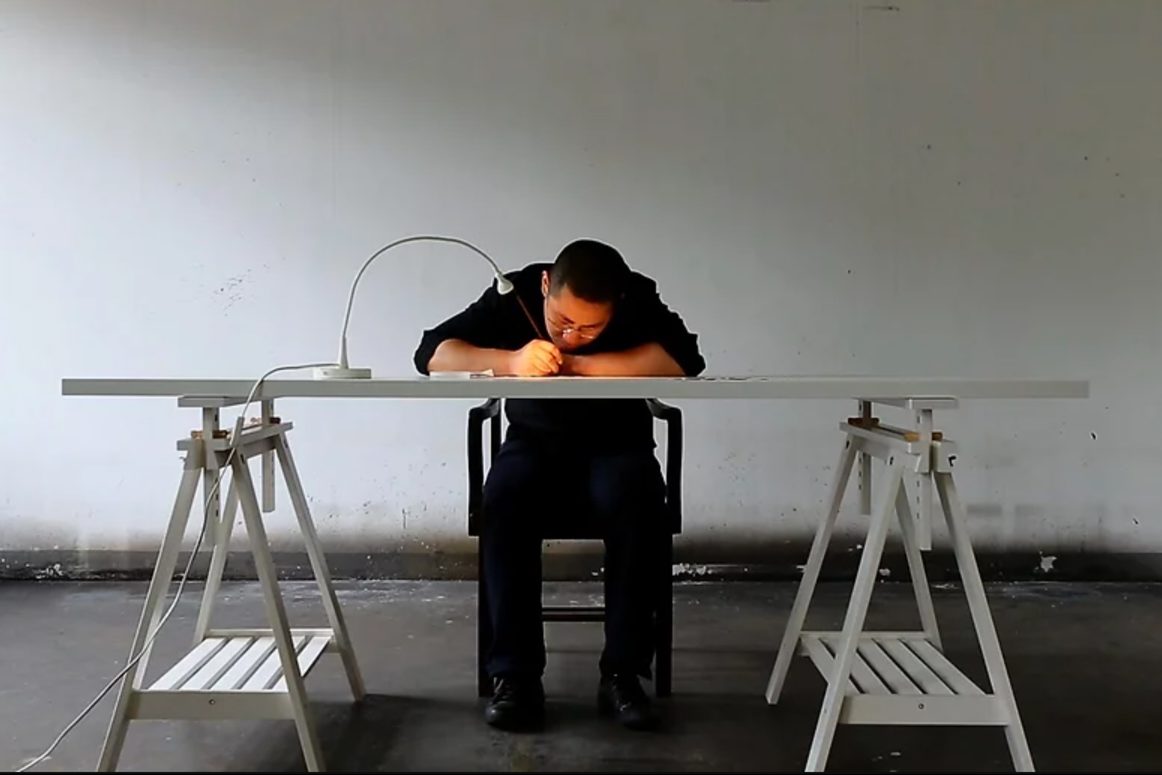
Zhang Hui Graduated from the Mural Painting Department of Central Academy of Fine Arts in 1991 2005 Master of Arts and Design, Minneapolis College of Art and Design Currently works and lives in Beijing
walk in the surrounding
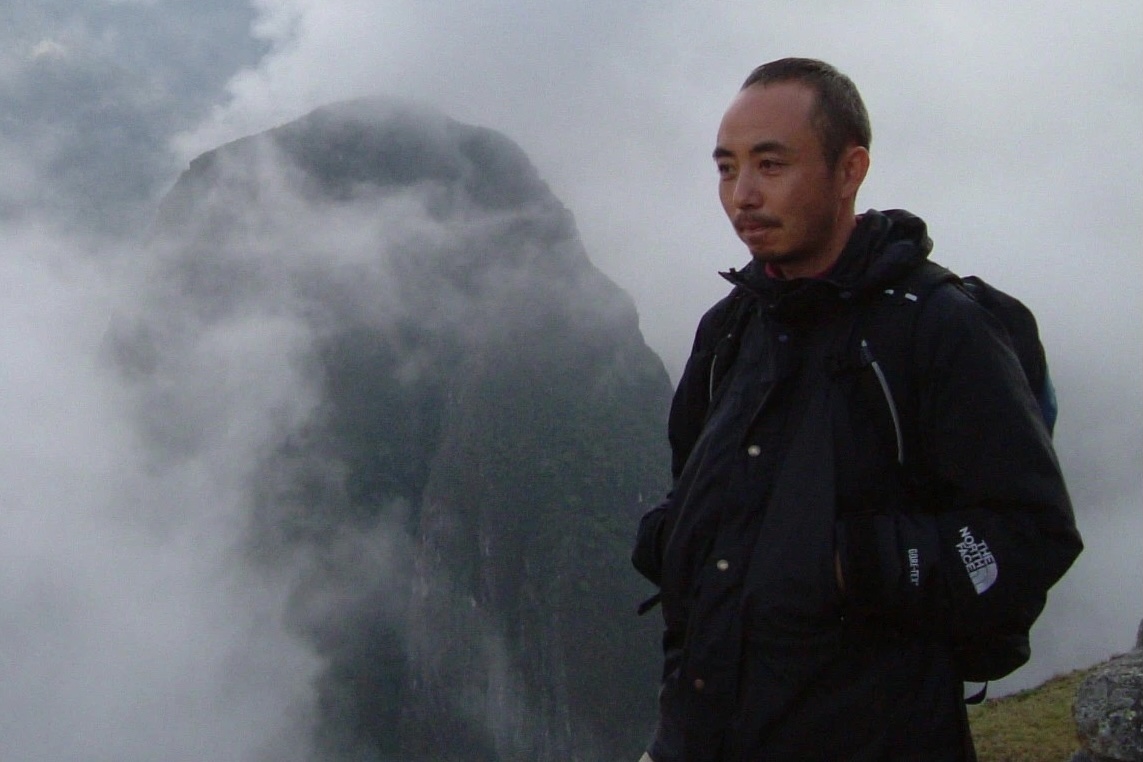
Living in Beijing, Zhang Hui like to walk in the surrounding mountains. Zhang Hui usually leave at 8 or 9 in the morning, sometimes with a couple of friends, sometimes by myself, driving for one and a half to two hours, and there are some routes around 100 kilometers away.
If it is a four- to five-hour route, Zhang Hui will bring something to eat, such as a steamed bun or a biscuits or bean buns, and sometimes a boiled egg. Generally, there is no salted duck egg, which is salty and oily, which is inconvenient. Be sure to bring something sweet, such as a few pieces of candy, two snacks, or two energy bars.
Bring a 500ml bottle of water on cold days, two bottles on hot days, and three bottles in July and August. There are many hills with an altitude of about one kilometer in Beijing, and the general parking place is about 500 meters.
There are only three mountains of two kilometers, Dongling Mountain 2,303 meters, Haituo Mountain 2,241 meters, and Wuling Mountain 2,118 meters. Outdoor hiking has sunshine, sufficient oxygen, and the atmosphere of trees, flowers, and mountains. It is a process of challenging one’s own limits and relaxing and happy.
In the book “What Do I Talk About When I Talk about Running,” Haruki Murakami describes his daily life, running in the sun, eating grilled fish, drinking beer, writing, and listening to music.
It’s a beautiful day. Zhang Hui also like the ending part of his “Norwegian Forest.” Reiko made a hot pot for Watanabe, and they sang while talking about the guitar. They held a “real” funeral for Naoko and played 51 songs in a row. The soul of Super Naoko is also redeeming himself. After that, they “hugged each other as a matter of course” and then made love.
like Bach’s music
Zhang Hui like Bach’s music, religious sense and divinity. Especially his fugue, the chase and escape of notes entangled and flowed. Zhang Hui like Indian traditional music, which is continuous and coming in a steady stream. Like jazz. Like Mahler, especially his ninth and tenth symphony, eternal, beyond death, suffocating.
Schopenhauer said that we are all slaves of our own will, trapped in the desire for food, sex, money, and control. Art is a possible way to save us from the distorted, boring and painful reality. Art can give us. Transcendence, it has such an energy to help us achieve spiritual escape.
Over the years, Zhang Hui have painted several different series: cities, trees and branches, people, colored stones, clouds, grids. There are many journeys and thoughts behind these paintings. Now it is difficult for me to state clearly the background of these thoughts.
Lei Benben is an artist with strong consciousness, in other words, lei ben ben takes a simple and linear approach to think about her art style.
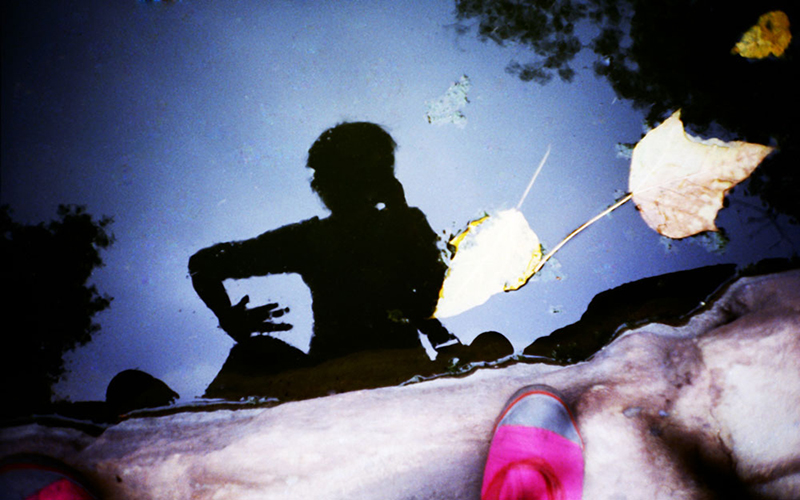
Lei Benben , Showder on the water, 2005, photography
lei ben ben used to be a dance teacher. To her, since dancing was very much challenged by other commercialized art formats, it somehow makes dancing a purer and soulful expression. One day, Lei Benben picked up a camera by accident. Camera’s view to the world and the way it captures images amazed her. So she gave up her dance career, and turned for another challenging profession.
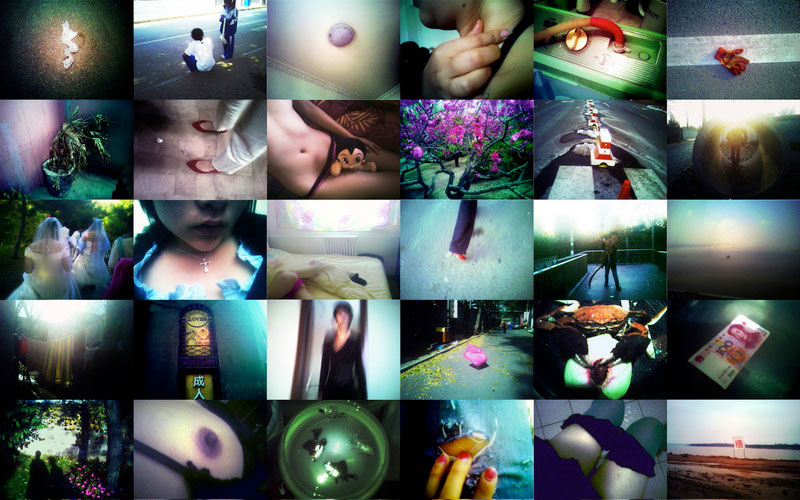
Lei Benben , The Passion of Life, 2005, photography
Lei Benben started her photograph career by using camera lenses on mobile phones. The style of her works is rather low key: the objects in her images give us the sense of joy with melancholy. The color of her images seemed to be purified to its original luster by the soft lights of a cloudy day, touching and vibrant.
Wisdom and beauty photographs
lei ben ben photograph works are random taken. Lei Benben is an artist with linear logic and her characteristics determines that her works would not be flourished with splendid colors. However, her works are full of straightforward wisdom and beauty. The underlying interpretation of social morals can be sensed throughout her images. In addition, the art of dance plays a significant role in Lei Benben’s photography; it makes her works delicate and sensitive, even if the themes of the works are somehow heavy or serious. The element also contributes to the permeating, gentle and subtle appearance of her photography without overloaded contents.
Lei Benben , Present, 2012, photography
Lei Benben’s mobile phone photography concentrates on story-telling rather than expressing opinions of displaying certain attitude. It is very similar to man traditional Chinese poetries that praise on nature phenomenon: the works only care about what is happening, not what would happen afterwards.
lei ben ben ‘s Hair is missing
Lei Benben , My Hair is missing , 2007, photography
A bald head could be a special code for certain groups or certain characters. For example, the bold head is commonly associated with prisoners, patients (those who are losing hair as result of chemotherapy), Buddhists, Punks, Skin Heads or artists. In this case, bald head actually becomes identity or the symbol of some groups with special characteristics. Some would obtain this special code or symbol to gain certain recognition or at the least the proof of an identity. Since the identity is such a hot topic in today’s society, the image of “bald head” drew Lei Benben’s attention and let her into a contemplative process to find her proof of identity. In the contemporary society, Bald Head is often linked to negative things.
Lei Benben , My Hair is missing , 2007, photography
Sometimes, it is considered as a sign of politics, representing a class of people who are not respected politically or socially. In reality, the image of “bold head” has in fact been worshipped as an alternative subject by many. More and more people start to use the image to gain recognitions or identities. Along with other popular idols or distinctive personalities, the appearance of “bold head” makes the character identifying an even more intriguing and complicated process.
The institute of Zoology and Botany for Lei Benben
Lei Benben , The institute of Zoology and Botany , 2007, photography
“The institute of Zoology and Botany” is the work that Lei Benben has been expecting the most. The images attempt to create contrast and examine how life reacts and strives for survival under suppression. In this case, the forcible use of flash lights provides the unusual and surprising power for subject’s compulsory behavior. Because Lei Benben is not a scholar type of artist, she once again diverted from a serious and heavy topic by employing her romantic and sentimental nature. That’s why I believe that this photograph series is smart and poetic.
Lei Benben , The institute of Zoology and Botany , 2007, photography
Ni Youyu is not just an artist; he is an observer, a researcher and a collector. In his spacious, industrial Shanghai studio, one encounters antique shards of ceramics, curious objects found in flea markets, stacks of notebooks and works in progress. Commonly overlooked found objects, many of which the artist discovered while traveling, are scattered around the room.
Ni Youyu working in his studio in Shanghai, 2013 Photo: Shasha Liu
Ni strives to create a space where ideas historical and contemporary can intersect. Educated in traditional Chinese ink-wash painting, he draws from the rich and deep traditions of Song and Yuan Dynasty ink paintings, when the ancient artists pursued the unity between man and nature within the limited space of paintings. The Song and Yuan pieces emphasized the sense of historical grandeur and rationality, making a strong impression esthetically with their precise of brush strokes. Following Chinese radition, Ni studies and emulates the work of old Chinese masters as a daily ritual. However, he does not simply mimic these ancient artworks in his own work. Rather, he immerses himself in them to extract their essence and purposely does not include ink paintings on paper in his own work. Ni’s practice is equally informed by post-1960s conceptual art, such as the Italian modern art movement Arte Povera (1967-1972).
Installation view of Ni Youyu’s personal exhibition “Brief history” Shanghai Art Museum Ni Youyu solo exhibition “Site of short history exhibitions”
Ich the damaged relics Ni You yu
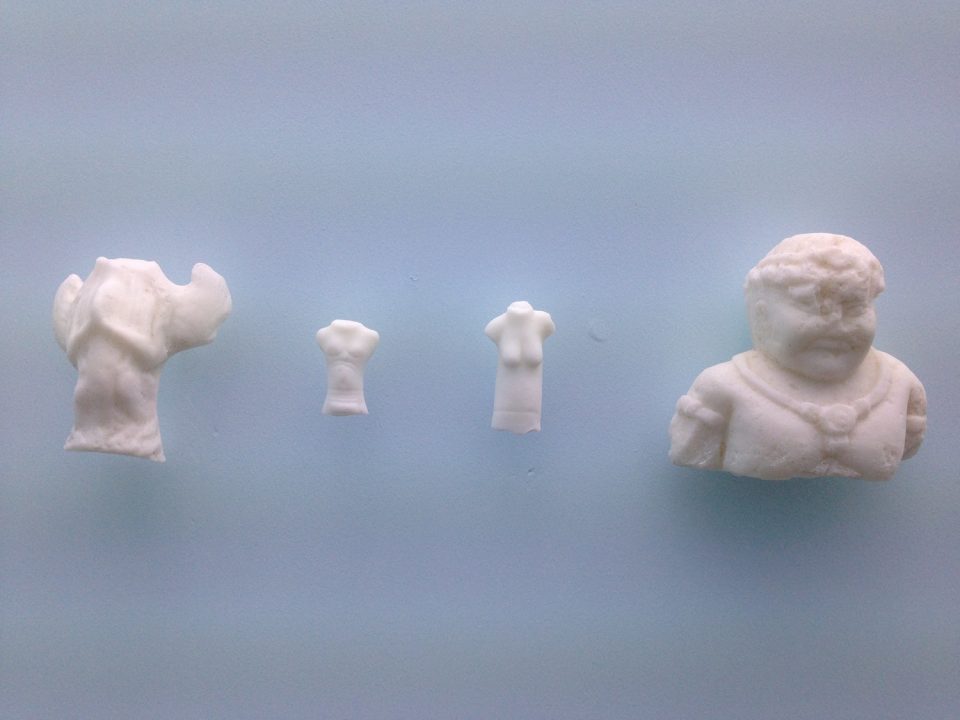
lch (2013), made from found objects, involves 100 small pieces of damaged and eroded relics of Chinese figurative sculptures of people, Buddha and animals, dating from the North Song (960-1127AD) to the Qing Dynasty (1644-1912AD) that Ni collected on research trips over several years. After making molds from these ancient pieces, the artist cast soap sculptures from them. Exhibited as though they are artifacts, the sculptures juxtapose the temporality of soap with the lifespan of hard stone antiquities. In doing so, they raise questions about change and permanency, exposing both materials’ essential fragility.
Ni Youyu, Zilch, 2013, 100 soap sculptures
As part of the work, viewers are invited to become participants and “adopt” one piece of the soap, which they are free to use however they like. In exchange, they are asked to submit a photo of the object in their home. Their treatment of the soap becomes a reflection of their understanding of the sculpture’s function and its status as both a utilitarian and an aesthetic object.
Ni Youyu , Zilch Bubble, 2013, detail
The Song dynasty
Since 2011, Ni has been working on a series of paintings that exclusively use black matte and gold paint. Inspired by paintings from the Song dynasty and historical Japanese screen paintings. Sense of history, their color combinations and the precision of the brush strokes. Ni chose these colors in order to create a concrete yet illusionary visual effect. The contract of the gold semi-gloss against the black matte yields a contradictory quality. lending each scene a realistic yet dream-like aura.
Ni Youyu ,Song Dynasty inkwash painting in detail
Hoping to avoid solid lines, Ni developed a special method that uses pressurized water to wash away layers of paint. For each painting, he repeats this process several times; the result is a surface that appears worn, as though eroded by time. This effect is a similar to the visual device used in Song and Yuan Dynasty ink paintings. Ni creates scenes of waterfalls, landslides and flood-damaged landscapes by applying water to the painting’s surface. This interaction – between water both represented and actual – imbues the work with a sense of ingenuity and contradiction.
Ni Youyu, Big Waterfall II detail
Galaxy the experience of childhood of Ni Youyu
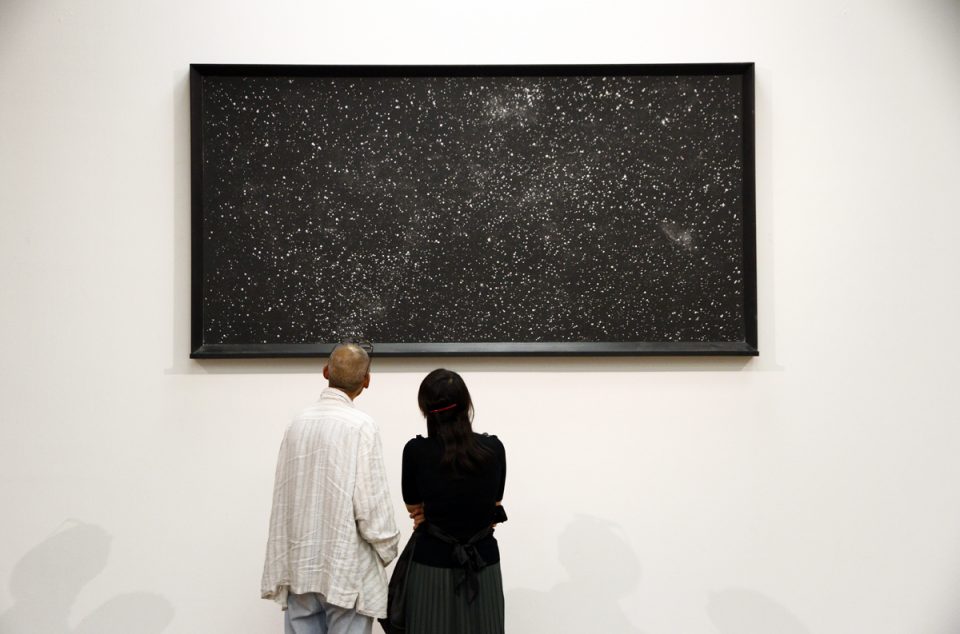
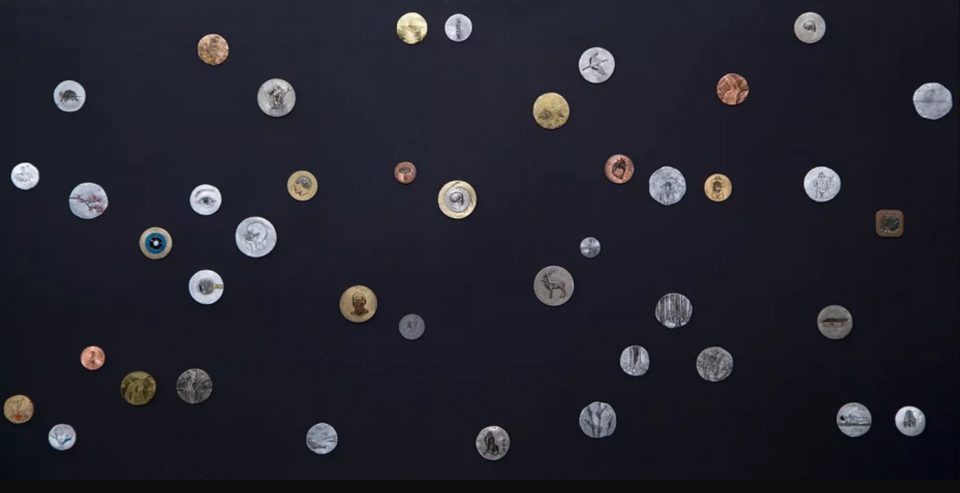
Ni’s work Galaxy (2008-) re-examines and critiques the trend of costly large-scale art productions .that may be impressive but possess little meaning or content. In Chinese, the phrase “to pound the money” refers to spending a large amount of money without giving it much thought. Ni physically enacts this saying. repeatedly hammering coins he has collected from around the world until their surfaces are flat enough to paint on.
Ni Youyu, Galaxy, 2008 – 2012, Installation view
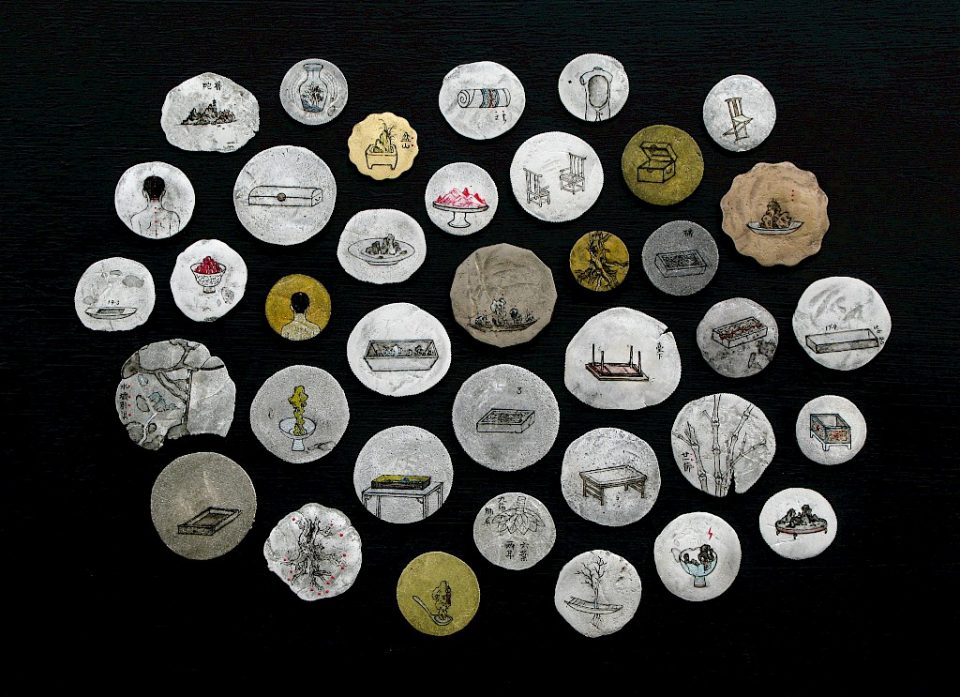
Building upon his preexisting interest in miniature painting, Ni trained himself to draw ink paintings on the coins.which he flattens to approximately one inch in diameter. As though representing “a galaxy of human knowledge,” these paintings depict a range of subjects, from landscapes to anatomy. This project furthers Ni’s exploration of the relationship between deduction and addition. In destroying the coins’ surfaces, he removes their monetary value. However, this process of destruction is also generative: it transforms .the coins into art objects, endowing them with a new value within the art market.
The inherent labor-intensive quality of his artworks requires the artist’s full attention and repetitive action. Ni often gets into a deep meditative state while in the process of creation. lending these works a sense of ease and grace. making his artistic practice an effortless endeavor.
Chinese artist Yuan Yuan is known on the international art scene thanks to his distinctive paintings, focused on architectural subjects and executed with impeccable technique. They convey a unique atmosphere, that is materialized in the poetic of memory.
Confessionary II, 2013, oil on linen
Zheijang hometown
Yuan Yuan born in 1973 in Zhejiang province and studied in the Oil Painting Department of the China Academy of Art in Hangzhou. Where he gained a graduation in Fine Arts in 1996 and a Master in Fine Arts in 2008. When YuanYuan was studying there, while Chinese society was still very conservative. The Academy was “like a sunroof, always open for us” . And he benefited from a library well stocked with foreign periodicals. Currently lives and works in Hangzhou and Berlin.
His work is heavily influenced by traditional Chinese painting, which she studied when he was a secondary school student. Also, the painter was inspirited by Western artist such as Richard Long (Land Art) and Felix Gonzalez-Torres (Conceptual Art).
Breakfast, 2013, oil on canvas.
YuanYuan subjects are mainly interiors and these are based on real places, with some imaginary elements added. Sometimes he also manipulates architectural details and as a result the scenes . He depicts seem to lie somewhere between reality and illusion.
All Yuan Yuan’s paintings share a sense of abandonment, offering just a glimpse of their former glory.
The artist said
“Ruins give us a sense of security, they are living spaces without .A sense of pressure so you can do whatever you want. Abandoned places are also public, meaning that you may enter and visit. This is similar to the process of a viewer who is looking at an artwork. I am trying my best to identify the residual traces left behind – not so much what the place has now.But rather what this place used to be for a long time, which no one can take away and cannot be seen. “
YuanYuan, A Home for Home, 2012, oil on canvas
YuanYuan, Fairy Dream Liner 3, 2008, oil on canvas
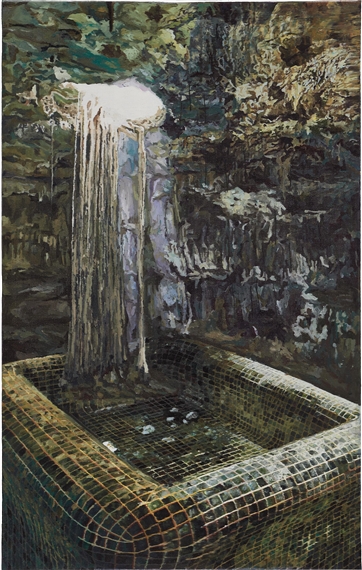
Paintings composition are highly structured and orderly, dictated by the geometric details of the architecture depicted. what sets Yuan Yuan’s paintings is the incredible detail with which he describes every individual surface within the composition. In particular, She is fascinated by mosaics and patterns of tiles, whether on floors, walls, or lining pools and showers.
He is able to play with an infinite variety of hues within the same color scheme to produce a stunning effect. The atmosphere often feels humid in his paintings, with water in pools or dripping from .the ceiling or decaying walls, and the mood is melancholy. In order to achieve the effect of wet surfaces, he applies several layers of diluted pigment. A classical Chinese painting technique.
Yuan Yuan, Meteoric Water, 2011, acrylic on canvas
Yuan Yuan, Swimming Pool II, 2010, oil on canvas
At first glance, Yuan Yuan’s paintings seem devoid of any human presence. This is not quite true. She wants to represent people by depicting traces of human activity, which heighten our curiosity.
Thus, She also conveys a sense of passing time, of transition and history.
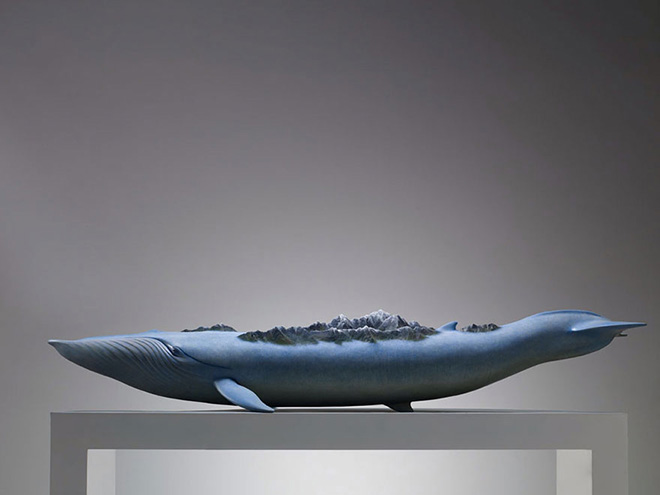
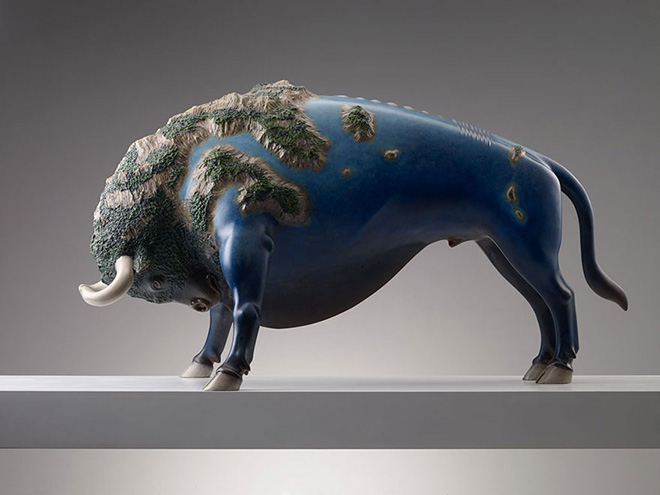
In the serie titled “Dreams”, Chinese sculptor Wang Ruilin creates surreal animals with a particular features: on their backs – and sometimes on their antlers – these creatures carry monumental elements of nature like lakes and mountain cliffs. It’s like a modern animal-version of Noah’s Arc without people.
“Dreams Ark1”, Wang Ruilin
“Dreams Floating1”, Wang Ruilin
Wang Ruilin is a talented Chinese sculptor, born in 1985 in Anshan, in province of Liaoning. He graduated at the Central Academy of Fine Arts in Beijing in 2005 and actually lives and works in the same city.
Rui Sculpture Life
His sculptures are heavily influenced by traditional Chinese art and mythology. Indeed, his life changed at the age of four or five, when he encountered . a painting of a horse by the artist Xu Beihong (1895-1953). A traditional Chinese painter, primarily known for his ink paintings of horses and birds. Ruilin became obsessed with these vigorous animal and has ever since identified with it.
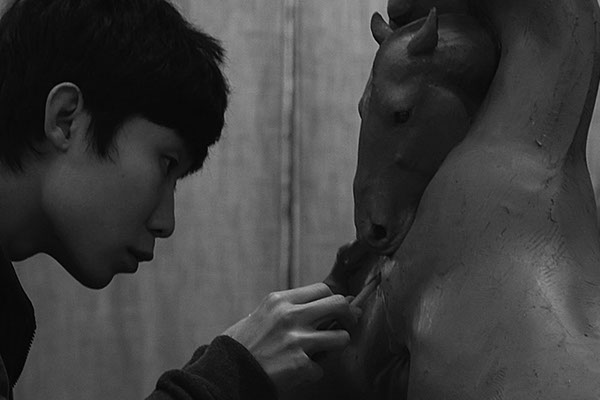
Horses became one of the main characters of Ruilin’s works, resulting in the series “Horse. Play”, where pours the lively power of the animal in different static postures, creating significant tensions in the sculptures.
“Horse. Play”, Wang Ruilin
“Dreams Horse”, Wang Ruilin
“Dreams” series are almost life-sized copped sculptures .And the artist describes their creative process as digging deep into his heart and excavating works that originally exist from various experiences.
About his works, Ruilin says:
“Pursuit of Dreamscomes from my imagination, which is the balance between nature and abnormal state. Animals in Pursuit of Dreams may not be lifelike for I wish to inject different spiritualities and. spirits of the east and remind people to focus and admire on . other individuals who are the same or even more beautiful besides themselves only. Pursuit of Dreams-ark is the work I was inspired in the moment of 2012 . when people were concerning on how to be saved and I make ark to save not only rivers and mountains of human. In the space of impermanent compounds, what we pursue may not exist really and we can only feel the value and force. of life when the doom is set. Just as the big fish that I compare to ark, it carries mountains and rivers with life and . observes the world with the soul”
“Dreams Ark2”, Wang Ruilin
Ruilin working on “Horse. Play”
Eastern-classical art also influenced Ruilin use of color.In particular he loves Chinese flower paintings . for their rich, bright and cool colors. For the artist eyes they seem deep, pure and full of profoundness and uniqueness.
The series “Dreams” was protagonist of ART Beijing in 2014.
Zhou Jun is a contemporary conceptual chinese photographer. He was born in Nanjing Province in 1965 and graduated from Nanjing Normal University in 1990.
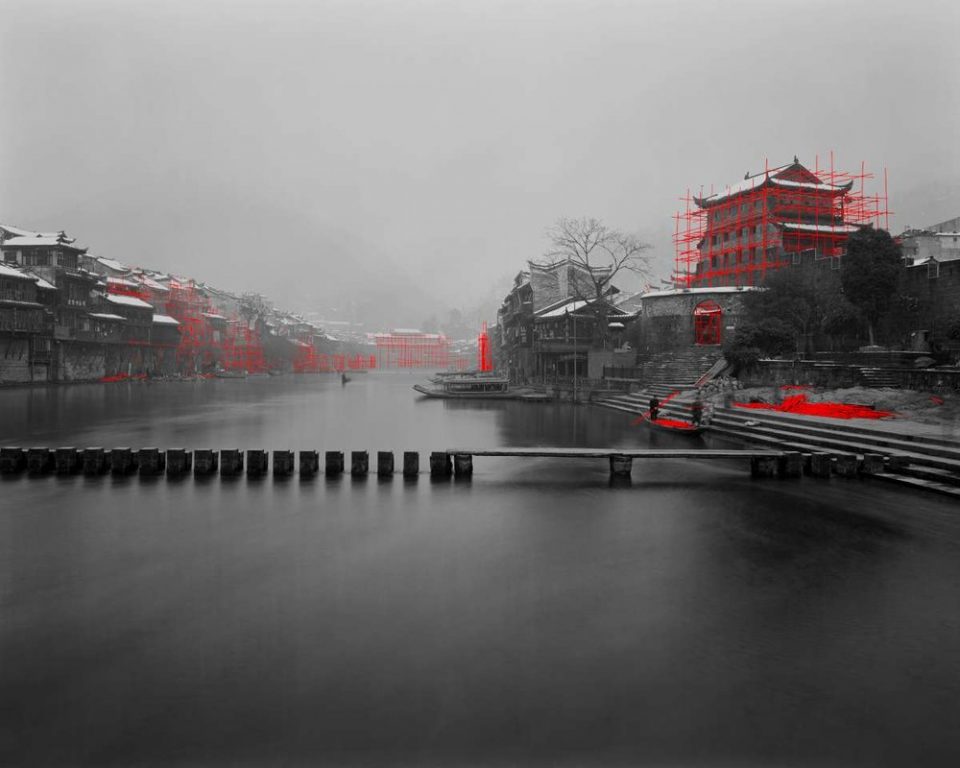
His work revolves around construction sites and the relationship between urbanization and the preservation of ancient cultural inheritance.
Zhou Jun
Zhou Jun’s technique
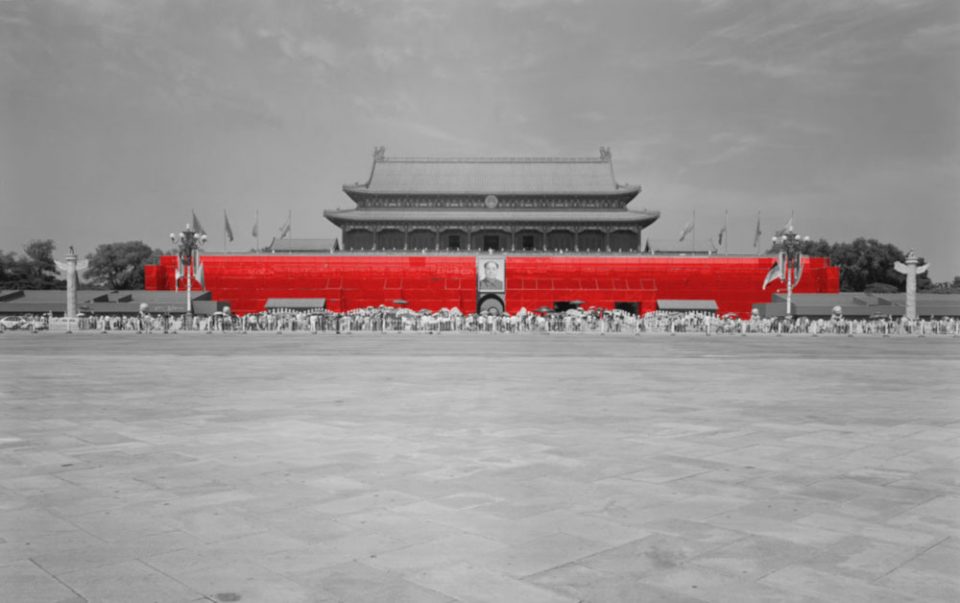
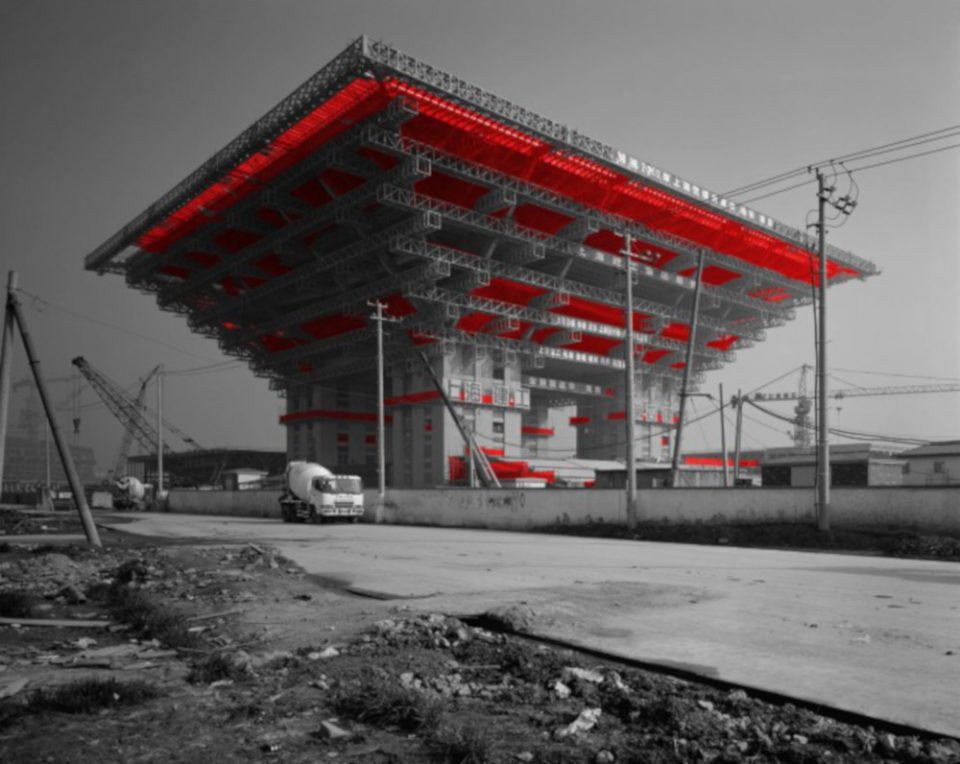
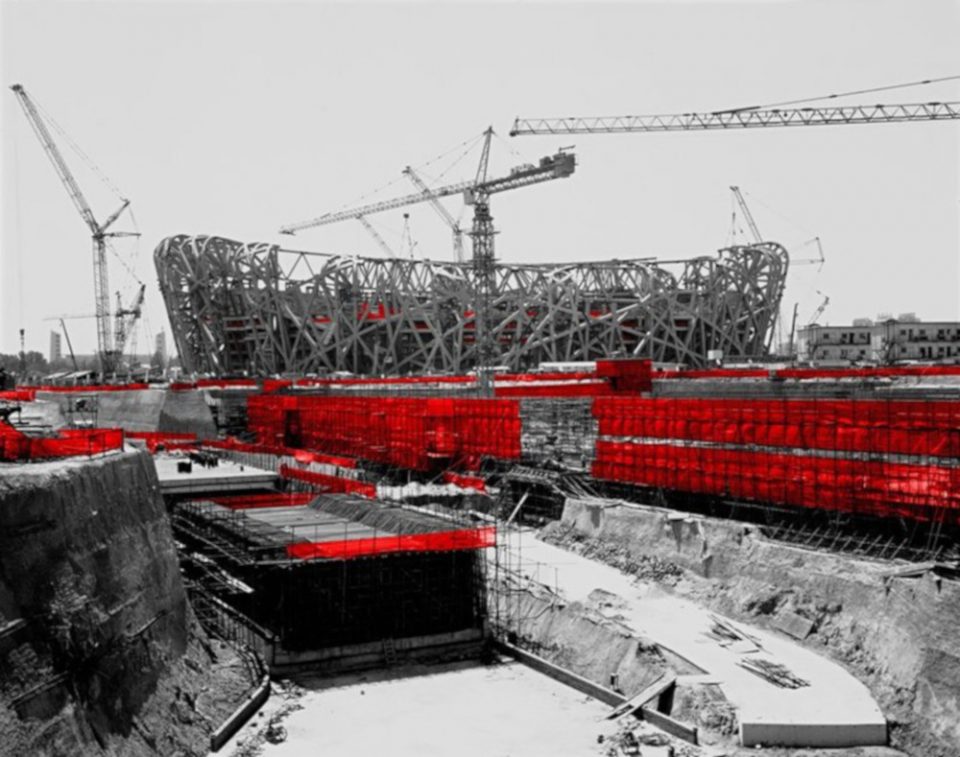
The artist is best known for his series – Scaffoldings; Bird’s Nest project; The Red and the Black – featuring Chinese cities in black and white with overlays of red streamers wrapped around under-construction buildings. Zhou Jun uses large format film cameras to produce negatives, which are scanned, digitally manipulated and printed to produce large unframed photographic works. Built environment is the subject of Zhou’s work in an analysis of China’s rapid and sometimes brutal redevelopment. Created since 1992, his photographs mainly treat the conflicting relationships between Chinese traditional architecture and contemporary buildings while continuously challenging the symbolic nature of the red color.
9th 2007, 2007, Digital C – print, 120 x 190 cm/180 x 286 cm
Expo 2010 Shanghai – China Pavillion, 2009, Digital C – print, 120 x 150 cm/220 x 180 cm
Building progress
The contradictions that are presented when trying to preserve the past in a time of China’s unprecedented economic growth underpin the work of Zhou Jun. During the last thirty years the most striking feature of China’s re-development has been its city construction. Demolition of whole villages to make way for high-rise development is a regular occurrence. The lead up to the 2008 Beijing Olympics saw massive building works and although it transformed Beijing into a modern city entire neighborhoods were ‘moved on’ in the name of progress.
Bird’s Nest No. 2, 2006, Digital C – print, 50 x 60 cm/120 x 150 cm
Zhou Jun’s work embodies a quality of yearning for the past to some extent and this is seen in his photographs of historic buildings from Beijing. He is acutely aware of the expansion of Chinese cities and the loss of traditional architecture. It is the loss of Chinese culture in the pursuit of globalisation.
Phoenix Ancient City, 2011, Digital C – print, 120 x 150 cm/180 x 220 cm
Seeing red
The color red has significance in Chinese cultural memory as it is used for ceremonial occasions such as weddings but it also represents revolutionary communist ideology. It is a reminder of the turmoil of the recent past. Because of this, the wide variety of perspectives of each person means completely different feelings and reactions are aroused by the color red. The partnership between the black and white photographs and the red sections of scaffolding allows the audience to produce their own meanings.
“Hanging Red”, 2009, 120 x 150 cm, Archival Inkjet Print on Fine Art Paper
A word from the author
“The three decades of development China is experiencing – building to a crescendo with the Olympics – are unparalleled in history. The colour red, which I use to highlight specific parts of the photograph, can elicit different responses in people from different countries or cultures – at times, it can even have opposite meanings for people. I want my work to be interpreted differently by people depending on their response to the symbolic meaning of red. In this sense, the work has the potential to reveal international perspectives to common subject matter.”
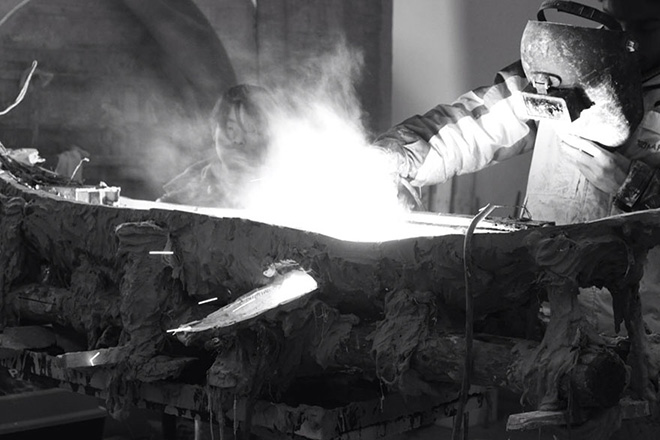
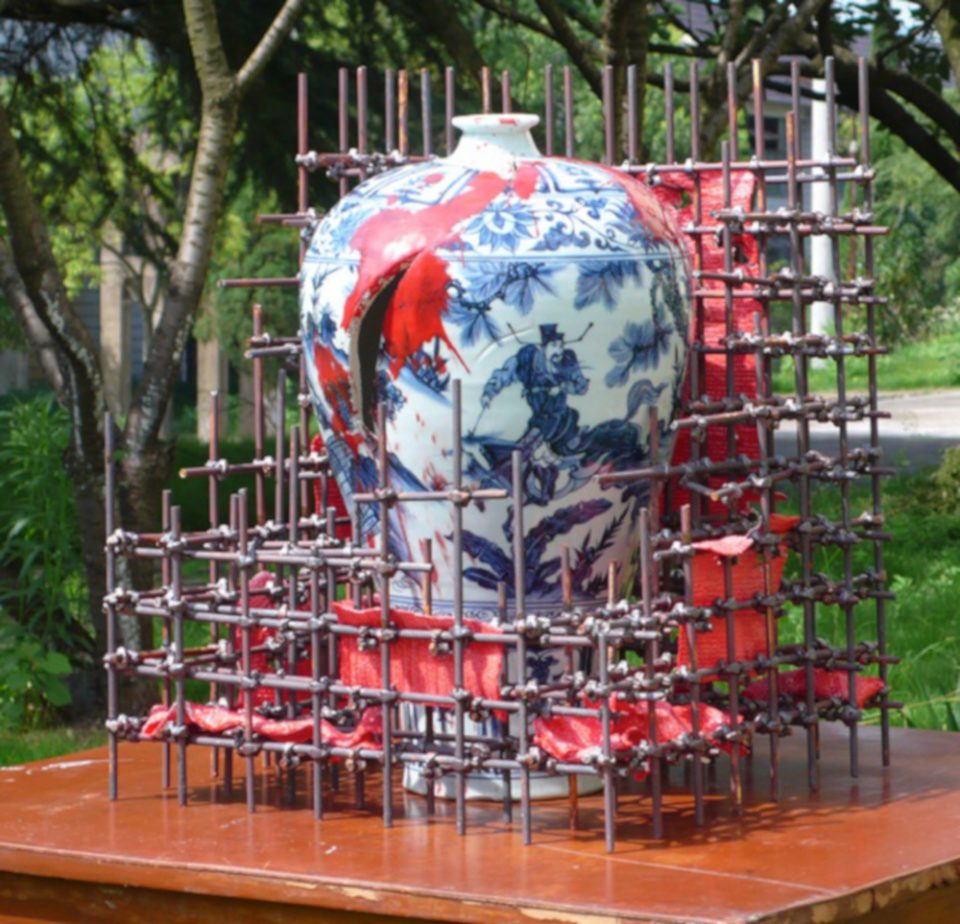
Zhou Jun also creates sculptural works using porcelain and other materials, always mantaining his distinctive style and his conceptual structure.
A “wounded” porcelain vase, surrounded by scaffoldings
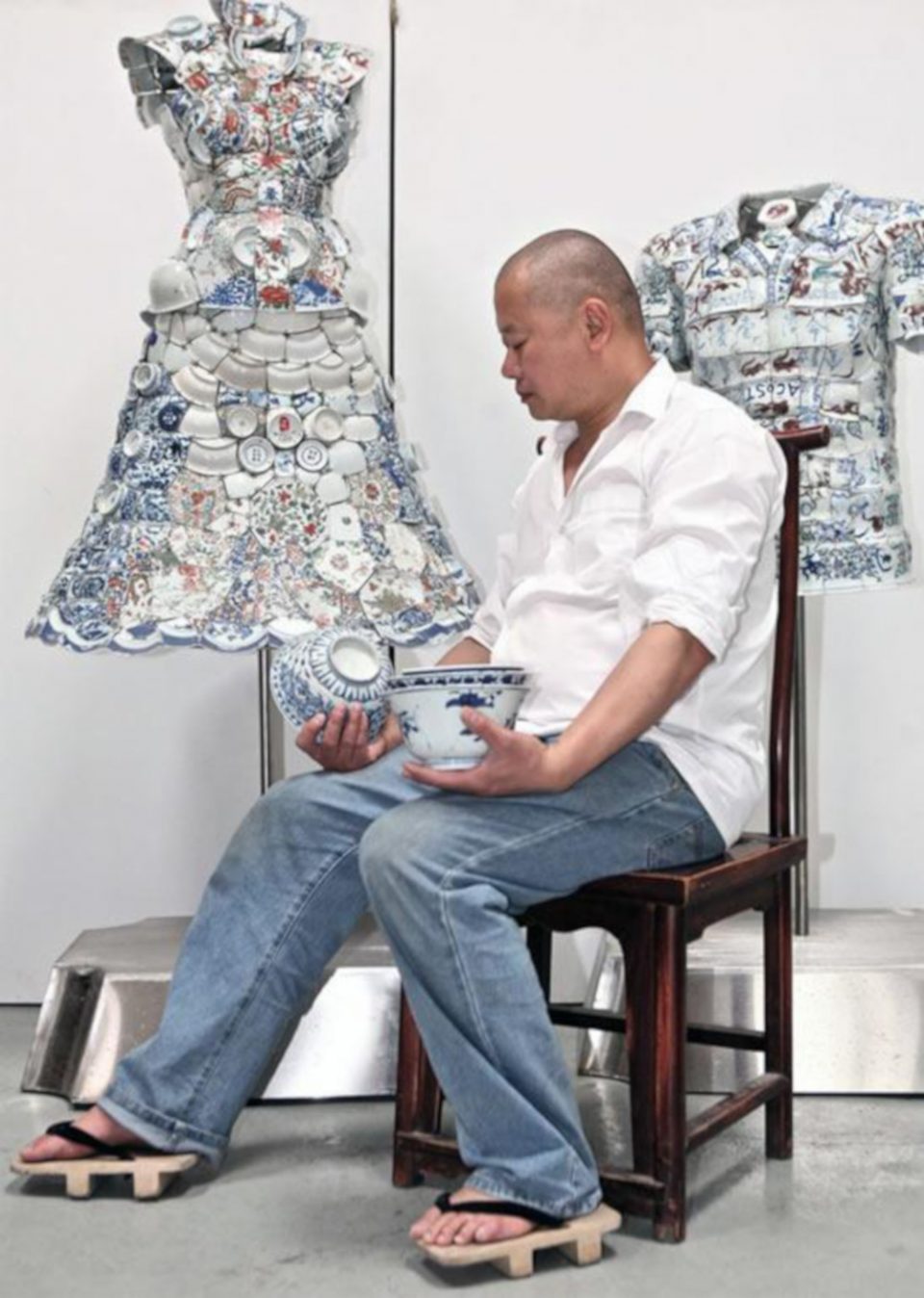
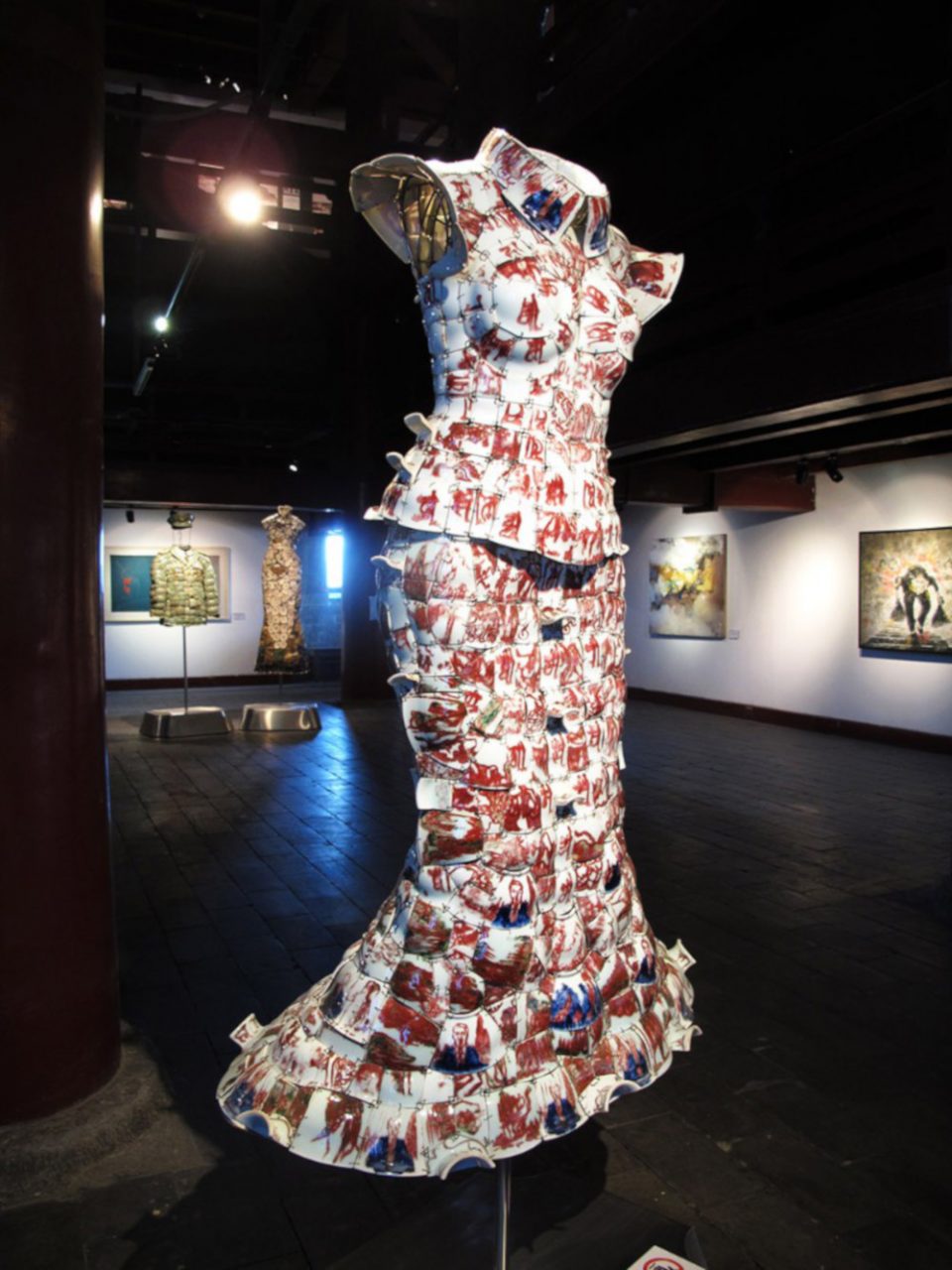
Li Xiaofeng is a Chinese sculptor and fashion designer, born in 1965 in Hubei. His unique work consists in wearable porcelain clothes.
He graduated at the Central Academy of Fine Arts (CAFA)’s Mural Department, and began his activity as a muralist. Then he began specializing in sculpture in order to explore new concepts and expressive forms to apply to the Chinese contemporary artistic scene.
Li Xiaofeng
His sculpture-clothing project is truly original, both for the selected material and the idea of wearable “pieces of armor” that recall Chinese traditional works.
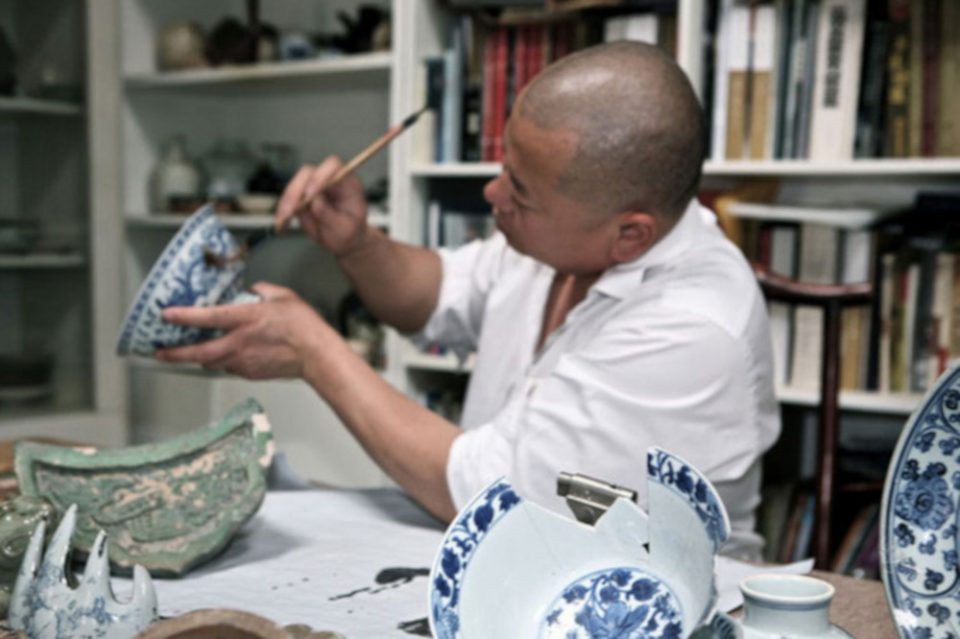
Li Xiaofeng’s creative process
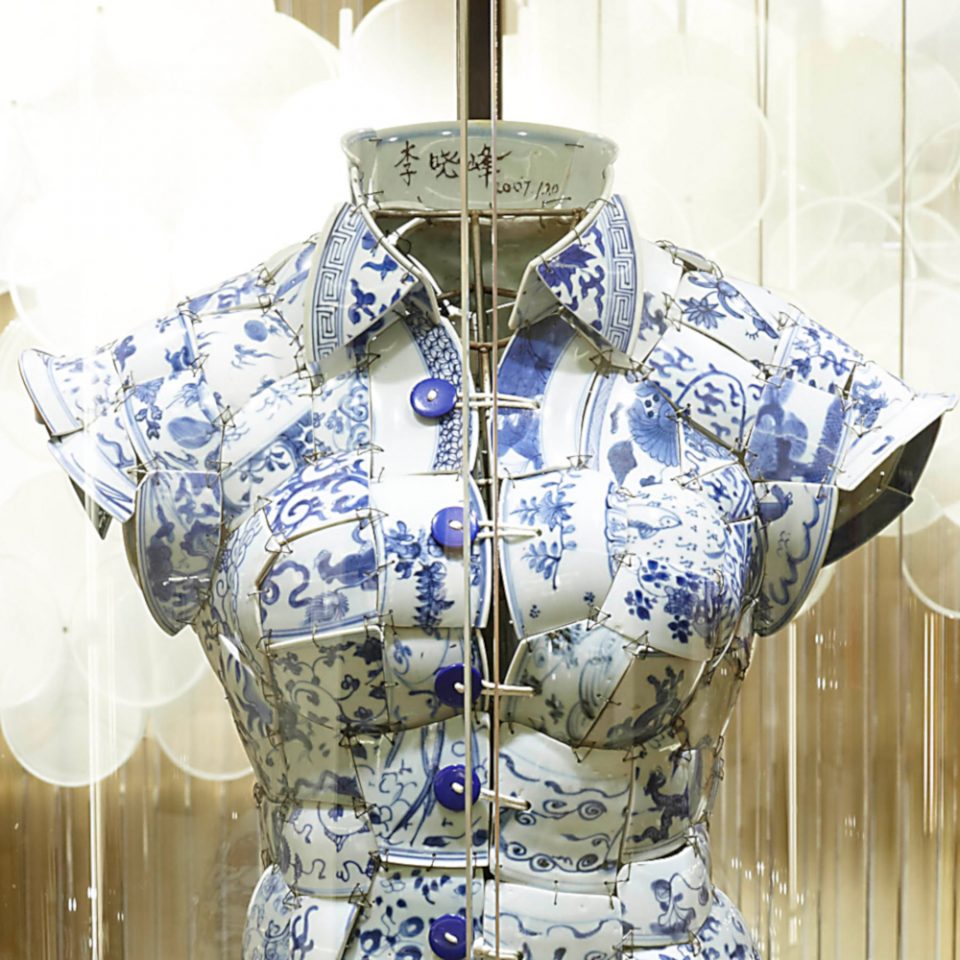
Li Xiaofeng researches and collects fragments of ancient Chinese porcelain recovered from archaeological excavations, dating back to the Yuan, Ming and Qing dynasties: he models and polishes them and punctures them, then sews them together on a leather undergarment through a silver thread, creating a “porcelain fabric”. His meticulous work is a bridge between past and present and a sharp reflection on the concept of culture.
These dresses are fully wearable
Li’s Rearranged landscapes
“Chinese culture” is the basic breakthrough point in Li’s works: he feels a sense of mission for its study and he channels it all in what he calls “Post Orientalism”. Landscape was always a major theme in his large number of paintings created in the past but, instead of simply copying like some other contemporary artists, he had always the urge to rearrange it, in a dynamic dialogue with history.
This extract explains the reason why Li Xiaofeng’s calls his porcelain clothes “rearranged landscapes”:
“Since the time when it was the Mongol Yuan capital Khanbalik to the present day, Beijing has initiated its largest excavation projects of all time and, like a blue snake that has been hibernating for a millennium, the city is now stirring and shedding its old skin. It greedily emerges through the towering buildings, twisting free from the historical sediment of its ancient civilization. Blue-and-white porcelain shards that represent this civilization are unearthed in large quantities at the same time. These blue shards, bathed in the sunny skies of socialism and caressed by the contemporary cool breezes blowing from the west throughout the capital, assume a bewildering array of postures as fashion items entering the new century!
Xi Liaofeng at work
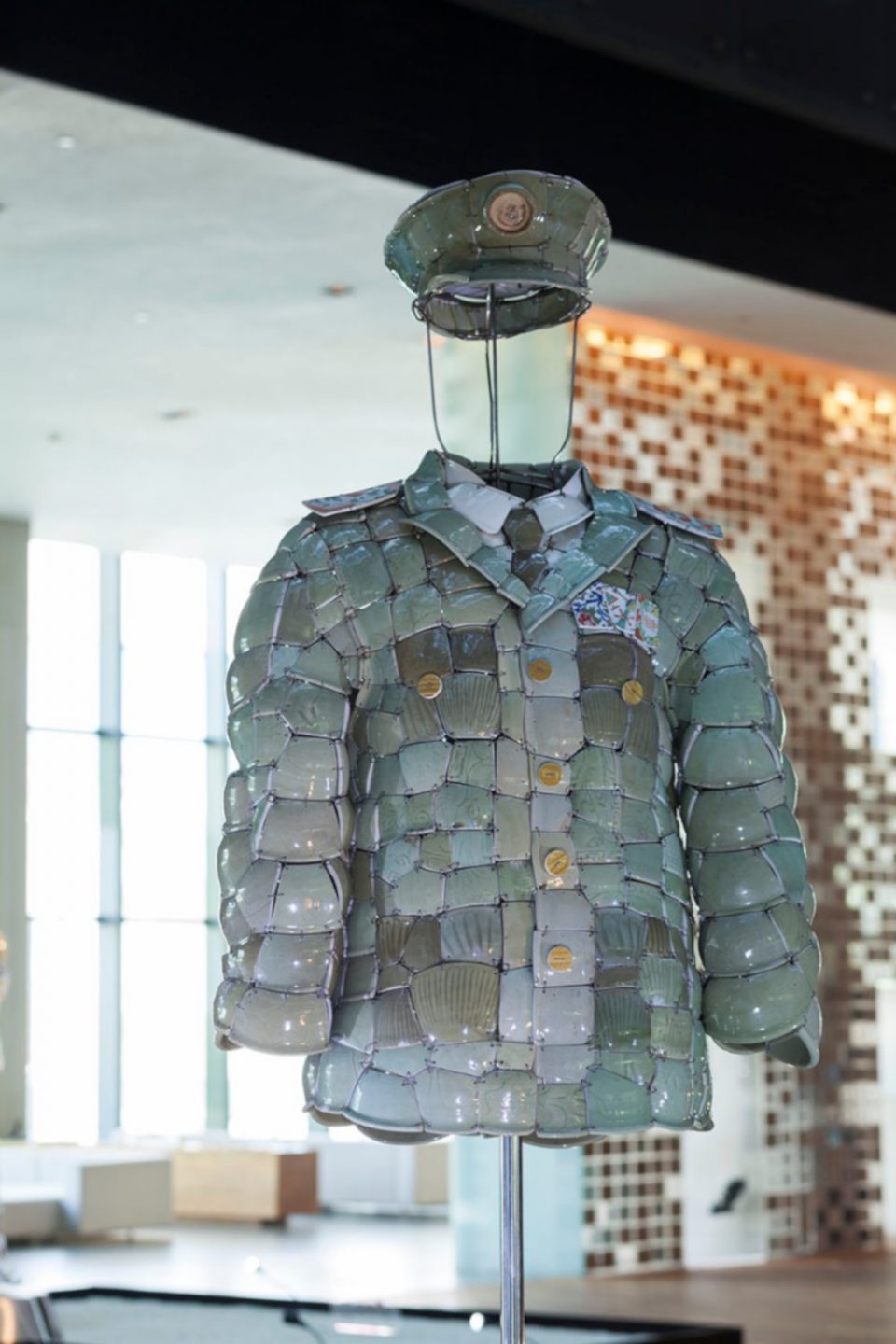
Among his works are women’s dresses, t-shirts and men’s jackets. His first piece in wearable porcelain fragments was “Beijing Memories”, a Mao suit.
MIlitary uniform
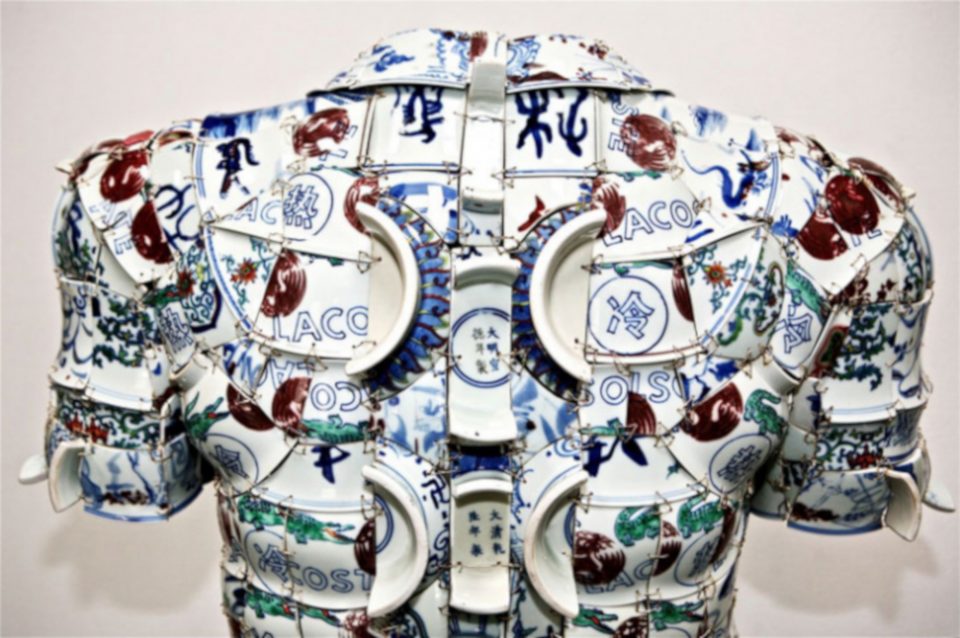
Lacoste’s porcelain shirt Li XiaoFeng
In 2010 the world-renowned brand Lacoste commissioned Li Xiaofeng a porcelain polo shirt for men and women for the Holiday Collector series. Unfortunately, a problem occurred: the PRC prohibits the export of ancient artifacts, including old porcelain shards.
Despite that, the artist did not give up and realized the porcelain himself, with the crocodile’s logo attached, and tore it apart only to recompose it into a Polo shirt, one of the most expensive and exclusive items ever sold by Lacoste.
Lacoste’s porcelain shirt-sculpture
The artist also released a limited edition polo shirt, choosing blue and white fragments depicting the lotus flower and drawings of newborns from the Kangxi period and the Qing dynasty. The lotus flower represents rebirth and purity while newborns represent fertility. In that period the mortality rate among children was high and this type of decoration was in great demand in the hope of being a blessing for children.
“Porcelain shards” polo shirt
Li Xiaofeng’s main expositions
2019
Dreaming of Crafts of the Future: Mongyudowon Unfolds, 11th Cheongju Craft Biennale 2019, Culture Factory C, Cheongju
2018
Cracked – Porcelain, Red Gate Gallery
2D vs 3D, Red Gate Gallery
798, We Are Back, Red Gate Gallery
2017
Red Gate on the Move, Red Gate Gallery
Contemporary Dialogues Between Fashion and Art, Zhu Zhong Art Museum
The Silk Road and Celestial Clothes, Taimiao Art Museum
Fusion – The International Exhibition of Contemporary Ceramic Art, Art Museum of Nanjing University of the Arts, Nanjing
2016
Red Gate: The Next 25 Years, Red Gate Gallery
2015
China: Through the Looking Glass,The Metropolitan Museum of Art, USA
2014
5th Tanwan Ceramics Biennale, Taipei County Yingge Ceramics Museum, Tanwan
ST. Start International exhibition of the Chinese Contemporary Ceramic Art, Today Art Museum, Beijing
2013
7th Gyeonggi International Ceramic Biennale 2013 Korea, Icheon CeraMIX Creative Center, Korea
2011
Ming to Nirvana, Red Gate Gallery
2010
Head On, Red Gate Gallery
Width Contemporary Art Exhibition, Museum of Contemporary Art, Beijing
ZHU YANING: My name is Zhu Yaning and I am 23 years old. I’m currently studying sculpture at the Academy of Fine Arts in Florence, and graduated on September of this year.
ART BAIGUAN: When did you start to learn and get in touch with art? Which was the original intention of learning art?
ZHU YANING: When I was young, I had a really interesting art class and slowly I became more and more interested. In high school, I studied at the CAFA , where I studied Western traditional art, with its oil paintings. At the same time, I was also learning the fundamental aspects of history of art.
ART BAIGUAN: What made you choose contemporary art instead of traditional art? In your opinion, traditional art has an impact of contemporary art?
ZHU YANING: I know how to understand contemporary art from the traditional art thanks to the opportunity I had of studying abroad. It’s common opinion thinking that I should be at home because of my young age. Teachers are basically relatively traditional so after going abroad. I began to get in touch with some new things, and learned the contemporary art of the 20th century and the development of Western avant-garde art.
Materials and themes are not really important aspects, artists’ point is completely beyond the art range I once understood. In the beginning, it was actually very overwhelming. Because there was always something I didn’t know about that I should have tried understanding harder. But than if you leave the past and choose new things.you will eventually find a path that suits you better. Although there are still many confusions, it is indeed more than just going abroad.
In my opinion Chinese students abroad feel themselves bound between their tradition and the culture they are in contact with. I later discovered that the concepts and knowledge of the traditional art that I have learned have already penetrated into my own thoughts.and will be reflected whenever I do what I do. But it is a kind of wealth for me. The most important thing is a relatively peaceful attitude to get in touch with new things. In this way, your artistic concept will become more diversified, which means more possibilities for creation.
Zhu Yaning
In fact, I don’t have the ability to define objectively and undergroundly contemporary art and traditional art, Some people may think that some avant-garde art of the last century can represent contemporary art. However, for some contemporary art practitioners they have already become a thing of the past. They are already tradition. In the second half of the last century, there was a conceptual artist who wrote a thesis on the topic of philosophy as art. This is enough to prove that the definition of art in the last century has changed dramatically.
Zhu Yaning’s ArtWork
ART BAIGUAN As far as I know, you used to study sculpture. Why did you choose to do installation art?
ZHU YANING: Because the content we are studying is within the scope of visual art. In which we distinguish the direction of sculpture, oil painting, printmaking and the like. But to put it bluntly, we have chosen a way, like a tool or a category. it’s not a transformation, because in the end all forms are meant to express what you want to express. Then the device is a language that I think is relatively comprehensive, it can create more possibilities. It gives you more possibilities and more ways to express what you want to behave,
Zhu Yaning’s Sculpture
ART BAIGUAN: What is your work expressing? How do you think about material choices?
ZHU YANING I just want to give the audience a feeling A comparison and a discussion about time. Time, such a serious thing, is gentle.I tried to make people feeling the passing of time the more delicate i could. This is what I want to do, but whether the expression is sufficient or not is still open to question. In fact, because I am also a young and new artist, I am not as comprehensive as the mature artists. I think materials serve to the expression, the choice is because it is suitable, there is no deep reason. The final product can only be said to be within the scope of my ability to express the content in the best way possible.
ART BAIGUAN: Which is the work you are more satisfied with?
ZHU YANING: My favorite work is the third one, made with an italian girl, Fiamma. This work is my first contact with the image, and through this work I understood that cooperation is a very important thing. Before this experience I used to think that artists were independent individuals. or that everyone has their own independent ideas,so that it is difficult to integrate with other artists. But unexpectly, in this work, we had a very good cooperation, so I am really satisfied.
ART BAIGUAN: What do you think about installation art, new media art and the future development trend?
ZHU YANING: Installations and new media will become mainstream, and any of these devices that serve the things of life will ultimately serve art. Since the art has broken every boundaries, we have been free to use any form and medium. I think AR technology and 3D modeling have been used a lot until now but both will be used more in the future.
This is very good, we don’t have to stay in the past, we need just to accept it, because it’s not that you use new things to abandon some of the cultural heritage of the past, so I think it is creating more possibilities, and at the same time the viewer also has a better experience, and it is still a positive thing.
Zhu Yaning’s ArtWork
ART BAIGUAN: Have you ever encountered difficulties in your creation?
ZHU YANING: The most difficult problems are still some real problems. For example, what kind of materials, venues, and equipment are allowed to be made and used but most important: the maturity of creation.
The difficulty I have encountered now is that my creation is not mature enough and my position is not strong enough.
Zhu Yaning’s ArtWork
ART BAIGUAN: Can you express your own creed or thought? Do you have somthing to suggest to younger generation who are still groping on the art road?
ZHU YANING: The most fundamental suggestion is simple: it is sincerity. There are many problems and as long as we insist on sincerity, we will be able to solve them. Sometimes we fall into self-doubt, we don’t trust anyone or we do not have confidence in what we do. But we can understandd whether we are doing this in good faith, as long as you are doing is in good faith all the things you do have value.
I got two advices for the young generation: the first is to look at the individual’s orientation, and the second is to maintain interest. If you are not interested in something you do not have to learn it. It doesn’t make sense and wastes time. Because many of the students I met in the art think, “Ah, this subject is just like this, it doesn’t mean anything,” because they didn’t feel the meaning of it sincerely.
Zhu Yaning’s ArtWork
When I first saw her work, it gave me a feeling of calmness and quietness. I was full of thinking about time and life. I thought she should be a quiet and mature girl. I can’t help but feeling that she is really a cute little girl. She has the characteristics of not following the trend and the ones of being alone and not alone at the same time.
Isn’t this the quality and attitude that the new young artists?
Xu Yu, whose real name is Xu Yu. She said that she started this name because it was a homophonic and poetic picture of her original name, so she uses it now.
More materials to represent the picture to Xu Yu
According to her own introduction, there are many mediums for her paintings, watercolors, colored lead, oil pastels, carbon bars, board paintings, etc. Generally, a material will be changed after a long time, because she always tries to use more More materials to represent the picture.
“Hometown”
At first, I saw Xu Yu write this paragraph on Weibo’s Weibo: “My childhood was in Hangzhou, a small town in a small town in Jiaxing. The farthest place I visited was Hangzhou, when I looked at the province Travelers are envious of the glare of their eyes. When I was in high school, I saw someone going abroad to study abroad. I thought how good it would be if I were to go abroad. I have been looking up at the authors of the books and books since I bought Huaxin, thinking about if one day It ’s good to know them, and I ’d like to be able to freelance one day.
Things come to mind here, the world becomes wonderful. Later, when I went to college, I started to skip classes and save money to travel, and later I fought with my parents After studying abroad, I started to run around the world, and I also became an author of the heart and a freelancer. What ’s even more amazing is that those who I have followed since high school are much better now. Become a friend and a fan friend (speaking of a flower in my heart here).
as long as I do it, I can do it
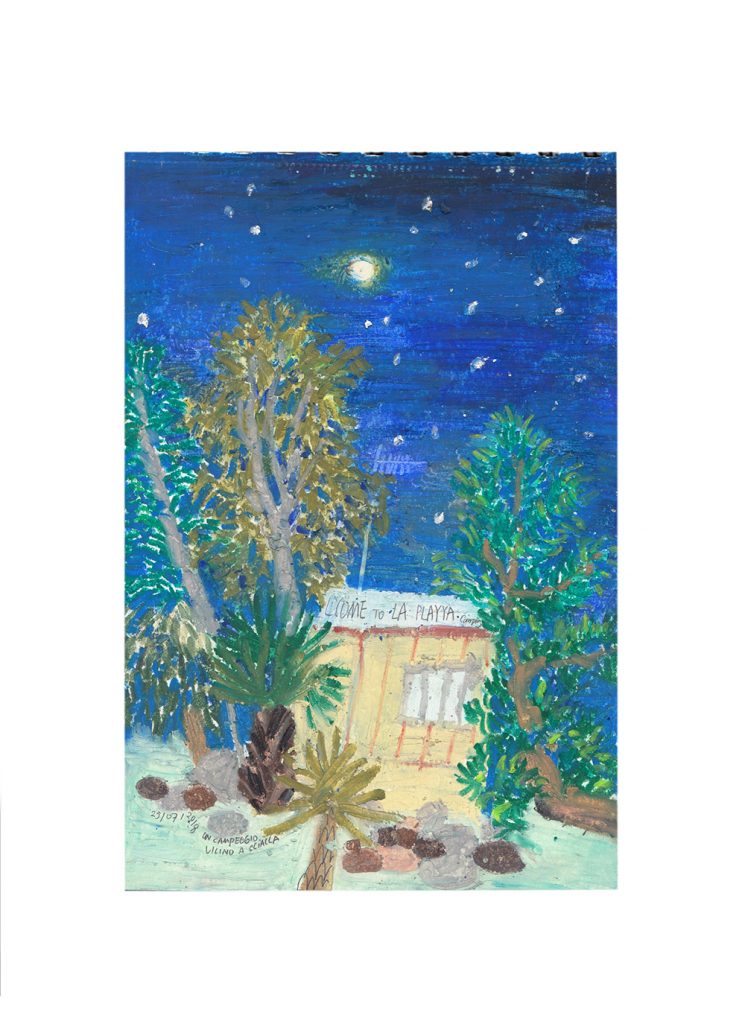
Once I only dare to think about things, I naturally reflected them into reality a little bit. Not long ago, I had a wish to go to the beach to see the stars Look at the moon. At this moment on the sea breeze terrace, the stars are all over the sky. It seems that as long as I can think of anything, as long as I do it, I can do it. “
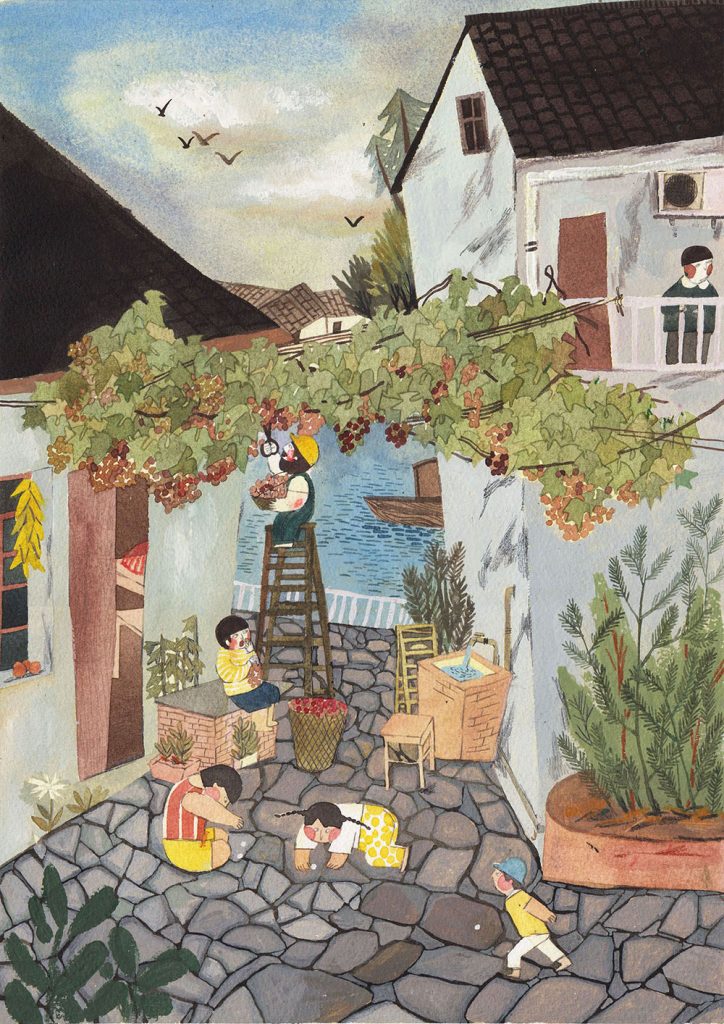
“The watermelon field in summer is a beautiful memory of my childhood”
For Xu Yu, painting is not about how skilled you are, but about showing what you want to say. Techniques are physical things, and what you really have in mind does not depend on your skills. Anyone can draw.
“One year I lived in Tuscany, and the small country-style lifestyle allowed me to enjoy the complete life of an Italian.”
Like Xu Yu, she is a cute little girl in the eyes of friends. Her favorite things may be painting and traveling, and occasionally love cooking.
“XuYu is really a childlike girl.”
In the memory of her friend, she was a girl who ran to Sicily with her two schoolbags on her own. The schoolbag was full of equipment needed for painting. “You will be very happy to follow her, she will tell you the story she met on the trip.” My friend said “Because Xu Yu particularly likes to chat with others, I remember that when the Roman tourist encountered her, she came to know a Japanese and Korean Traveling friends have also listened to their stories. It feels amazing! Xu Yu is really interesting and interesting (Courage of the Northeast dialect). ”
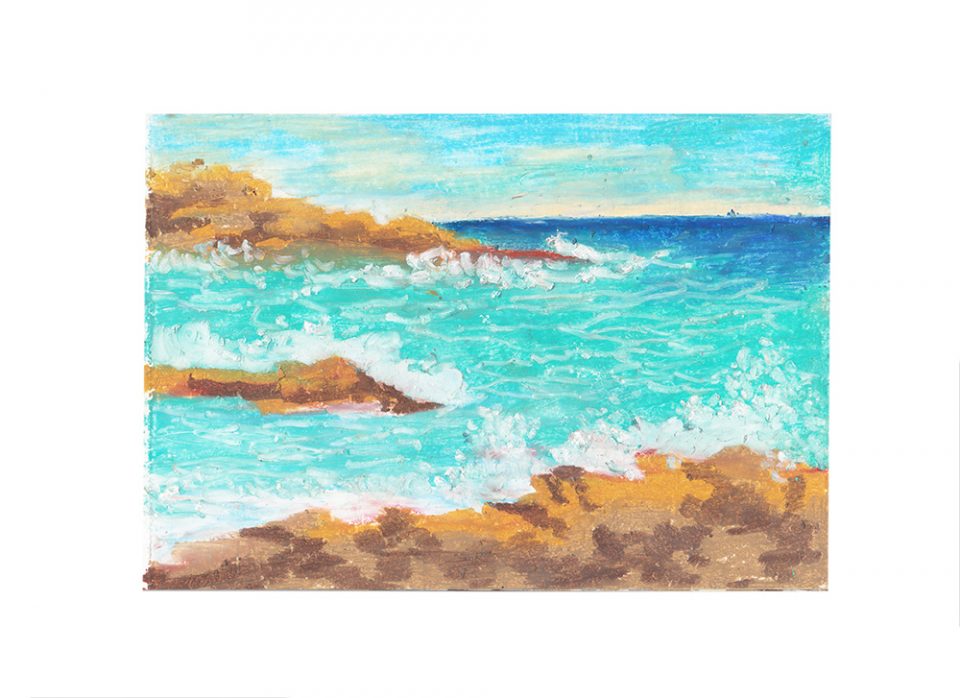
“The Beautiful Legend of Sicily”
Xu Yu said: “Every aspect of life can give me a lot of inspiration. Traveling, painting, watching movies, and living in different places. I want to paint too many things every day. I just hate that time is not enough.”
“The Legend of Sicily 2”
She also said: “The perception of live painting is completely different from that of taking pictures.”
“Southern Diary”
“Southern Diary” is her graduation project and the first personal picture book in her life. This book can be regarded as an account of her in the past 20 years.
The inner page of the picture book “Distance”
Xu Yu : Let’s go travel!
In fact, Xu Yu’s painting is the story of her life experience, simple and beautiful. We always have all kinds of messy reasons to disturb our travels, but with Xu Yu’s paintings, we can see the beauty and follow her story line.
At the same time, you can also look forward to the story “Italian Alone” she has assembled for three years.
Will you finally have the urge to say?
“Let’s go travel!”
“Southern Diary”
“Southern Diary”
“Southern Diary”
xu yu resume
Xu Yu, graduated from the School of Art and Design, Zhejiang University of Technology,
Now studying at the Bologna Academy of Fine Arts as a graduate student in comics, and is also a freelance creator,
Now cooperating with magazines such as “Painted Heart”, “Picture Box”, “Middle School Place”, “Children’s Literature”, “National Geographic”, “Traveller” and so on Co-published books “Adventures of Rabichi” and “Distance”. Published works:
In 2017, cooperated with Tomorrow Publishing House to publish “Distance”
In 2017, he co-published “The Adventures of Rabbi” with Red Horse Book
Published a personal picture book “Southern Diary” in 2018 (intimate traveler)
In 2018, cooperated with Le Fun to publish the flip book “Unveiling the 24 Solar Terms”
Liu Jiahua was born in Sichuan in 1979, and graduated at the Sichuan Academy of Fine Arts. He came to Beijing in 2009 to work as an independent artist. Thanks to his work, he’s been invited to participate in important exhibitions is his country but also abroad and has won different awards. Recently, Liu Jiahua has attracted a lot of attention among the new generation of artists with his unique form of picture expression.
As an artist who enters the city from the countryside, the order, rules and even civilization of the city undoubtedly subvert the existing cognition of Liu Jiahua. In the visual, psychological and lifestyle aspects, and so, he truly feels the impact of the so-called urbanization process.
Therefore, in the works of his artistic creation, “Returning to Peach Blossoms”, the architectural symbols representing the urban civilization and the traffic symbols and the nature with its mountains and rivers, both have a yearning for urban civilization and a decadent agriculture. “The Return to Peach Blossoms” has a metaphor of “spiritual utopia” from the subject.
“Building” is more than a “City”. “City” is like a book, a testimony to the modern historical process. Gorgeous skin of human civilization, and a legend and dream in the memory of the nation. The confession of “City” reflects the distress of people, although one is material and the other is flesh. To describe “city” between affirmation and loss is to describe “people” themselves.” ——Liu Jiahua
There’s a proverb talking about winds: it is says that the distance between the two places is one hundred miles. For example, the “wind” will be different, and the “vulgar” will change with a thousand miles.
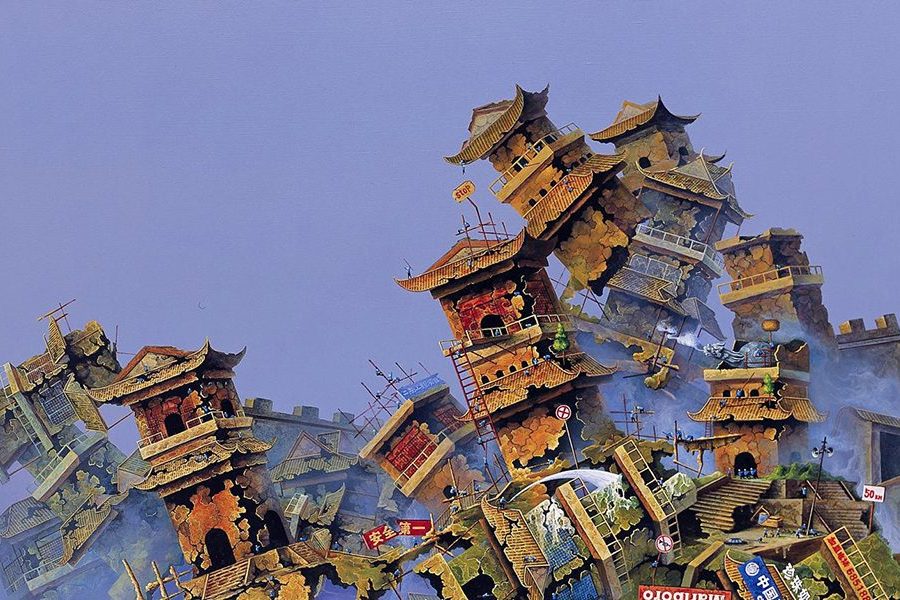
The artist Liu Jiahua’s work “Red City” was born like a juxtapose of traditional symbols and contemporary phenomena. Causing visual confusion. This surrealistic theme and the sense of suspension of dreamy colors create a lost world that is also true and illusory.
The work “Red City” has a long history and a splendid Chinese culture, and it has been draped in the era of the colorful clouds. The collection of ancient and modern Chinese and foreign architectural creations is infiltrated into the works. Consequently allowing it to be distributed spirituality and vitality.
“Why did you choose ancient architecture?”
At his question Liu Jiahua said: “The pavilion” has a double dimension of meaning, which can represent the ancient architecture that has disappeared, or it can be transformed into a symbol that of traditional and cultural heritage.”
“Next, the red rope began to appear in his picture. Why did you draw this rope?”
Liu Jiahua explained: “It is actually a disbanded Chinese knot. It no longer has the original meaning of harmony, happiness, etc. It is used to bind, Wrapping and hanging Chinese ancient buildings.
Therefore I hoped to use two traditional things to create a current visual experience and social problems. A little bit of “cooking beans and burning soybean meal”.
Most of the works created by artist Liu Jiahua are the series of “Red City Records”. So some critics have divided his creation into four periods: the “New City Period”. Which is the period in which Liu Jiahua began to re-examine, recognize,establish and construct himself. At this time, Liu Jiahua was in self-deconstruction and negation of self. Looking for the development period of the true self; the third period was the “Behind the City”. And the ancient architecture depicted in his paintings has begun to transform into the expression of self-centered orientation. The last period is the “unmanned period” is a period of psychological and ideological maturity created by Liu Jiahua. That is to say that it seems to have entered the realm of “no self”.