Categories
在博物馆 人物 传统 典藏故事 古代 艺术家

Palace Museum | Nymph of the Luo River

The painting Nymph of the Luo River is a work of Gu Kaizhi, a famous painter of the Eastern Jin Dynasty. Gu Kaizhi painted it after reading Cao Zhi’s poetry Nymph of the Luo River. This painting is one of the treasures of classical Chinese painting in terms of its content, artistic structure, character modelling and other methods of expression. The painting now in the National Palace Museum is a copy of Gu Kaizhi’s Nymph of the Luo River by a Song dynasty artist.
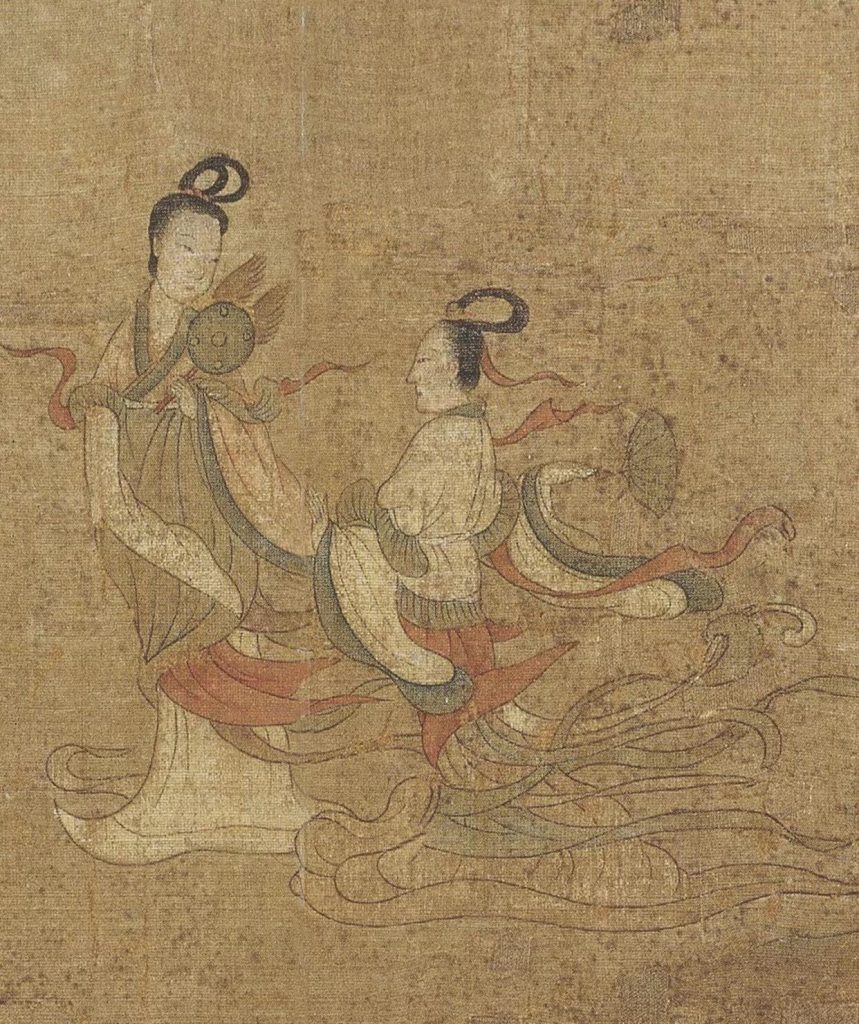
a part of Nymph of the Luo River
Palace museum
Gu Kaizhi

Introduction to the painting Nymph of the Luo River

Creative Background

Legend has it that Cao Zhi is the author of the poetry Nymph of the Luo River. He fell in love with Zhen Yi’s daughter when he was young. But Zhen Yi’s daughter was later forced to marry Cao Zhi’s brother. She died after giving birth to a son. Cao Zhi wrote poetry Nymph of the Luo River as a memorial after her death. Gu Kaizhi was so moved by this story, he painted a picture of Nymph of the Luo River.
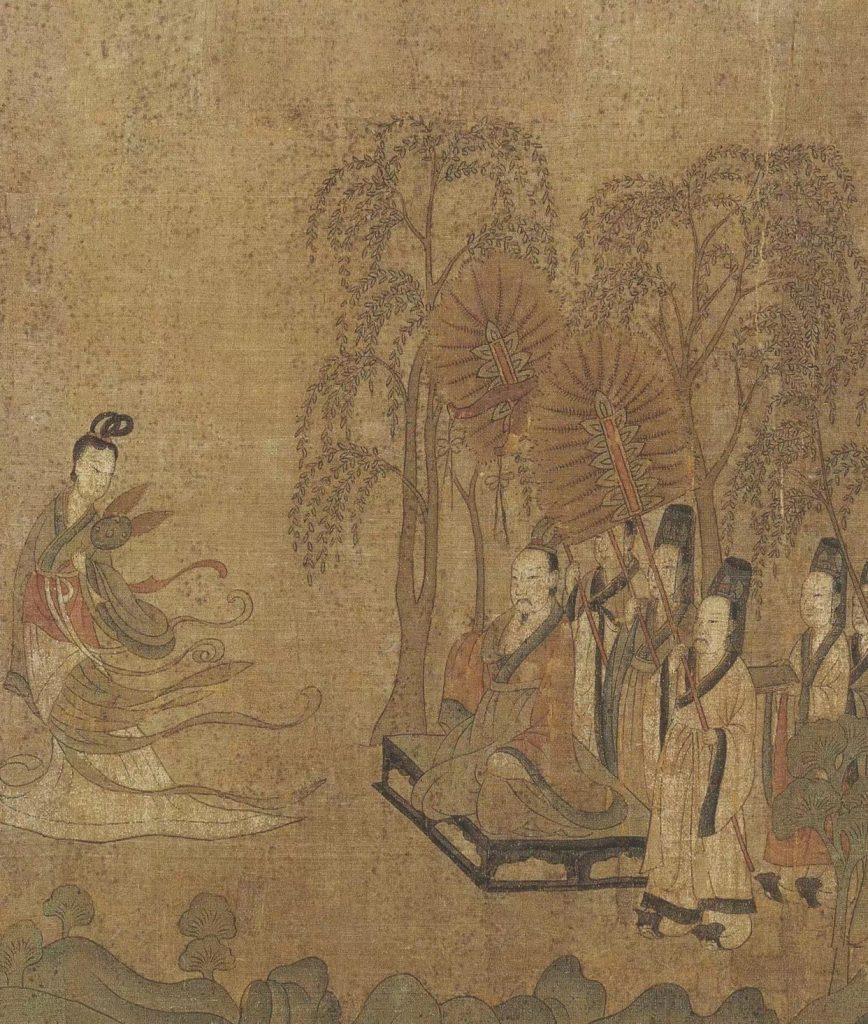
a part of Nymph of the Luo River
Palace museum
Gu Kaizhi

Figures

The main characters of this painting are Cao Zhi and Nymph. Cao Zhi, standing on the shore, has a stagnant expression, and his eyes are gazing at Nymph who stands on the water, very fascinated. Nymph, with her hair in a high bun and her clothes blown up by the wind, has a feeling of floating from the heavenly realm, and she wants to go but still stays, with a look of admiration between her eyes. Throughout the scroll, Gu Kaizhi repeatedly arranges for Cao Zhi to meet with Nymph, but even though she falls in love with Cao Zhi, Nymph eventually has to leave, leaving Cao Zhi standing on the shore, pining for her all day long, and ultimately departing in despair.
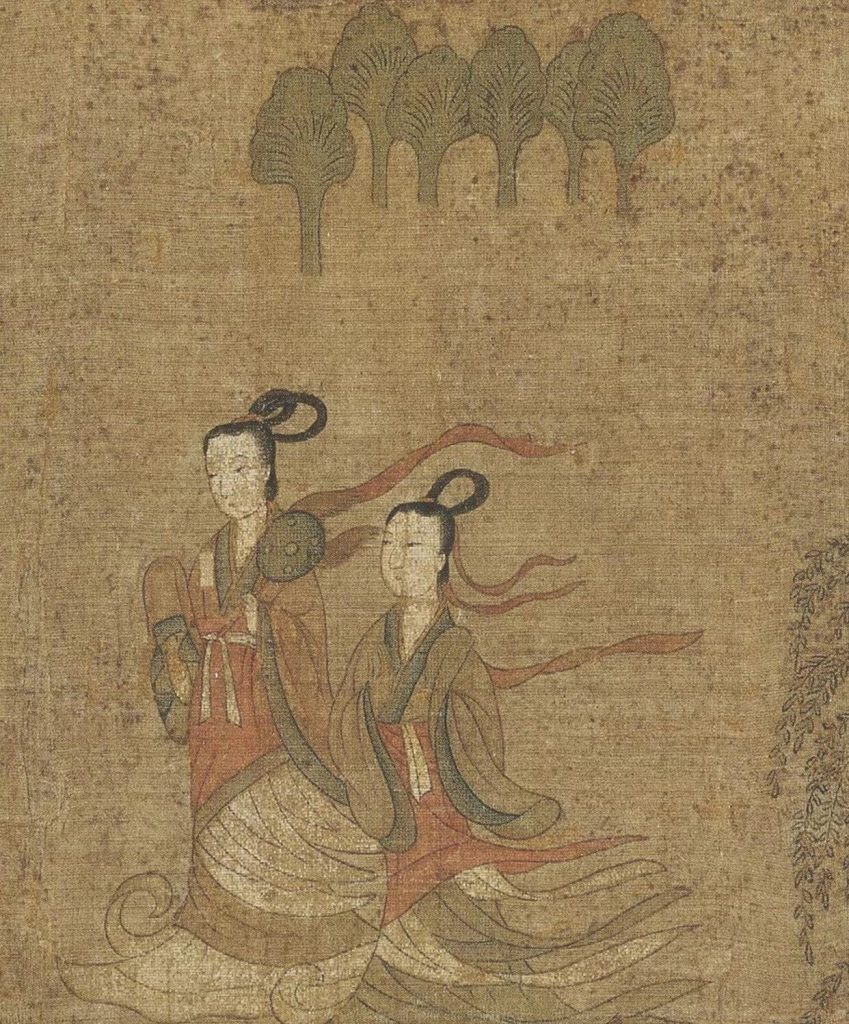
a part of Nymph of the Luo River
Palace museum
Gu Kaizhi

When Gu Kaizhi was portraying the characters, he deliberately handled Cao Zhi’s attendants in a dull manner, thus showing Cao Zhi’s excitement. What the audience sees at this point is Cao Zhi’s concentration and excitement, which is difficult to express in words. This is in line with Gu Kaizhi’s artistic philosophy. He believed that one should not only portray the character’s appearance, but also the character’s inner personality. This viewpoint had a great influence on the development of Chinese painting in the later period. It laid the foundation for the pursuit of ‘ depicting the spirit ‘ in Chinese painting.
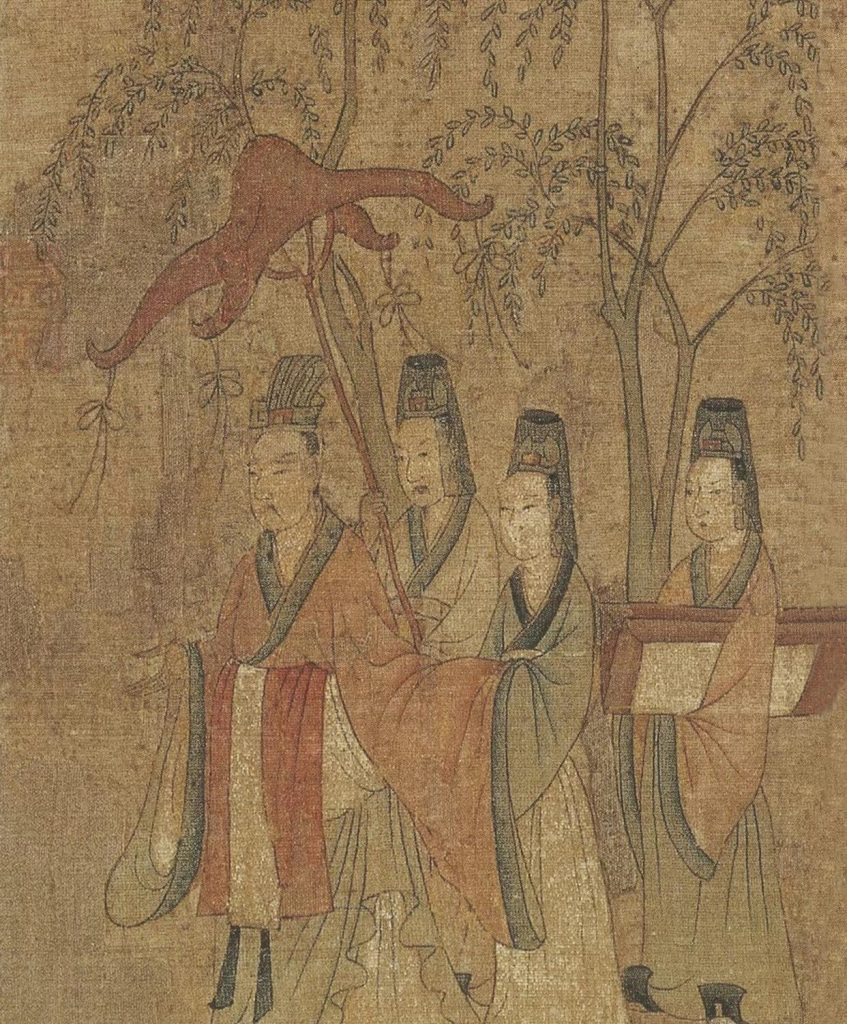
a part of Nymph of the Luo River
Palace museum
Gu Kaizhi

Landscapes

In this painting the relationship between the figures and the background is out of kilter, and the close-ups are not distinguished from the distant landscapes; the figures are as tall as the mountains. This was also the situation in early Chinese paintings and did not improve until the Sui and Tang dynasties.
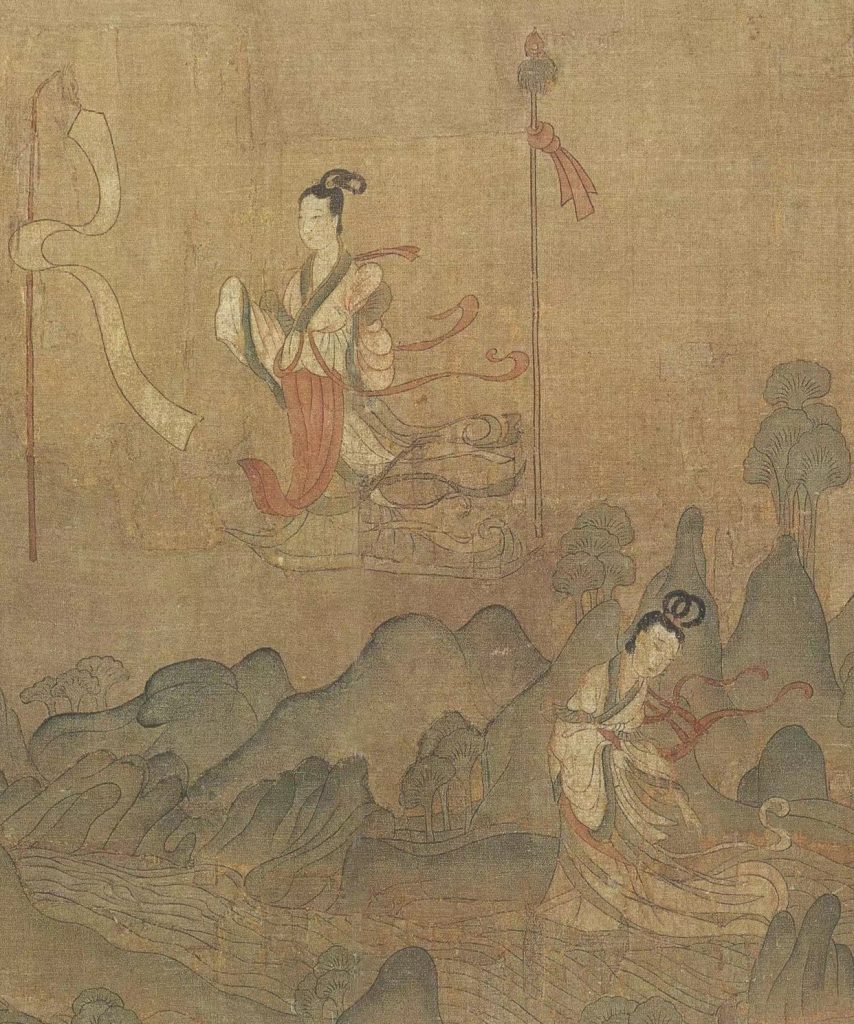
a part of Nymph of the Luo River
Palace museum
Gu Kaizhi

Animals

Gu Kaizhi created many rare birds and exotic animals based on the depiction of poetry Nymph of the Luo River. In fact, these animals didn’t exist in life . They were entirely imagined by Gu Kaizhi. For example, the dragons he painted had antlers, and the fish he painted had the head of a leopard. They run on the river without splashing, as if they were flying through the air.
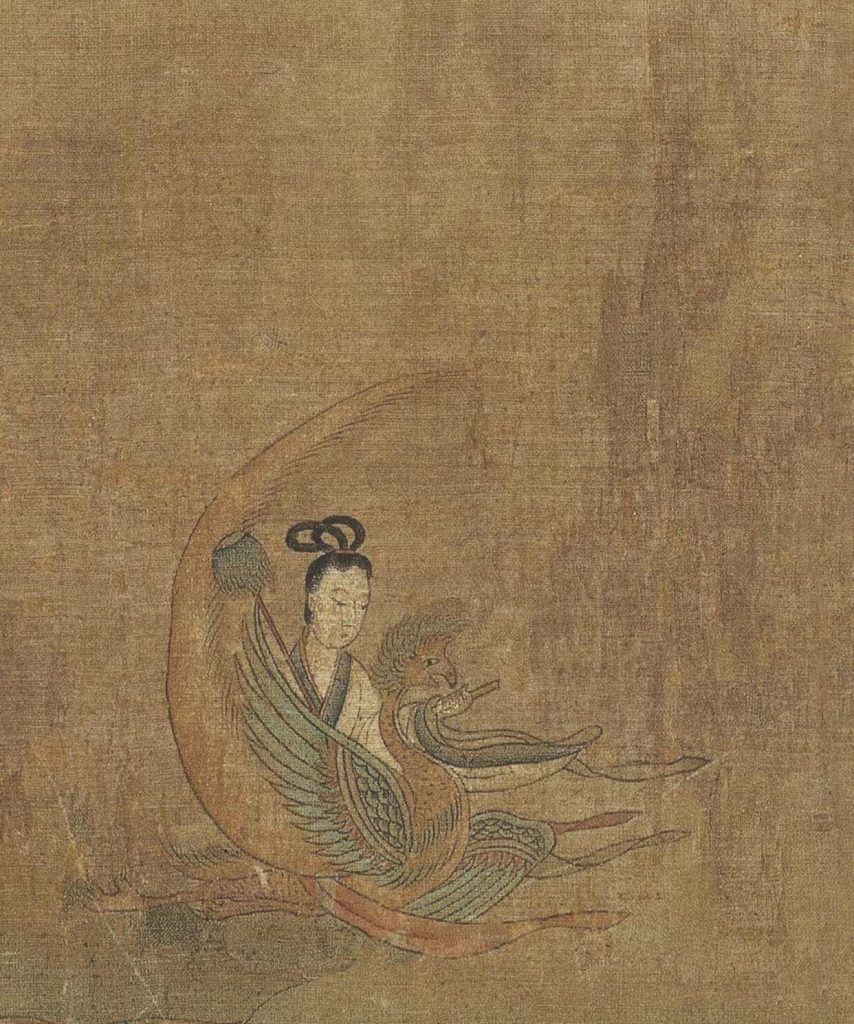
a part of Nymph of the Luo River
Palace museum
Gu Kaizhi

The significance of the painting Nymph of the Luo River

The painting not only represents the highest level of painting in the Eastern Jin Dynasty, but also Gu Kaizhi’s art theories influenced the development of Chinese painting in the later period, which made Chinese painting develop in the direction of paying more attention to the ” spirit “.
Source

Nymph of the Luo River

Palace Museum

Gu Kaizhi

Categories
Museums 在博物馆 人物 传统 典藏故事 古代

Wuhou shrine|A wise ruler and a good minister

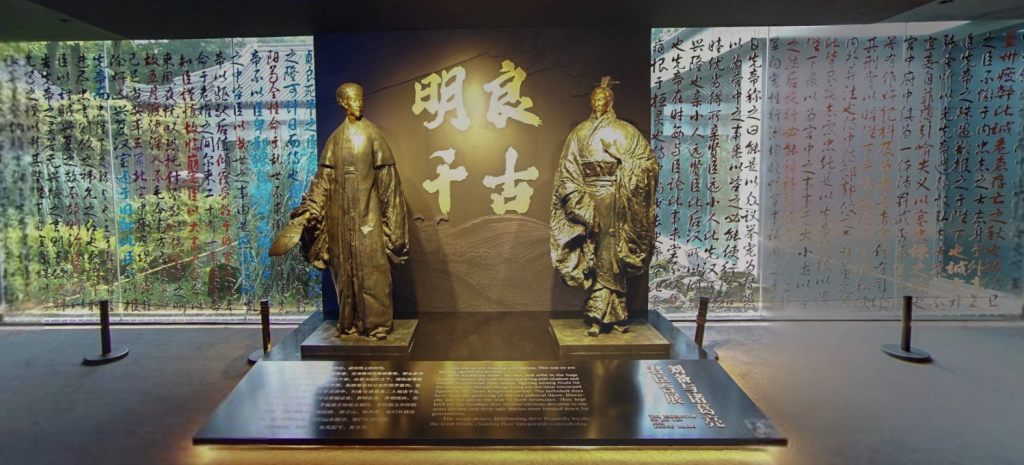
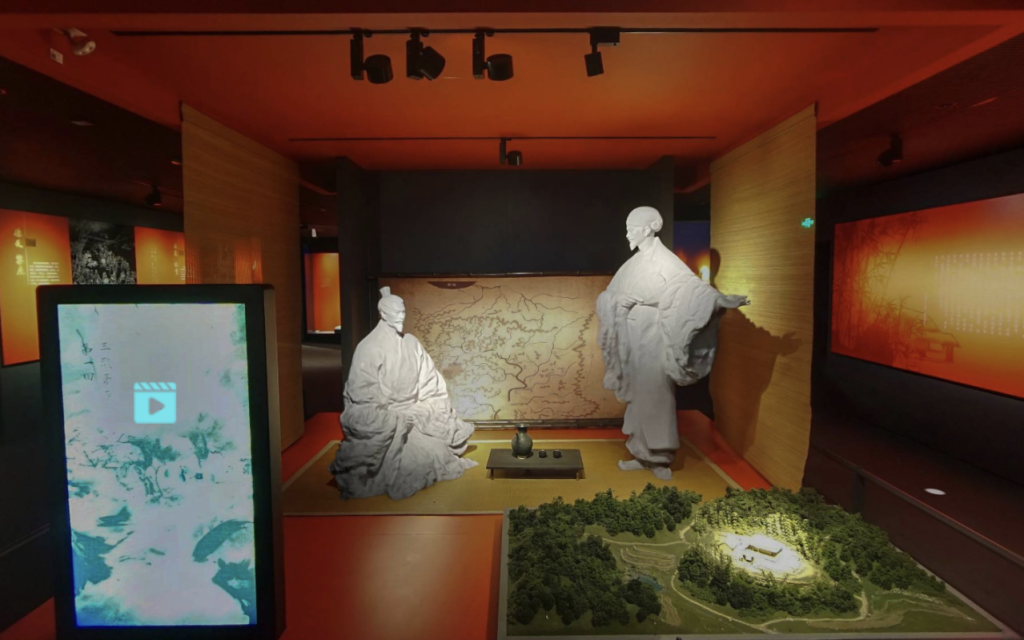
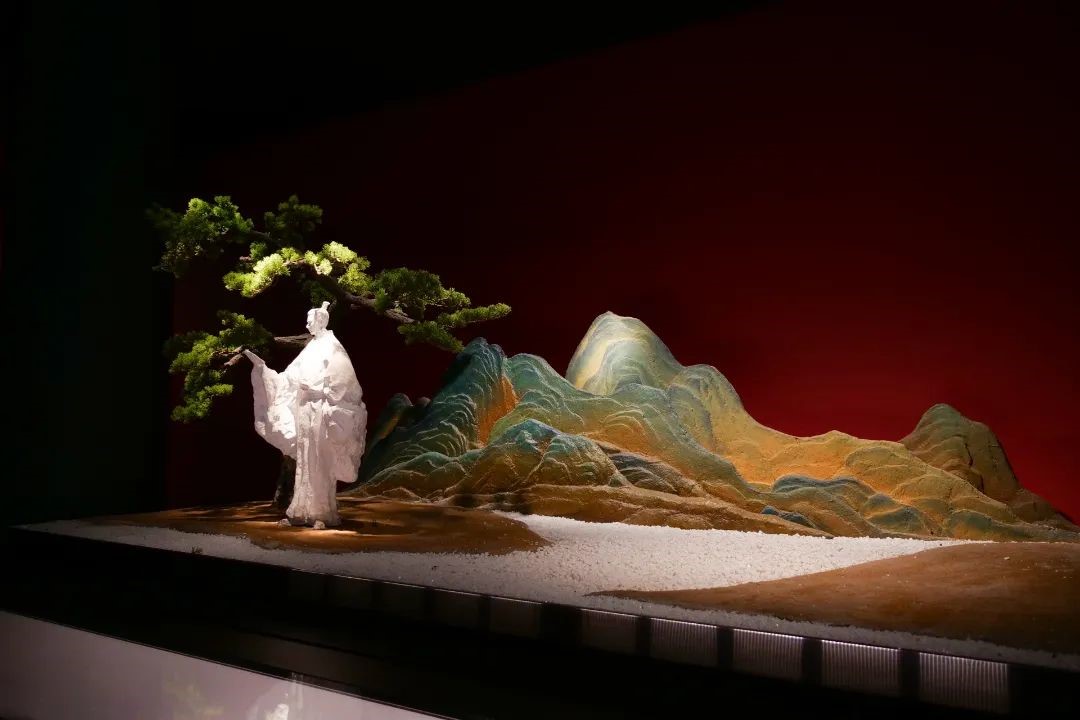
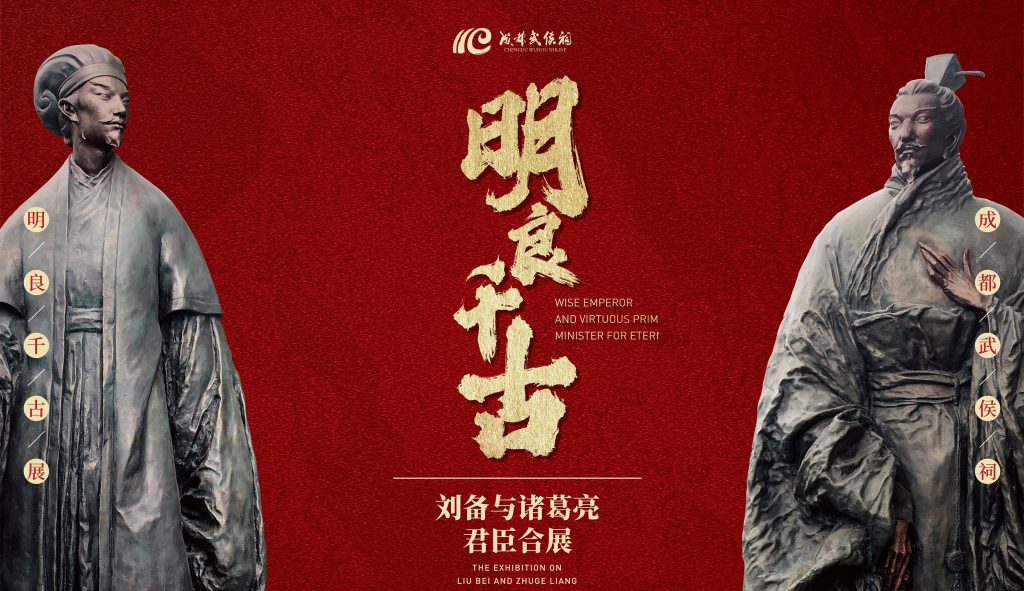
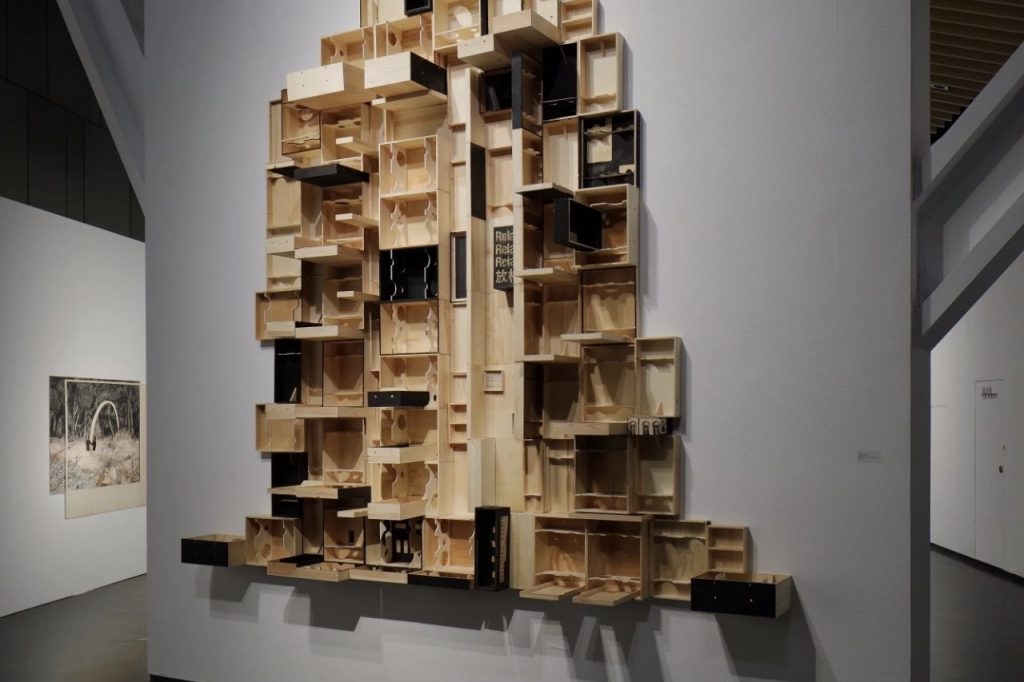
Liu Bei and Zhuge Liang Joint Exhibition is on display at the Wuhou Shrine in Chengdu. This exhibition is based on the historical facts of the Three Kingdoms , and recreates the legend of 1800 years ago.
Wuhou shrine
Liu Bei
Zhuge Liang

Preface

In China, when we were young, we would know that there is a famous book called ‘Romance of the Three Kingdoms’. This book mainly depicts wars and tells the history of nearly a hundred years. It is from the end of the Eastern Han Dynasty to the early years of the Western Jin Dynasty. When we grow up and read ‘Romance of the Three Kingdoms’,we can better appreciate that in that period of the flood waves in the river of history, Zhuge Liang and Liu Bei two people in times of crisis trust each other, in the danger of obstacles in the liver and gall. They wielded their swords together to point to the enemies. They also trekked through the mountains together, which is how impassioned, and how heroic. This exhibition tells us the story of the two heroes’ acquaintance and trust.

Wuhou shrine
Liu Bei
Zhuge Liang

Contents of the Liu Bei and Zhuge Liang

This exhibition is not only offline but also online 3D exhibition. In addition, it places the excavated artefacts in the corresponding period. So it not only tells a story, but is also supported by historical facts.

This exhibition is divided into three main sections: ‘Floating and Sinking in a Time of Troubles’, ‘The Gentlemen and Ministers Working Together’, and ‘Restoring the Han Dynasty’.These three sections contain about 10 stories about the life of Liu Bei and Zhuge Liang . Among them, the three Visits to a thatched cottage and entrustment a child with an orphan in city Baidi are not only familiar stories, but also important elements of this exhibition.

1. Liu Bei’s three visits to a thatched cottage

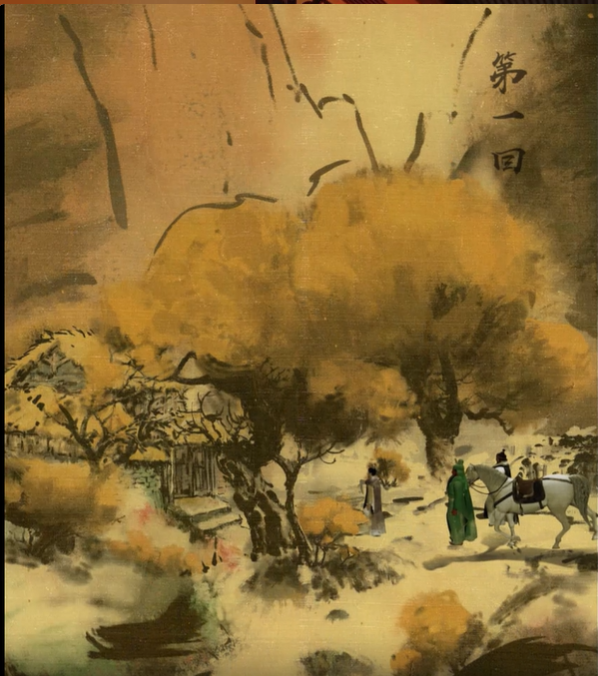
Although Zhuge Liang was talented, he lived in a thatched cottage in Longzhong. Liu Bei heard about his talent, and in order to restore the Han Dynasty and take over the world, he made a special trip to visit. It so happened that Zhuge Liang went out that day, Liu Bei had to turn back in disappointment.

Wuhou shrine
Liu Bei
Zhuge Liang

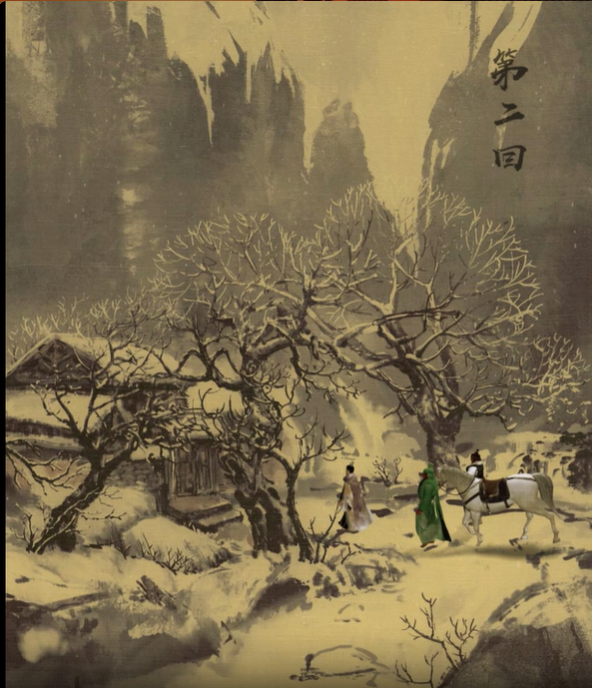
Soon, Liu Bei and Guan Yu, Zhang Fei and braved the blizzard for a second time to invite. Unexpectedly, Zhuge Liang went out again. Zhang Fei was not willing to come again, see Zhuge Liang is not at home, urge to go back. Liu Bei could only leave a letter to express his admiration for Zhuge Liang and his intention to invite him to come out to help him save the country from a dangerous situation.

Wuhou shrine
Liu Bei
Zhuge Liang

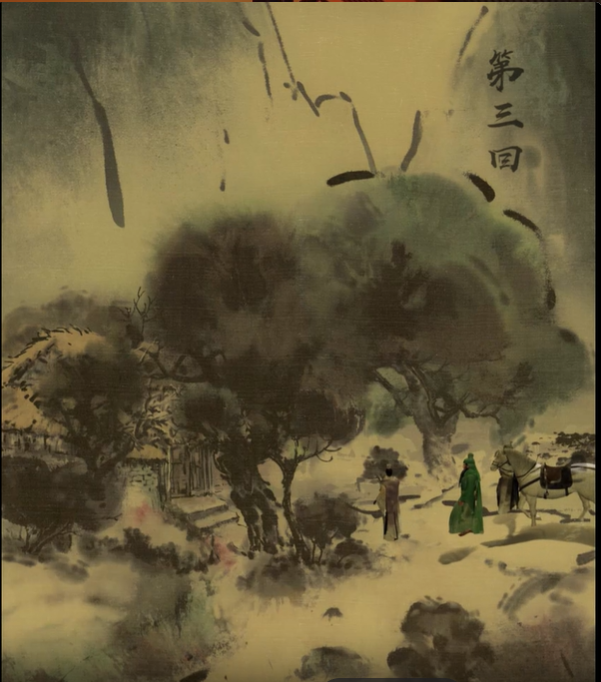
After some time, Liu Bei had eaten vegetarian for three days and was ready to invite Zhuge Liang again. Zhang Fei, however, advocated that he should be the only one to do so, and if he did not come, he should be tied up with a rope. Liu Bei chastised Zhang Fei and visited Zhuge Liang for the third time with both of them. When they arrived, Zhuge Liang was sleeping. Liu Bei did not dare to startle him. So he stood until Zhuge Liang woke up, only to sit down and talk with each other.

Wuhou shrine
Liu Bei
Zhuge Liang

After some exchanges, Liu Bei very much agree with Zhuge Liang’s military plan. He would like to worship Zhuge Liang as a military adviser, ask him to come out to help themselves to take over the world. Zhuge Liang was moved by Liu Bei’s ‘three visits to a cottage’ of a piece of sincerity. So he left Longzhong to help Liu Bei.

Wuhou shrine
Liu Bei
Zhuge Liang

2.Liu Bei entrust a child with an orphan in city Baidi

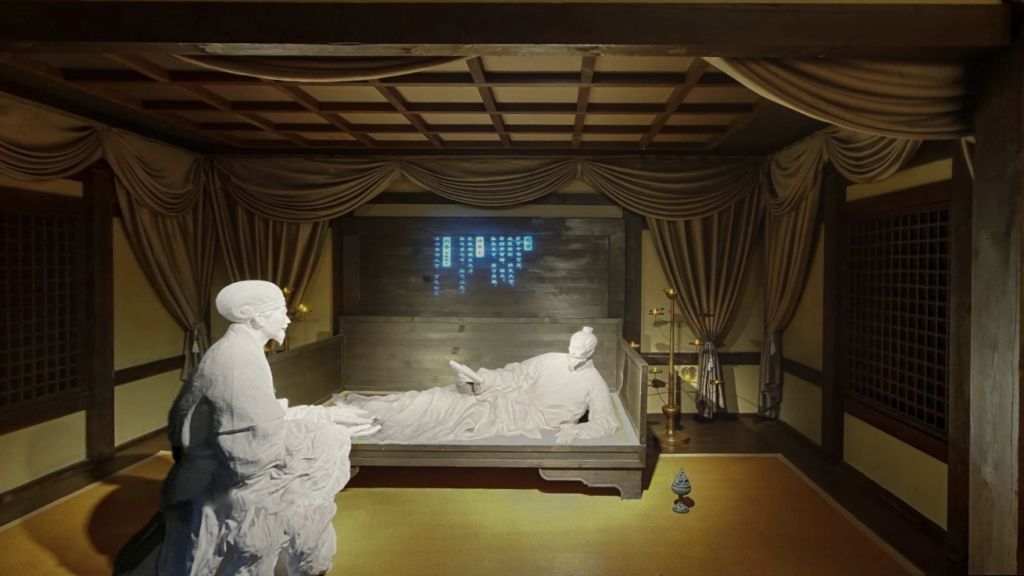
The loss of the strategic Jingzhou, the defeat of Guan Yu and Zhang Fei, the defeat at the Battle of Xiaoting, and Liu Bei’s serious illness at this time made the whole country’s power shaky. Liu Bei dying, in the City Baidi will entrusted son AhDou to Zhuge Liang. He said to Zhuge Liang: ‘If you think AhDou is the material to be the emperor, then you will assist him. If he is not, up to you.” Zhuge Liang did not fail Liu Bei. He spent his life assisting Ah Dou until he fell ill and died in the army.

Wuhou shrine
Liu Bei
Zhuge Liang

‘I have Kongming as a fish has water.’ A wise ruler, a good minister, swimming against the current in the midst of difficulties and obstacles, entrusting the far-reaching ambitions of the family and the country in the midst of storms.

Information

Date: 2021.10.1-2031.10.1
Location: Mingliang Qiangu Exhibition Hall, Chengdu Wuhou Shrine
Address: Located at No. 231, Wuhouci Street, Wuhou District, Chengdu, Sichuan, China

Exhibition Opening Hours
Tuesday to Sunday: 9:00am-18:00pm
Closing time: Every Monday (except holidays)

Ticket Price: Adult RMB 50/person; Child RMB 25/person
Tel: +86-028-85535951

Source

Wuhou Shrine

Exhibition online

site of Wuhou Shrine


Categories
Contemporary 人物 当代 艺术家

Contemporary | Zhao Qi: like works

The Chinese art

Artist: Zhao Qi

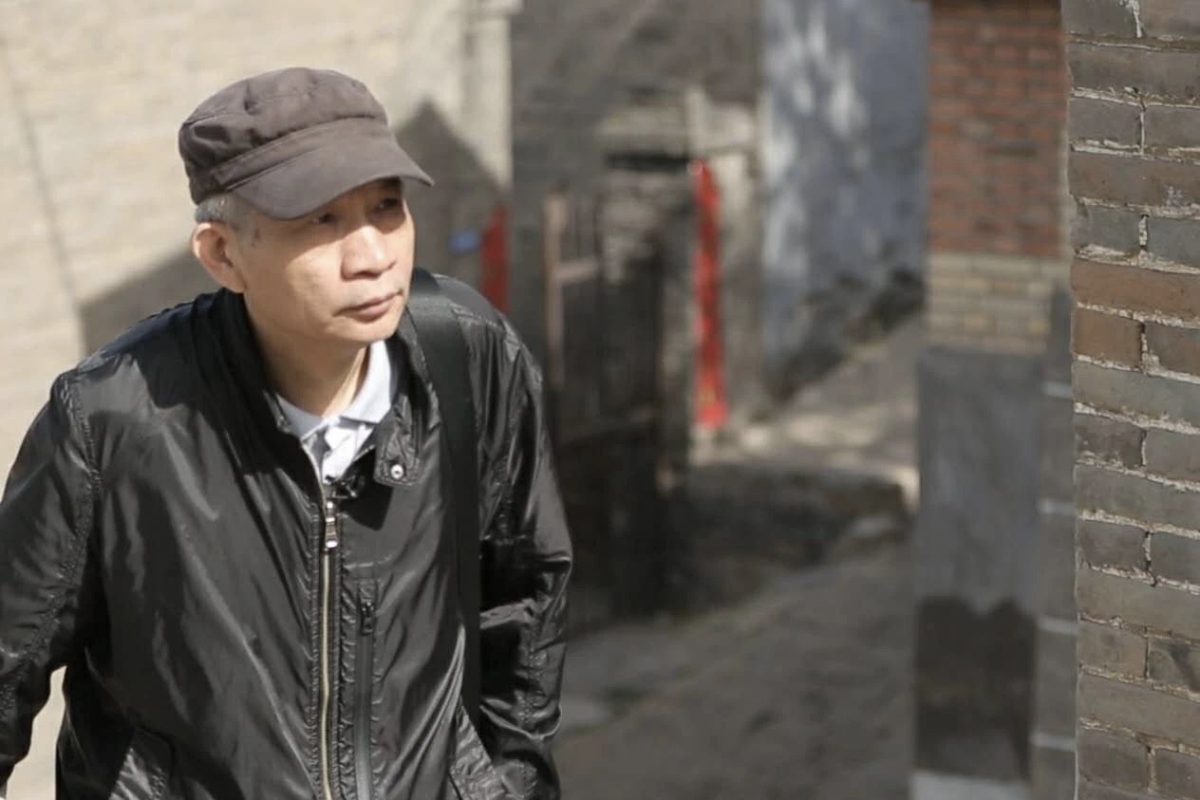
zhao qi Born in Jin County, Liaoning Province in 1954
He currently works and lives in Beijing

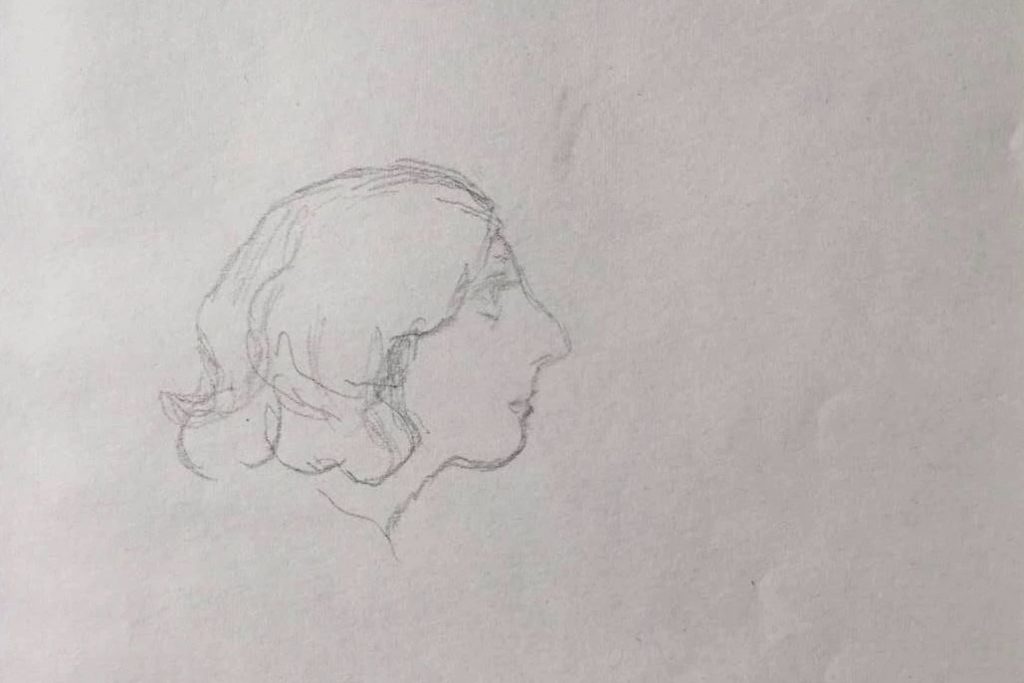
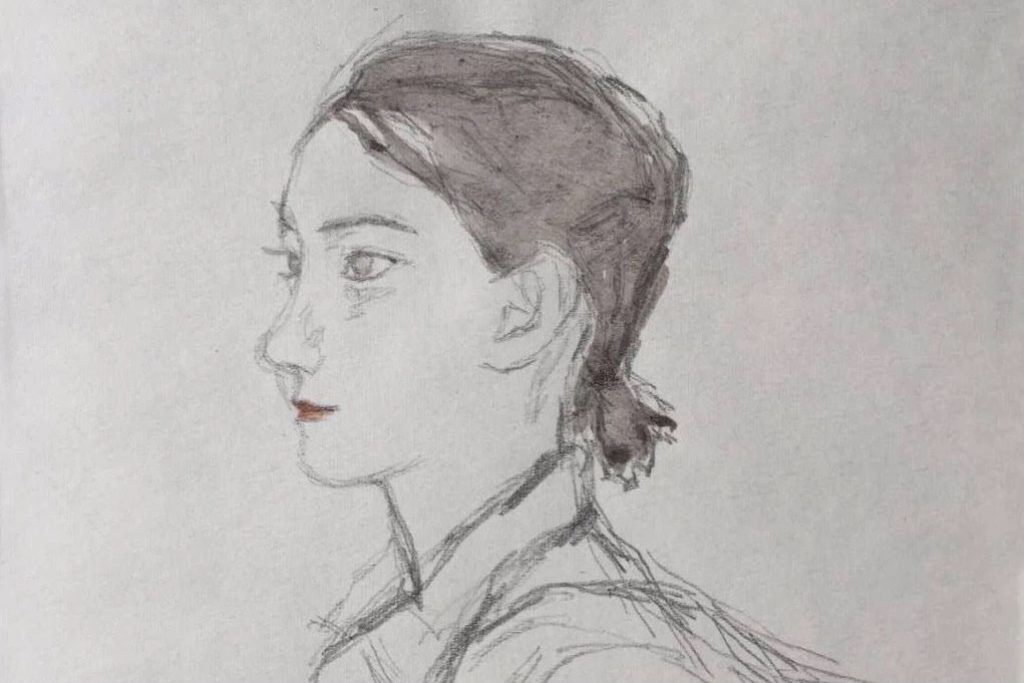
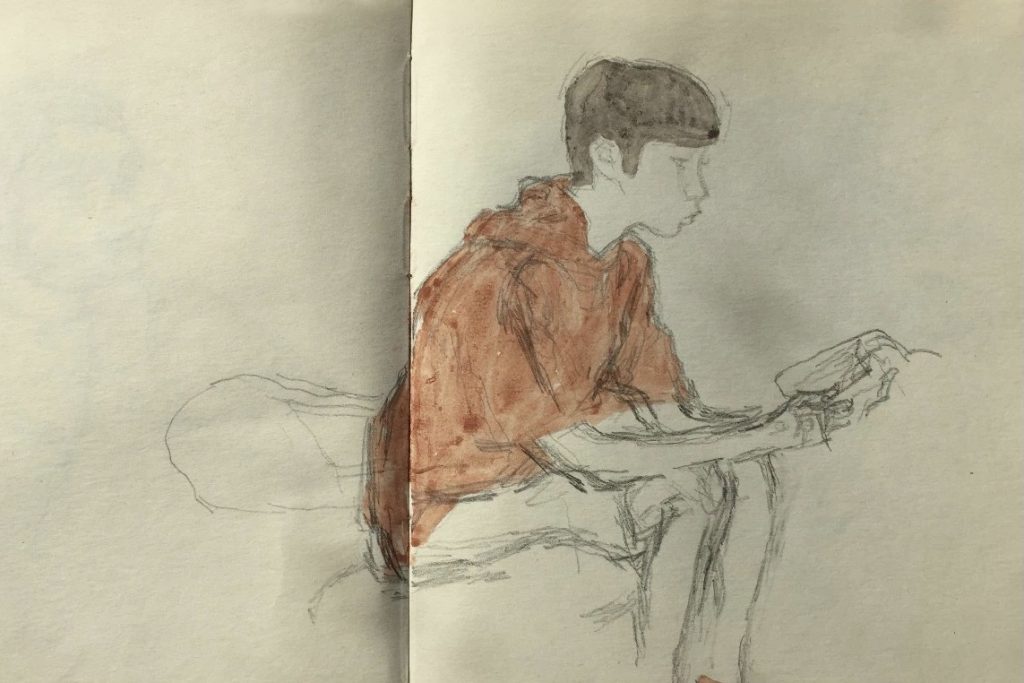
zhao qi would like to call these paintings on small notebooks works. Therefore, this point is emphasized because according to custom. We often call this type of painting “studio”, or shorthand or something like that. What zhao qi don’t understand is, why can’t sketches and sketches be placed in the exhibition halls of art museums such as Chinese paintings, oil paintings and prints?

Zhao Qi work

Outside of zhao qi understanding of painting, I think the work is a kind of narrative and the painter expresses his ideas through the painting. Although these paintings on small books are not “formal” like the works on display, their essence is still something thoughtful.

These paintings are random, sometimes standing, sometimes sitting, sometimes leaning against where. This way, I can see that when I painted. I must have been moved by the image in front of me. Yes, these images are painted in front of the object, it is not an imagination from nothing. ——This is different from other jobs, right?

——All the works are sent with feelings. suddenly I feel wrong to tell this fact. Because some images are also boring when I hold a pen and first draw carelessly. When painting, the picture looks interesting. Painting is indeed a very magical act, we cannot know where the end of the brush is attached.

Contemporary art usually refers to art that has innovated and subverted existing norms in the fields of oil painting, sculpture, and printmaking since China implemented economic reforms in 1979 and opened to the outside world, including photography. Installation.Concept.Performance. Video. Multimedia and other new art forms . The Chinese art circle regards an art exhibition in 1979 as the beginning of Chinese contemporary art history.

Categories
Contemporary 艺术家

Contemporary | Aaajiao – deep simulator

Who is Aaajiao

Aaajiao is the online handle for Xu Wenkai. Who coined the name in the years he downloaded mp3s from Soundseek and chatroom users. His username chromatic_corner to ‘A Jiao’ (literally in Chinese: corner).

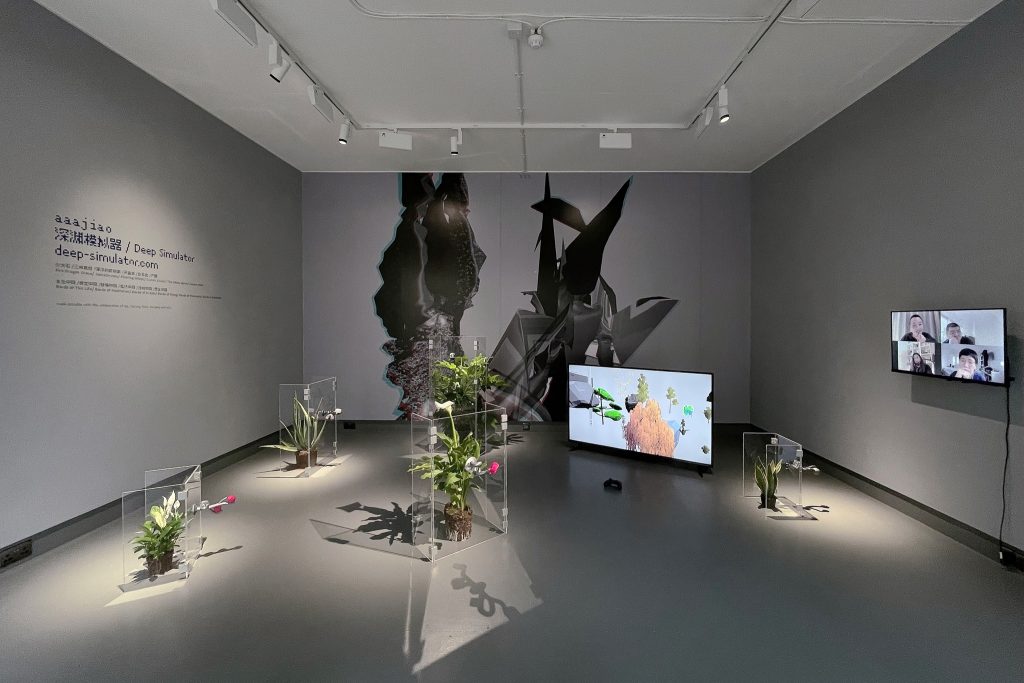
Aaajiao, Deep Simulator, at Tabula Rasa Gallery in London

Aaajiao Deep Simulator

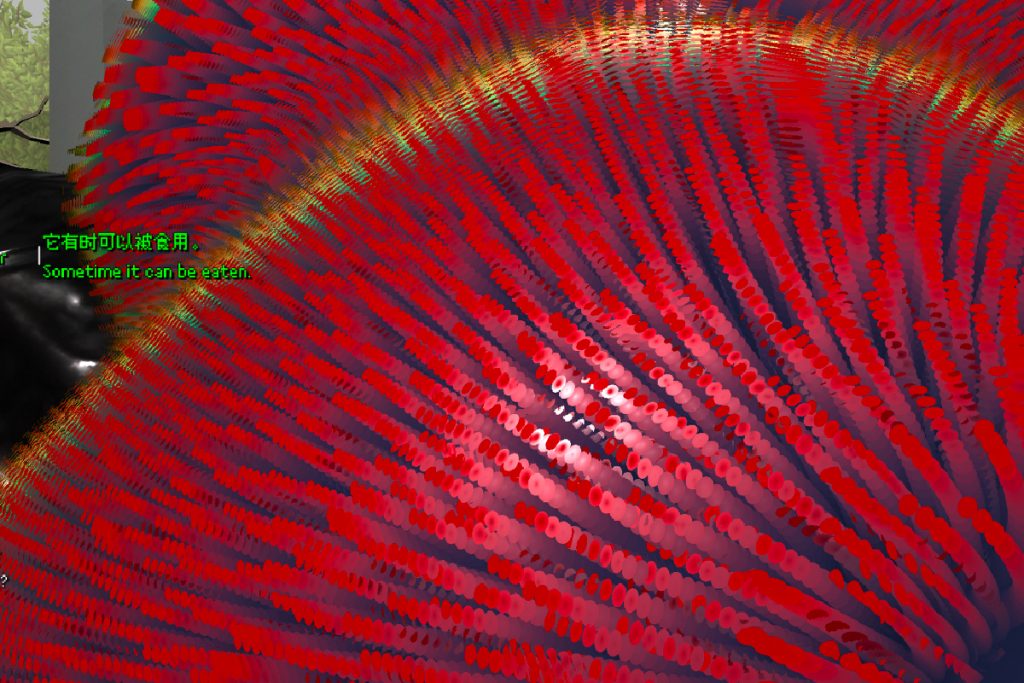
That sense of double play, in which a seemingly straightforward work is laid bare as a labyrinthine critique that feels at once accessible and obscure, comes through, also, in the artist’s latest exhibition, Deep Simulator, at Tabula Rasa Gallery in London (4 June–31 July 2021). The work was first shown in the project room of Castello di Rivoli Museo d’Arte Contemporanea in 2020, marking the artist’s first exhibition at an Italian institution.

Aaajiao, Deep Simulator, at the project room of Castello di Rivoli Museo d’Arte Contemporanea, 2020

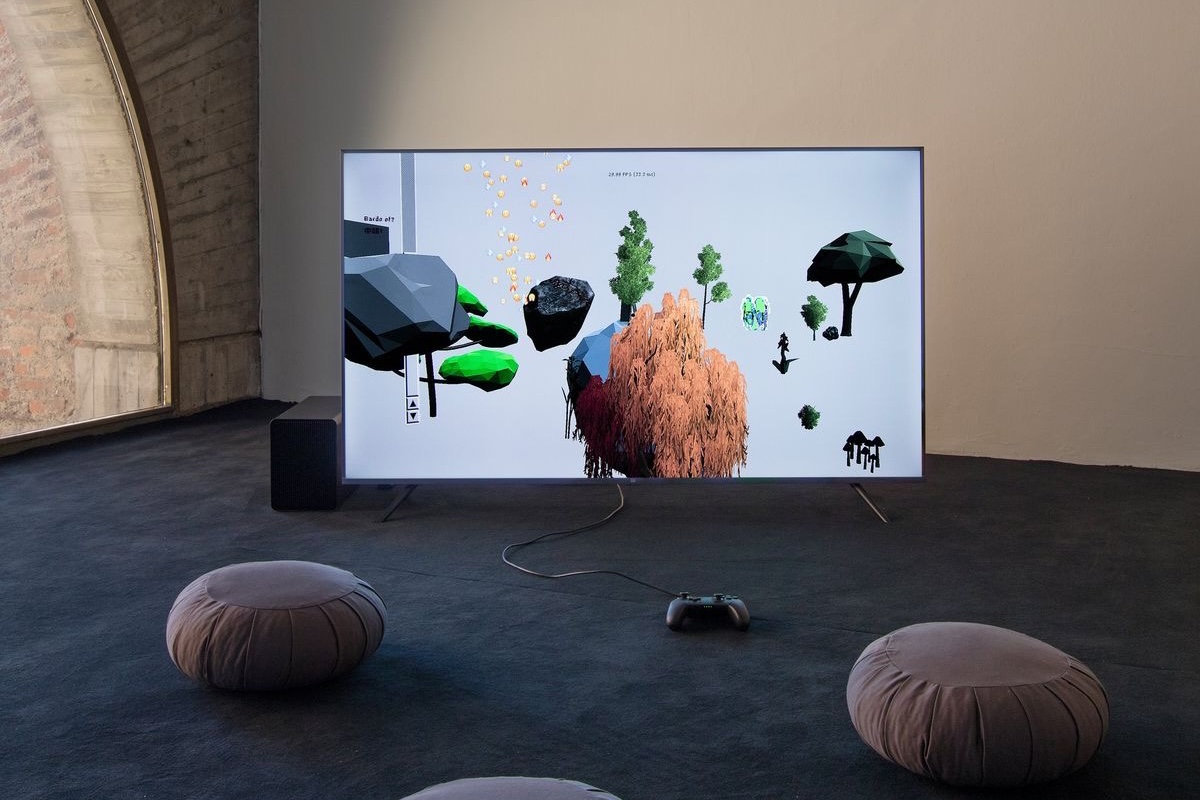
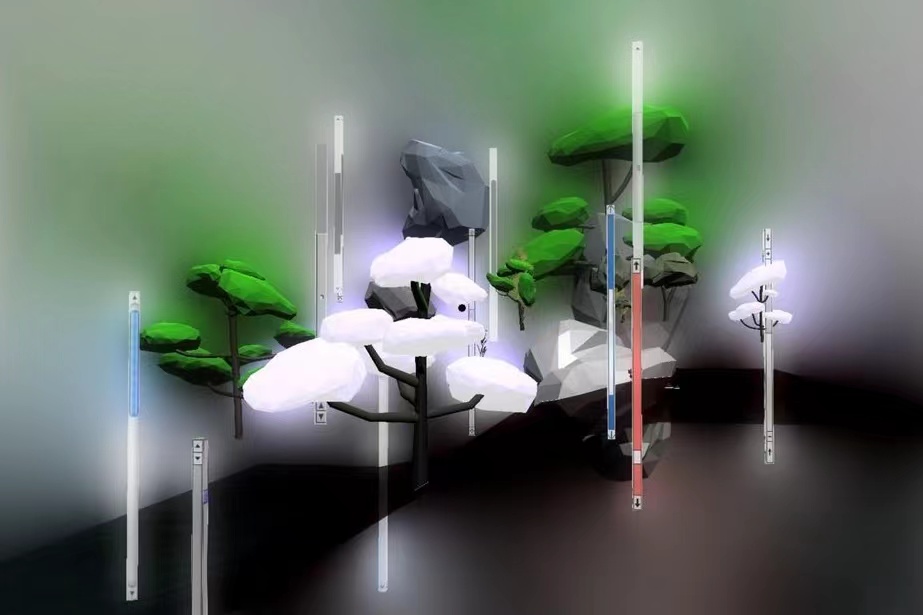
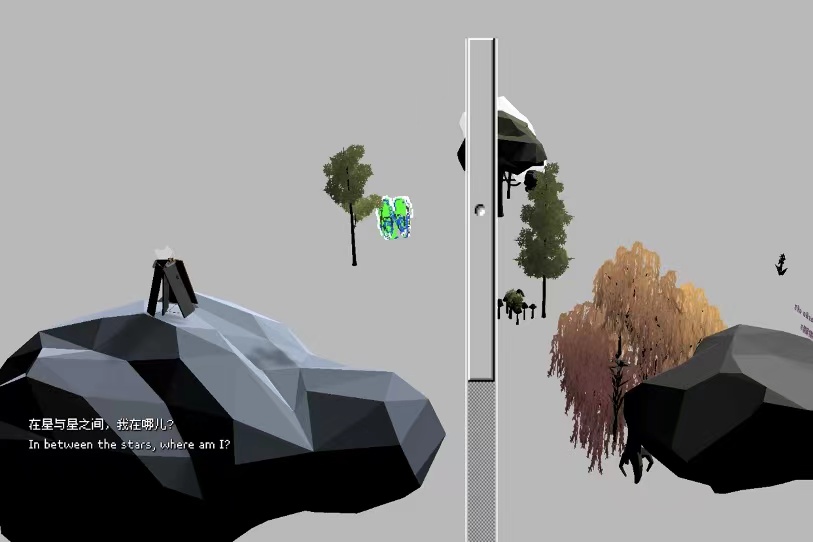
In a room set up with a gaming station and standalone. Surreal objects evocative of tree branches rendered by digital algorithm. Aaajiao’s metagame Deep Simulator invites the viewer to partake in a space exploration at once both real and virtual.

Aaajiao, Deep Simulator, 2020

The prime engine

Deep Simulator sees computational power as the prime engine that generates the state of our world. The six possible states of Bardo—a term originated from Buddhism that describes the intermediate state between death and rebirth—can be retrieved by the player via six levels of computational power. “Deep Wanderer,” defined as the protagonist of the metagame, is an amalgamated persona consisting of the viewer of the exhibition, the player at the game station, and the wanderer in the metaphorical journey within the simulation. Upon seeing and being the “Deep Wanderer”, individuals such as us come closer to understanding the truth of our existence.  

Aaajiao, Deep Simulator, 2020

Human Identity

As the artist’s continuous reflection on the evolution of human identity along the transformative power of the Internet sphere, the forming of The Player in Deep Simulation is a transmutative process carried out by the artist over the years. It passes through the figure of The User presented on the artist’s solo exhibition User, Love, High-frequency Trading in 2017, and The Bot as an information crawler for the project bot in 2018. The spectator’s ability to see the player playing while awaiting his or her own turn opens up a path to observe an “other” him- or herself, and underlines the controversial notion of the real in the world of new technologies, the Internet and the circulation of digital data. 

Aaajiao, Deep Simulator, 2020

It is worth noting that Deep Simulator was specially conceived for the project room of Castello di Rivoli in 2020. Making aaajiao the first Chinese artist to exhibit at an Italian institution. Due to the pandemic, only domestic visitors in Italy were allowed. We hope that through presenting the work for a second time at our London space, the work will be able to reach a broader audience.

source

https://ocula.com/magazine/conversations/aaajiao-nft-blockchain-future/

http://gallerytabularasa.com/exhibitions/page.php?id=31aaajiao-deepsimulator

https://eventstructure.com/

Categories
Contemporary 当代 艺术家

Contemporary丨Chen Qiang: Thoughts spanning

Thoughts spanning

chen qiang sketch

Life is a general summary

Life is a general summary of human beings living in nature and from the past to the present to the future, emphasizing practical effectiveness on the issue of survival. It is precisely because of this practicality that it rejects the essence of art, because the thoughts of art is ineffective in the practicality of life.

The effectiveness of life has established a common sense of normality for us, so that our thoughts and actions are within this clear range of normal consciousness. Practicality and effectiveness are brought into full play in this range. However, the essence of art does not belong to this range.

This kind of normality consciousness will find that we have to give up those normal consciousnesses in the process of fully pursuing ambitious, practical and intelligent goals.

Abandoning the thoughts of normalcy is the beginning of discovering art and also the beginning of artistic creation.
In fact, art is the art of perception.

The original intention of art

The original intention of art is to allow perception to regain new perception. It is the perception that is difficult to perceive. It is about the perception method, about the perception outside the existing perspective, about the perception of small accidents in the existing experience, and it emphasizes the methodology.

thoughts chen qiang
chen qiang experimental

There are many reasons that hinder our in-depth creation, one of the main ones is too many ideas, too selfish, and too arbitrary.

Art is not a microphone and foil of ideas. Art will shine only when ideas serve art.
It is not that art needs to match ideas, but ideas need to match art.

Don’t expect to put your own ideas into others’ heads through art. Because art is not a tool, let alone a conspiracy. Ideas can only become the background, not the protagonist.

chen Qiang sketch Thoughts

Why do we put a horizontal line across the screen, our eyes will immediately show the illusion of the horizon? Is this the effect of gravity on us? Or is our genes conspiring with gravity?

Gravity is the original force on the earth and is closely related to the birth of life. The horizon is a symbol of gravity.

Gravity determines our perception. We perceive the world under the control of gravity, and we perceive the world in the formula of gene propagation and survival.

Our perception is a convenient program edited by genes in order to survive and spread genes. Everything starts step by step, and we are secretly defined as a carrier of communication.

However, in the long journey of human development, due to the residual increment of perception .

The birth of art

The birth of art has gradually become an exception thoughts. It is a bit like a mutation in gene transfer. It can become more and more free from gravitational manipulation.

Survival needs, let yourself become useless for survival, let yourself be yourself. When the purpose of art is art. Art has completed its ignorance of gravity and betrayal of genes.

Presenting the unknown perception is like presenting art. From a certain angle, let yourself be in a kind of uncertainty from time to time, is it not a kind of freedom?
This is the question I thought about in the process of creating this batch of works.

Categories
Contemporary 当代 艺术家

Contemporary | Su Xinping: Art, spend my life

Artist: Su Xinping
Born in Jining City, Inner Mongolia in 1960
Deputy Dean of the Central Academy of Fine Arts
Professor, PhD supervisor

Su XinPing Perspective

Su Xin ping was born in Jining, central Inner Mongolia, and now Ulan Qab City. Where the population was only about 30,000 in the 1960s. From today’s perspective, it can only be regarded as a small town, an adobe house, and a few buildings.

In January 1977, I enlisted in the army. The army stipulates that recruits must train in the company for one year, and can only do painting-related work in the second year.

One day after living in the company for half a year, when I was studying to read the newspaper in the evening. I accidentally saw the news about the admissions of the People’s Liberation Army Art Academy . In the newspaper, which caught my attention.

Su xingping Military art

su xin ping decided to apply for the military arts exam, so I went to the leader of the army to talk about my thoughts. I didn’t expect to get the answer that ordinary soldiers can’t apply for the exam. This kind of answer can hardly hit me. At that time, there was only one way for soldiers to enter university, and that was to retire.

Chinese works

After I was discharged from the army, I went to work at Jining City Cultural Center, and I was able to devote all my energy to review. In May, when it was the day of college admissions and registration.

The only professional schools I could choose were the Tianjin Academy of Fine Arts and the Department of Fine Arts of Inner Mongolia Normal University.

Inner Mongolia belonged to In the North China region, national regulations did not allow cross-regional examinations at that time.

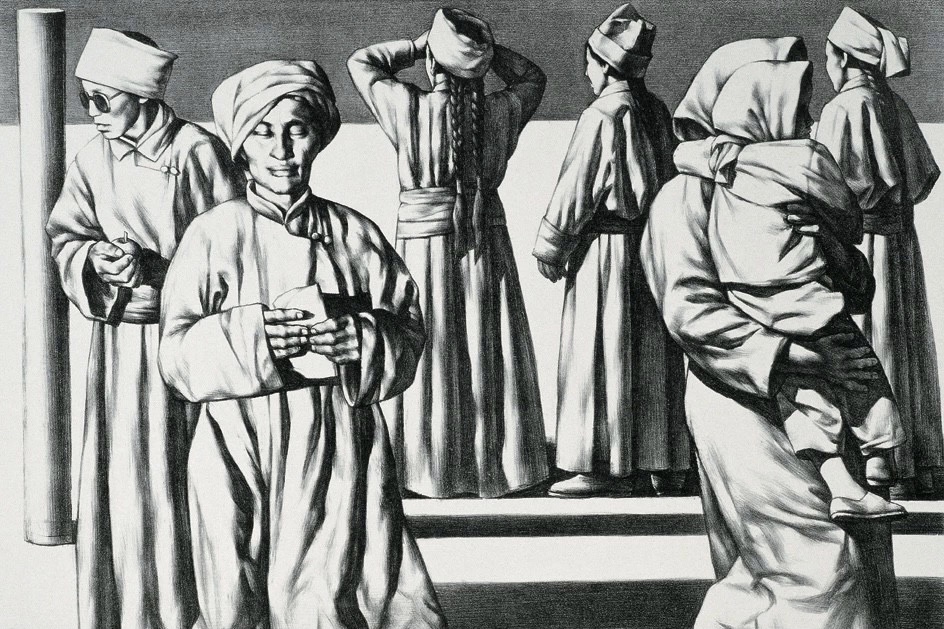
As for why I chose printmaking artist as a major, I think it may be a problem of understanding, because I have painted a lot of black and white illustrations in the army. I think black and white painting is just a printmaking.

Oversea life

I was admitted to the Central Academy of Fine Arts in 1986. At that time, the academic atmosphere of the Academy of Fine Arts was unparalleled. You can see some clues only from my classmates and colleagues. When I was in school. Yin Jinan and I lived in a dormitory.

However, the selection and conversion process of my major did not go smoothly. My master’s research direction was woodcut.

When I saw the last class of classmates painting stone plates, I was still attracted. For the first time.I saw that it can Painting, and can print very subtle changes. I wanted to try it out, so I secretly borrowed a slate from him.

At the end of the teaching inspection. the teacher in the department saw the lithograph I painted and asked who made it. I was a little nervous about being criticized.

The department leader thought that I was more suitable for professional development in lithograph. and the department decided to transfer me to study at lithograph studio.

Su XinPing Gao ming lu

At the end of 1988, Gao Minglu, the curator of the “Chinese Modern Art Exhibition”, came to the Academy of Fine Arts to select works. When he saw my lithographs. he chose two works and invited me to participate in the exhibition.

Today, it seems that the modern art exhibition is a landmark exhibition in the history of contemporary Chinese art. But su xin ping did not have this awareness at all at the beginning. and even before the opening of the exhibition. Su xin ping went back to my hometown in Inner Mongolia to visit relatives.

Only later did I hear about the grand occasion of the exhibition, and learned that on the opening day of the National Art Museum of China. Almost all participating artists were present. The shooting, the sale of shrimps, the washing of feet, and the incubation of eggs. shocked a series of contemporary art acts that challenge ideology.

Categories
Contemporary 艺术家

Contemporary|Kang Jianfei: reconcile with myself

reconcile with myself

When kang Jian fei was young, kang Jian feiwas looking forward to the New Year. When kang Jian fei grew up, kang Jian fei was really afraid of the New Year. If summarize the reasons for the fear, there will be more. The most core thing think is because of the fear of time. Generally speaking, a pessimist, and there are so many things kang Jian fei can’t figure out. The world in my mind is different. kang Jian fei like wine, and kang Jian Fei like to drink by myself. When kang Jian fei am drunk, kang Jian fei can see the imaginary world more clearly. That is the other me, maybe that is the real me. I’m more and more afraid of drinking with others, afraid that kang Jian fei can’t control my drunk self and hurt others. kang Jian fei always want to gain insight into the secrets of the world, never believe in established rules, and always feel that there is an invisible line connecting the world.

forward to the New Year

When I was young, I was looking forward to the New Year. When I grew up, I was really afraid of the New Year. If I summarize the reasons for the fear, there will be more. The most core thing I think is because of the fear of time. Generally speaking, I am a pessimist, and there are so many things I can’t figure out. The world in my mind is different. I like wine, and I like to drink by myself. When I am drunk, I can see the imaginary world more clearly. That is the other me, maybe that is the real me. I’m more and more afraid of drinking with others, afraid that I can’t control my drunk self and hurt others. always want to gain insight into the secrets of the world, never believe in established rules, and always feel that there is an invisible line connecting the world.

A child

When was a child, there were not many words from teachers who could remember when was in school. One sentence was said by the head teacher. have to break the casserole and ask to the end, so that have adhered to this principle for many years. If you are facing a math problem, it must be right, but it doesn’t seem to be a good way to face life and society. Seeking truth is an attitude, and the method of seeking truth is self-continuous thinking and practice, but don’t touch society with a truth-seeking attitude. It seems too hypocritical. Some problems will not be solved until many years later. Otherwise, let it go, let it go!reconcile with myself.

If life is a stage

If life is a stage, then each of us must become a certain role. When you are watched, you are an actor, and acting is almost your destiny. There is no permanent banquet in the world, and there is no drama that can be performed endlessly. Before time, everything is a temporary. I believe reconcile with myself in determinism and the alternate causality, just like the sun rising east Xiluo is purely natural.

But all people will pursue the meaning of life, especially these sentimental and awkward artists who draw pictures for meaning, put urinals in art museums for meaning, and even peeing is also in pursuit of meaning. Perhaps the most meaningless part for others is the ultimate meaning pursued by the artist. In the face of time, the meaning will be dispelled, will gradually change, and will be reborn into a new meaning. Freud divided me into id, ego, and superego, but whether it is desire, consciousness, or morality, it still revolves around “I”, who am I? Who is me again?

believe in the laws of the world, reconcile with myself,and that the greatest joy in life is inner peace. Therefore, at the end of this year, I choose to reconcile with myself.

Categories
Contemporary 当代 艺术家

Contemporary | Zhang Hui likes Beijing

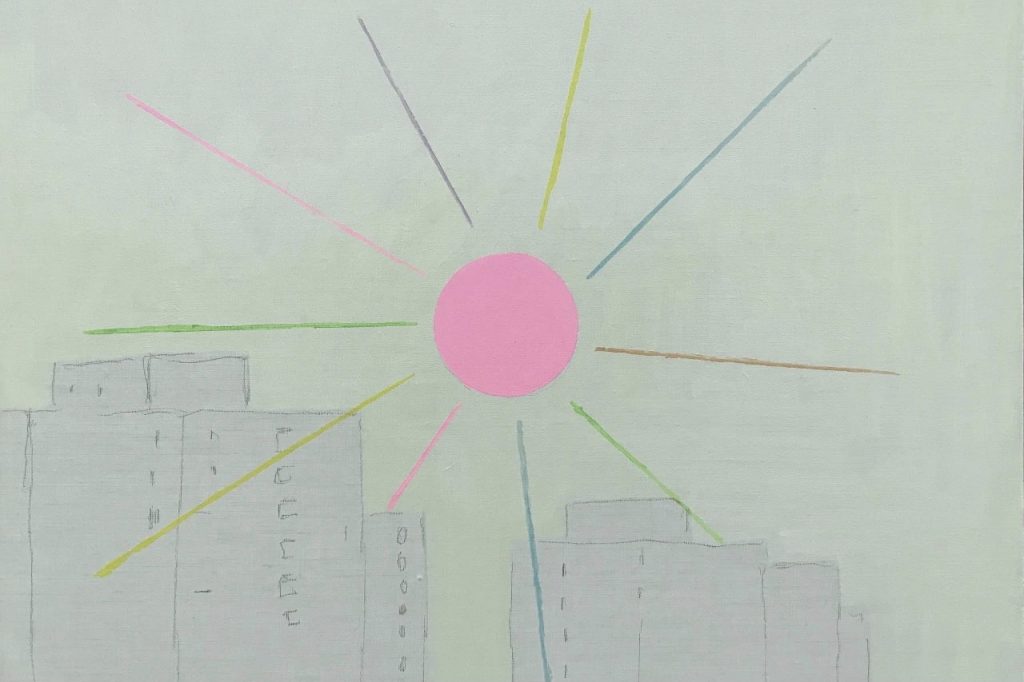
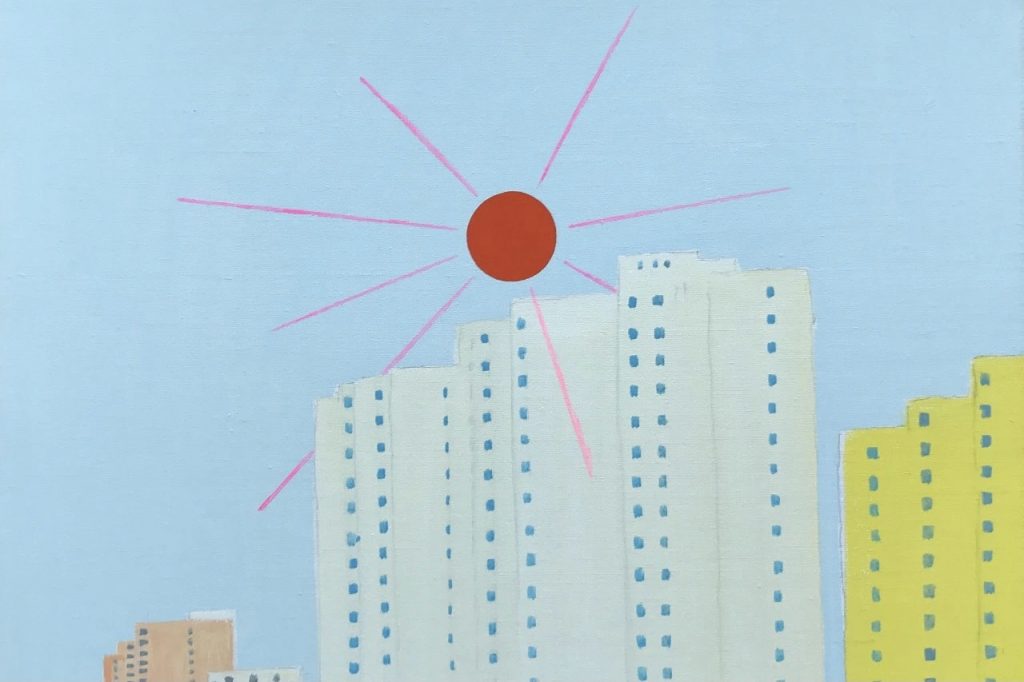
Dazzling sun

Artist: Zhang Hui

Born in Beijing in 1968

Zhang Hui Graduated from the Mural Painting Department of Central Academy of Fine Arts in 1991
2005 Master of Arts and Design, Minneapolis College of Art and Design
Currently works and lives in Beijing

walk in the surrounding

Living in Beijing, Zhang Hui like to walk in the surrounding mountains. Zhang Hui usually leave at 8 or 9 in the morning, sometimes with a couple of friends, sometimes by myself, driving for one and a half to two hours, and there are some routes around 100 kilometers away.

If it is a four- to five-hour route, Zhang Hui will bring something to eat, such as a steamed bun or a biscuits or bean buns, and sometimes a boiled egg. Generally, there is no salted duck egg, which is salty and oily, which is inconvenient. Be sure to bring something sweet, such as a few pieces of candy, two snacks, or two energy bars.

Bring a 500ml bottle of water on cold days, two bottles on hot days, and three bottles in July and August. There are many hills with an altitude of about one kilometer in Beijing, and the general parking place is about 500 meters.

There are only three mountains of two kilometers, Dongling Mountain 2,303 meters, Haituo Mountain 2,241 meters, and Wuling Mountain 2,118 meters. Outdoor hiking has sunshine, sufficient oxygen, and the atmosphere of trees, flowers, and mountains. It is a process of challenging one’s own limits and relaxing and happy.

In the book “What Do I Talk About When I Talk about Running,” Haruki Murakami describes his daily life, running in the sun, eating grilled fish, drinking beer, writing, and listening to music.

It’s a beautiful day. Zhang Hui also like the ending part of his “Norwegian Forest.” Reiko made a hot pot for Watanabe, and they sang while talking about the guitar. They held a “real” funeral for Naoko and played 51 songs in a row. The soul of Super Naoko is also redeeming himself. After that, they “hugged each other as a matter of course” and then made love.

like Bach’s music

Zhang Hui like Bach’s music, religious sense and divinity. Especially his fugue, the chase and escape of notes entangled and flowed. Zhang Hui like Indian traditional music, which is continuous and coming in a steady stream. Like jazz. Like Mahler, especially his ninth and tenth symphony, eternal, beyond death, suffocating.

Schopenhauer said that we are all slaves of our own will, trapped in the desire for food, sex, money, and control. Art is a possible way to save us from the distorted, boring and painful reality. Art can give us. Transcendence, it has such an energy to help us achieve spiritual escape.

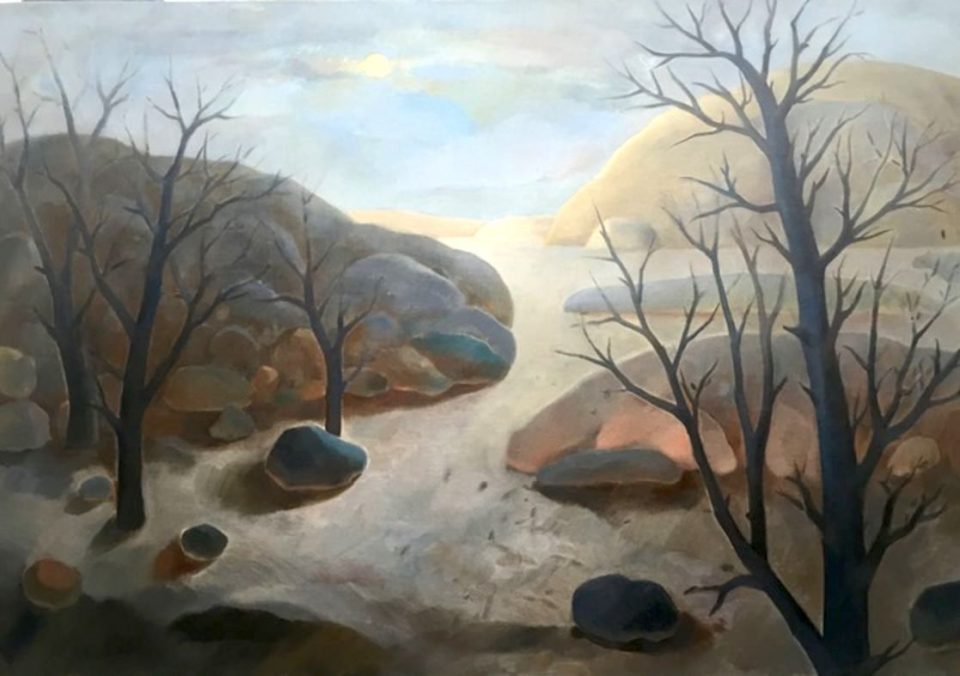
Over the years, Zhang Hui have painted several different series: cities, trees and branches, people, colored stones, clouds, grids. There are many journeys and thoughts behind these paintings. Now it is difficult for me to state clearly the background of these thoughts.

Categories
Contemporary 对话

Contemporary | Chen Ke sad girl

Chen Ke is born in 1978 in Tonjiang, China’s Sichuan province. She’s graduated from the Sichuan Academy of Fine Arts, where artists had many opportunities to explore their emotions and instincts. 
This free environment, alongside cartoons, fairy tales and comics, helped her to build her identity as an artist.
After participating in numerous national and international exhibitions, she worked on a variety of media, including painting, sculpture and fashion design.
Chen Ke is recognized as the most representative artist of the New Generation of Cartoon of China.

Background

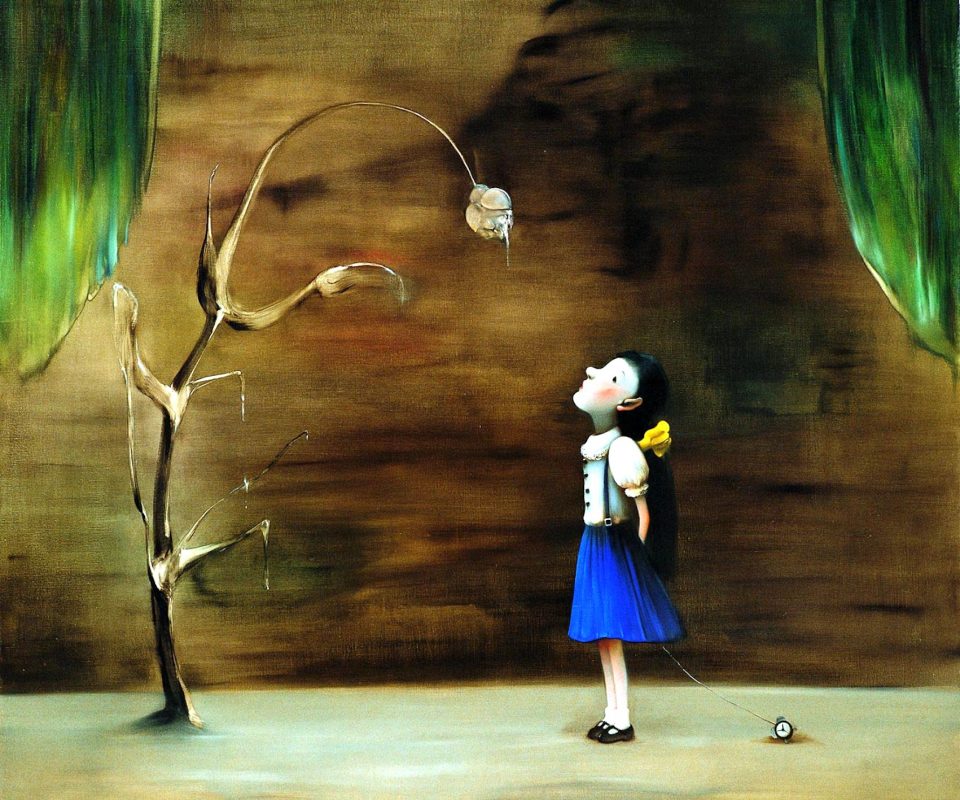
Various images of little girls, representing the core of human nature, flow like a thread through the works of Chen Ke.
Although references to the art of comics are evident, when one analyzes her works in more detail, they become visible elements of style of Western masters such as Caspar David Friedrich, as well as the influence of traditional Chinese paintings, creating an exciting tension. 
Being eager to experience Chen Ke often surprises her viewers. Not only does she produce her own paper, she embroiders canvases with beads, but she also applies oil paint to stretch cotton fabrics that are popular in her childhood days.

Chen Ke sad girl

Chen Ke is considered the most representative artist of the new generation of Chinese artists. Her melancholic paintings, which express the loneliness of growing up as an only child, show digital images made of bright and colorful light from her kaleidoscopic and dazzling imagination.
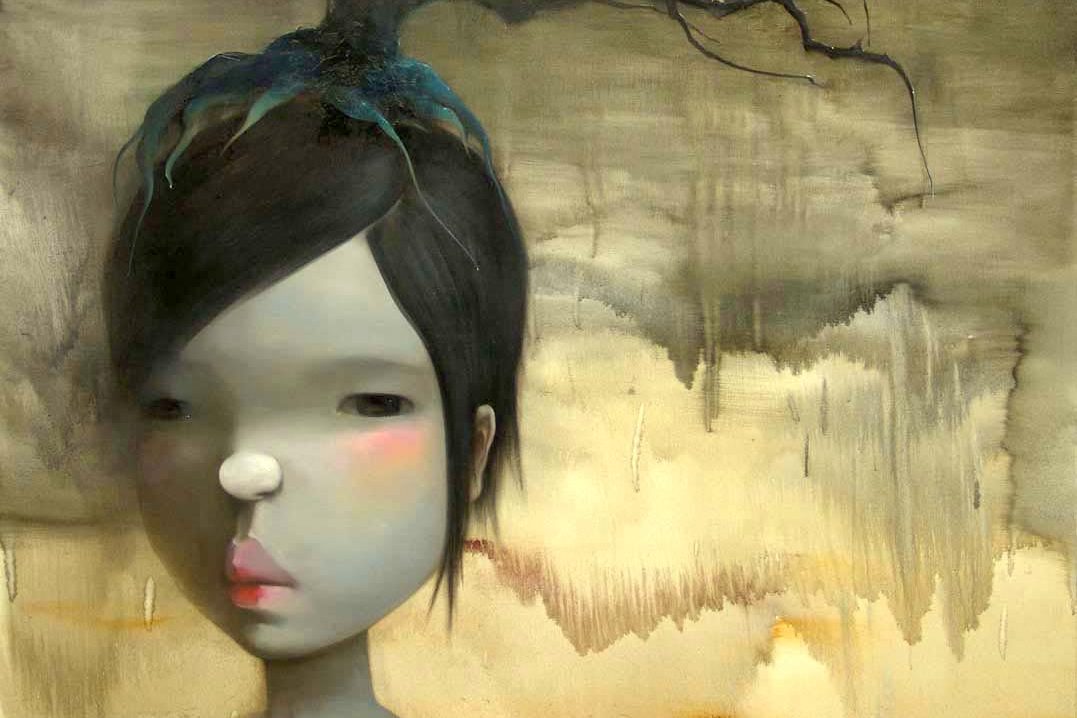
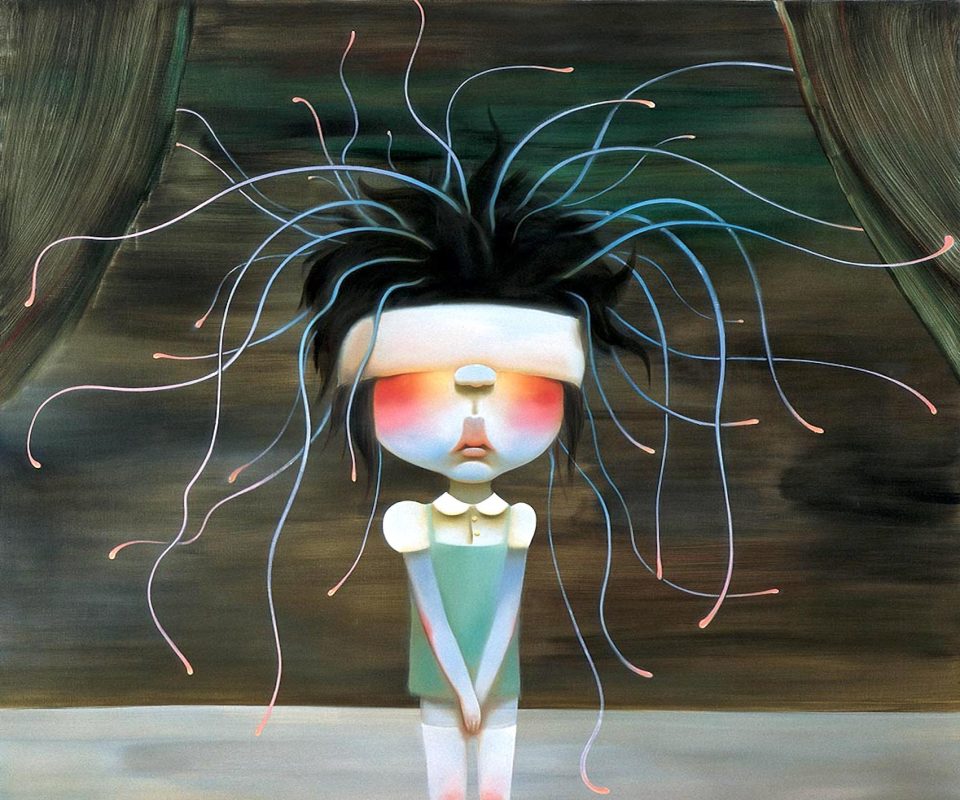
That’s why the artist says: “My characters are somewhat sad, isolated and powerless and this is exactly how I feel sometimes. My art is as real as my spirit.”As classical artworks of Chen Ke, almost every piece of work shows a little girl with a round nose, who is lost in depression, limited to herself, living in an unreal space, and seems to keep a distance from the human world.

Chen Ke
Like porcelain paintings

Usually, the sad girl takes up the center of the whole artwork. With the full expression of the blank as well as the grain like porcelain paintings, the artist fully shows the opposition of the reality. A reality that buries the audience in the waves of the sense of unknown sadness. The sad girl seems to be jumping between the virtual world and the reality, which makes the audience lost in the endless loneliness and long distraction.

Chen Ke
Chen Ke and Beijing

In her first two years in Beijing, she felt lonely and what she could do was to paint and put her moods into the painting. She believed this is the reason why many people think that the girl in her painting was actually her self. And the girl in her painting grew up with the growth of the artist. She believed her art appeared from her daily life, so she hoped art could enter the daily lives of people. 

Chen Ke and Fashion

She thought fashion and art have no differences at the top point. She has cooperated with many fashion brands. In 2008, Fendi invited Chen Ke to join the Fendi special handbags Baguette Anniversary commemorative edition series; she designed a handbag for the series. In 2014, Chen Ke designed for the Vogue FNO series to celebrate the ninth anniversary of Vogue magazine.

Chen Ke

Fonti:
Artsy
Wikipedia
Perrotin

Categories
Contemporary 当代 纵观艺术 艺术家

Contemporary| Zhou Jun – The Thick Red Line

Zhou Jun is a contemporary conceptual chinese photographer. He was born in Nanjing Province in 1965 and graduated from Nanjing Normal University in 1990.

His work revolves around construction sites and the relationship between urbanization and the preservation of ancient cultural inheritance.

Zhou Jun
Zhou Jun

Zhou Jun’s technique

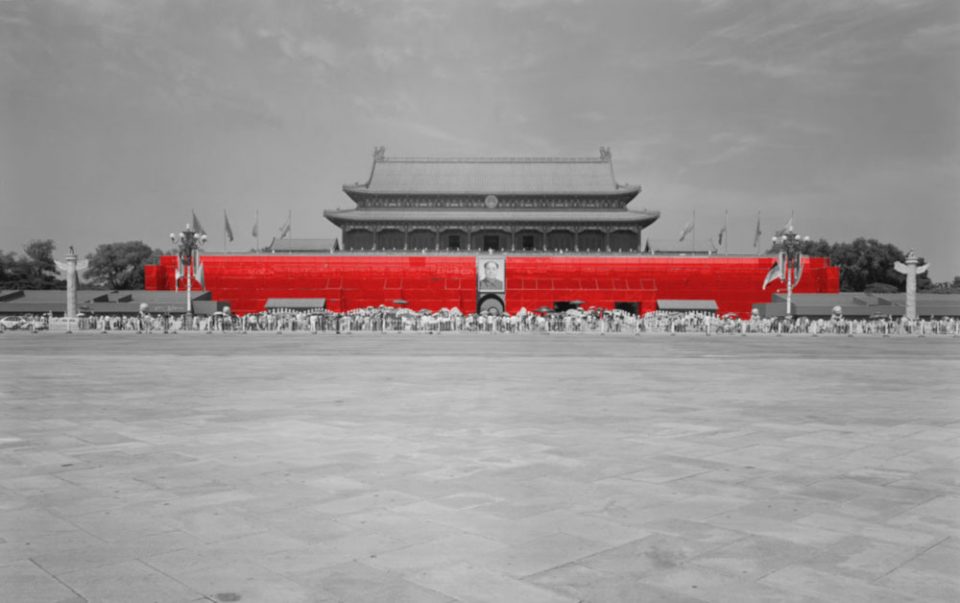
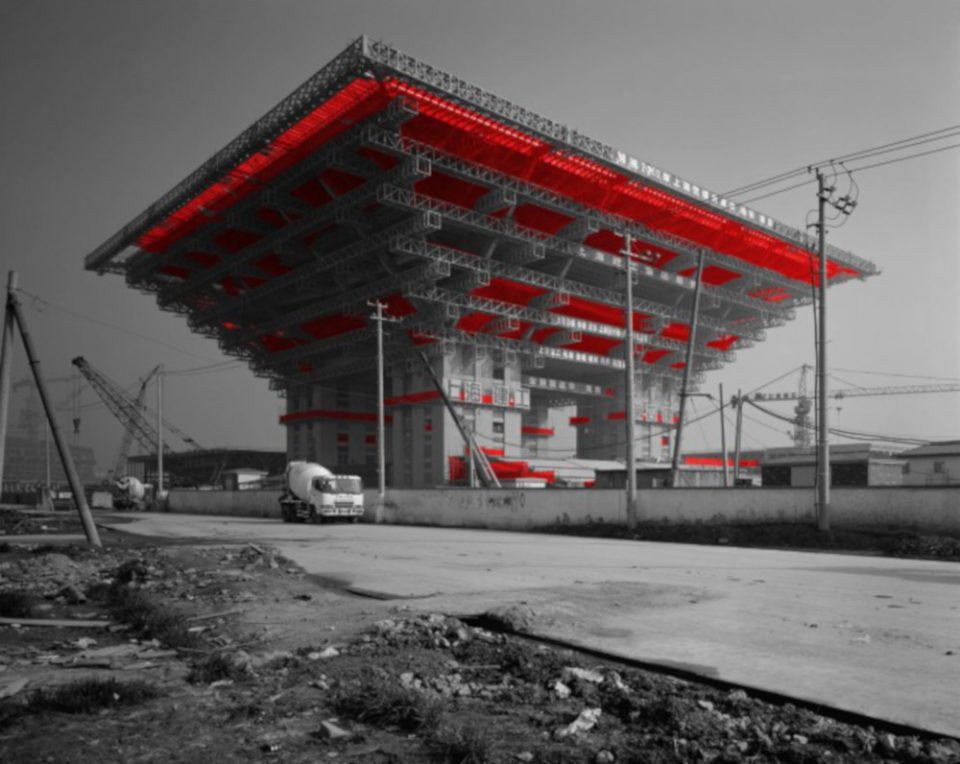
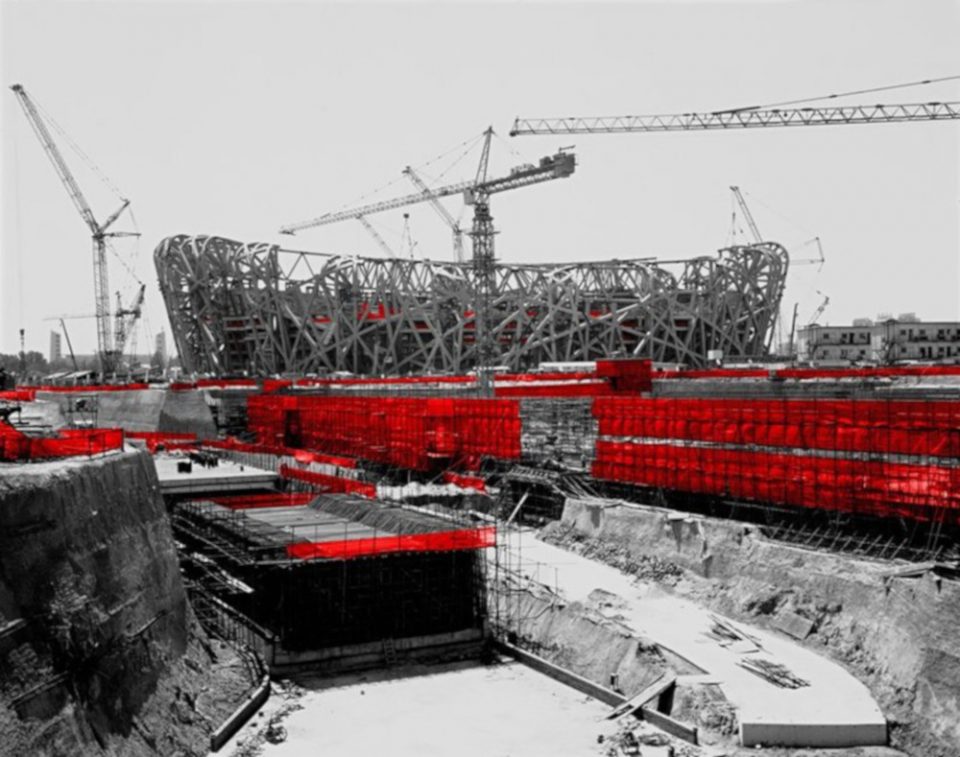
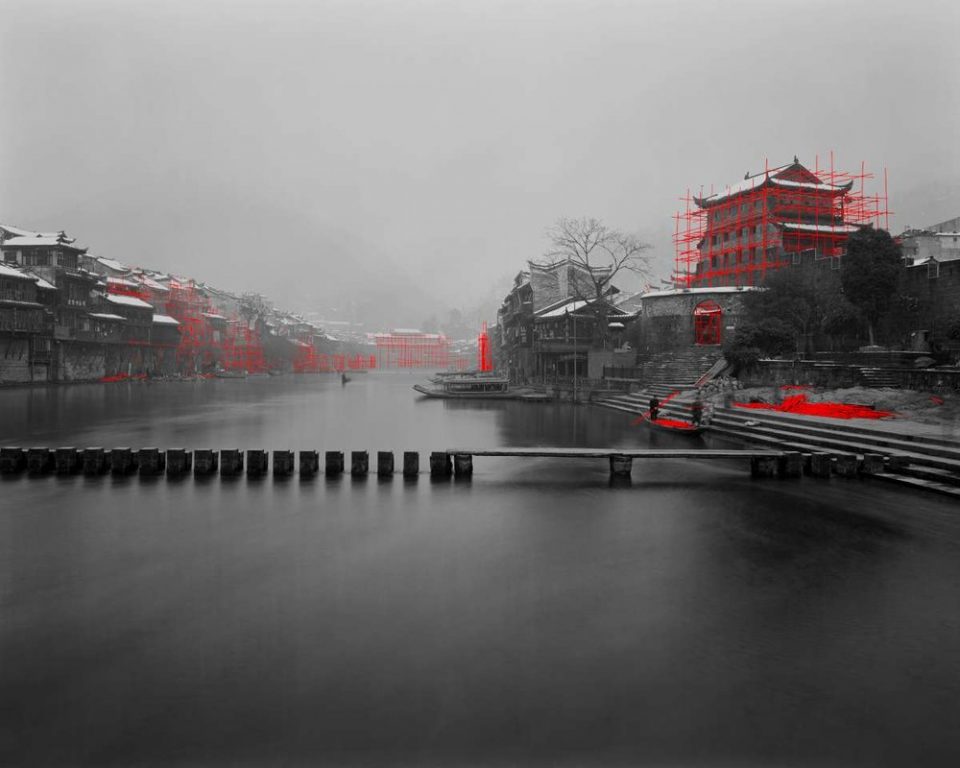
The artist is best known for his series – Scaffoldings; Bird’s Nest project; The Red and the Black – featuring Chinese cities in black and white with overlays of red streamers wrapped around under-construction buildings. Zhou Jun uses large format film cameras to produce negatives, which are scanned, digitally manipulated and printed to produce large unframed photographic works. Built environment is the subject of Zhou’s work in an analysis of China’s rapid and sometimes brutal redevelopment. Created since 1992, his photographs mainly treat the conflicting relationships between Chinese traditional architecture and contemporary buildings while continuously challenging the symbolic nature of the red color.

9th 2007, 2007, Digital C - print, 120 x 190 cm/180 x 286 cm
9th 2007, 2007, Digital C – print, 120 x 190 cm/180 x 286 cm
Expo 2010 Shanghai - China Pavillion, 2009, Digital C - print, 120 x 150 cm/220 x 180 cm
Expo 2010 Shanghai – China Pavillion, 2009, Digital C – print, 120 x 150 cm/220 x 180 cm

Building progress

The contradictions that are presented when trying to preserve the past in a time of China’s unprecedented economic growth underpin the work of Zhou Jun. During the last thirty years the most striking feature of China’s re-development has been its city construction. Demolition of whole villages to make way for high-rise development is a regular occurrence. The lead up to the 2008 Beijing Olympics saw massive building works and although it transformed Beijing into a modern city entire neighborhoods were ‘moved on’ in the name of progress.

Bird's Nest No. 2, 2006, Digital C - print, 50 x 60 cm/120 x 150 cm
Bird’s Nest No. 2, 2006, Digital C – print, 50 x 60 cm/120 x 150 cm

Zhou Jun’s work embodies a quality of yearning for the past to some extent and this is seen in his photographs of historic buildings from Beijing. He is acutely aware of the expansion of Chinese cities and the loss of traditional architecture. It is the loss of Chinese culture in the pursuit of globalisation.

Phoenix Ancient City, 2011, Digital C - print, 120 x 150 cm/180 x 220 cm
Phoenix Ancient City, 2011, Digital C – print, 120 x 150 cm/180 x 220 cm

Seeing red

The color red has significance in Chinese cultural memory as it is used for ceremonial occasions such as weddings but it also represents revolutionary communist ideology. It is a reminder of the turmoil of the recent past. Because of this, the wide variety of perspectives of each person means completely different feelings and reactions are aroused by the color red. The partnership between the black and white photographs and the red sections of scaffolding allows the audience to produce their own meanings.

“Hanging Red”, 2009, 120 x 150 cm, Archival Inkjet Print on Fine Art Paper

A word from the author

“The three decades of development China is experiencing – building to a crescendo with the Olympics – are unparalleled in history. The colour red, which I use to highlight specific parts of the photograph, can elicit different responses in people from different countries or cultures – at times, it can even have opposite meanings for people. I want my work to be interpreted differently by people depending on their response to the symbolic meaning of red. In this sense, the work has the potential to reveal international perspectives to common subject matter.”

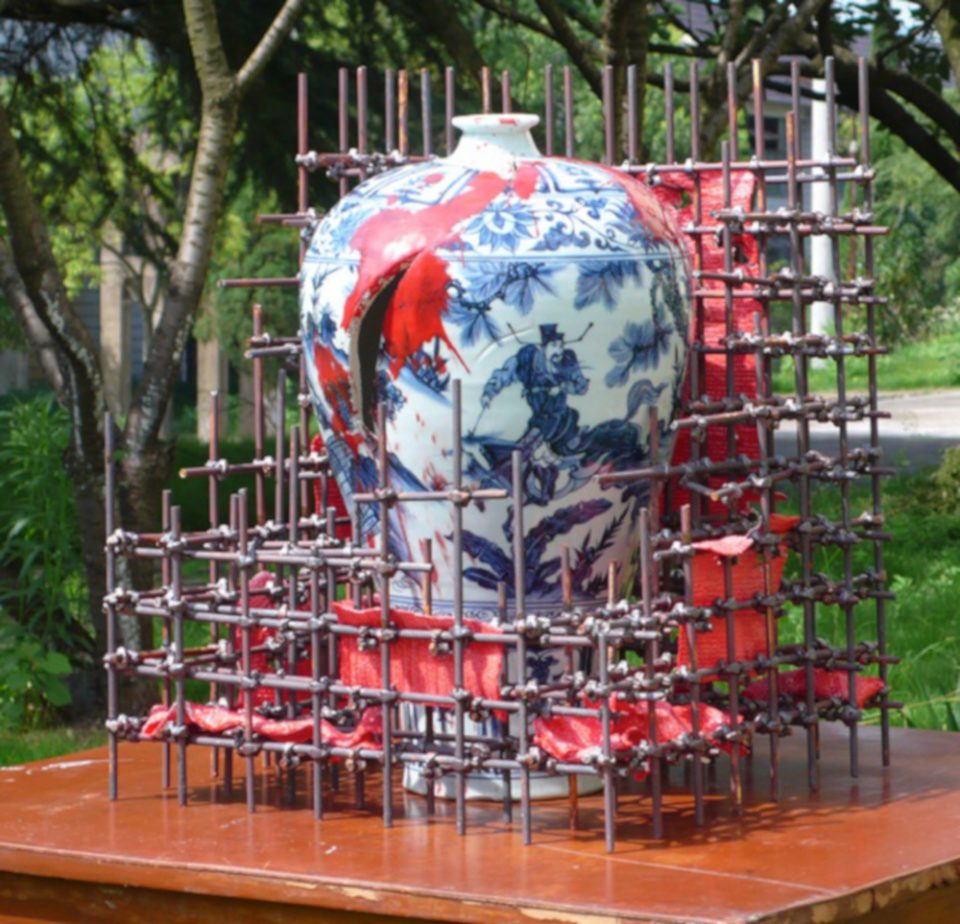
Zhou Jun also creates sculptural works using porcelain and other materials, always mantaining his distinctive style and his conceptual structure.

A
A “wounded” porcelain vase, surrounded by scaffoldings

For more informations about Zhou Jun’s work: https://www.redgategallery.com/Artists/Zhou_Jun-photography/index.html

or: http://www.artlinkart.com/en/artist/wrk_yr/dbabrws/1eccAtt/2006